Fear Free with America’s Vet, Dr. Marty Becker, DVM
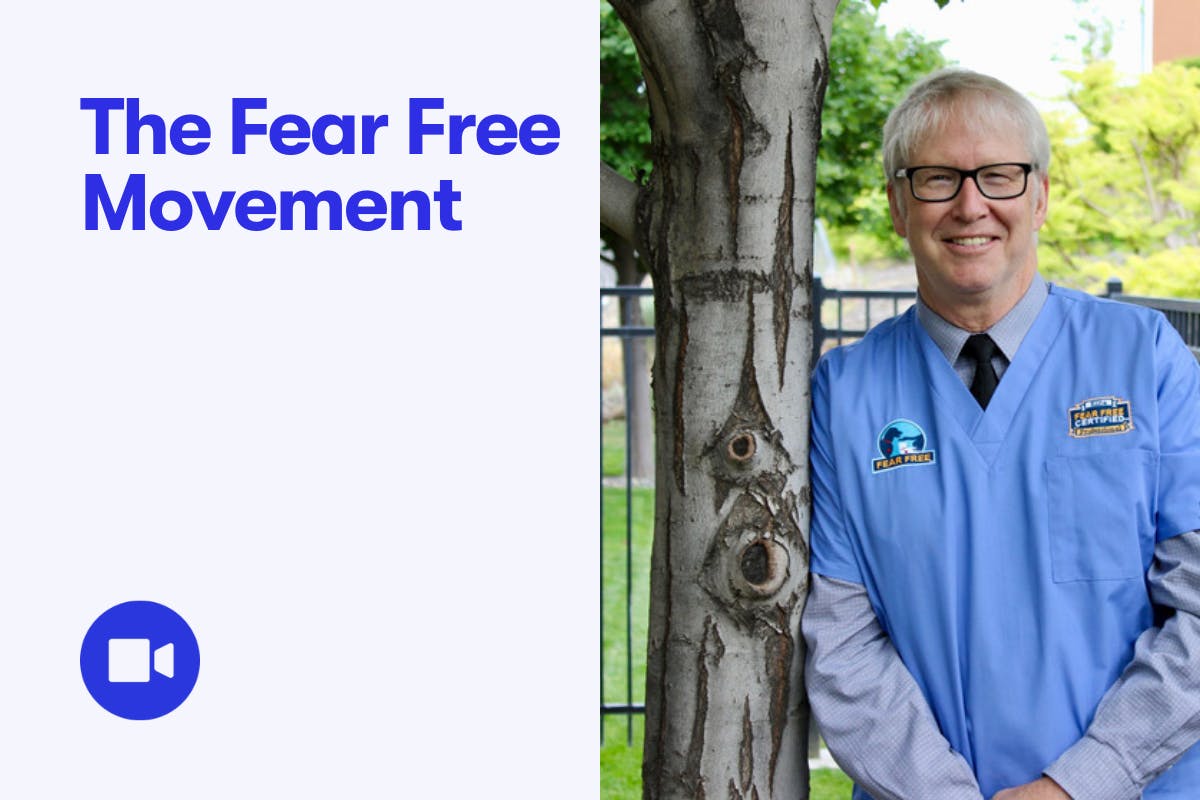
America’s Vet, Dr. Marty Becker, DVM, joins us on a Good Breeder Webinar to talk about the Fear Free Movement and Your Dogs.
Good Dog is on a mission to educate the public, support dog breeders, and promote canine health so we can give our dogs the world they deserve.
Good Dog is on a mission to educate the public, support dog breeders, and promote canine health so we can give our dogs the world they deserve.
Good Dog is on a mission to educate the public, support dog breeders, and promote canine health so we can give our dogs the world they deserve.
America’s Vet, Dr. Marty Becker, DVM, joined us on a Good Breeder Webinar to talk about the Fear Free Movement. Developed by hundreds of experts in behavior, medicine, and handling, Fear Free has become one of the most transformative initiatives in the history of companion animal practice.
Over the last four decades, Dr. Becker has owned or co-owned seven veterinary hospitals, lectured across six continents, became an adjunct professor at three colleges of veterinary medicine, and wrote 25 books, his most recent being From Fearful to Fear Free: A Positive Program to Free Your Dog from Anxiety, Fears, and Phobias.
Join our Good Breeder community
Are you a responsible breeder? We'd love to recognize you. Connect directly with informed buyers, get access to free benefits, and more.
Transcript
Dr. Judi Stella [0:07] Good afternoon, everyone! Thanks for joining us today. I’m really happy to introduce Dr. Marty Becker, also known as America’s Veterinarian. Dr. Becker earned his veterinary degree from Washington State University, College of Veterinary Medicine, and has been a pioneer in the field of human–animal bond and the human–animal connection. Over the course of his career, he has owned many veterinary practices, given lectures all over the world, serves on the Board of Directors and Chief Veterinary Correspondent for the American Humane Society. Dr. Becker has authored 25 books, 3 of which were New York Times bestsellers. His most recent book is entitled From Fearful to Fear Free: A Positive Program to Free Your Dog From Anxiety, Fears, and Phobias. That is what we’re going to talk about today. With that, I will turn the conversation over to my colleague, Dr. Mikel Delgado, and our esteemed guest, Dr. Becker.
Dr. Mikel Delgado [1:03] Hey, everybody! I’m Dr. Delgado. I’m really excited to be moderating this discussion between you (and your questions) and Dr. Marty Becker, who I’ve known for a few years now. Amazing person. Marty, we can just start off. I think all of us would love to hear about your personal journey into veterinary medicine and how you decided fear free was where you wanted to go. When you talk about it, maybe you could just give our listeners a definition of what “fear free” is.
Dr. Marty Becker [1:43] I think my brain’s gone. I’m 67. It might have been from peeing on an electric fence from the farm, back when I was a kid. The wind would catch it. I hear “Dr. Delgado” and it reminds me of Mr. Roboto. I’m not sure why. Da-da-da-da-da-da Dr. Delgado! By the way, for those of you that are coming on, somebody was eating celery on this zoom call before we came on. There’s never been a good discussion wrapped around celery. Let me tell you.
Dr. Mikel Delgado [2:17] Okay, we can delve into it.
Dr. Marty Becker [2:19] I don’t want to see celery next time. I want to take you back. I’m an Idaho farm boy. I was born and raised in southern Idaho, down in potato country. I remember 1963, the year the Beatles invaded America. It was February. The wind was blowing snow horizontally across these frozen fields. I asked my dad (I was 9 years old), “Can we bring Luke (the Labrador Retriever) in the house tonight?” Because of this snow storm. He explained to me that, no, these Labrador Retrievers were from Labradors in Canada, and they were made for this. Luke, by the way, slept in an old calving shed. We had dairy cows, too. Had an Idaho potato sack for a door and a straw bale inside for warmth. Well, he resisted. I resisted. Luke the Labrador Retriever came. Dad said he could stay on the porch, on the linoleum, and when the storm stopped he had to go back outside. Well, think of an older house. It had a screened-in porch, linoleum is vinyl flooring (for those of you who aren’t old like me). Luke was on ice skates. He had been a farm dog. He had never come across something like this. So he falls to the ground. He infantry crawls over there. I still remember. He stuck his head in the door, which opened into our kitchen. He looked around and went, “Man, this is nice in here! I’ve been living in this shitty cabin shed, and you guys were living in here? Oh my god!” So he rose up, came over, leaned against my dad. The old Lab Leaner thing. And then all of a sudden took off and hauled-ass around our house. One room and the other room and the other room. Then he came back to the couch and flew up onto the couch. His tail was beating like a potentiometer on the side of the couch. My god. The human–animal bond had life breathed into it at that point. Literally, on farms like ours and ranches, pets move from the barnyard to the backyard to the back door to the bedroom. For those of you that didn’t grow up rural like I did, out with the Sunday project dog house that dad built with the local lumber store. He went literally from outside to inside to underneath the covers! Put another way: from the kennel to the kitchen to eat. So, it was a migration of Biblical proportions. Once you had intimacy, once you had close physical contact, that’s when healing power starts.
By the way, I’m America’s Veterinarian. I’m not America’s Trainer. That’s Dr. Delgado. There went my 18-pound doorbell, off there. I don’t even apologize for it. It’s probably nothing. It’s probably a chipmunk or something. Anyway, that’s when you start seeing the healing power, that human–animal connection comes from close physical contact.
Let’s fast-forward to 2009. I’d been in 89 countries, all 50 states, all 7 continents—talking about really celebrating, protecting, and nurturing the bond because that’s the essence of what you’re doing with Good Dog and what we do in veterinary medicine and what you do in grooming. We celebrate, protect, and nurture that special relationship that people have with their pet. I used to have a national radio show, and I’d end it with my voice raising with enthusiasm: “Remember, there’s only one greatest pet in the world and every family has her! I’m Dr. Marty Becker, and we’ll see you next week.” I swear, if they hooked 36 people on here—if we hooked 136 of us up—to a lie detector and took it simultaneously, “Do you, in fact, have the world’s greatest dog?” we would all answer in the affirmative, and we would all pass. That’s the neat thing about it. By the way, if we said the world’s greatest grandkid or world’s greatest child—first of all, people don’t care. And there’s always jealousy. But with the dog, people don’t mind the fact that we all think we have the world’s greatest pet.
I was in a lecture in Vancouver Island (British Columbia), and I’d given the lecture the day before, the keynote. The next day, it was a boarded veterinary behaviorist named Karen Overall. Just for your FYI. Mikel is a certified applied animal behaviorist, PhD in animal behavior. There are DVM-boarded behaviorists. There’s about 100 of them. There’s 50 residents, which shows you how popular this field is becoming. I sat in the back of the room in this conference for two reasons. Number 1: I was going to sneak out early. Idaho is the land of Zion. It’s not Utah. It’s 70% LDS in Idaho. Just imagine the swarm of people on bicycles with black pants and white shirts and ties going all around, like little bees; there’s so many of them. Because the legislature has a cap on 3.2% beer. Boo! Boo! So, you go to Canada, you think: nice, cold Canadian beer. Plus, I’ll meet my wife early for supper. I’m in the back of the room. This is an artifact, for those of you. This is a FranklinCovey day planner. If anybody has one of these, in the chat, you have to say it. If you also have an AOL account, I will send you a copy of any of my books, personalized and autographed—free of charge.
Dr. Mikel Delgado [8:10] Wow, are you ready?
Dr. Marty Becker [8:10] I’ve got to see a photo of the day planner—FranklinCovey, not another one, and an AOL account. So, by the way, Mikel, you’re young. AOL’s not for you.
Dr. Mikel Delgado [8:20] I have Hotmail.
Dr. Marty Becker [8:23] AOL is for people who need constipation products and adult diapers and stairlifts and walk-in tubs. It’s the bomb for people my age. Anyway, Karen Overall gets up and her opening statement is: “Those of us that are in the business of taking care of animals are causing repeat psychological damage to pets by what we are doing or not doing. Behavior produces a physiological response. Behavior is medicine.” She said fear is caused by something painful or something disturbing. The example she used was you trim the nails too short, oh—that’s painful. Now disturbing is seeing the nail trimmers or just going into the room where the nail trimmers are or opening up the drawer where the nail trimmers are or just thinking about trimming their nails and they know you’re going to trim their nails. It can be a vaccination, which many of you breeders would do. Oh, that hurt. That’s painful. Now seeing the syringe—that’s disturbing.
Dr. Mikel Delgado [9:25] I think a lot of us have gone through this recently, if we got a vaccine or two, right?
Dr. Marty Becker [9:33] You know what—this is a perfect example. I got my second Covid shot maybe 2 months ago. I go by free will. I choose to go. I know why it benefits me. I know how long it’s going to take, so I can anticipate the relief of fear, anxiety, stress, or pain. I know it’s going to be 30 minutes. And I have control. I can leave if I want. In fact, we were sitting there. They give the shot. They wait 15 minutes to see if you have a reaction. Everybody’s looking on their phone, chatting a bit. All of a sudden, this woman runs by. “AH!” She just flies by. The door goes open. We’re all, “What the hell was that?!” Well, she saw the needle go in her husband’s arm, and that was it. She was going to pass out. It was a fight/flight combination for her. Well, let’s contrast that with a pet in the vet clinic the same day or at somebody’s home or a place where you breed. First of all: they’re taken against their will. Some would call it “hell care.” Two: they don’t know why it benefits them. Three: they can’t anticipate or expect the relief of their anxiety and stress and pain, even if it’s moments away. Finally number four: they have no control. A pet is just like a 1-year-old child. Those of us who take care of them have to realize we’re pediatricians for life, really.
I’ll wrap this up. I always loved animals. I always felt like I was compassionate. But before her talk in the veterinary hospital, I was stretching cats out into two zip codes. You know, its head is in Minneapolis and its ass is in St. Paul. Its head’s in San Francisco and its ass is in Oakland. That’s what you’re taught to do. There was no procedure that couldn’t be solved by adding one more technician to hold him down or another technician or a tech’s restraint. I left there. She said fear is the worst thing a social species could experience. I thought well, no fear. Fear free! It’s aspirational. That’s how it got started.
Dr. Mikel Delgado [11:54] So it kind of took another veterinarian to make the lightbulb go off in your head. Before that, in your practice, I assume you’d seen signs of fear and stress and anxiety in the cats and dogs you were treating.
Dr. Marty Becker [12:05] Oh, one hundred percent. You know what I thought it was? Collateral damage. I thought there was nothing you could do. And I didn’t realize how damaging it was. I come from an era. I’ve been a veterinarian for 41 years this year. We were taught, at Washington State University in the late ’70s, that animals didn’t feel pain like humans did. If they did, it was good because they were immobile, which meant they couldn’t tear the stitches out, they wouldn’t ruin your perfect leg reconstruction. I don’t know why you thought that. You step on your dog’s foot, and it cries out. Duh! You dehorn a cow or castrate them, and they scream and poop and pee. Duh! Whatever they told us. We were taught restraint. Restraint says there’s a battle to be fought to protect the doctor, the breeder, the trainer, the groomer. Instead what we have is called gentle control. The battle to be fought to protect the pet, and 99.99% of the injuries are fear-based aggression. One thing that’s interesting, Mikel, is the science of fear, anxiety, and stress for a dog. They are panting. Not because they’re hot. They’re in an air-conditioned hospital or car. They shiver, they shake, they pant, they salivate, they lick their lips, they yawn—not because they’re bored. They yawn because they’re stressed. Their ears are often pinned back. There’s a furrowed brow. Their tail is tucked. They try to hide. They jump off the table. They lean away from the threat. They’re whale-eyed; there’s this thousand-yard stare. Cats—we used to say cats were F-ed going to the vet. That means fight, flight, freeze, or fidget. What happens in fear free—let’s look at cats. You add pre-visit nutraceuticals or pharmaceuticals, and you add another F. It’s Far Out, man. Like Cheech and Chong. Wow, man. This is nice, man. It’s transformative. I’m not kidding you. I practiced last week. The dog will drag the pet parent into the practice. Often, the pet parent has to try to drag him out. The exact opposite of a typical hospital. Because we put the treat in the treatment.
Dr. Mikel Delgado [14:55] So you had this revelation at a conference. This idea came to you. How did you bring it to fruition and what kinds of responses did you get from veterinarians, vet techs, pet owners?
Dr. Marty Becker [15:10] The Fear Free advisory group is 256 people. There are 65 boarded veterinary behaviorists. That’s the bedrock of Fear Free. That’s the building block. And then there are PhD behaviorists, like yourself. There’s people in animal handling. There are 12 boarded anesthesiologists. Every discipline you can think of! There’s also the Head of Ethology at MIT. I forgot that. The only person that is gifted, of all of us, is [15:50]. Tempo has played a big part of Fear Free.
We went from 2010 until 2015 doing proof of concept. How do you actually do it? We know we want to take the pet out of petrified, but how do you do it? We were working on it, starting to lecture. It launched April 1 of 2016 as an online education program. We had hoped to have a thousand people by the end of the year in the veterinary community be Fear Free certified. We had ten thousand. Now we are, five years later, over 100,000 individuals. Listen to this, too: there’s only 60,000–65,000 companion animal veterinarians in the United States. We would not fill an NFL stadium. There are more practicing attorneys in New York City than there are practicing companion animal veterinarians in the United States. It’s in 56 countries. It’s fully in Spanish. Importantly, 22 of the 30 veterinary schools now require Fear Free certifications of all students before graduation. And by the end of next year (2022), the Association of Veterinary Technician Educators wants to make Fear Free mandatory for all 45,000 veterinary technician students.
Dr. Mikel Delgado [17:20] So the future is bright for veterinary practice!
Dr. Marty Becker [17:23] I want to go back if we could. Remember, my brain is addled from drinking and peeing on an electric fence when I was young. Not so much on the drinking. Okay, what do you think is in here really? It’s not celery juice—I’ll tell you that! I’m teasing. The one way she got me—the one way Karen Overall got me—she went through the signs of fear, anxiety, and stress, and then she showed a picture of a dog that was laying down in the exam room with its head between its legs, like it was sleeping. I’d seen that a lot of times, and I always thought: My god, that dog is so relaxed. It’s just taking a nap on the floor. Why can’t they all be like that? Oh my god! That is the worst it could possibly be! It’s called collapsing immobility. First it’s fight or flight. Am I going to fight? Am I going to flight? Then if they’re cornered and can’t go anywhere—if you want an analogy, that’s why in World War II, people would line up beside a pit full of bodies to be shot at. You always think: Why don’t they run? For God’s sake! At least try. You can’t move. The cat that’s frozen on the table—it looks like a fur covered statue you used to love because they didn’t move. And the dog is laying there with its eyes closed—it actually thinks it’s very close to death.
Dr. Mikel Delgado [19:06] That’s so sad. Many veterinary schools [19:12] frontier, which you’re already doing—bringing this into the home. It’s not just at the vet practice. It’s beyond.
Dr. Marty Becker [19:24] Fear Free started out just aspirational. We take an oath as a veterinarian or a veterinary nurse to prevent or relieve pain and suffering. Hell, we were causing it! By what we were doing or not doing. That was a bitter pill for me to swallow. My god. I’ve always loved animals and being compassionate. We’ve been doing this to these animals all these years. Dr. Oz calls me America’s Veterinarian when he introduces me, and I had a lot of chances to talk to pet parents, and I thought wow. It was so obvious. Mikel, people like you, the boarded veterinary behaviorists—they’ve been talking about this forever. It’s just that nobody listened. I didn’t listen either. It just went in one ear and out the other.
Dr. Mikel Delgado [20:14] I worked at a shelter, and we stretched out, too. We all loved animals. It wasn’t our intention.
Dr. Marty Becker [20:24] We’d pick cats up by the scruff.
Dr. Mikel Delgado [20:28] People think you can’t possibly treat animals safely if you don’t pin them down.
Dr. Marty Becker [20:35] Right. That’s the interesting thing. It started out the right thing to do, and then we found out it’s better medicine. When I’m thinking of breeders, it’s just much better health for pets. In the veterinary practice, the vital signs are more normal. What if the temperature was higher because the pet had an infection, not because it’s stressed and shivering? What if its blood glucose was higher because it was pre-diabetic, not because it’s in fight or flight response? So, your vital signs are more normal. Your physical exams are more normal. They’re not hiding pain and sensitivity. You don’t get immunosuppression. There’s not studies done on pets that I’m aware of, but there is in humans—about flu shots. If you’re calm in a flu shot (versus stressed) you can look at immunity levels 3 months, 6 months, 9 months, a year, and they’re much higher. This is interesting. We didn’t talk about this when we were previewing this talk. During Covid, I talked to a friend of mine (the past president of the Mayo Clinic). He’s quadruple boarded at Mayo, the mothership in Rochester. He’s retired, by the way. Number 1 New York Times bestselling book How to NOT Become My Patient. Ed Creagan. Wonderful book. How am I going to protect my family? I thought he’d have “Take these doses of Vitamin D or do this,” and he goes, “Hey, we were just talking—some of us in the Cleveland Clinic and Harvard and Johns Hopkins and Emory—and we were talking about how we should deploy pets for Covid.” I’m like, “WHAT did you just say?” This is going to be good! As a veterinary medical correspondent. He said, “Think about this, Marty. You are going to be exposed to Covid, and you’re going to survive it because of your immune system or you’re going to get vaccinated to build immunity because of your immune system. What is the enemy of the immune system? Cortisol.” That’s the thing that allows you to lift a truck off somebody or run faster to escape things. Cortisol kills the immune system. What are you going to do to reduce fear, anxiety, and stress in homes? Duh! These dogs are in 75% of homes. It’s a medicine that tastes good. It is trusted. It has no side effects. What’s it cost to deploy? A bacon strip. Things got politicized and tribal, and it never came out. But really what people are doing when you’re a breeder: you want to reduce fear, anxiety, and stress. They can’t be healthy unless they’re happy. That’s it. Period. They also have to start with enrichment activities early on, but I really want you to think about this. In my lifetime, I’ve seen it go from a dog as an animal to a pet to a family member to a child. And now, really, it’s a human life support system cleverly disguised as a four-legged child, especially with millennials and Gen Z. They will do anything to take care of their pets like that. That’s their children.
Dr. Mikel Delgado [24:00] There are definitely some generational differences and trends.
Dr. Marty Becker [24:08] You’re not providing somebody a dog. You’re providing somebody a human healthcare system that is disguised as a dog. This is sad, but with people, there’s duplicity. There’s hidden agendas. There’s posturing for personal gain and performances. What do you get with a dog? Unconditional love, limitless affection, to-die-for loyalty, something to laugh about every single day. In that reciprocity—we call it the love loop; in The Healing Power of Pets I wrote that when you’re petting your dog or it’s laying by you, it’s rooting you with its head or raking you with its paws—this is good. You get releases of oxytocin (the hug hormone). You get prolactin (like a mother nursing a baby). You get serotonin (the runner’s high, what we take Prozac for—or whatever they’re using). And then [25:18], the active ingredient in chocolate. But guess what! The dog gets exactly the same biochemical spa treatment. They’re not a maple tree that we’ve tapped into and are sucking all the juice out of them. We’re not a giant tick. There’s a reason why there hasn’t been another domesticated species in 5,000 years. Only dogs and cats have broken down our hearts en masse. But that’s why that closeness, that intimacy, matters so much.
Dr. Mikel Delgado [25:50] Absolutely. Before we start getting to some questions, if you were going to give some advice to people raising puppies, what’s the most important thing they need to know to have a Fear Free, happy home with these dogs?
Dr. Marty Becker [26:15] We probably have a combination of breeders and people that have new puppies on here, right? Let’s talk about breeders first. First of all—and I said this to you guys when I agreed to do this talk—I am pro-breeder. I am on the American Humane Board. I’m on 5 national boards and 5 local shelters. Our first Labrador Retrievers we got from a breeder. We went and looked in the Sunday classified ads. That’s the way it was done. You looked at the prefix, you went to their house, you bought it, you got puppy food, you made your appointment for shots. As a veterinarian, I was a matchmaker a lot. I never did artificial insemination, but I delivered a lot of puppies—pulled them from their mother and helped put them in the ground. From birth to earth. Now we know there’s a phenomenal shortage. I’ve been working with shelters since veterinary school, and there were 26-27 dogs and cats euthanized every year. It’s below 750,000. Mostly cats now. People that have traveled to the Carribean or overseas or Central America or South America—there’s all these dogs. Find them homes? They don’t make good dogs. They look like a dog, but they’re not the same kind of dog. You talk to boarded veterinary behaviorists, and a lot of those are island dogs that they see all the time. I’m on your side. I love it when somebody comes together and does things right. You’re raising kids for somebody else, like a foster. I think of you as foster parents. What you’ve got to do is first think about its physical wellbeing. It’s just not food, water, shelter, and veterinary care. There has to be enrichment activities. Mikel, as you know, for a cat its absolute needs are a climbing place, a hiding place, a place to scratch. These dogs have a genetic exuberance to do things. I’m working with a company now to design a line of toys that are meant to be buried. Their bodies are built for movement. They’re very athletic. You want them to engage the body, engage the mind.
I’ll give you an example of what you would do. You should tell everybody that gets a puppy from you: do not feed out of food bowls. I can tell you that for 20 years, we have never fed a dog or a cat out of a food bowl. With as many as 6 dogs and a whole slew of barn cats and a couple of indoor cats, why? I live in extreme northern Idaho, up here in the Panhandle. Idaho is kind of a funny state up there at the top. It’s 100 miles tall by 45 miles wide, the Panhandle. Fifteen miles to Montana that way, 30 miles to Washington State, 6 miles to Canada straight north. There are wolves here. In fact, I saw a wolf about a mile away from the house about 10 days ago. A beautiful female. Listen: there’s never a wolf with a beer gut. There’s never a coyote sitting on the side of the road thinking shit, I’ve let myself go. Look at all these dogs on Animal Planet. “Look at me! This is horrible. I can’t even get my tracking collar on.” They wake up hungry. Every day, it’s “Let’s roll.” It takes 6 steps to eat. You’ve got to detect your food by sight or smell. Pursue it. Apprehend it. Kill it or scavenge it. Compete with the rest of the pack. Finally, you belly up to the beast to eat. When you feed out of a bowl, you go right to step 6. So 80% of the wild canids waking up in pursuit of food—you don’t want to dumb that down to where it takes 3 seconds to 3 minutes.
Dr. Mikel Delgado [30:38] Yeah, fast eating can cause problems for dogs, too.
Dr. Marty Becker [30:42] A lot of serious issues of bloat and excessive gas. Today our outdoor dog (a Boxer Pitbull cross)—I just brought her her kibble this morning out in the grass. She’s out there. She’s been out there for two and a half hours, looking for food in the grass. One had to do a food puzzle to get food this morning.
Dr. Mikel Delgado [31:13] It’s like they have a Google calendar: from 10pm to noon, food puzzle.
Dr. Marty Becker [31:22] We know that’s true for dogs or cats. I think you want pets that are healthy and happy and live a full life. That part is the enrichment part. There’s destructive chewing and constructive chewing. Chewing is a good behavior. You just need to turn it into something. Fear Free Happy Homes is complimentary to all pet parents, to everybody. It’s the best place on the planet. You (as a breeder) or you (as somebody who is a puppy mom or dad) should go to Fear Free Happy Homes. It’s not the place to go for doggy diarrhea and things, but it is the place to go for anything related to emotional wellbeing. We’ll tell you what to do for thunderstorms. We’ll tell you what to do for the Fourth of July fireworks. Leash aggression. Interspecies aggression. All of those things. The stuff on separation anxiety, Dog TV has a special on Dish on June 12—open to everybody, free of charge. I’m the main host, but they’re sending people to Fear Free Happy Homes. It’s an amazing resource for you guys.
Dr. Mikel Delgado [32:40] That’s great. I’ll make sure to add the link in the chat for everybody. We actually just got a question about what you just mentioned about feeding. Someone wants to know: Do you just throw the food in the grass?
Dr. Marty Becker [32:55] A variety of things. You might think: what do you do in the wintertime? It snows. A lot. In the summertime, I just throw it out in the grass. My daughter has a couple of Pug mixes. I’ve had 8 dogs out there all looking for food in the grass. I have never seen them fight ever. Never. I’ve seen stuff when you come home and there’s food scraps in the steak house. There’s a little bark. Nobody gets hurt, but there’s that stuff. In the wintertime, we have a giant piece of shag carpeting that we just put in one bay of the garage. There’s different ways you could do it. Today, by the way, (if you go to DrMartyBecker on Facebook) I’m actually doing a Facebook Live event at 1 PST on dog food puzzles, of all things. It’ll show you a variety. Some are more like mazes. It’s too deep to bite it, so they have to use their tongue to move stuff around the maze. The Kong is so ubiquitous. There’s a Kong wobbler. It’s like a Weeble Wobble. It has a little hole in it, and it’s only when it’s knocked one way that the kibble comes out. There’s a variety of ones that have to be turned or spun. You can go to Chewy or Amazon to find them. There are others. I don’t know if any of you that are on this chat remember Ernest. Ernest was this dumb guy that always wore this cap. He played the dumb guy. Jim Carney or something. Well, some dogs are Ernest and some are Einstein. Some are dumb as a rock and some are crazy. My daughter has two Pug mixes. One is unbelievably smart. He’s like a safe cracker. But Nina Ottison—all of her stuff is unbelievable. These things—when you look at it, you think how the hell can a dog do that? Some of these are just like little safe crackers. They know to pull this out or take this off. They spin the damn thing with their paw. Some dogs will just grab the food puzzle and shake it, knock everything out.
Dr. Mikel Delgado [35:35] That’s one way to solve the problem, right?
Dr. Marty Becker [35:36] I’ve never seen it where no food puzzles work. There’s one called Green Interactive Feeder that looks like a big golf divot, like the Jolly Green Giant hit a big golf divot. It’s got these blades of grass (plastic) that are different heights and set differently. That’s a surefire one. They’ve got to use their tongue to work it out of these little things.
Dr. Mikel Delgado [36:00] Some of these that you’ll be demoing could work with a wet or raw diet?
Dr. Marty Becker [36:06] Well, not really. What you have to do for a wet diet is you have to have them do some kind of a hunt for it. Those are designed for kibble. But there are ones that you can use, like a Kong (the standard Kong). They call it Kong stuffing. There’s all sorts of recipes online. You can take your dog’s normal food (if you’re feeding a canned food). What I like to do is take it and, inside the hole, put a pencil rawhide (looks like a fuse, like a bomb). Freeze them. Freeze a bunch at a time. Give it to your dog outside. Give it to your dog in the wintertime in the laundry room or the mud room or the patio or something, or the kitchen. They’ll just work and work and work. You know, they call it crumb scavenging, but when dogs chew, if you give them something really good, they retreat. Almost always. And then they turn and face you. Watch how they do this! Then as little bits fall off, they eat it and then they hold it between their paws and then they chew on it. But what we do here—sometimes, when you have to feed them prescription food—is put it in empty little Chobani yogurt things. Just split the portion into 10 equal things, just a tiny bit in each one. And then they’ve got to go find it in the house.
Dr. Mikel Delgado [37:35] So you’re going to do a live demo today with dogs?
Dr. Marty Becker [37:38] You’ll get to see Cutie Pie, who by the way, is the world’s greatest dog. He’s Dachshund, Chihuahua, and Jack Russell. He’s a canine cocktail. He came from southern California, Wings of Rescue, distemper survivor. He’s like two dogs long and a half a dog tall, if you know what I mean. He’s like a low-rider.
Dr. Mikel Delgado [38:05] So everybody tune in to see Cutie Pie. Let’s dive into some more questions. One person wants to know whether or not non-professionals can be certified with Fear Free. What’s the certification?
Dr. Marty Becker [38:20] You absolutely can be certified. You go to FearFreePets.com. People that are listening to this probably don’t need race-approved CE. Race-approved CE means it’s passed some standards. If you’re a veterinarian or a veterinary technician, it counts against the CE credits (continuing education credits) you have to have. When we put it together, we could have made it—with 65 boarded behaviorists—impossible to pass. But we made it to where somebody that was brand-new in the veterinary field could pass it. The only part you will find that you’re going to think what the heck—it’s kind of like when I took typing in high school in 1973, I thought: What the hell do I need typing for? I’m really glad I took it. There’s stuff on sedation protocols. There’s something called the amygdala, this little tiny almond-shaped thing that sits deep in your brain. I look at my iPhone that has 30,000 photos. I don’t know how that works. I don’t know how the amygdala can hold all this negative stuff from my life. My dad was a manic-depressive and an alcoholic, my mom and dad didn’t have a very good marriage, I remember fights with an old girlfriend, I remember being beat up one time, I remember car accidents and stuff—
Dr. Mikel Delgado [39:51] Okay, let’s not relive all this trauma!
Dr. Marty Becker [39:51] True. I could go through therapy and perhaps desensitize myself. You have no idea what’s in that dog’s amygdala. We call it “putting the treat in treatment.” There’s a whole system of how you do this. Some dogs are just so traumatized that you need to give them nutraceuticals and compression garments, pharmaceuticals. There’s also a Fear Free trainer’s course. That’s separate. And there’s a Fear Free grooming course. If you are the type that raises breeds, I would take the Fear Free pet’s course, I’d take the grooming course, and you probably should take the training course. At the very least, take the one. Then you can say you’re Fear Free certified. You can look like me, like NASCAR here.
Dr. Mikel Delgado [40:47] With the patches?
Dr. Marty Becker [40:46] You get a patch. For anybody who has a stethoscope, you get a stethoscope badge. Let me give you an idea of what happens at a Fear Free veterinary hospital. You’ve got to get the carrier out the week before, not the night before or the morning of, because that’s a trigger. The carrier means hell. You start a magic carpet ride of pheromones, from carrier to car to clinic. The day of the visit, you have the pet come in very hungry, so they respond to rewards. The pet parent puts the carrier in the car, makes sure it’s flat. If they have to roll a towel under it to secure it in a seat or in the back, they put a sheet over it so only the front is open, looking at the back of the passenger-side front seat. You want to reduce visual stimuli. You not only don’t baby-talk your pet, you play a certain channel of SiriusXM music or we’ll tell you what to get on Spotify or iTunes to play on the way in. When you come in—this is pre-Covid—you called once you came in and checked in outside, and you waited till it was your turn to be seen. This was pre-Covid. You’d go into the exam room. Your pet is given the choice of where it’s examined: on the floor, in their lap, on the table. Most of them are on the floor. I have a non-skid surface. By the way, if you can see this shirt, I wore this on purpose. Anything like this that has a pattern (straight lines) is not something you should use around them, because the term is called a [42:25]. Straight lines in nature mean mankind. What you want are pastel colors (if it looks good on an Easter egg!). Solid pastel colors are the best. Let me finish up real quick: the stethoscope, the most iconic thing in medicine. Unless somebody has a communicable disease like Parvo or influenza, this thing is not cleaned. It’s usually hung on a hook or on your desk. Guess what’s on here: fear pheromones. In a Fear Free practice, after every office visit, this is cleaned with a product called Rescue. I believe that product is used a lot with breeders, too. Amazing product! And then we wipe back across them with a pheromone wipe. We let the dog sniff it. When they sniff it, they’re sniffing it, and they’re going: God, mom, you sure got skinny, you skinny bitch. But that’s you! In their brain, that tells them that that’s them. It instantly calms them, no matter what their age is.
Dr. Mikel Delgado [43:29[ So this really ties in nicely to a question we got this week from someone: Everything changed during Covid for vet visits, right? In some places, Covid restrictions are being lifted, but many of us are still sitting in our car while our pets are in the office. How can we ease that transition? Did you come up with a Fear Free plan for Covid?
Dr. Marty Becker [43:56] We did. First of all: I’m talking to the choir here. Dogs are territorial around their home and around the vehicle. You don’t approach the vehicle. Take the pet out of the vehicle. Then you meet on neutral ground. You start putting the treat into treatment right from the start. And 99.9999% of people greet pets wrong. If you’re out today and you’re watching people on the street on the Starbucks patio or wherever, you will notice people see a dog — “Oh my god! Look at that dog! What kind of dog is it? What’s its name? Can I pet it?” — and then they come over. They get real big and low, and then they stick their hand out. Well, every piece of that is wrong. One: you have direct eye contact. Not good. Two: you’re looming over it. Not good. And three: you’re sticking something in its face. The dog smelled you before it even saw you. So what do you do? You turn sideways. You squat down or take one knee. You pat your leg, see if they’ll come over to you. And then some dogs we had to do more things with, nutraceuticals or pharmaceuticals, too. Here’s the silver lining to that. Many people that are on his call sure as hell want to be around their pet in the exam room. They’ve always been with their pet in the exam room. We have an FAS scale in Fear Free. When you see a pet, there’s a pain scale.
Dr. Mikel Delgado [45:29] Hold on! Explain what the FAS scale is.
Dr. Marty Becker [45:30] Fear, anxiety, stress. There’s a pain scale, and there’s a body condition scoring scale. Any vet—no matter if you’re in the same practice or across the country or across the world—we use the same scale. If somebody says that dog has a body condition scoring of 4 or its pain scale is 3, we know what that means. Same thing with FAS. We finally got to see a lot of pets without their moms or dads. A lot of those pets did better without mom or dad there. Now we can actually point back, post-Covid, and say, “Cutie Pie actually did better when you weren’t with him.” That’s a hard conversation to have, but in Fear Free, if we see a pet is really distressed with their mom or dad there, we might say, “Sparky’s really protective of you. Why don’t you step out, just for a minute, and see what happens? See if he’ll calm down or not.” That’s the way I typically handle that.
Dr. Mikel Delgado [46:40] It requires a lot of trust, right? I know for me, it’s been harder to not be with my pets.
Dr. Marty Becker [46:49] You know what we did, too? We did a lot of FaceTime and Zoom to actually show people. Cutie Pie—I saw him eating horse shit this morning. I mean, he had a green grin, right? I see him using his tongue as toilet paper. Yet he comes in and jumps up and licks me on the mouth. And I could care less. If my beloved wife of 42 years licked me, I’d probably get sick. There are people that always looked at us like you guys are weird—gross! I’d never do that. Well, during Covid, they got pets. They get to see what this fuss is all about. I feel sorry for them because they’ve never seen the interaction between a veterinarian and a pet, that you build rapport, get the dog’s tail wagging. You know the places to touch. You get the cat purring. At North Idaho Animal Hospital, where I work, 85% of the cats that aren’t sick or injured will take a treat in that hospital. That means they have to have low, fear, anxiety, and stress scores. They have to have really tasty treats. (You typically have to amp them up, to make them warm and stuff, so they’re really aromatic.)
Dr. Mikel Delgado [48:12] We have another question that I think is really interesting. They want to know the difference between fear and being really aware of what’s going on in the environment. This person said their dog likes to signal with their voice and posturing if they hear or see something. They’re alerting: Hey mom! I hear that noise. I see that thing. But they’re unclear on whether or not their dog is afraid. Maybe you can describe how we can tell.
Dr. Marty Becker [48:44] First of all: Mikel, you’ve got more knowledge about this stuff than I do. The boarded veterinary behaviorists certainly do. But I’ll give it my best, okay? First of all: it doesn’t really matter if it’s fear or anxiety or stress. Is it fear? Is it anxiety? Or is it stress? Well, fear is good and bad. Why would I go on a new roller coaster at Six Flags when I’m going to be scared, right? But I do. Why am I going to ski a black diamond instead of the easy run, right? If you think about anxiety—if I didn’t want anxiety, I wouldn’t try to do the Sunday New York Times crossword puzzle. I wouldn’t do Sudoku. You wouldn’t play poker. Just like for dogs, some anxiety is great. Hunting dogs. Dogs that compete in competitions. You’ve got to get a dog panting-tired every day. If you get a dog panting-tired every day, there’s a saying: “A tired dog is a happy dog.” Remember they’re built for movement. You don’t want them to get overweight or obese, which is 66% of America’s pets, which is about the same as Americans. With Cutie Pie, in the wintertime, what I do is I take a slingshot and shoot his kibble with a slingshot. If I'm really tired at the end of the day, I’ll just take a kibble and shoot it, and he says it hitting the grass, and he jumps down on it and tries to find it. That’s a good anxiety. You don’t want to make them like a robot or take that part out of them. In those situations, that dog still has control. In a situation when you’re holding that dog down to vaccine it or trim its nails or to groom it or to do stuff like that, they have no control. There’s a difference there.
Dr. Mikel Delgado [51:31] Does Fear Free Happy Homes discuss people doing treatments at home? If you have to pill your dog or trim their nails?
Dr. Marty Becker [51:41] Yes. There’s a real compliance issue with veterinary medicine. When I say “most,” I mean most medicine ends up in the cupboard or the drawer and not in the dog. They won’t say anything because they feel guilty or embarrassed—like oh my god, everybody else must be successful. It’s hard enough for a veterinarian to do it with some of these pets. What you do is you learn tricks. If you have a pet that’s really sensitive to taking pills, you can use a pill pocket. What you do is periodically (just at random) give them 3 pill pockets. One is the promise. The second one is the deed. And the third one is the chaser. Think of it like that: three-card Monty in New York with the ping-pong ball or the peanut, and they do all this stuff and move it around, and you have to guess which one it is. That’s why you give them three of them. When you give the pill, the first one is the promise, the second one has the pill in it, and the third one is the chaser. Here’s the other thing to do. Put the pill in with whatever your dominant hand is and close it with the opposite hand. The mistake people make is they put the pill in and squeeze it shut. They can smell it’s still on your finger, on the outside of the pill pocket.
Dr. Mikel Delgado [53:07] We have someone who is preparing to fly on a 1-hour direct flight with a 12-week-old puppy in a sherpa bag. Do you have any advice on reducing fear and anxiety on a flight?
Dr. Marty Becker [53:20] First of all, if your veterinarian still prescribes Acepromazine, get another veterinarian. It’s contra-indicated. It makes it worse—and for thunderstorm phobias and for Fourth of July. It’s contra-indicated. It was something that was last used 20 years ago. Acepromazine, injectable, is used in some sedation protocols. What I would tell you to do, number one, is use a compression garment. A thundershirt. Compression—that’s why you swaddle a baby. We just lost my mother-in-law last week. It’s why people hug you very hard. It’s why people that are autistic like to be squeezed tight. There’s a nutraceutical product called Zylkene. Buy it on Amazon. Use 6x the dose it says on there, if you’re traveling like that. Six times the dose—it’s very safe. Lastly, there are two products you get from your veterinarian. One is called Alprazolam, which is a generic Xanax. And then there’s Sileo. It’s from a company called Zoetis. It is an FDA-approved product for noise phobias, but we use it off-label for reducing fear, anxiety, and stress. It’s a gel. You just wipe it on the gums of your pet.
Dr. Mikel Delgado [54:55] Yup, used for the Fourth of July, too, right?
Dr. Marty Becker [54:56] Oh my god, it’s unbelievable! Cutie Pie, by the way, has really bad noise phobia. He never suffers. If there’s a thunderstorm in the forecast, we give it to him preventatively. If there’s a clap of thunder or gunshots up here in northern Idaho, you give it to him and it takes about 30 minutes or less to take effect. Make sure you put down in the chat my email: drmjb@fearfreepets.com. Not only for questions about Fear Free, but I’m also a big mental health advocate. I’ve got a lot of mental illness problems in my family, so there’s been 4 suicides on my side. My dad’s brother, sister, and father all killed themselves. My dad killed himself. On my wife’s side, her dad’s brother and sister killed themselves. Very open about mental health issues. I’m on an antidepressant myself. Sometimes somebody just needs somebody to talk to. If you look at me, I’m happy. I’m already half-ass drunk this morning. (I’m not really. This is coffee.) But you can tell I’m an upbeat person. Call me America’s Veterinarian. I live in a beautiful house. Why the hell would I be unhappy, right? I don’t know.
Dr. Mikel Delgado [56:27] We work with animals. There’s a lot of compassion fatigue and a lot of empathy that we have, right? People who love animals tend to be more empathic and are affected.
Dr. Marty Becker [56:38] It just goes with the territory about what we do. I mean, it’s the greatest highs—to deliver a puppy, to smell puppy breath, to smell a dog’s foot pads, to bring that joy to somebody—and also when you lay them to rest, the final grace… My sister is a physician. She’s a nefrologist. That’s what typically happens in human medicine. They know one organ of you for one little period of time.
Dr. Mikel Delgado [57:08] She just needs a kidney.
Dr. Marty Becker [57:12] She might see this person for 15 minutes once in their life. In what we do, we have a lifetime relationship with people. It depends on how long you practice and what age, but you might see them through three or four different pets. I really applaud what you’re doing in this business. There’s discussions about creating a program for breeders. There’s already Fear Free Shelters. It’s complimentary to all shelters. It’s under discussion to do something for breeders, because we want it full-circle. We want a pet to be purchased from a Fear Free breeder or adopted from a Fear Free shelter. It should live in a Fear Free Happy Home, go to a Fear Free veterinarian, go to a Fear Free trainer, groomer, pet sitter, boarding, daycare. Then you’ve completed the circle, and all of us look to keep it happy, healthy, and live a full life.
Dr. Mikel Delgado [58:10] What a perfect note to end our discussion on. We’re out of time. But thank you so much for being here. It’s great to see you again. Thanks also for sharing so much about your personal…
Dr. Marty Becker [58:19] I’m going to make an appearance here. Cutie!
Dr. Mikel Delgado [58:33] Everyone, hang on! I have no idea what’s going to happen right now.
Dr. Marty Becker [58:39] I’ve got to show everybody my son. Today he’s agitated because there’s somebody here doing some work outside. You’ve got to see this. You see how long he is, right?
Dr. Mikel Delgado [58:57] He’s very cute.
Dr. Marty Becker [58:59] Isn’t that unbelievable? That’s my son! My wife and I don’t sleep together anymore because I snore on all these antidepressants, and I have all these vivid dreams, and I punched her in the face a few times. Cutie Pie and I sack out together. Anyway, every one of you—I’d love it if I could see all 155 people’s pets. Thanks for having me on, you guys. I appreciate it.
Dr. Mikel Delgado [59:29] Thanks so much. I hope we get to hang out with you again.
Dr. Judi Stella [59:32] Yes, thank you so much.
Dr. Marty Becker [59:37] I love dog’s foot pads. Don’t you guys love that, too? Thank god it doesn’t smell like horse shit.
Nicole [59:54] Thank you so much for joining us today, everyone! Keep a lookout for an email from Good Dog with the recording of this webinar. If you aren’t yet a member of our community and you’re interested in joining, you can always visit gooddog.com/join, so you can join more future events, just like this. Thank you so much, everyone! Have a nice day!
Join our Good Breeder community
Are you a responsible breeder? We'd love to recognize you. Connect directly with informed buyers, get access to free benefits, and more.