The Good Breeder Spotlight Column: Kyla
Meet Good Breeder Kyla Flora, and learn how a one resilient puppy named Lilli left a mark on her heart forever.
Good Dog is on a mission to educate the public, support dog breeders, and promote canine health so we can give our dogs the world they deserve.
Good Dog is on a mission to educate the public, support dog breeders, and promote canine health so we can give our dogs the world they deserve.
The Good Breeder Spotlight Column is a place to share the stories that matter most...YOURS!
Each month, we’ll be spotlighting a new member of our Good Breeder community. We created this column to amplify your voices, recognize the incredible work and sacrifices you make for the dogs we love, and provide you with a safe space to share your unique breeding stories.
We’re so excited to introduce you to this month’s Good Breeder columnist, Kyla Flora of Prebleridge Acres.
Good Dog is on a mission to educate the public, support dog breeders, and promote canine health so we can give our dogs the world they deserve.
Join our Good Breeder community
Are you a responsible breeder? We'd love to recognize you. Connect directly with informed buyers, get access to free benefits, and more.
Good Dog: Tell us a little bit about yourself and your background with dogs?
Kyla Flora: I have always loved dogs, but it was my uncle's dog Nakita that caused me to fall in love with purebred Labs. My uncle bred her a couple of times, and it was Nakita's puppy that got us started on our own breeding journey.
GD: What made you want to become a dog breeder?
KF: My family started breeding field Labs when I was a pre-teen. We knew absolutely nothing about health testing, but I will say we were acing the socialization without even knowing what we were doing! I am the oldest of eight, and all of us (plus our friends) were playing with and handling every litter from the time they were born until they went home. When my husband and I started dating, I told him early on that I came with Labs. We laugh about it now, but I think at the time it would have been a deal breaker for me. We had only been dating a couple of months when that happened. Just prior to that, we had really started trying to improve our program. We were starting to health test our dogs, changed our socialization techniques, and in general formed a more structured program. When we got married I knew I wanted to build a program known for not only beautiful dogs (I loved the blockier show lines), but physically and mentally sound dogs as well.
GD: How did you begin learning about breeding? What were some of your resources?
KF: When we were first married, I devoured every resource I could find. I read book after book on breeding and raising puppies. I read everything I could find on AKC. I wanted to know all about genetics, puppy rearing, and just ethical breeding in general. I learned pedigrees and lines. I got a little fanatical about it, but I was obsessed. I met a breeder near by that knew so much about whelping and raising puppies. I learned a lot about how to successfully resuscitate puppies and care for dams during deliveries. There were also a couple of show breeders that gave me good advice, and were willing to answer my questions on genetics and stud options.
GD: Were there any challenges you had to overcome?
KF: There were a couple. I feel like I had to work really hard and go above and beyond to prove that we are an ethical family breeder. Anyone who knows me personally knows I'm a little crazy about my dogs. I also went from being the "public relations person" in my parent's well-known kennel, to a nobody three hours away. I think it has taken me three or four years to feel like I really have a reputation for breeding quality puppies! That was a hard fact to face. I felt like I had been breeding for a very long time, but to everyone else I was a newbie who was just starting out!
GD: Can you describe the moment your very first litter was born?
KF: This was a little anticlimactic for me because I had been involved in so many of my mom's deliveries. My first litter was easy, but my second about did me in!
GD: One of your puppies from your second litter has a particularly incredible and resilient story. Tell us more about her unique journey to becoming a therapy dog.
KF: That dog is Lilli. She was born at 58 days gestation from our first breeding, so she was possibly even earlier than that. It was her mom's first litter; my second on my own. Brooklyn [her mom] labored all night, and quit after she delivered about half of the puppies. We ended up in an emergency C-section. We couldn't get her to nurse the puppies on her own for the first week, so I was up every three hours sitting with her so she would feed her puppies.
Because of the C-section, she was on low-dose antibiotics for two weeks. At one week and 6 days, she developed a severe case of mastitis, and we had to separate her from the puppies. I usually would worm puppies at two weeks, but thought that was a lot for their little systems to abruptly change their food supply (My vet verified that I made the right decision). At three weeks old I wormed them, and three of the puppies were very sick, but little Lilli was almost gone. I was up with Lilli and the other two puppies every two hours. Slowly over the course of a week she started to perk up, and I thought she was going to be okay.
When the puppies were five weeks old, a breeder friend stopped in to see them. We were watching the puppies play, when she singled Lilli out and wondered what was wrong with her foot. I soon found out that when she went into shock from the wormer, her body had shut down the blood supply to her feet. We had one paw without any pad, and the other one was just starting to fall off. I rushed her to the vet, where we carefully cleaned her up and wrapped her feet. Then we settled in for a waiting game. My vet is awesome, and we worked together to treat Lilli.
It worked! Lilli is now a therapy dog in a major Dayton hospital system. I am so so proud of her and thankful she found a family that was willing to take the time to help her live up to her potential! All those sleepless nights and daily trips to the vet were definitely worth it.
GD: What brought you to Good Dog, and how has being a Good Breeder impacted your breeding program?
KF: We were looking for somewhere that really highlighted what we stood for. It felt like a lot of places online were just allowing anyone to list litters, and while everyone starts somewhere, there wasn't a way to differentiate between those of us that were putting a lot of time, effort, and money into raising healthy, well-adjusted dogs. from those that weren't putting the same amount of effort into their litters. It was frustrating.
Our program has flourished since we joined Good Dog. People trust Good Dog to vet their breeders, so they feel confident. I also think that the parts of our program that Good Dog showcases allows applicants to really connect with a breeder who has the same values they do.
GD: What is your favorite part about dog breeding, and your least favorite part?
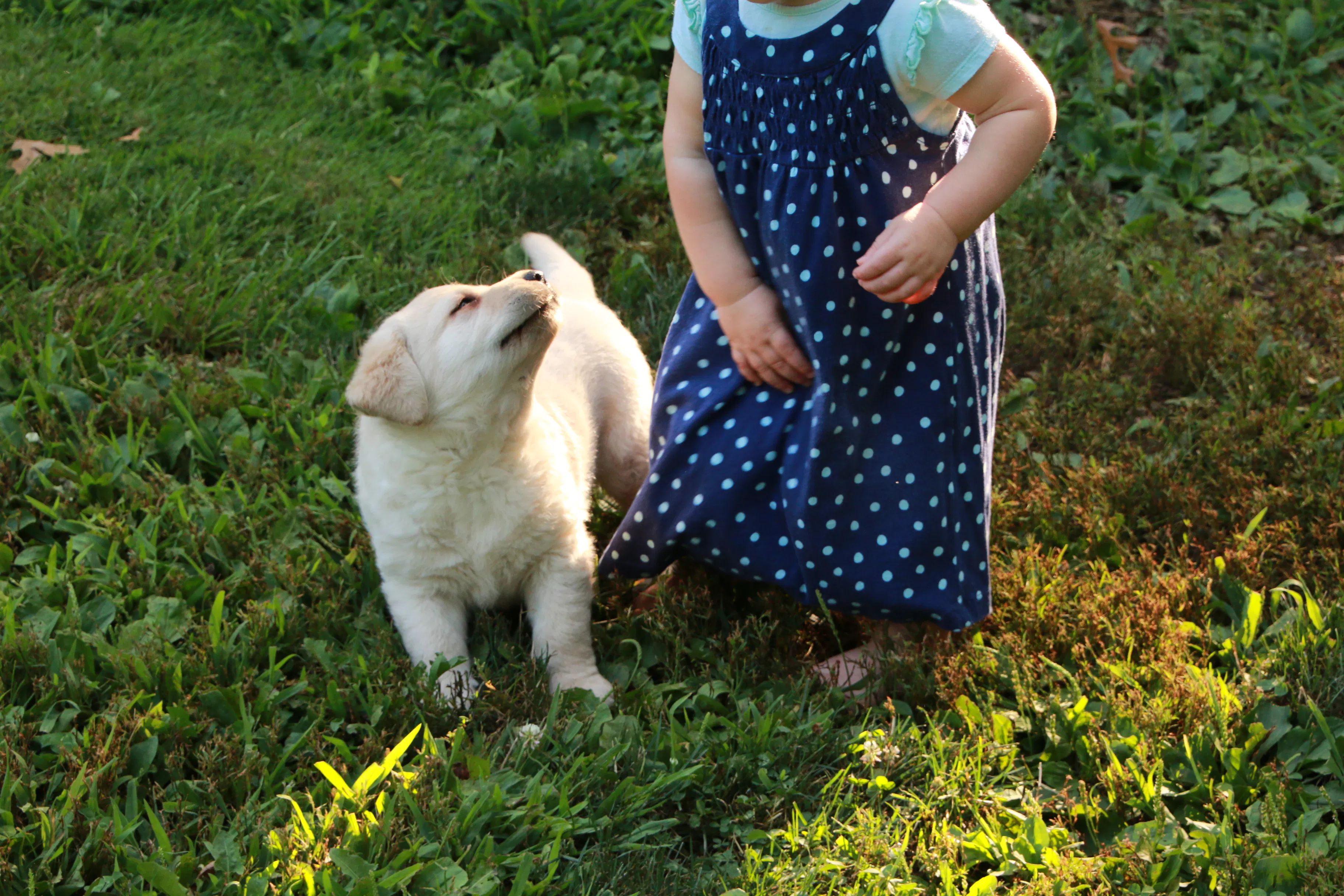
KF: The puppies are my favorite part, but I also love the feeling of making an impact on the lives of my families. We have puppies training for service and therapy work, active therapy dogs, and even just those "therapy" dogs that lay on the couch and offer comfort to the families they live with. I love feeling like what I am doing is making a difference.
I get really annoyed by the stigmas that surround breeding. I get [non-breeder] people all the time that say, "Oh you're selling your puppies for what! Maybe I should get a dog and make some easy money!" If it's easy money, you aren't doing it right. I wish they could see all the literal blood, sweat, and tears that are poured into my dogs. If you figured the amount of time I spent with the dogs, and the average income over the last five years, it's pennies if anything. It's not uncommon for puppy pick day to be 9 hours long. I might be up for 48 hours straight the first two days of a litters' life. Even when there aren't puppies, there are vet visits, training, cleaning, and feeding for my other dogs. We put our hearts into this, and we aren't out making 'easy' money!
GD: What has your relationship been like with your puppy buyers, and are there any in particular that stand out to you?
KF: We love our puppy families! We are very hands on, and most of the time feel like we really get to know the families we connect with. Lilli's family is definitely special to me. They're so good about sending me updates and keeping me in the loop! It was also an honor to place a puppy with 4Paws for Ability.
GD: Looking to the future of dog breeding, what do you hope to see the dog breeding world look like in 20 years?
KF: Education is key! I want to see the general stigma of breeding be changed into something different. I want it to be just as common for people to boast about their puppies and say "I got her/him from an ethical breeder."