Microchipping
The microchip is an important tool in keeping your dog safe.
Good Dog is on a mission to educate the public, support dog breeders, and promote canine health so we can give our dogs the world they deserve.
Good Dog is on a mission to educate the public, support dog breeders, and promote canine health so we can give our dogs the world they deserve.
Good Dog is on a mission to educate the public, support dog breeders, and promote canine health so we can give our dogs the world they deserve.
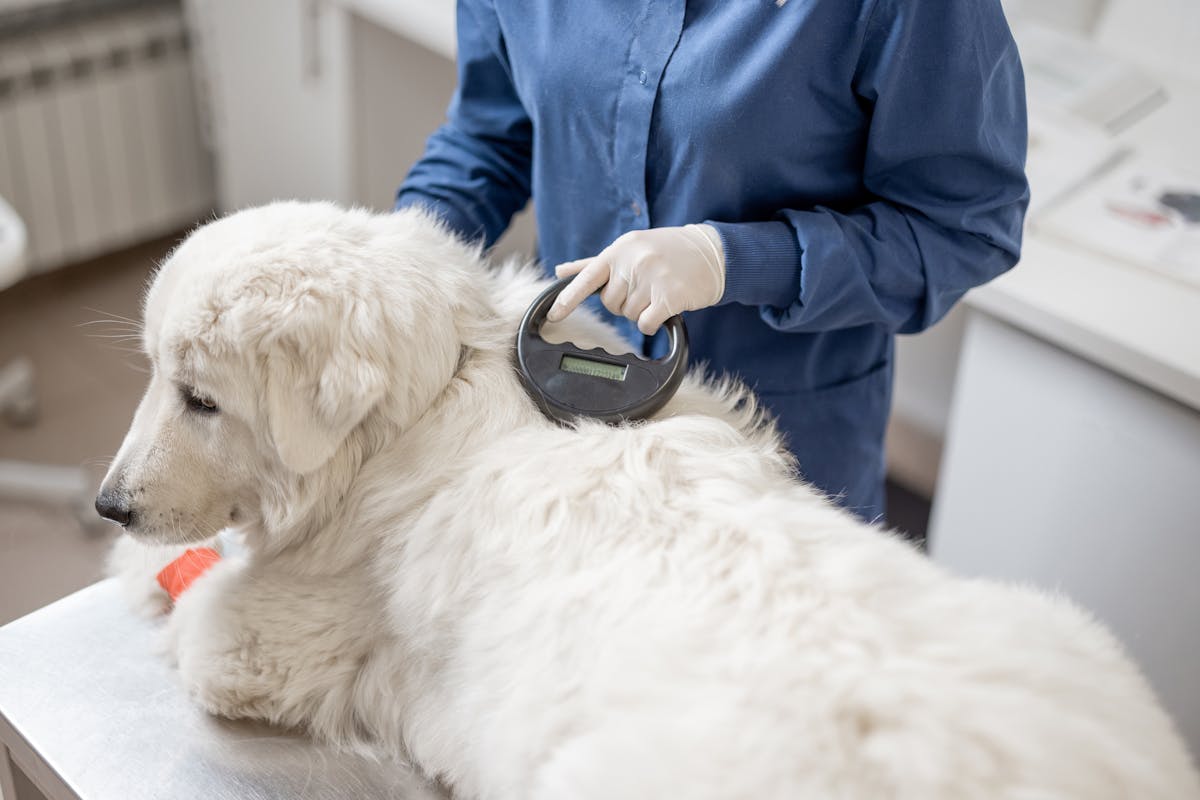
For all dog owners, being unable to find a lost dog is their worst nightmare. Microchips are an incredibly important and relatively easy way to keep your dog safe. A microchip is essentially a tiny chip, around the size of a grain of rice, that has a unique identification number. If your dog ever becomes lost or separated from you, any veterinarian or shelter that finds him will be able to scan the microchip, look up your registered contact information, and reunite you with your dog.
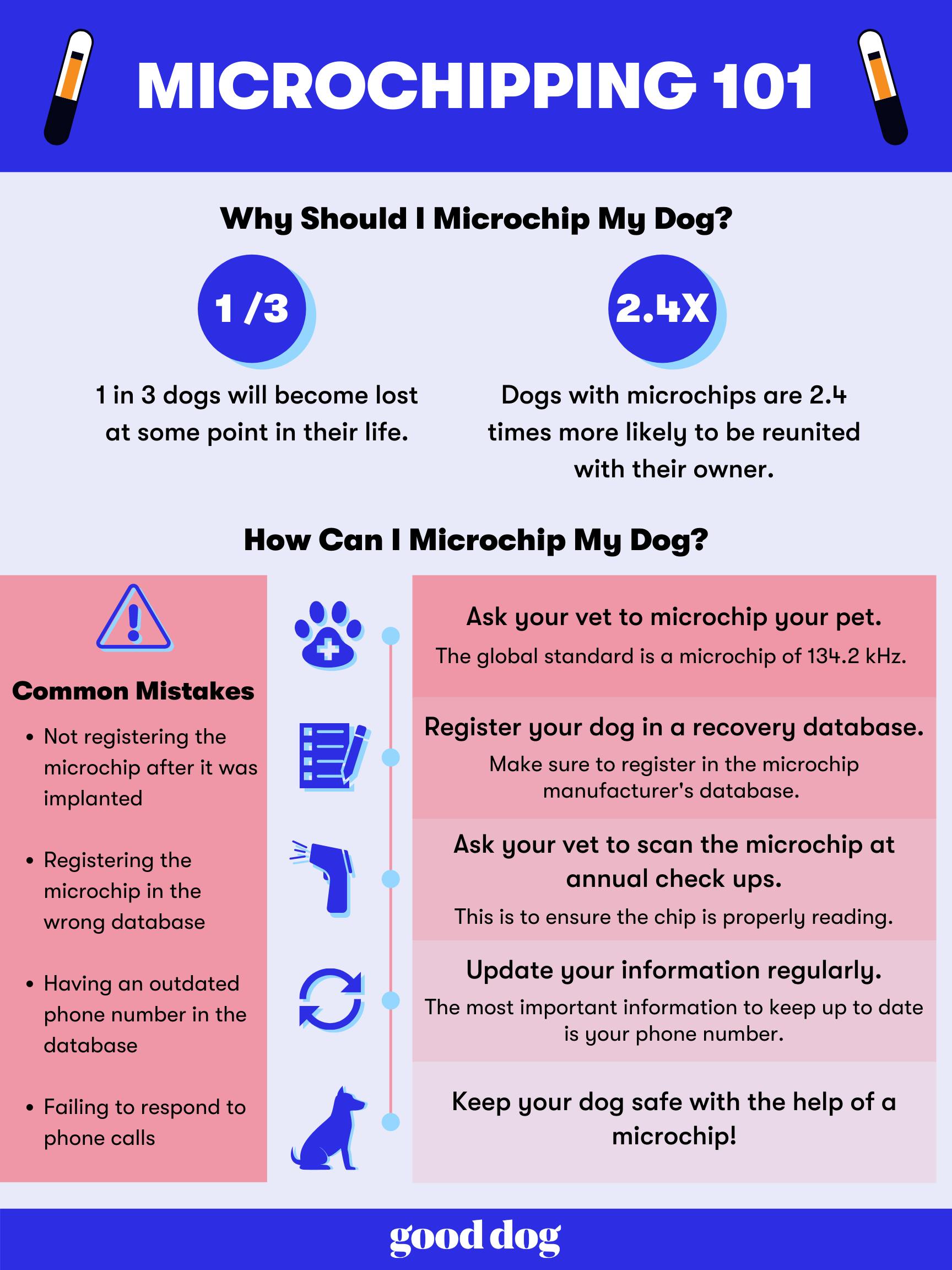
Microchips are commonly used in pets in the US, and for good reason. Around one in three pets will become lost at some point, and pets with microchips are far more likely to be reunited with their owners than pets that only wear collars. While we may be tempted to believe that collars and tags with our contact information are enough to trace our dogs back to us, these methods of identification can break off, wear away, or be removed. A microchip will not be misread or tampered with, making it the best way to keep our pets safe. However, be mindful that a microchip is not a GPS device; your dog should be microchipped in addition to wearing tags and even a GPS.
The microchip implant process is fairly simple - your veterinarian uses a needle to implant the chip between the dog’s shoulder blades. Many owners elect to perform the procedure at the same time as a spay or neuter, since the dog will already be under anesthesia. However, this is optional as the process is not painful. Remember, it is never too late to get your dog microchipped.
Microchips come in different frequencies. Because there is no standard frequency in the US, microchip frequencies can be 125 kHz, 128 kHz, and 134.2 kHz. There are a few types of microchip scanners that can read only one frequency, but universal scanners are becoming more commonplace in shelters and clinics. The global standard set by the International Standards Organization is a microchip with 134.2 kHz frequency. It is best to adhere to this standard in case you and your dog ever travel abroad, but be sure to ask your veterinarian for recommendations.
After your dog is microchipped, register the chip in a national pet recovery database with your contact information. Without registering in a national database, the microchip will simply be an identification number with no information attached to it. Even if your dog is found by a shelter and the microchip is successfully scanned, the shelter will not be able to access your contact information. Ask your veterinarian about which database to register your dog’s microchip. The American Animal Hospital Association has consolidated all the top databases into a search tool called AAHA LookUp. If you move or change phone numbers, immediately update your information in the database. Ask your veterinarian to scan the microchip at each annual check up to make sure the chip reads properly. When you take your pup to a new vet, be sure to have the microchip scanned so the clinic has your information on file. In case your registered information is not up to date in the database, the shelter may call your clinic instead, which can then reunite you and your dog.
The American Animal Hospital Association has designated August 15 as “Check the Chip Day,” so if you haven’t already this year, make sure to ask your veterinarian to check your dog’s microchip!

Join our Good Breeder community
Are you a responsible breeder? We'd love to recognize you. Connect directly with informed buyers, get access to free benefits, and more.