Protecting your Dogs from Tick-Borne Diseases
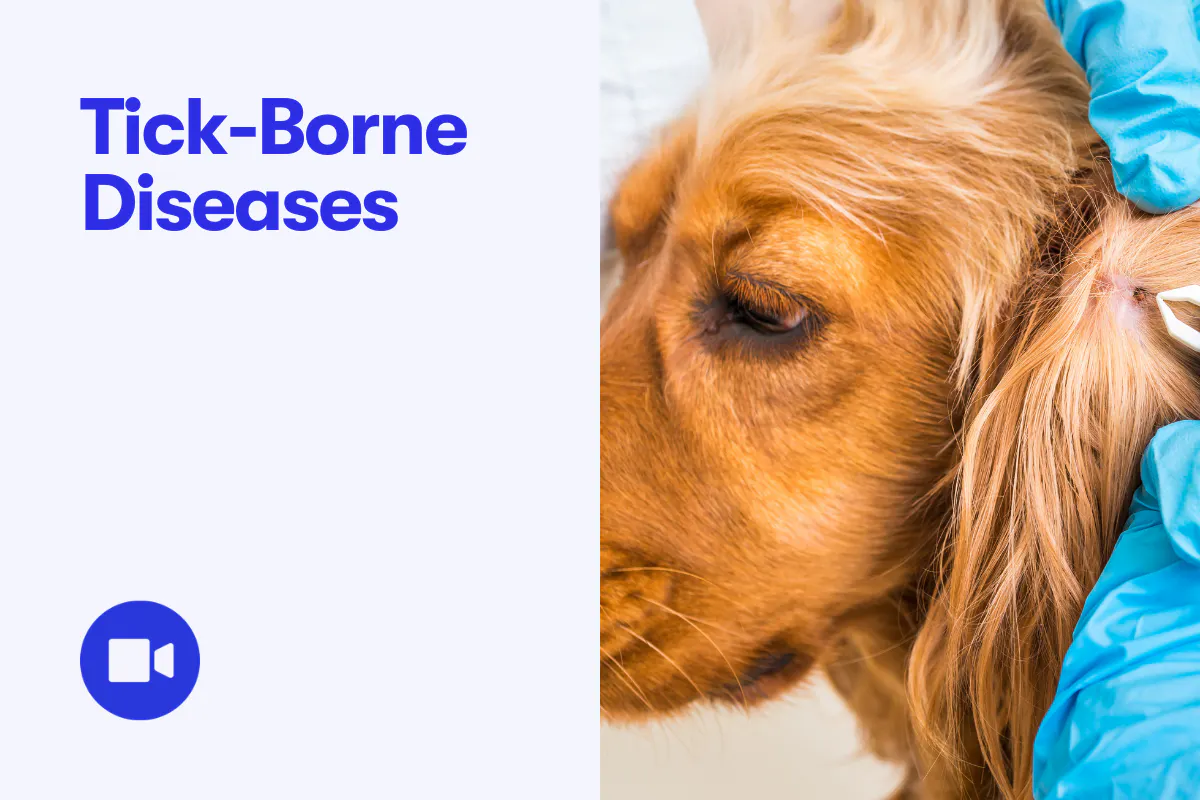
The webinar will cover common tick-borne diseases in the US and tick preventative options for dogs.
Good Dog is on a mission to educate the public, support dog breeders, and promote canine health so we can give our dogs the world they deserve.
Good Dog is on a mission to educate the public, support dog breeders, and promote canine health so we can give our dogs the world they deserve.
Good Dog is on a mission to educate the public, support dog breeders, and promote canine health so we can give our dogs the world they deserve.
Watch this webinar and learn all about common tick-borne diseases in the US and what you can do to protect your dogs!
Join our Good Breeder community
Are you a responsible breeder? We'd love to recognize you. Connect directly with informed buyers, get access to free benefits, and more.
Transcript
Monica DeBosscher [0:01] I think we can go ahead and get started and people can keep joining. My name is Monica, and I’m the Director of Partnerships and Legal Affairs here at Good Dog. We’re so excited for all of you to join us today! For those of you who might be new to Good Dog, Good Dog’s mission is to build a better world for our dogs and the people who love them by advocating for dog breeders, educating the public, and promoting canine health and responsible dog ownership. We’re a secure online community created just for dog breeders. We have a Legal Resource Center with sample dog contracts, special discounts (including on health testing), a secure online payment system, and software built for you to manage your waitlist and your applications. Plus, we have lots of educational opportunities for you and your buyers, just like this one. Good Dog is completely free for breeders who pass our screening and comply with our standards. If you aren’t yet a member of our community, we invite you to learn more about our mission and apply to join at www.gooddog.com/join. Without further delay, I’ll pass it to Dr. Judi and our special guest.
Dr. Judi Stella [1:08] Hi, everyone! Thank you for taking the time to join us today. We’re excited to have Dr. Trisha Rettig join us again today to talk about ticks and tick borne diseases. Trisha received her PhD from Kansas State University with an emphasis on immunology, and after graduation she did a postdoc at Loma Linda University, working closely with NASA in the immune response to vaccination in microgravity; so, she had mice in space, which we all think is the coolest thing ever. She did some additional work focusing on genetics and pathogenic bacteria. Today she’s going to talk to us a little bit about ticks and tick borne diseases. So with that, I’ll let you take it away!
Dr. Trisha Rettig [1:52] Alright, thank you guys for having me, and thank you so much for joining! Judi already introduced me, but I figured I’d fill in a few extra things. As she mentioned, I got my PhD in immunology but on the dog side, I also own a Pembroke Welsh Corgi and a Golden Retriever. I’m active in multiple dog sports. When I’m not busy being a scientist, I’m also a professional dog trainer. I also want to note that all opinions expressed within are my own and do not necessarily represent those of my employer.
[2:25] Today we’re going to talk about the whole chunk of information about tick borne diseases and ticks and preventatives and what we can do about them. We’re going to talk about the different ticks here in the United States. We’re going to talk about the life cycle. We’re going to cover some of the more common infections. We’ll talk about testing options, treatments, and also tick prevention methods.
[2:52] We’re going to get started with some tick basics. I’m going to warn you the next slide has pictures of ticks on it. If you don’t like that, just close your eyes for a little bit.
[3:01] These are the main tick species and their ranges within the US. We’re specifically covering things here today that have important infections for dogs. Most of us, I imagine, are pretty commonly associated with Deer Ticks. These are the guys up here on top. And also American Dog Ticks are the most common throughout the country. We’re also starting to see more of these Lone Star Ticks. They are spreading throughout the country. But this gives you an idea of what we see around the country and also what they carry that we’re particularly worried about.
[3:44] The icky ticks are gone. This gives you an idea of, across the country, where some of these things are. These maps are not 100% accurate, but it gives you an idea. For example, I know I lived about here in Kansas, and we did have Lone Star Ticks. I did pull them off my dogs. Be aware that, especially some of these Southern ranges, are continuing to extend North as the country as a whole is getting warmer. This gives you an idea that ticks are pervasive across the country, and we have a lot of different ticks in a lot of different areas.
[4:26] We’re going to talk specifically about the Deer Tick life cycle. This is what most of our ticks that are infectious go through. They start by laying eggs in the fall. These will hatch, and they turn into larvae over the winter. These females are laying eggs. They hatch into these little larvae, and they’re able to overwinter. In the spring then, these little larvae attach and feed on their first host. A lot of the time, these are rodents (mice, squirrels, something like that). And then after this feed, they molt into their first adult phase. This happens in the fall, where they overwinter again. And they can then attach to the second host. Again, they’re going to feed through the summer. They’re going to molt. This is when they become adults again, overwinter, and then this is when they start feeding on larger species. So it’s important to note that there are multiple places where these guys are infected. If they feed the first time and get a host here that is infected with something, they can be a larvae and are infected; they can be nymphs and are infected; and they can be adults and infected with something. This takes three years, and they’re able to infect all throughout this cycle, as long as they fed on an infected host.
[6:05] More icky tick pictures; I’m sorry. This gives you an idea of some of the scale. We call these Dog Ticks. This is a Dog Tick species. You can see: they start off really small and can get to be larger. But some of these species (specifically Deer Ticks) can stay very small, and the larvae also are very small. Remember that all of these stages can potentially infect. These are partially fed females and fully fed females. You can see they really get quite large.
[6:44] Once a tick bites, what actually happens? Again, a tick can pick up their pathogenic infection anywhere in their lifecycle, as long as they’ve fed. What’ll happen: tick lands on the surface, they will bite and be able to suck blood here. You can see there are all these little barbs; this helps the tick stay attached. What’ll happen is the ticks are able to inject substances in their saliva to help keep blood flowing and also create this little plug to keep them into their host. As they start doing this, as they feed, they’ll be able to use their salivary glands here. These salivary glands have pathogens in them. They then inject those pathogens into whatever host they’re feeding on, and then they’re able to go on and infect the host. Once this tick has its pathogen already in it, they’re then able to (on each subsequent bite) continue to infect new hosts. Again, depending where in that cycle it infected the first time, that saliva can continue to infect throughout the tick’s life. These ticks aren’t bothered by these pathogens, so they’re able to live with them. They’re able to transmit them from host to host. They don’t make the ticks themselves sick, but they then make subsequent hosts sick. They can also have multiple pathogens, so a specific tick could be carrying multiple infectious diseases, and the more they feed, the more that they will be able to pick up different infectious diseases from different hosts. Then they’re able to become engorged, and this is when eventually they’ll drop off. This is to give you an idea of how big these ticks can get. I’m sure most of us have seen engorged ticks at some point in time. They can grow a lot, and they can drink a lot. This is just to give you an idea of what they look like.
[9:01] I think I’m done with the gross tick pictures now. We’re going to go through some of the tick borne diseases and their distribution throughout the US.
[9:11] Before we get started, I wanted to put two notes in here. First, the data presented here can cover different species. We don’t necessarily have good dog-specific data for a lot of these infections, so I’ve notated if the distributions are dog-based or people-based with these little symbols. Also, it’s important to note that transmission rate (the speed at which the infectious organism gets from the tick into the host) can vary by tick species, can vary by the species or strain of the infections, can vary on whether or not the tick was already fed prior to biting a new host. The information here is presented as the fastest document or if we could find dog-specific information, that was presented as well. I’ve noted what species this information is in.
[10:12] We’re not going to look at all of these infections, but this is to give you an overall idea of where we’re seeing tick borne diseases. Those of you up in New England states, this is just a hot bed. We’ve got a lot of ticks here. They’re able to carry a lot of different things. I’m in the Upper Midwest; this is also a hot bed. Anywhere there are ticks, we can see these tick borne infections.
[10:44] We’re going to start with Lyme Disease. This is a bacterial infection transmitted by Deer and Western Black Legged Ticks. The transmission speed: it’s able to be transferred in less than 12 hours in mice, and the incubation time in dogs can be weeks to months. Common symptoms include fevers, shifting leg lameness (this is really one of the famous classical signs of it), swollen joints, enlarged lymph nodes, lethargy, depression, and anorexia. We can see neurological symptoms in humans and horses, but these aren’t seen in dogs. There also may be some breed-specific dispositions to infections. There was a study done in Europe that showed that Bernese Mountain Dogs were more likely to be infected, but this may be partially due to lifestyle choices or it could be that there are some breed-disposing to getting these infections. This is mostly seen in the Northern part of the country and definitely up here in New England especially. This is the human distribution in 2018 and the dog distribution that we saw in 2020. It’s also important to know that there is a Lyme-specific vaccine available. This vaccine may be controversial within the veterinary community, so I discussed it a little more in-depth in the Vaccine-Preventable Infections and Building Your Vaccine Plan webinar, which you should be able to access. It goes a little more into depth of the vaccine and choices made regarding that.
[12:29] Next we’re going to look at Ehrlichia. Again, this is another bacterial infection. It’s transmitted by Brown Dog Ticks and can be transmitted extremely quickly, in less than 3 hours in dogs. The incubation time is somewhere between 8 and 20 days. There’s a couple of different phases that the symptoms go through. We start with an acute phase. This is usually seen right away (1-4 weeks): fever, lethargy, anorexia, swollen lymph nodes and spleens, there can be bleeding and pale mucosa. A lot of times, these symptoms really subside, so the dogs can go subclinical. This can happen for months or even years that the dog isn’t showing symptoms, but then we progress to chronic disease phase, so we can have anemia, bleeding, lameness, eye issues. When we look at distribution (these are both dog-specific distribution), it tends to be more clustered in the Southern states, but you can see it’s really widespread throughout the country.
[13:36] Next we’re going to look at Anaplasma. This is again another bacterial infection. It’s transmitted by Deer Ticks and Western Black Legged Ticks. The transmission speed is a little slower; it happens within 24 hours after the bite. Incubation time is 1-2 weeks. There’s two different types of infection that Anaplasma can cause. The first is an infection of the white blood cells, so these are your immune system cells. Symptoms may be mild and vague, including lethargy, lack of appetite, fever, and lameness due to sore joints. There’s also an infection of the platelets. These are what make your blood clot. It can cause mild clinical disease: loss of appetite, lethargy, fever, bruising, nosebleeds, and weight loss. Again, when we’re looking at the distribution, it’s mostly in the Upper Midwest and New England.
[14:36] We’re also going to look at Rocky Mountain Spotted Fever. This seems to be, in my anecdotal experience, one of the things that seems to be more up-and-coming. We’re starting to see a lot more of this, both in humans and in dogs. This is a bacterial infection, spread by the American Dog Tick and the Rocky Mountain Wood Tick. Transmission speed is as fast as 2 hours. The incubation time can range from 2 days to 2 weeks. Again, common symptoms are fever, anorexia, lymphadenopathy (inflammation and infection of the lymph nodes), arthritis (again, we’re starting to see more joint issues), coughing, abdominal point, vomiting, diarrhea, edema of the face or extremities (swelling). This is more clustered in the Southern states. But again, we’re really starting to see this kind of spread throughout the country.
[15:36] And then the last infection we’re going to look at is Babesia. This is a parasite transmitted by Deer Ticks. Transmission speed is about 8 hours. Incubation time can take between 10-28 days. Common symptoms include hemolytic anemia, fever, anorexia, depression, pallor (just being pale), increase in spleen size, and also pounding pulse. This infection can persist for the life of the dog. Even after therapy, some dogs can become lifetime carriers.
[16:16] Now that we’ve looked at some of the common infections, we’re going to talk about different methods of testing and treating tick borne diseases.
[16:24] There’s this first line of testing methods. These can be done at a lot of veterinarians. We use a SNAP style testing, so SNAP tends to be the brand that most people are familiar with. But there’s actually a number of different companies that do this type of test. These are simple blood tests that can be performed while you’re waiting at your veterinarian. They include antibodies for multiple tick borne diseases (which tick borne disease depends on the brand). And they also usually include heartworm. They are used for detecting exposure in previously negative dogs. What these are testing for is just: Has your animal ever been exposed to this infection? For example, if they’ve been exposed to Lyme before, your dog will likely continue to test positive for Lyme because they’ve had that exposure, and they’ve seen it before. It doesn’t necessarily mean that they have an active infection. These have to be taken in conjunction with all the other information that you have about your animal. They also may cause false positives. If your dog has already had the Lyme’s Disease vaccine, you get what’s considered a false positive because your dog should have antibodies to Lyme. They are specific per prior exposure, so a Lyme positive dog can still use this test to look at other tick borne diseases. If you know your dog is likely to test positive because they’ve had the vaccine, you can still use this as a first round to look at the other diseases that are present. They are quick. They’re highly reliable. They’re an easy way to detect exposure. But further testing is likely needed once you identify, to find out if the exposure is current and what sort of treatment we need. These tests, depending on the infection, can require up to three months to show positive. The minute you pull a tick off of your dog is not the best time to go in and get the testing done, depending on the infection. For example, Lyme’s can take a very long time to actually show positive on these tests. They are also a valuable addition to your yearly screening in tick borne disease endemic areas. When you’re going in to get your heartworm test done, to get your heartworm medication, this may be a good time to ask your vet to just run a SNAP. This is one of the most common ones in the tick borne disease areas. Just to get an idea of whether or not your dog has been exposed. Like I said, they’re pretty cheap, so it’s a good way to just be able to do some screening.
[19:20] There are also additional testing methods. There are antibody based tests, which is what the SNAP test is (antibody based for tick borne diseases). We can also get more specific antibody tests. For those of you who haven’t attended my previous talks, antibodies are what your body makes in response to an infection. So this looks at whether or not your dog has ever been exposed to something. These antibodies are able to bind to the specific (in this case) bacteria, and that’s what helps the body clear those bacterias. These antibody tests look at what is currently circulating in the dog’s blood. They can help distinguish new infections versus previous exposures. For example, if your dog has been Lyme positive for a long time, they can tell the difference between that and a dog that was newly infected with Lyme. They can usually test for more infections than just the in-house SNAP testing. But some of these tests aren’t 100% reliable, so they need to be used as a part of diagnostics. This also includes the new C6 test for Lyme. This is an important test that we can use to determine if the infection is active and if treatment is required. We can tell if these are new infections that we need to do something about, or if it’s an old chronic infection or if it’s exposure (for example) to the Lyme’s vaccine. We can also run what are called PCR tests. What these tests do is they actually take the blood (usually), and we use an amplification process, and we look for little pieces of the bacterial or parasitic DNA, and we’re able to amplify those. And we’re able to say, “If there is some Lyme DNA in this animal, that tells us that this animal is infected.” These only work for current infections. If your dog was positive for Lyme, did have a Lyme infection and was able to clear it, PCR tests wouldn’t be able to detect it. They are highly sensitive. But these are also really expensive. This is another thing that we can use at helping to diagnose these animals. It’s also important to note that not all infectious agents are in the blood; other tissues could be required for testing. This isn’t necessarily something that we do in all animals, but that’s the difference between the antibody test and the PCR test. Again, when we’re trying to tackle tick borne diseases (as you heard, from most of the symptoms) a lot of the stuff is vague. Dog isn’t doing right. Maybe they’re a little lethargic. Maybe we’ve got some weird limping going on. We need to be able to use all this information with our vets to be able to make good diagnostic choices.
[22:32] Treatment consists of antibiotics or anti-parasitic drugs (depending on the infections). Not all infections require treatments. You need to work with your veterinarian on determining what’s the best course here. Treatments can be very long term and animals can go into remission but later show symptoms again. I mentioned before that some can become lifetime carriers, even with treatment. Additionally, some of these health effects may persist after infection and require long term treatment. I’m not going to go into any more specifics about treatment because these need to be handled with your vet. It’s also important to know that a single dog may have multiple tick borne diseases infecting them at the same time. A single tick bite or even multiple tick bites can transmit a multitude of different infectious agents. It’s important to work with your vet and be able to figure out the right treatment for your dog.
[23:32] Now that we know all of the disgusting things that ticks can carry, let’s talk about prevention.
[23:40] When I go into this, my goal is to give you guys questions that you can ask, that you can bring information to your vet, so that way, you guys can make good decisions together. Here are some things that I want to think about: How at risk is my animal to tick borne diseases? Do you have wildlife coming through your yard? Do you have squirrels? Do you have rabbits? Do you have mice? (In my area, we’ve got coyotes.) Do you have deer? Do you live in a high tick density area? If you do, how often are your dogs coming into exposure to them? Do you do activities that increase tick exposure? (For example, my dogs track and work in the field, so they definitely have some high tick exposure.) It’s also important to factor in trips or vacations that you may take when discussing options with your veterinarian. For example, if you normally live in a pretty low tick population area, if you’re going to go to an area with a high tick population, maybe you need to look into treatments or preventions for that option, but you wouldn’t necessarily need it all the time. Make sure that you discuss those things with your vet, so that way, they can help you plan properly. Do you have other pets in your house? Permethrin is legal to cats. Do not use it in houses where dogs and cats come into contact with each other or use the same bedding or surfaces. You have to make choices about what tick preventative works best for you based on other pets in the house. Additionally, do you have indoor/outdoor cats? Maybe dogs spend all the time inside, but maybe you have indoor/outdoor cats that may be able to bring other ticks into the house or other animals that may come in and out.
[25:28] You need to think about what are the risks to using preventatives for your dog. All drugs have risks, and it’s important to assess if there are any specific risks for that drug to your dog. For example, do my dogs’ parents have a history of reacting to this drug? Are there specific issues that my dog has that may not make this the best option? It’s important to note that MDR1 mutations are not associated with sensitivities to tick medications, so those of you who do have MDR1 breeds, this hasn’t been an issue so far. What are the risks to not using preventatives to my dog? Can I afford to treat an acute illness? Can I afford to treat a chronic illness? It’s also important to note that tick borne diseases can be fatal and chronic infections may affect the dog’s future breeding or working abilities. We have to be able to factor in: What am I going to do if my dog actually does get sick?
[26:30] When thinking about options, you also need to think about how likely am I (or your puppy buyer) to maintain the drug regiment. Different people have different abilities to really stick to the plan, right? Are you the type of person that’s going to do better with once a month? The first of the month, Fluffy gets tick and heartworm and their dewormer. Some of these options are now every three months. Is three months going to work for me, or am I really going to forget? Is it better to combine treatments? Are we going to do flea treatments, heartworm treatments, intestinal worm treatments—are we going to do all of those in one pill? Because we can offer some of these things. Or are we going to space them out for whatever reason? It’s also important to think about if we need to use prevention year-round. Remember that ticks don’t hibernate. They can come out on warm days. It can take a single warm day, and they’re out, and they’re ready to bite. If you’re in a really tick endemic area, perhaps we need to treat our dogs year-round. Again, work with your veterinarian on this. Is a topical or a feed-through a better option for my situation? If you are, perhaps, trying to maintain dog show coat and bathing them multiple times a week (for some breeds), maybe I need to go with a feed-through, so that way I don’t wash off a topical too fast. Do I want ticks to have to bite my dog before they’re killed? Or is one of them that works on contact better? Especially with the Seresto collars and people who are trying to maintain a show coat on their dog, can my dog wear the Seresto collar all the time, or do I need to do something that’s topical or feed-through? Again, these are all questions that you should ask yourself and work with your veterinarian to find the best options for you. It’s important to remember that a lot of our tick borne infections can infect both humans and dogs. So, there’s a possibility that your dog can pass it to you and that you can pass it to your dog through these different bites. Not only is it important that your dog be protected, but it’s also important for you as well.
[28:48] How can we work on prevention outside? You want to reduce your tick habitats in your yard. Obviously this depends on your situation and how much you can do, but: keep grass short, clear away brush and weeds, limit rodent and other small animal infestations. Make sure that you don’t have a good place for all the mice to hide in your yard, things like that. There are also yard treatments that you can do. You can buy or make tick tubes. People who make them use toilet paper rolls, but you can buy them, too. They’re just little tubes that have permethrin-treated cotton balls in them. You put them out in your yard. What they do is the mice will take the cotton balls and go use that to make their nests. Now you’re able to kill the ticks that are biting the mice, so you’re able to stop some of that cycle. There is some research that diatomaceous earth works as well, as well as Wondercide (this is an essential oil base treatment). Wondercide does have some scientific backing, but it’s not necessarily peer reviewed. There is peer reviewed data that shows that diatomaceous earth works, but you guys are going to have to go more into depth in figuring out what will work best for you. And then of course we also have topical and oral tick preventions.
[30:18] This is a list of most of (I believe) the topical tick preventions that are available—and their active ingredients. I mostly just wanted to provide this so that people had some information. Many of these are approved for use in breeding, pregnant, and lactating dogs, but I do want to note that these inserts—what they’re approved for and what age to use—can change from time to time, so please make sure you’re talking to your vet, especially before using them for pregnant or breeding or lactating dogs. Make sure that everything is still up to date. Minimum ages range from anywhere from 6 weeks to 6 months but a lot of these tick preventions have a weight limit, so those of you who have smaller dogs, some of these are as small as 2 pounds or 4 pounds. It kind of depends. Again, you’re going to have to work with your veterinarian to find out what works best.
[31:19] We also have a number of oral tick preventions, so these are feed-through. Again, make sure you talk to your vet about what to use. Also, a lot of these have weight limits as well.
[31:35] There are two things that I wanted to make specific note of. One of them is the Seresto Collars. I know most people are aware: There was this big USA Today article that went viral on March 2nd. The FDA and EPA have not flagged these collars as problematic. The potential for counterfeit products being reported here is not well-explored in the report. I’m going to talk about that a little bit. But there’s also some information on the class members of Bravecto, Nexgard, Simparica, Credelio, and Revolution (plus): the FDA issued an alert that these may be associated with adverse neurological reactions, including muscle tremors, ataxia, and seizures—including animals without a prior history. The FDA considers these drugs safe and effective. So, it’s important to be aware that all drugs have potential side effects, but you need to weigh these potential side effects with also the benefits that they’re giving you and your specific situation. It’s also really important to be aware of counterfeit drugs—especially the Seresto Collars. A lot of information out there now about these counterfeits being available! People buying them on Amazon. You know, you can buy them on Ebay. I’ve seen them everywhere. It’s very important to make sure that whatever drugs you’re giving your dog are coming from a reputable pharmacy. A lot of times the best way to do that is just make sure that you’re buying them through your vet. A lot of vets now have automatic shipping. I get my tick prevention shipped to me. I get my heartworm medication shipped to me. That way, I make sure that it’s coming from a reliable source and that I’m not getting a counterfeit drug. Again, it’s important to remember that all drugs have risks, and you need to work with your veterinarian to determine the best course of action for you and your dog based on your lifestyle and local risks.
[33:41] Given all this, what can we do to prevent tick attachment? Some of us live in places where we’re just going to have ticks. So this is what I do with my dogs when we come home from either tracking or hunting (where we know we’re going to be in a tick-heavy area). The first thing I do is a visual check of warm spots on my dog. So, I check ears, I check toes, I check their armpits, I check their groins. And then I go through them with a fine-tooth comb. This is called a Greyhound Comb. Buy them on Amazon. Eight dollars. That way, I can comb through the fur and look for ticks that way. Depending on how tick-heavy of an area I’ve been in, I will even use my force dryer (a dryer without any heat basically), and it’ll spread the fur down to the skin. I have dogs that have pretty thick coats, so that way I can see whether or not there’s any ticks. After that, I’ll remove and launder the bedding that my dogs used on the way home (crate pads, things like that). And then I will recheck my dogs. After a couple of hours (I’ll let them be dogs, do whatever), I will go back through and check again. A lot of times, I’ll find another tick on them. Just making sure to go back through: what did I miss the first time? And then another trick you can do is you can check where your dog has been chewing or licking or scratching. A lot of times, there’s an attached tick there. You can go through and just check those areas again. I also look for (if you’ve got double-coated breeds) areas that the hair just seems a little bit off. Sometimes you can find them that way too.
[35:25] You’ve found an attached tick. What’s the best way to get it off? There’s multiple removal tools. I highly recommend that you get something like this. There’s these tick keys. You can use these little spoons. All of these are ways to get directly at the head and remove the tick without irritating it. What you want to do is grasp the tick as close to the skin as possible and pull straight away using steady pressure. You don’t want to squish or irritate the body of the tick because that can irritate them into regurgitating more of the pathogen. You also don’t want to use heat or nail polish or petroleum jelly or whatever else you’ve seen go around to irritate ticks to make them back out. If you find a tick attached, you want it gone as soon as possible. Use one of these removal tools. Again, they’re super cheap. I probably own 8 of these tick keys. They’re all over my house. I’m a huge fan. You can send ticks for testing, but currently the CDC does not recommend this. There’s a lack of quality control in a lot of these companies. Positive results don’t mean that you are infected. Even though the tick may test positive for one of the infections, it doesn’t mean it transmitted to you. Additionally, a negative tick doesn’t mean you weren’t infected by another tick. If you’re able to see one and pull it off and it tests negative (it didn’t have anything), that doesn’t mean another tick hasn’t bitten you and that you aren’t getting an infection from that tick. It can provide both a false sense of I’m-infected and a false sense of security, depending on what the tick results come back as.
[37:22] Again, I just want to remind you to work with your vet to determine the best course of prevention and treatment for your dogs. It can be based around what your vet is seeing locally. Maybe they’re seeing more of an infection or more of a resistance to a specific drug, but they’re the ones who are really seeing what’s going on locally and can really help you determine what’s best for you and your animals. With that, I’ll take any questions.
Dr. Judi Stella [37:56] Thanks, Trisha! This is great. We do have several questions, so let me see if I can work through some of these. We did have quite a few questions about fertility and if you have any sense of if any of these diseases (Lyme’s in particular) impact fertility.
Dr. Trisha Rettig [38:18] I don’t actually know that off the top of my head. Nate may be able to better answer that, but I’m not sure.
Nate [38:31] Hi, everyone. No, not that I’m aware of.
Dr. Judi Stella [38:35] Alright. We can look into that a little bit more, though, and add some text if we find anything out about that. What kind of eye issues present with Ehrlichia?
Dr. Trisha Rettig [38:55] I don’t remember. We’re going to kick that one to Nate again.
Nate [38:58] That’s alright! They can have hemorrhaging into the eye and blindness, unfortunately, with Ehrlichia. Obviously, very severe—does not always occur—but can.
Dr. Judi Stella [39:11] Somebody asked if pyrethrins are toxic to rabbits or other wildlife. I’m assuming this is for treating the yard.
Dr. Trisha Rettig [39:17] I don’t believe it’s an issue for rabbits. I know specifically that’s the point. They're safe for using around those small rodents. It’s cats that have an issue with it. If you have outdoor cats… So, like, we have a cat. I did buy tick tubes, and I stored everything outside. I made very certain that my cat did not come into contact with it.
Dr. Judi Stella [39:46] Are there any epigenetic concerns with the regular use of preventatives?
Dr. Trisha Rettig [39:52] We don’t know anything about epigenetics. Epigenetics are amazing, exciting, and we don’t know enough about anything to be able to make those choices.
Dr. Judi Stella [40:03] How about using alcohol to remove a tick?
Dr. Trisha Rettig [40:08] You don’t want to irritate them. That’s the number one goal. Because these ticks carry these pathogens, any sort of irritation can cause them to expel everything that’s inside of them. That includes that pathogen. So you don’t want to use alcohol to remove them. The best thing is right by their mouthpiece, pull straight up as fast as you can.
Dr. Judi Stella [40:35] Someone’s asking if, in your research, did you happen to come across the latest update the CDC did on the WB and ELISA.
Dr. Trisha Rettig [40:43] I have not seen that. WB is a Western Blot, and ELISA is another antibody-based test. I will look into the latest information but, prior to that, the information with some of these: we don’t necessarily have really great tests at being able to detect everything, which is why we need to be able to pull everything together, but I will make a note to look for the latest information on ELISAs and Western Blots.
Dr. Judi Stella [41:15] Someone said that their vet used a urine specimen to confirm Lyme exposure, and they didn’t see that as a screen on your slides. Did you come across that as a test?
Dr. Trisha Rettig [41:25] I have not. Nate may be able to chime in more. I believe that urine analysis is more for whether or not the dog is symptomatic.
Nate [41:35] Yeah, so, utilizing your analysis to look for protein being expressed in the urine, which would be inappropriate—may be a sign of some tick borne diseases. But not necessarily a test for a tick borne disease specifically.
Dr. Judi Stella [41:51] Cheryl’s asking: Do we know that treatments like Frontline and Seresto are not carcinogenic?
Dr. Trisha Rettig [41:57] I don’t think you can actually make that statement. We can’t say nothing will ever cause cancer ever. What we can say is that these are safe. They have been used for a long time. The FDA and EPA carefully monitor this information. We just saw with the Covid vaccine: they’re on it. These government organizations are really watching these things, so we can say that they are safe. We can say that they are effective. But we can’t guarantee that nothing will ever be 100% safe for every animal and every person. It’s just not something we can do. We can say that they are safe for the vast, vast majority of animals, and that they’re safe for the vast, vast majority of people. But we cannot guarantee anything will be 100% safe all the time.
Dr. Judi Stella [42:58] Yeah. And I think cancer’s a hard one, because there are lots of causal factors that end up with the disease. It’s just not that easy to say there’s one cause. Breeding dogs, breeding dogs: Do any of these infections affect the placental barrier? Do we know that?
Dr. Trisha Rettig [43:21] I don’t know off the top of my head. I’m pretty sure Lyme’s does, but I can definitely look into it. We’ll send out a supplement.
Dr. Judi Stella [43:40] Someone says that their vet suggests blood work each year, even if on flea and tick preventative. What is your thought on that?
Dr. Trisha Rettig [43:45] I was actually just talking about this with Nate yesterday. If you live in a tick endemic area… As I’ve mentioned a couple of times, my dogs are in high-exposure rates. I will be running SNAP tests every 3 months on my dogs this year. They’re cheap. They’re quick. They give me immediate information. I have pulled attached ticks off my dogs this year. That will be something that I definitely include at least yearly. If you’re in high-risk situations, do it more than that.
Dr. Judi Stella [44:18] Yeah, I think you should have the same mindset as heartworm preventative. We keep them on it all year long, but we still do a heartworm test every year just to make sure.
Dr. Trisha Rettig [44:26] Some of these that I mentioned, the transmission rate can be within hours. You could’ve barely caught that tick, and it still could have transmitted something. By doing my SNAP testing, I’m able to actually see that. It’s a peace of mind. It’s not a problem for me to be able to check my dogs.
Dr. Judi Stella [44:49] Somebody asked about where they can get copies of these tick comparison pictures. Where did you get them? This will be up and posted, so you’ll have access to this recording. If some of you are interested in finding out more about tick borne diseases, a good reference is the CAPC website: the Companion Animal Parasite Council. There’s lots of good information on there. They’ll have links, maps, and all kinds of things, too, if that’s something that you’re interested in.
Dr. Trisha Rettig [45:19] Yeah, I’ll make a note to send you guys the links that I used.
Dr. Judi Stella [45:24] Somebody asked what prevention you use on your dogs.
Dr. Trisha Rettig [45:27] I can tell you that, but I don’t want to make it sound like a recommendation. I am currently using a spot-on. I will tell you that much. I’m very happy with it. Given my dogs’ lifestyle situations, I’m using a spot-on. I have pulled dead ticks off my dogs already, so I am perfectly okay with it.
Dr. Judi Stella [45:51] Here’s one. With the QC6 test, how can one test tell you where the animal is in regard to the infection? How do you know if they are on the way down after fighting off an infection or trending up dealing with a current infection with just one test or number?
Dr. Trisha Rettig [46:09] I’m going to kick this one to Nate. He knows a little more about what’s going on with it.
Nate [46:15] Yeah, so it depends on what test is used, to look at whether it’s a current infection or just exposure. Speak with your veterinarian regarding which specific test they’re using. It’s the levels that are indicated that can show exposure or an active infection.
Dr. Judi Stella [46:33] Okay, let’s see what else we have here. Someone was asking about the prevalence of tick borne diseases in the Denver, Colorado area for future travel. Again, I would refer people back to CAPC; it’s probably the best place to look. Issues in breeding dogs? We’ve covered that. Which of the tick borne diseases are long-term and not resolved after antibiotics? This person has had several dogs with Rocky Mountain Spotted Fever, and they’ve observed periodic recurrences requiring Doxy treatment.
Dr. Trisha Rettig [47:18] The problem with a lot of these infections is that (especially with the bacterial ones) they can go hang out in places that we don’t have good antibiotic treatment for. Things like [47:31] around your joints. If you get a couple of bacteria that can hang out there, until perhaps your dog gets stressed and then the body can’t keep the infection down again, we can get these recurring chronic infections. What’s happening in those cases: the bacteria really aren’t being entirely knocked out, so we continue to see these chronic infections. Not only can we continue to see these infections, but some of the damage can also be long-term. For example, in Lyme’s, we see this Lyme arthritis. Once the joints are damaged, we can’t fix that. Even if the bacterial infection is clear, we’re still getting symptoms of it down the road. It’s important to try and clear these as much as we can and obviously prevent them as much as we can. Just depending on the bacteria, sometimes they’re sneaky. They can really hide out. Those chronic infections can persist.
Dr. Judi Stella [48:37] How quickly do orals like Nexgard work to kill the tick?
Dr. Trisha Rettig [48:42] I tried to go through the data on the kill speed of the tick preventions, and the basic answer is the data can be hard to find for all of them. If you’re looking at specific kill speeds, I strongly recommend that you go through some of your own research on their websites to determine what they consider their kill speed. Most of them kill within 48 hours. That’s kind of their time frame. So, from attachment to death within 48 hours. Some are able to do that much more quickly. Some didn’t even test that quickly. Some of the data—they only looked at 48 hours. Some looked at it as short as 4 hours. It can really vary. But the results I’ve seen are anywhere from 4 hours to 48 hours to kill the actual tick.
Dr. Judi Stella [49:37] How effective is the Lyme vaccine?
Dr. Trisha Rettig [49:41] The Lyme vaccine is contested within the veterinarian community. There’s some research saying that it’s very effective, and there’s some research saying that it’s not very effective at all. This is definitely something you need to work on with your veterinarian. I go more into depth in it in whichever one I talked about this vaccine preventable infections group (the webinar). I actually have a full slide that talks about the Lyme-specific vaccine and why it may or may not be a viable option for you and your dog. There’s more information there.
Dr. Judi Stella [50:27] We’ve got a couple of questions about using doxy. Let’s see. What tick borne diseases can cause seizures, wipe out white blood cells, and significantly lower platelet counts? Responded well to 14 days of doxy but actual tick borne disease diagnosis was never found.
Dr. Trisha Rettig [50:48] I’m going to kick that one to Nate, but basically I’m going to tell you that the answer is “some of these can be really hard to find.” We have these general symptoms. They can be hard to find. This is better directed towards Nate.
Nate [51:05] Yeah, so, difficult to say if a diagnosis was never appreciated, but I’m glad we found a treatment plan that worked for your animal and was able to get them feeling better. S
Dr. Judi Stella [51:22] What information do you have on using a single prolactin dose of doxy post-tick-removal?
Dr. Trisha Rettig [51:28] That is currently recommended by the CDC for humans in specifically Lyme-endemic areas. There are currently no studies supporting that for dogs. That doesn’t mean it’s not effective. It means we don’t have a study supporting that. That will be up to your veterinarian to decide whether or not that’s something they’re okay with doing.
Dr. Judi Stella [51:55] Someone’s asking about: their dog was tested EE positive. I think she means Early Ehrlichia. What does that mean as far as health of the dog?
Dr. Trisha Rettig [52:17] If your dog has tested positive for Ehrlichia, then you have to do some further work to determine whether they’re currently infected with it and whether or not you should be treating that. You need to work with your veterinarian to be able to determine “Is my dog still infected? What are my long-term issues? What’s the best way to treat that?” You have to work with your vet to be able to really determine that.
Dr. Judi Stella [52:44] I think we got a whole lot of the questions. Somebody’s requesting a webinar on Lepto at some point, if you would like to tackle that next, Doctor.
Dr. Trisha Rettig [53:00] We covered Lepto in the vaccine-preventable infections.
Dr. Judi Stella [53:08] Cindy here says there is a veterinarian, Dr. Meryl Lipman, who does not recommend Wheatens be given Lyme’s vaccines because they are predisposed to kidney issues. Throwing that out there if anyone has Wheatens. Another request for a webinar on Giardia. That’s one we could tackle.
Dr. Trisha Rettig [53:32] Add it to the list!
Dr. Judi Stella [53:34] I think that’s it! I just wanted to say thank you to everyone for joining us today. This has been great. Thank you again, Trisha, and Nate for jumping in to help out with some of these questions. Monica, did you want to close out?
Monica DeBosscher [53:48] Yeah! Thank you again. This was so wonderful. Please keep a lookout for an email from us with the recording of the webinar. If you’re not yet a member of our community, we encourage you to apply to join at www.gooddog.com/join so we can keep you up to date on events just like this! Thanks, everyone!
Join our Good Breeder community
Are you a responsible breeder? We'd love to recognize you. Connect directly with informed buyers, get access to free benefits, and more.