Autoimmune thyroiditis in dogs: OFA testing and registration
Learn about one of the leading causes of low thyroid levels in dogs.
Good Dog is on a mission to educate the public, support dog breeders, and promote canine health so we can give our dogs the world they deserve.
Good Dog is on a mission to educate the public, support dog breeders, and promote canine health so we can give our dogs the world they deserve.
Good Dog is on a mission to educate the public, support dog breeders, and promote canine health so we can give our dogs the world they deserve.
By Regan Abromitis and Dr. Mikel Delgado, PhD
Autoimmune Thyroiditis, the most common cause of hypothyroidism in dogs, develops when the dog’s immune system attacks and destroys the thyroid gland. This leads to low levels of circulating thyroid hormones. Symptoms include rough, scaly skin, poor hair coat or hair loss, and weight gain. The disease can be controlled by supplementation with thyroid hormones.
Onset of the disease varies from 1-6 years of age with typical onset around 3-4 years of age. Annual testing is recommended for dogs 12 months and older, at least until the age of 4. Testing will aid breeders in making informed decisions to decrease the incidence of autoimmune thyroiditis.
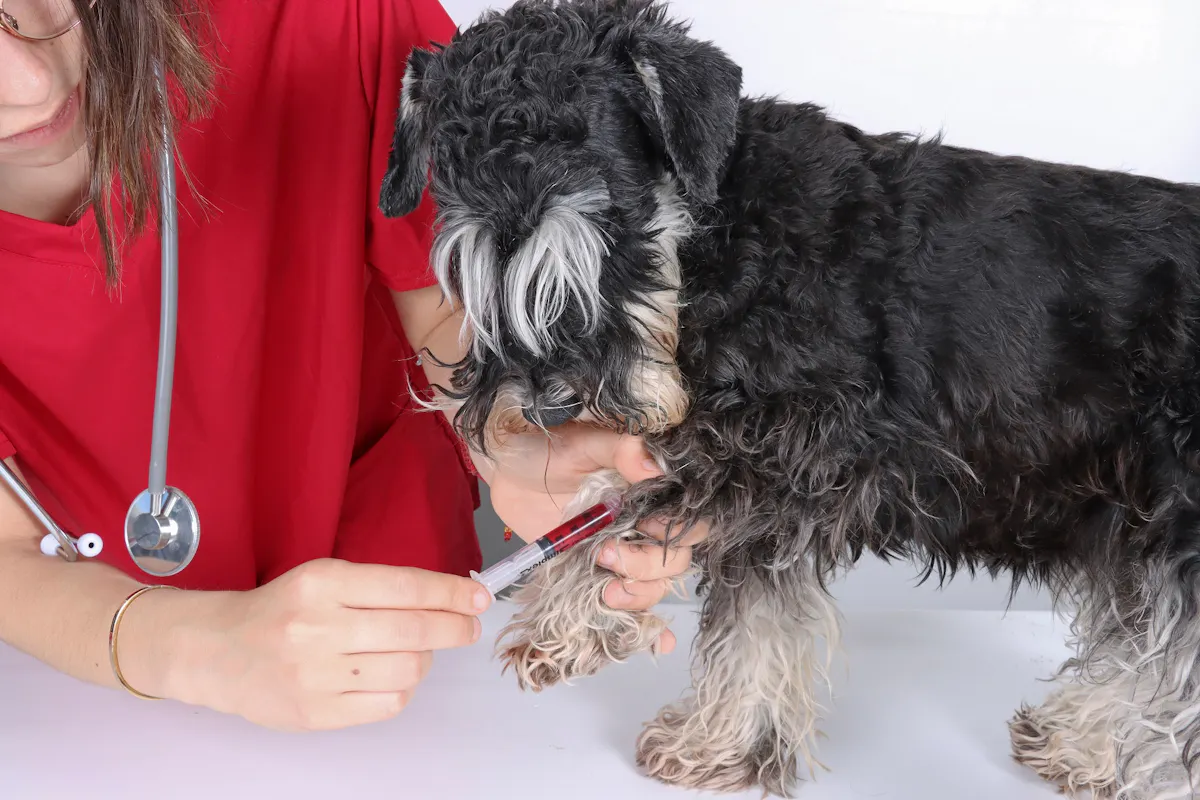
Screening requires a blood draw and can be performed by a licensed veterinarian who will send the sample to an approved lab to be analyzed. Results are then submitted to the canine health registry at the Orthopedic Foundation for Animals (OFA).
Note: Registration of test results is imperative for advancing canine health. Data from health registries support research efforts into canine diseases, establish validated diagnostic criteria, and maintain the reported test results in a reliable public database. Registered data can be used to identify newly emerging conditions, monitor the efficacy of interventions in decreasing the prevalence of conditions, and help breeders make informed breeding decisions.
How do I get my dog screened and registered for Autoimmune Thyroiditis with the OFA?
Step 1
Schedule an appointment with your veterinarian. This can also be part of an annual examination and vaccine appointment. Download, print, and bring the OFA form to your appointment (found here).
Note: Females should not be tested if they are in heat.
Step 2
The veterinarian will take a sample of blood from your dog (if your veterinarian isn’t familiar with OFA Autoimmune Thyroiditis evaluations, you can share the instructions below).
Step 3
You and your veterinarian will complete and sign the application form for OFA.
Note: Note the date of the last round of vaccinations on the OFA application.
Step 4
Once the application form is completed, you will include the associated fee and it will be mailed along with the blood sample. You can send to any of the OFA approved labs.
Note: The veterinarian will be sending the form, fee and blood sample together.
Fee schedule (as of July 2022)
- Dogs 12 months or older: $15 each
- A litter of 3+ dogs submitted together: $30 total
- Kennel Rate (5+ dogs submitted together): $10 each
Note: The registration fee is only to file the results and does not cover the cost of the veterinary exam or blood tests.
Step 5
Once received by OFA, test results will be mailed or faxed to the submitting veterinarian and the OFA. The OFA will send a report to the owner.
Note: It is recommended that dogs be retested annually until the age of 4, then bi-annually after that. Owners are welcome to test dogs under 12 months of age, however these will be considered preliminary evaluations and not be issued a number in the OFA database.
Instructions for your veterinarian:
- The test requires at least 2mL of serum .
- The serum sample must be from freshly collected blood.
- Use a plain “red-top” tube for blood collection. Do not use a serum separator tube with clot additives or any other type of plasma collection tube.
- After collection, place the blood sample in the refrigerator for 60 to 90 minutes to allow clotting.
- Centrifuge, collect the serum, and transfer to a plain plastic or glass tube suitable for shipping.
- Clearly label the sample with the owner’s name, animal’s identification, date of blood collections, and “OFA Thyroid Panel.”
- If the specimen is to be stored for more than 12 hours prior to shipping, frozen storage is recommended.
- Veterinarians must fill out their portion of the application. Note the date of the last round of vaccinations on the OFA application.
- Send the sample, application and fee to the OFA approved laboratory of the owner’s choice (there is usually a fee associated with this, cost will depend on which lab is used) via overnight courier service either chilled or frozen.
undefined - Test results will be mailed or faxed only to the submitting veterinarian and the OFA. The OFA will send a report to the owner.

Join our Good Breeder community
Are you a responsible breeder? We'd love to recognize you. Connect directly with informed buyers, get access to free benefits, and more.