Rabies
All dogs need protection from this deadly, zoonotic disease
Good Dog is on a mission to educate the public, support dog breeders, and promote canine health so we can give our dogs the world they deserve.
Good Dog is on a mission to educate the public, support dog breeders, and promote canine health so we can give our dogs the world they deserve.
Good Dog is on a mission to educate the public, support dog breeders, and promote canine health so we can give our dogs the world they deserve.
Rabies is a zoonotic disease (meaning that it can be transmitted from animals to humans) caused by infection of the rabies virus. Rabies is transmitted through direct contact with the saliva or nervous system tissue of an infected animal - usually through a bite.
Tens of thousands of people die from rabies each year, and almost all of them acquired rabies from a dog bite. The vast majority of cases in humans occur in Africa and Asia. The United States has few cases of rabies observed in dogs, due to the fact that routine rabies vaccination is widespread and in most states, legally required.
Signs of Rabies
Rabies attacks the central nervous system, affecting the brain and spinal cord. It can incubate for several weeks before symptoms appear. Symptoms tend to be neurological in nature, whether in humans or in other animals. In humans, early symptoms include weakness, fever, and headache. Dogs may be restless, irritable or aggressive, and may show signs such as drooling, seizures or paralysis.
Once there are clinical signs, rabies is considered fatal and treatment may provide supportive care but will not prevent death in most cases. Dogs with suspected rabies infections must either be isolated for observation, or euthanized. The only way to definitively diagnose rabies in animals is to test brain tissue for the presence of rabies virus antigens (this requires euthanizing the animal).
Rabies Prevention
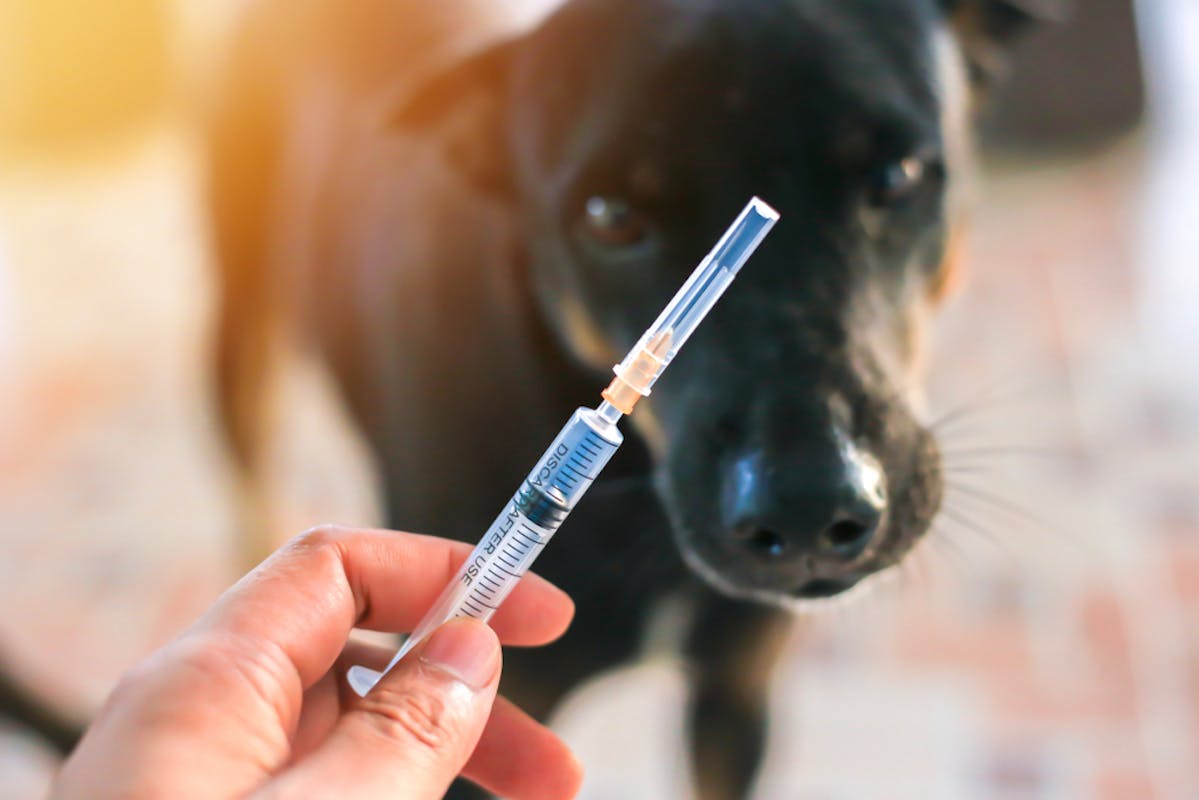
The single most important way to prevent rabies is to vaccinate all dogs. For puppies, the initial dose should be given between 12-16 weeks but not earlier than 12 weeks of age followed by a second dose within 1 year (typically given 1 year later). Thereafter, dogs should be given a booster vaccine every 1-3 years.
Protect your dog from wild animals and unvaccinated dogs where possible. If your dog has been exposed to or bitten by a wild animal or unknown dog seek prompt veterinary care and post-exposure treatment. Seek prompt post-exposure medical treatment if you are bitten by a dog.
Post-exposure Treatment
If your dog is bitten by another dog, be sure to ask that dog’s owner if their dog is up-to-date on their rabies vaccination. Your veterinarian can help you assess the severity of the bite, and whether your dog may need to be quarantined or given a rabies booster.
If you are bitten by a dog or other animal that you suspect might have rabies, you should seek medical care promptly. Worldwide there are fewer than 30 documented cases of humans who have survived a clinical rabies infection.
Your doctor and local health department can help you make a decision regarding treatment which may include post-exposure prophylaxis (PEP). PEP entails injections of immunoglobulin (plasma with antibodies) and multiple doses of the rabies vaccine. Treatment takes about two weeks and can prevent a clinical infection.
References and Further Resources
Dog Immunology Basics with Dr. Trisha Rettig, PhD
Vaccine-Preventable Infections & Building a Vaccine Plan for Your Dogs
Global Alliance for Rabies Control

Join our Good Breeder community
Are you a responsible breeder? We'd love to recognize you. Connect directly with informed buyers, get access to free benefits, and more.