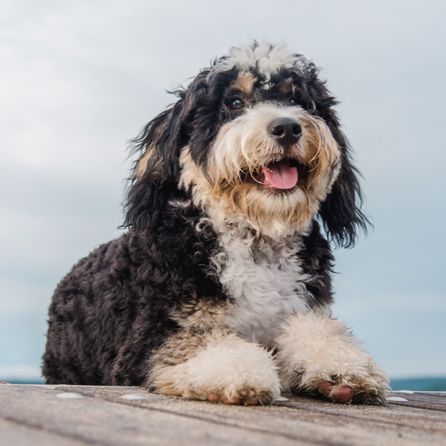
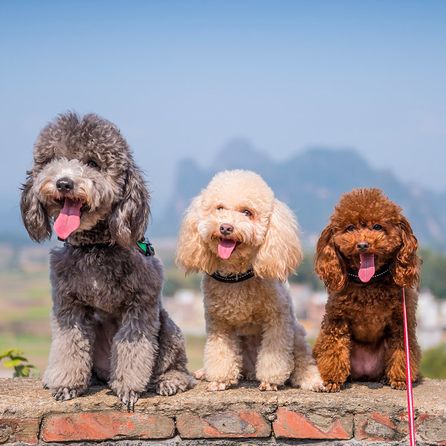
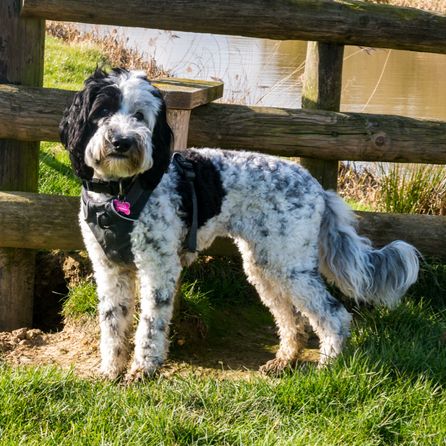
Royal Litter
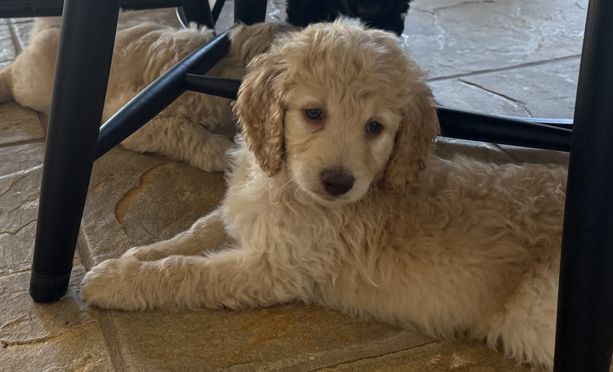

- Peoria, AZ
Meet the breeder
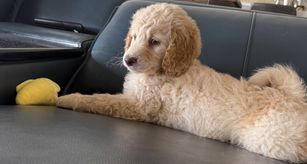
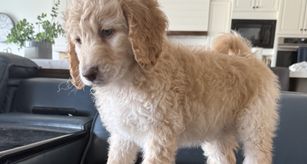
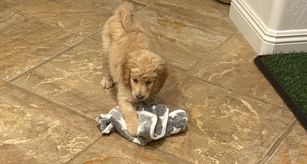
I'm Bethany M., the breeder behind Royal Litter located in Peoria, AZ. All of our puppies are bred, raised, and loved indoors to produce happy, healthy pets for those seeking the best family companion! We bred our blonde female F1b Goldendoodle w/our chocolate male F1b Labradoodle. Mom & Dad are both smart, sweet, active & have no health issues. Dad is 4.5 & Mom is nearly 2 years old. They love outdoor adventures & love to cuddle. They make the perfect family pets!

Q. & A. with Bethany
What are the different breed sizes in your program?
Our puppies are medium size. Sizes will vary depending on the parent dogs.What are the different breed coat colors in your program?
Our puppies include light golden, golden, and cream. Colors will vary depending on the parent dogs.Where do your breeding dogs live?
They live in my home.

Matched dogs
These dogs are already reserved or have gone home.

Lord Cuddles
Went homeMale
Boy 2
Went homeMale
Getting a puppy from Bethany
Bethany has been certified by Good Dog’s screening team for responsible and trusted breeding practices. When you’re ready, reach out to ask about the puppies or anything else on your mind. You’ll get to know each other through messaging, phone, or video and pay securely, all on Good Dog.
Together, you’ll choose the puppy that’s right for you, stay in touch with regular updates, and plan how to bring your new puppy home.
Price
“The price includes dewormer and first round of vaccines. All of our puppies are the same price regardless of color, size, or sex.”
Contract & health guarantee
Bethany may provide a written contract or health guarantee when you purchase a puppy. This helps protect both you and your breeder, ensuring that you both have a clear understanding of the terms of your puppy purchase. If Bethany offers a contract or guarantee, the details will be personalized by them. If you have any questions or want to know more, don't hesitate to reach out to Bethany directly.
You’re protected
on Good Dog
When you pay and communicate on Good Dog, you’re covered by Payment Protection.
What's included
From Good Dog
- Lifetime support from Good Dog’s Care Team
- 10% lifetime discount on Figo pet insurance
- Puppy Training Program & private community
Enrichment & socialization
- Various sounds
- Car rides
- Surface & tactile stimulation
- Socialized with children
- Socialized in new places
- Daily handling
- Socialized with other dogs
- Introduced to people of different ages and appearances
Puppy health practices
- Vet check
- First round of shots and deworming
- Vet records
Extras
- Food & treats
- Blanket with mom & littermates’ scent
- Toys
- Initial potty training
Location & pick-up
You can drive or fly to pick up your puppy from Bethany.
Breeder's location
Meet in Peoria, AZ
5612 miles away
·
Other pick-up locations
Meet at Phoenix Sky Harbor Airport
5623 miles away
·
Flexible meeting point
Bethany can meet at a location that works for both of you
More about Bethany
Bethany has been a member of Good Dog for over 1 year
Bethany was screened for responsible practices and has been a member since 2025.
Bethany’s links

Bethany is a trusted Good Dog breeder
Royal Litter meets or exceeds our community standards in these areas:
- Responsible breeding practices
- Health of breeding dogs and puppies
- Puppy environment and enrichment
- Buyer education and policies
Parent dogs
All breeds

Goldendoodle

Australian Labradoodle

Duchess, mom
Goldendoodle
About Duchess
Duchess is a sweet, playful Goldendoodle. It's been so fun watching her become a mom and take such good care of her pups. She loves physical touch. She's the best at snuggling. She also loves being outdoors and in the sun. She loves hiking, walking, playing with our male Duke and is so good with kids.
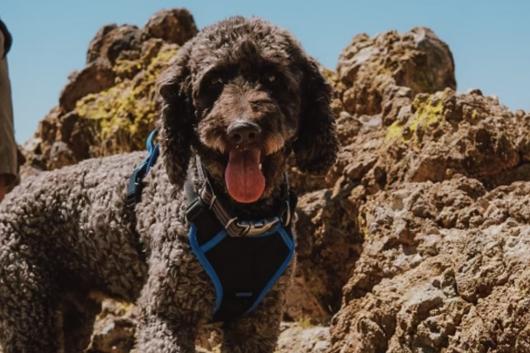
Duke, dad
Australian Labradoodle
About Duke
Duke is a fun, sweet Labradoodle. He loves to snuggle, but also loves being active. Hiking and going for walks brings him so much joy. He's so sweet to our female Duchess. He's a perfect gentleman.
Parent health testing
Good level
Royal Litter reports to performing the health tests below on their breeding dogs. Ask your breeder about the tests performed on the parents of your litter. Learn more about health testing for Double Doodles.
DNA Disease Panel, von Willebrand Disease III (vWD III), Ullrich Congenital Muscular Dystrophy, Trapped Neutrophil Syndrome, Cohen Syndrome (TNS), Thrombopathia, American Eskimo Dog Type, Stargardt Disease, Spongy Degeneration with Cerebellar Ataxia (SDCA2) mutation originally found in Belgian Shepherd Dog, Spinocerebellar Ataxia with Myokymia (KCNJ10), Spinocerebellar Ataxia (SCA), Skeletal Dysplasia (SD2), Shar-Pei Autoinflammatory Disease, Severe Combined Immunodeficiency Disease, Terrier Type, Sensory Neuropathy, Border Collie Type (SN), Renal Cystadenocarcinoma and Nodular Dermatofibrosis (RCND), Recurrent Inflammatory Pulmonary (Collie Type) - Single Assay Test, Pyruvate Kinase Deficiency (PKD), Labrador Retriever Type, Protein-Losing Nephropathy (PLN; NPHS1 Gene Variant), Progressive Retinal Atrophy (PRA), Generalized, Primary Open Angle Glaucoma (ADAMST17 Exon 11), Primary Lens Luxation (PLL), Primary Hyperoxaluria, Primary Ciliary Dyskinesia, Kartagner Syndrome (PCD), Prekallikrein Deficiency, Fletcher Trait, Polycystic Kidney Disease (PKD), Pituitary Dwarfism (LHX3), Persistent Müllerian Duct Syndrome, P2RY12 Receptor Platelet Disorder, Osteogenesis Imperfecta (OI), Golden Retriever Type, Osteochondrodysplasia, Miniature Poodle Type, Oculocutaneous Albinism, Neuronal Ceroid Lipofuscinosis, Tibetan Terrier Type, Neuronal Ceroid Lipofuscinosis 10 (NCL10), American Bulldog Type, Neuronal Ceroid Lipofuscinosis 6 (NCL 6), Neuronal Ceroid Lipofuscinosis 5 (NCL5), Golden Retriever Type, Neuronal Ceroid Lipofuscinosis 1 (NCL1), Dachshund Type, Neuroaxonal Dystrophy NAD, Nemaline Myopathy, American Bulldog Type, Narcolepsy, Dachshund Type, Narcolepsy, Labrador Retriever Type, Myotonia Congenita, Schnauzer Type, Myotonia Congenita, Australian Cattle Dog Type, Musladin-Leuke Syndrome (MLS), Muscular Dystrophy, Ullrich-type; mutation originally found in Landseer, Multiple Drug Sensitivity (MDR1), Mucopolysaccharidosis IIIA (MPS IIIA), New Zealand Huntaway Type, Microphthalmia Syndrome (PES), Methemoglobinemia, Medium-Chain Acyl-CoA Dehydrogenase (MCAD) Deficiency, May-Hegglin Anomaly, Malignant Hyperthermia (MH), Macular Corneal Dystrophy, MCD (CHST6), Lundehund Syndrome, Long QT Syndrome, Limb Girdle Muscular Dystrophy, Boston Terrier, Ligneous Membranitis, LM (PLG), Lethal Acrodermatitis (LAD), Bull Terrier Type, Laryngeal Paralysis (Bull Terrier Type) - Single Assay Test, Lagotto Storage Disease (LSD), L-2-Hydroxyglutaric Aciduria (L2HGA), Staffordshire Bull Terrier Type, Juvenile Myoclonic Epilepsy (JME), Juvenile Laryngeal Paralysis & Polyneuropathy (JLPP), Inherited Myopathy in Great Danes (IMGD), Inflammatory Myopathy (Myositis), Ichthyosis, Golden Retriever Type, Ichthyosis, German Shepherd Type, Hypomyelination, Weimaraner Type, Hypocatalasia, Hereditary Vitamin D-Resistant Rickets (HVDRR), Hereditary Nasal Parakeratosis (HNPK), Hereditary Footpad Hyperkeratosis, Hereditary Ataxia, Cerebellar Ataxia, GM2 Gangliosidosis, Poodle Type, GM1 Gangliosidosis (GLB1), Shiba Inu Type, GM1 Gangliosidosis, Alaskan Husky Type, GM1 Gangliosidosis, Portuguese Water Dog Type, Glycogen Storage Disease Type VII, Phosphofructokinase Deficiency, PFK Deficiency (PFKM Wachtelhund Variant), Glycogen Storage Disease Type IIIA, GSD IIIA, Glycogen Storage Disease Type IA, GSD IA, Globoid Cell Leukodystrophy (GCL), Terrier Type, Glanzmann's Thrombasthenia, Great Pyrenees Type, Fetal-Onset Neonatal Neuroaxonal Dystrophy (MFN1), Fanconi Syndrome, Familial Nephropathy, English Springer Spaniel Type, Factor XI Deficiency, Factor VII Deficiency, Exercise Induced Collapse (EIC), Episodic Falling Syndrome (EFS), Ehlers-Danlos Syndrome, Early Adult Onset Deafness (EAOD), Dystrophic Epidermolysis Bullosa, Dry Eye Curly Coat Syndrome (CKSID), Dilated Cardiomyopathy 2 (DCM2), Dilated Cardiomyopathy 1 (DCM1), Diffuse cystic renal dysplasia and hepatic fibrosis, Dental-skeletal-retinal anomaly (DSRA), Degenerative Myelopathy (DM; SOD1A), Deafness and Vestibular Dysfunction, Doberman Pinscher Type, Day Blindness, Achromatopsia, Cystinuria Type II-A, Australian Cattle Dog Type, Cystinuria Type II-B, Miniature Pinscher Type, Cystinuria Type 1, Newfoundland (PennGen), Craniomandibular Osteopathy (CMO), Copper Toxicosis, Labrador Retriever ATP7A, Congenital Stationary Night Blindness (CSNB), Congenital Myasthenic Syndrome (CMS), Old Danish Pointer Type, Congenital Myasthenic Syndrome (CMS), Labrador Retriever Type, Congenital Myasthenic Syndrome (CMS), Jack Russell Terrier Type, Congenital Macrothrombocytopenia, Congenital Hypothyroidism with Goiter (CHG), Compliment 3 Deficiency (C3), Collie Eye Anomaly (CEA), Cleft Palate (DLX6), Chondrodysplasia/Dwarfism, Centronuclear Myopathy (CNM), Canine Multifocal Retinopathy (cmr3; BEST1 Exon 10 SNP), Bernard-Soulier Syndrome, Cocker Spaniel Type, Bald Thigh Syndrome (IGFBP5), Alexander Disease, Acral Mutilation Syndrome (AMS), 2,8-Dihydroxyadenine (2,8-DHA) Urolithiasis
Genetic testing reduces the chance of passing down a wide variety of hereditary diseases of differing prevalence and severity such as Progressive Retinal Atrophy (an eye disease) and Von Willebrand's Disease (a blood disease).