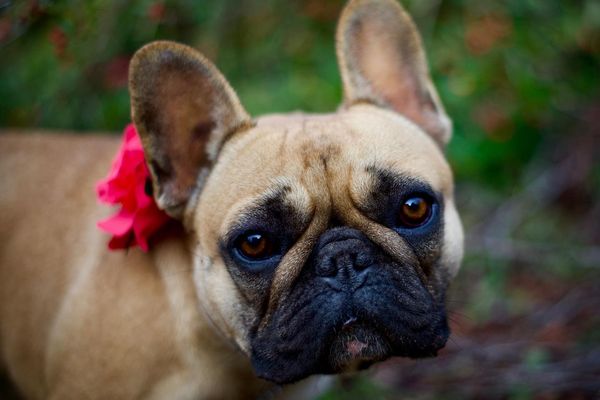
A Fawn Frenchie looks into the camera, there is a pink flower on the collar
Get to know

French Bulldogs

Written by
Caroline Coile, Ph.D.,
 author of 34 dog books.
Written by
Caroline Coile, Ph.D.,
 author of 34 dog books, including the top-selling Barron's Encyclopedia of Dog Breeds.
| | | | |

The Frenchie is the little engine that could—that is, could unseat the reigning top dog in America as the new #1 AKC breed. With good reason: With the face of a gargoyle, ears of a bat, and personality of a clown, it’s impossible not to smile when a Frenchie enters your life.

The Frenchie started its climb to the top several years ago, but in recent years has rocketed in popularity. But some longtime French Bulldog lovers fear that with popularity comes problems, and they caution owners to do their research before buying.
Browse available puppies

Connect with reputable breeders to find the dog of your dreams

At a glance

Very Low Energy

Energy level

1/5

Very Low Maintenance

Grooming

2/5

Small

Size

Clownish, friendly, exuberant

Temperament

10-12 years

Lifespan

Average Trainability

Training

3/5

Low Vocality

Barking

2/5

At a glance

  • Energy level

    Very Low Energy

  • Grooming

    Very Low Maintenance

  • Size

    Small

  • Temperament

    Clownish, friendly, exuberant

  • Lifespan

    10-12 years

  • Training

    Average Trainability

  • Barking

    Low Vocality

Why people love the breed

Appearance

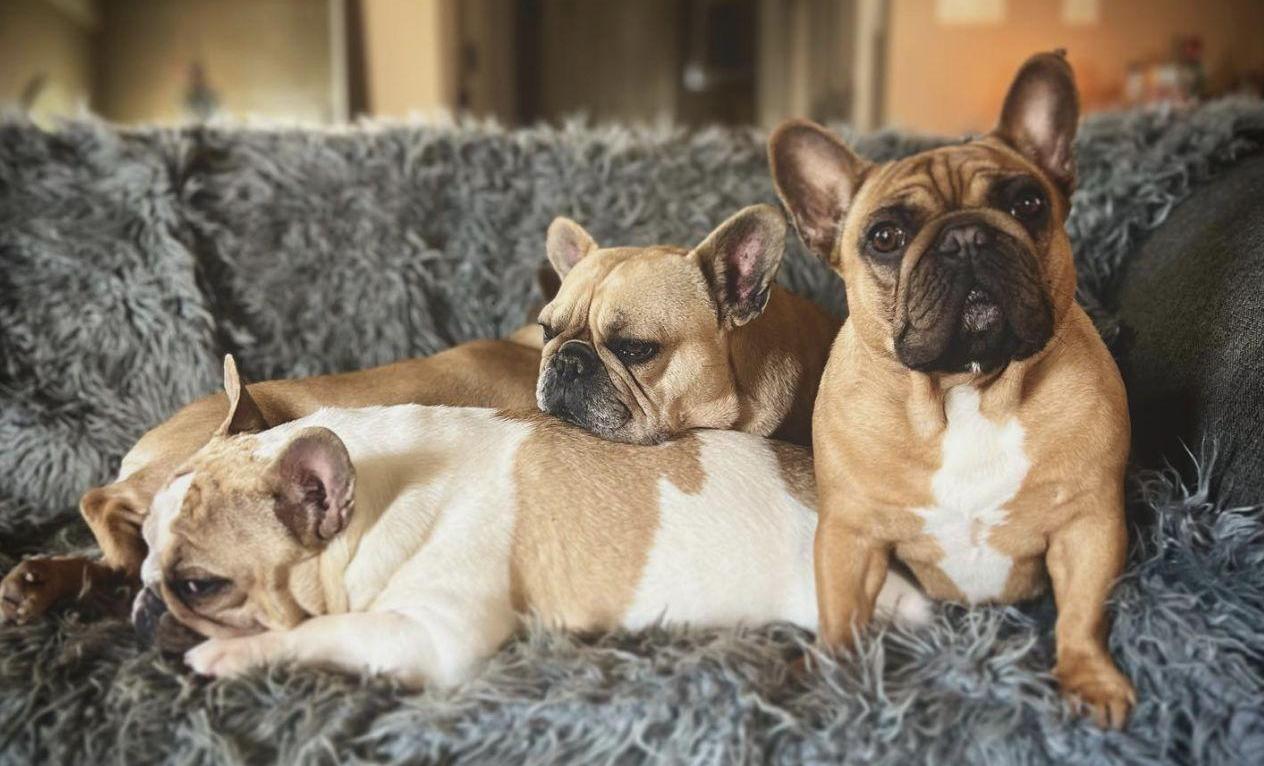
The Frenchie’s appearance is part Bulldog, part gargoyle, part bat, and all Frenchie.
The French Bulldog, as its name implies, is derived from the (English) Bulldog. So it shares many of the traits that helped Bulldogs in the bull baiting arena, such as a wide body, low center of gravity, large bone, muscular physique, wide head and jaws, undershot bite and recessed nose. Of course, the French version is much too small to face any sort of adversary, except for a stuffed toy, but the general look remains. Per breed standard, the body is compact, with a slightly arched “roach” back. It is wide, with wide-stationed legs. The hind legs are slightly longer than the front legs. The tail is naturally very short, never docked, and either straight or screwed (slightly curled or twisted). It is set on and carried low. The head is broad, large, and square, with a very short muzzle and an underbite (bottom incisors in front of top incisors). The eyes are round, and the ears naturally erect (never cropped), large and wide at the base and rounded at the tips (called bat ears). The coat is short, sleek, glossy, and close-lying. Standard colors include white, cream, fawn, or any combinations of the foregoing. Standard markings and patterns include brindle, piebald, black masks, black shadings, and white markings. Non-standard colors may include solid black, black and tan, black and white, white with black, blue, blue fawn, and liver.

Grooming

Frenchie coat care is fairly straightforward. But don’t be misled: Wrinkles and other parts may need daily maintenance.
The short coat needs occasional brushing with a bristle or rubber brush once a week or less. However, other parts need more frequent, perhaps daily, attention. First, any wrinkle provides a moist, dark haven for bacteria to grow and skin infections to flourish. You must clean and dry their wrinkles appropriately. Otherwise, wrinkles can become infected, raw, painful, and smelly. Of a more delicate nature, you may have to wipe your dog’s butt because some Frenchies aren’t able to clean themselves there. As with any dog, check the ears weekly, and clean them if needed or better, consult your veterinarian. Trim the nails as needed, more often in older or inactive dogs. Brush the teeth daily.
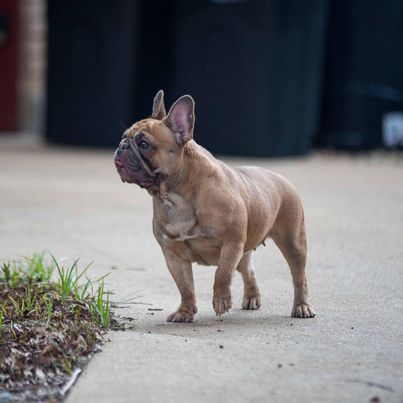
A Blue Fawn Frenchie stands outside on a sidewalk
Img:

Souls of Faith Frenchies

Breed temperament and characteristics

Exuberant, rollicking, and merry—it’s as though the French Bulldog breed was put on Earth just to entertain themselves and their people.
Exuberant, rollicking, and merry—it’s as though the French Bulldog breed was put on Earth just to entertain themselves and their people. The Frenchie is known for its fun-loving personality. They seem endlessly able to find a humorous side to everything, and even through their natural scowl, their laughter and smile shines through, infecting everyone around. They do everything with full gusto, whether playing or snoozing, and that’s part of their allure. As much fun as they can be when awake, they don’t mind taking life easy and lolling about. Their Bulldog heritage does mean they can be very stubborn, and will not hesitate to dig in if you try to force them into compliance. But let them think it’s their idea, and you'll both soon be on the same page when it comes to training and manners. They can be excitement barkers, but they tend to quiet quickly. They tend to get along with everyone—lovers, not fighters. They make great pets for everyone in the household, from small children to elderly adults. Well, almost everyone: If your dream is to have a marathon companion, probably not the dog for you. They don’t often make great service dogs because they’re too small to do many tasks expected of them, and may not be at their best in hot weather. And while they’re willing to please you, they still are more willing to please themselves.

Exercise

Frenchies like short bouts of play throughout the day rather than one long session. They’re generally happy to frisk around in circles, play some games of fetch, and then crash for a rest until the next play session.
Frenchies were not built to be tireless runners, or even walkers. They love getting out to explore the neighborhood, but they can also get enough exercise in a small backyard and in some cases, indoors. In fact, in hot weather, it’s safer to exercise indoors or in the early morning. Frenchies easily overheat, especially in combination with hot weather and exercise. This can have fatal consequences, so all Frenchie owners must safeguard their dogs from this and get them rested and cool if any signs-–such as excessive panting, drooling, or rasping breathing sounds—occur. In hotter weather, take them out in the early morning if cool enough, as they still need to walk and explore the outdoors, even if they're housebound the rest of the day. They enjoy wading, but caution: Frenchies float about as well as your average cinder block. You must safeguard them from drowning. Keep them away from water over their head, and when near it, have them wear a life vest.
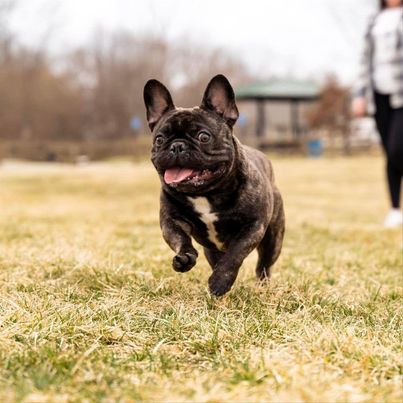
Brindle Frenchie running in a field
Img:

Divine Crown French Bulldogs

Training

French Bulldogs are Bulldogs at heart—with all the famous Bulldog tenacity and stubbornness as their ancestors.
Frenchies were bred as companions, not servants. They didn’t have to herd sheep following cues from a distant handler, or find and retrieve downed birds. Their Bulldog ancestors had to grab a bull and hold on tight, no matter what happened, and even though this has been watered down through generations, Frenchies can still be famously stubborn. They do enjoy being bribed though, and will do almost anything for a treat. And they are clever—but sometimes clever enough that if you laugh at one of their antics they’ll continue doing it rather than what you want them to do. They are basically willing to please and many have reached upper levels of competitive obedience, although they are not the hop-to-it obedience competitors seen in the top breeds. They know how to do just enough to get by. They particularly enjoy learning tricks, and can be very good at performing them. Many enjoy agility, but they don’t do well being repetitively drilled through the exercises. They can be suspicious of strangers, so early socialization is important. Given that, most are very accepting of new people.

Diet and nutrition

It’s very important that your Frenchie does not become overweight. Unfortunately, they have that tendency.

Some Frechies can lead overly sedentary lives. It is critical that their owners feed and exercise them appropriately as obesity makes them more prone to medical issues and breathing difficulties. Their unique conformation makes it more difficult to appreciate when they are overweight. They should be trim and muscular, with an indication from the side and top of a smaller waist. Ask your veterinarian's opinion if you worry your Frenchie may be overweight. Remember that all dogs tend to put on more weight as they age, especially if neutered or spayed. Other than that, Frenchies don’t usually require any special diet. Feed them as you would any puppy, but again, do not overfeed them. Discuss any special diet concerns with your veterinarian. Your Frenchie’s optimal diet may change with age. Some health problems require special diets that may only be available through prescription.
5 Frenchie puppies in various shades of fawn sit and pose on a lawn chair
Img:

Ford Frenchies

Health issues

Frenchies have one drawback: they have health issues.

Lifespan: 10 to 12 years.

Patellar luxation

This occurs when the kneecap slips out of the groove in which it should be nested, causes lameness and arthritic changes. It occurs mostly in small breed dogs. Screening involves an examination and grading of the degree of luxation present registered with OFA.

Intervertebral disc disease (IVDD)

A degenerative condition that can impact your dog's spinal cord and cause painful mobility issues (even paralysis).

Brachycephalic obstructive airway syndrome (BOAS)

This occurs in short-faced breeds, including Frenchies. Some Frenchies have one or more of the components of BOAS, which can cause breathing difficulties These components are stenotic nares (pinched nostrils), elongated soft palate, and other anatomic defects associated with the respiratory tract. Dogs that have difficulty breathing, that require surgical therapy, or that have a hypoplastic trachea should not be considered for breeding.

Other health issues

Hip dysplasia, skin and ocular issues.

Learn more about health issues that may impact French Bulldogs

History

A Tale of Eighteenth-Century Charm, Parisian Glamour, and a Triumphant Return to the Spotlight.
In the eighteenth century, Bulldogs were fairly popular in England. In Nottingham, many of the Bulldogs were very small, sometimes called Toy Bulldogs. The mainstream Bulldog breeders didn’t like them. When these Toy Bulldog breeders moved to France, they kept breeding them, and even accentuated their bat-ears, which also annoyed the traditional Bulldog breeders. The bat-eared little Bulldogs soon became all the rage in Paris, and soon became the darlings of the French upper class. Visiting Americans brought them back to the United States. They debuted in America with one of the most elegant dog shows ever held in that country, attracting the attention of the very wealthy. Soon they were one of the most popular dog breeds to show in America. They remained popular until World War II, then declined until they began to be noticed again in the 1990s. They gradually increased in popularity until they became the top AKC breed in 2022.
About the author

Canine specialist, Caroline Coile, Ph.D., is the author of 34 dog books, including the top-selling Barron's Encyclopedia of Dog Breeds. She’s written thousands of magazine and web articles about dogs. She specializes in canine science, health, breeds and competitions. Caroline has won 20 national dog-writing awards, and was a 2015 Inductee into the Dog Writers Association of America Hall of Fame.

Breed Scorecard

Characteristics and temperament
  • Affectionate with family

    4

  • Watchdog level

    3

  • Playfulness

    4

  • Adaptability

    4

  • Social needs

    5

  • Temperament

    Clownish, friendly, exuberant

  • Intelligence

    3

  • Good with other dogs

    4

  • Good with cats or other pets

    5

  • Friendly with strangers

    3

  • Good as a service dog

    1

  • Good for apartments

    5

  • Barking level

    2

Appearance
  • Height

    11-13"

  • Size

    Small

  • Colors

    Brindle, Cream, Fawn, White, Black (non-standard), Black and tan (non-standard), Black and white (non-standard), White and black (non-standard), Fawn and white, Liver (non-standard), Tricolors (non-standard), Brindle and white, Blue (non-standard), Blue fawn (non-standard), Fawn brindle and white, White and brindle, White and fawn

  • Coat texture

    Smooth

  • Coat length

    Short, close-lying

Training
  • Trainability

    3

Exercise
  • Exercise needs

    1

  • Exercise time

    Half hour to 1 hour daily

  • Mental exercise needs

    3

  • Favorite activities

    Tricks, obedience, fetching

Grooming
  • Grooming needs

    2

  • Brushing frequency

    Monthly (but any deep wrinkles should be cleaned daily)

  • Needs professional grooming?

    No

  • Drooling level

    3

Health issues
  • Patellar luxation

  • Intervertebral disc disease (IVDD)

  • Brachycephalic obstructive airway syndrome (BOAS)

  • Other health issues

Other
  • Bred for

    Companionship

  • Country of origin

    France

  • Popularity level

    5

FAQs

  • On Good Dog, you can search for French Bulldog puppies or dogs in rescues and shelters. Adopting a French Bulldog from a shelter or rescue is generally less expensive than buying a puppy from a breeder with ethical practices. Across the United States, there are dedicated rescues that specialize in specific breeds and may even help transport a French Bulldog dog to you from another part of the country. Although it can be more cost-effective, adopting the exact breed you're looking for is typically more difficult than working with a responsible breeder. Learn more about adopting a dog from a shelter or rescue.

  • Prices for French Bulldog puppies for sale vary by breeder and individual puppy. On Good Dog today, French Bulldog puppies are typically around $4,500. Because all breeding programs are different, you may find dogs for sale outside that price range.

  • Frenchies are excellent family dogs. They are fun-loving and gentle with kids, snuggly and comforting with the elderly, and adventurous enough for the average adult who may not have hours to devote to dog exercise.

  • Frenchies are fairly easy to keep, but do require special precautions in warmer weather. This means living inside in air conditioning, and making sure your vehicle has air conditioning. In addition, if you're traveling in hot weather, you should have a way to keep your Frenchie cool in case you ever break down beside the road. Beside avoiding overheating, the main challenge is in keeping the wrinkles dry and clean––and sometimes, trying to sleep if your Frechie snores!

  • Frenchies are expensive, partly because they are expensive to breed. Most breedings are done by artificial insemination, and delivered by planned Cesarean section. Litters are fairly small, and require constant supervision during the first two weeks so that puppies don’t get laid on or aspirate. Frenchies also tend to be expensive due to their popularity.
Caroline Coile, Ph.D.

Caroline Coile specializes in canine science, health, breeds and competitions. Caroline has won 20 national dog-writing awards, and was a 2015 Inductee into the Dog Writers Association of America Hall of Fame. She’s written thousands of magazine and web articles about dogs in addition to 34 dog books.

Content on Good Dog is generated, fact-checked, and evaluated by qualified writers and veterinarians.

Caroline Coile, Ph.D.

Caroline Coile specializes in canine science, health, breeds and competitions. Caroline has won 20 national dog-writing awards, and was a 2015 Inductee into the Dog Writers Association of America Hall of Fame. She’s written thousands of magazine and web articles about dogs in addition to 34 dog books.

Content on Good Dog is generated, fact-checked, and evaluated by qualified writers and veterinarians.