Get to know
Pembroke Welsh Corgis

Written by author of 34 dog books.
Caroline Coile, Ph.D.,
Written by author of 34 dog books, including the top-selling Barron's Encyclopedia of Dog Breeds.
Caroline Coile, Ph.D.,
Pembroke Welsh Corgis will make your home their castle, and make everyone feel welcome.
There’s a reason Pembrokes were The Queen’s choice for decades. Smart, active and eager to please, they come from working class roots but adjust to any castle seamlessly. They love to greet their admirers, treating all as equals, and they welcome new friends. Give them a job, and they’ll do their best to finish it. And they do it all with a perpetual smile! To be a true Corgi lover though, you may have to enjoy the sound of happy barking.
Browse available puppies
Connect with reputable breeders to find the dog of your dreams
At a glance
Moderate Energy
Energy level
3/5
Low Maintenance
Grooming
3/5
Medium
Size
Active, friendly, busy
Temperament
12-13 years
Lifespan
Quick to Learn
Training
4/5
High Vocality
Barking
5/5
At a glance
Energy level
Moderate Energy
Grooming
Low Maintenance
Size
Medium
Temperament
Active, friendly, busy
Lifespan
12-13 years
Training
Quick to Learn
Barking
High Vocality
Why people love the breed
Having a Corgi is like having Prince Charming (or Princess Diana) in your home. With a big butt.
If one thing defines a Pembroke it’s their perpetual smile—along with a cheery outlook to match. They are eager to do just about anything you suggest, whether it’s braving the elements to take out the trash—or snuggle beside you to watch TV. They love to play with kids–although they can get carried away and nip at their heels as though they were cattle… And if you love a dog that will bark for you, they’ve got you covered!
Pembroke owners bring up one more odd thing they just love about this breed: their butts! No other breed can match the swagger of a Corgi butt as they’re walking away from you! If you like big butts—this is your breed!
Appearance
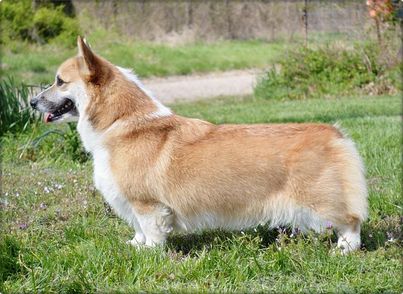
Short on leg, long on body—and with a face like a fox!
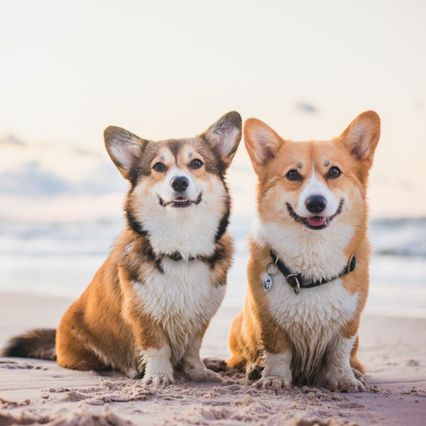
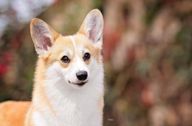
Corgis are technically achondroplastic Resulting in their short legs. This gives them a saucy appearance with quick agile movement. Their expression is foxy, with the naturally erect ears, oval eyes and medium-length muzzle resembling that of a fox.
Some Corgis are born with a naturally short or bob-tail, but they can also be born with long tails (that are usually docked in countries where docking is legal).
The coat is weather-resistant, of short to medium length and with a very thick insulating undercoat, providing protection against the cold damp Welsh countryside. They can be black & tan, red, sable or fawn, with or without white markings. Most are red with white markings.
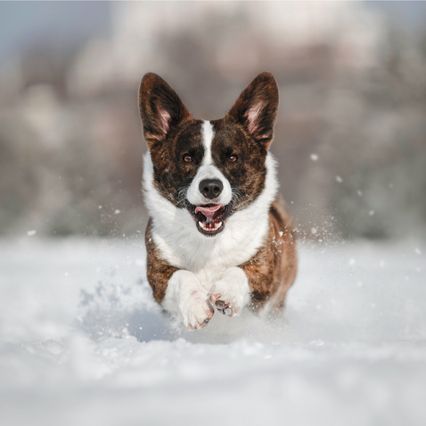
Compared to Cardigan Welsh Corgis (often called “the ones with the tail”), Pembrokes are smaller, have lighter bones and smaller pointier ears. They may have a bobtail or docked tail, have straighter front legs viewed from the front, and don't come in the merle or brindle patterns.
Grooming
Unless it’s shedding season, brushing once a week will do.
Use a comb, pin brush or bristle brush on the coat once a week. They do shed a lot during shedding season twice yearly so you’ll need to brush more often then. Bathe about once every month or two.
The coat doesn’t tend to tangle or mat
Trim the nails as needed, more often in older or sedentary dogs. And brush their teeth every day for the best smile!
Img:
Wind Dial Farm
Breed temperament and characteristics
Corgis are quick to learn and quick to act!
Corgis were bred as cattle drovers, meaning they worked behind cattle to move them forward. They did this by jumping in and out and nipping at their heels (while avoiding their kicking hooves), and adding some barking for emphasis to get them going. They bring these traits with them into your home. This means they’re very energetic and eager to get out and do something. They can nip and bark to excess when excited, because they would love to get you—or your kids and their friends—herded in the right direction.
They learn fast and would prefer to do your bidding than to test your limits. They were bred as working dogs to drive cattle tirelessly, so they may still want to play or work when you’re ready to turn in. Like all dogs bred to herd, they tend to be very intelligent and good at following directions.
They get along well with your friends, your pets, and other dogs whether at home or in the neighborhood. They are a good candidate for dog parks, but they can chase other dogs to excess.
Exercise
This is not a breed for lazy owners!
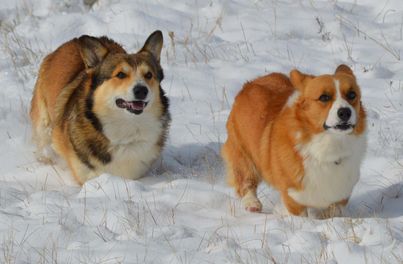
Bred to tirelessly drive cattle by jumping in and out under their hooves, it’s no wonder Pembrokes are quick and energetic. Their exercise needs won’t be met with a stroll around the block. They need at least an hour, more likely two, of a mix of running, playing and walking. Their dream outing is a chance to herd cattle or even sheep or ducks; some owners even arrange for herding lessons at nearby herding dog facilities. Second choices are agility lessons. Hiking is another favorite activity.
Img:
Smiling J Ranch Corgis
Training
Pembroke Welsh Corgis are obedience class stars—as long as they’re moving!
To be successful herding dogs, Corgis had to pay attention to what their handler wanted them to do. It doesn’t do any good to get a bunch of cattle moving if they’re headed in the wrong direction! So Corgis that just bit at heels randomly weren’t bred from; those that heeded the handler’s directions became your Corgi’s ancestors. This means that today’s Corgis tend to be attentive and eager to follow directions. They can be overly-eager and impatient at times, so walking or staying calmly—and quietly-–can sometimes be a challenge! They learn quickly so do best if they are continuously challenged rather than drilled with things they already know. Always use positive reinforcement, which involves rewarding the behaviors you’d like to see more of in your dog.
Diet and nutrition
They’re not picky–unless you let them be!
Very young puppies will require feeding three to four times a day until ~4 months of age, then one to two times a day thereafter. For puppies, feed them as directed by your veterinarian, but if they start to become chubby as older puppies you may have to slightly restrict their intake.
The Corgi is normally not a picky eater and unless medically required they have no special dietary considerations. Of course like any smart dog they will take advantage if you give in to attempts to be picky.
You should be able to feel the ribs and hips without much probing. Your Corgi should have a slightly hourglass shape viewed from the top, with a slightly tucked up abdomen. Because of potential back problems, it’s especially important to prevent obesity. Many adult and especially older, neutered Corgis are overweight and require a restricted diet.
Img:
BriarFox Welsh Corgis
Health issues
They’re generally very healthy—but they can have back problems.
Lifespan: 12 to 13 years.
Intervertebral Disc Disease
A degenerative condition that can impact your dog's spinal cord and cause painful mobility issues (even paralysis), is more common in dwarf breeds, including Corgis.
Hip Dysplasia
A complex condition involves both genetic and environmental factors and arises when the head of the femur doesn’t fit in the pelvic socket, causing arthritis and lameness. No genetic test is available to date, therefore, the recommended screening test is x-rays.
Von Willebrand Disease (vWD)
An inherited bleeding disorder caused by a lack of and/or deficiency in von Willebrand factor protein, which is needed to help platelets stick together to form clots. This disease occurs more commonly in Corgis.
Degenerative Myelopathy (DM)
A non-painful, progressive neurological disease. Affected dogs will begin to show signs of weakness of the hind limbs that will progress to complete paralysis.
History
Royal herders with a rich history and charming personalities.
They are in the AKC Herding group.
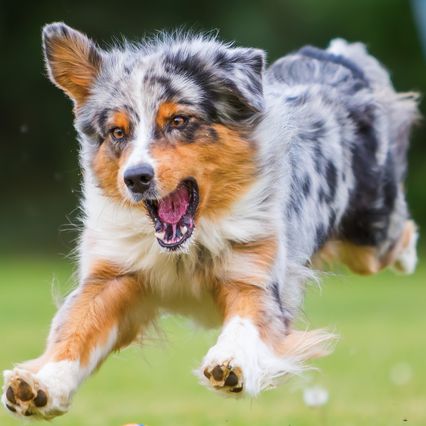
DNA studies have shown that the Pembroke’s closest relative is, not surprisingly, the Cardigan Welsh Corgi, followed by the more distantly related Australian Shepherd. They may have been developed as a cattle drover as early as the 10th century AD. Being short-legged helped them duck in and out to nip at the cow’s heels while avoiding their kicks—which were usually aimed too high.
The name Corgi probably comes from the Welsh “cor,” meaning dwarf, and “ci,” meaning dog.
Queen Elizabeth II owned Corgis since 1933, when her father gave her one. Her influence popularized the breed in Britain and around the world.
The AKC recognized them as a separate breed, distinct from Cardigan Welsh Corgis, in 1934.
Owners include Stephen King, Dirk Bogarde, Michel Houellebecq, Diane Keaton, Norman Rockwell, Gary Cooper, Kendra Wilkinson and Kiefer Sutherland.
A Corgi named Rufus was the original mascot of Amazon.


About the author

Canine specialist, Caroline Coile, Ph.D., is the author of 34 dog books, including the top-selling Barron's Encyclopedia of Dog Breeds. She’s written thousands of magazine and web articles about dogs. She specializes in canine science, health, breeds and competitions. Caroline has won 20 national dog-writing awards, and was a 2015 Inductee into the Dog Writers Association of America Hall of Fame.
Breed Scorecard
Characteristics and temperament
Affectionate with family
4
Watchdog level
4
Playfulness
3
Adaptability
4
Social needs
4
Temperament
Active, friendly, busy, smart, eager to please, easily trained
Intelligence
5
Good with other dogs
5
Good with cats or other pets
5
Friendly with strangers
5
Good as a service dog
3
Good for apartments
2
Barking level
5
Appearance
Height
10-12"
Size
Medium
Colors
White and fawn (non-standard), Fawn, Red, Sable, Black and tan, Blue (non-standard), White and black (non-standard), White and red (non-standard)
Coat texture
Coarse overcoat, soft undercoat
Coat length
Short, straight, stand-off
Training
Trainability
4
Exercise
Exercise needs
3
Exercise time
1 to 2 hours daily
Mental exercise needs
4
Favorite activities
Herding, obedience, agility, hiking
Grooming
Grooming needs
3
Brushing frequency
Weekly
Needs professional grooming?
No
Drooling level
1
Health issues
Intervertebral Disc Disease
Hip Dysplasia
Von Willebrand Disease (vWD)
Degenerative Myelopathy (DM)
Other
Bred for
Driving cattle
Country of origin
Wales
Popularity level
4
FAQs
On Good Dog, you can search for Pembroke Welsh Corgi puppies or dogs in rescues and shelters. Adopting a Pembroke Welsh Corgi from a shelter or rescue is generally less expensive than buying a puppy from a breeder with ethical practices. Across the United States, there are dedicated rescues that specialize in specific breeds and may even help transport a Pembroke Welsh Corgi dog to you from another part of the country. Although it can be more cost-effective, adopting the exact breed you're looking for is typically more difficult than working with a responsible breeder. Learn more about adopting a dog from a shelter or rescue.
The typical price for Pembroke Welsh Corgi puppies for sale may vary based on the breeder and individual puppy. On average, the price of Pembroke Welsh Corgi puppies from a breeder is $2,050.
Yes! They are active, fun-loving, smart and easily trained! The only thing they’re not good at is just sitting around unless they've gotten enough exercise that day
Yes and no. Their grooming is low maintenance, and they’re not picky about what they eat. But they do demand a lot of attention and both mental and physical exercise–one to two hours a day!
They are excellent family dogs! They like to play with children, hike with adults and sit with the elderly. They are not inclined to bite, but can be good watchdogs.