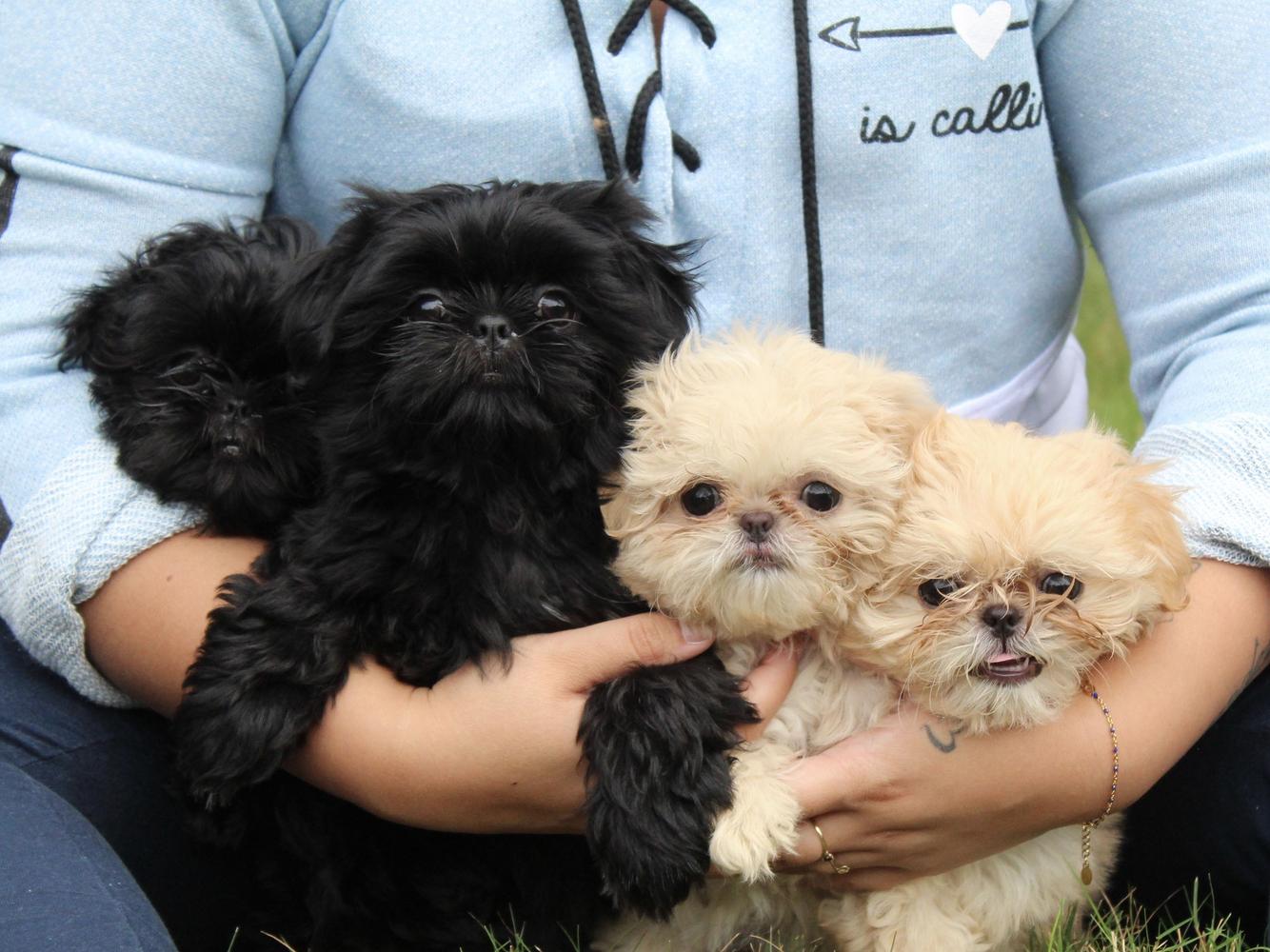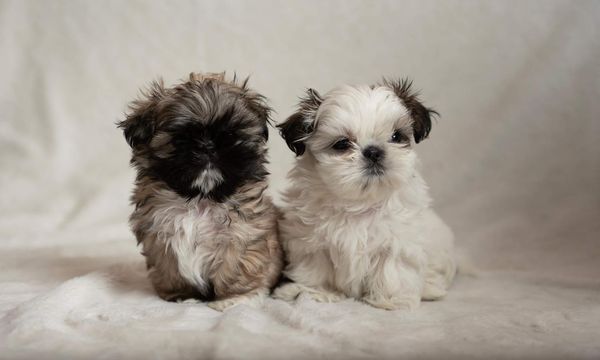
2 Shih Tzu puppies sitting for a photoshoot
Get to know

Shih Tzus

Written by
Caroline Coile, Ph.D.,
 author of 34 dog books.
Written by
Caroline Coile, Ph.D.,
 author of 34 dog books, including the top-selling Barron's Encyclopedia of Dog Breeds.
| | | | |

Shih Tzus are an ancient breed that cast their spell on people over a thousand years ago—and they’re still doing it today. A favorite of everyone from royalty to celebrities to just regular folk, Shih Tzus make themselves at home wherever their loved ones are.

Both glamorous and cute, the diminutive Shih Tzu commands attention wherever it goes. They’re playful and perky, tiny but tough companions for people of all ages. Don’t be misled by that baby-doll face; Shih Tzus are surprisingly impish and ready to make their own adventure. They’ve been among America’s favorite breeds for years, and with typical Shih Tzu stubbornness, have no intention of stepping down.
Browse available puppies

Connect with reputable breeders to find the dog of your dreams

At a glance

Low Energy

Energy level

2/5

Regular Maintenance

Grooming

4/5

Extra small

Size

Playful, gentle, affectionate

Temperament

10-18 years

Lifespan

Average Trainability

Training

3/5

Vocal

Barking

4/5

At a glance

  • Energy level

    Low Energy

  • Grooming

    Regular Maintenance

  • Size

    Extra small

  • Temperament

    Playful, gentle, affectionate

  • Lifespan

    10-18 years

  • Training

    Average Trainability

  • Barking

    Vocal

Why people love the breed

People love Shih Tzus because Shih Tzus are cute! It’s hard to resist that baby-doll face, especially when those big eyes are pleading to hop in your lap, play a game, or take a tour to visit all their admirers. Shih Tzus are perpetually happy dogs whose good mood is contagious.
When a breed has been developed since ancient times just to make people happy, they’re very good at it! That’s the deal with the Shih Tzu, one of the earliest breeds developed as a cozy companion and lapdog. It’s a breed of contrasts: in personality it can be both loving lapdog and stubborn mischief-maker; in appearance it can be groomed to be either a perky cutie-pie or a longhaired glamor model. Put it all together in a handy-sized dog that can fit in your lap or trot by your side, and you can see why the Shih Tzu is one of the most popular breeds in the world.

Appearance

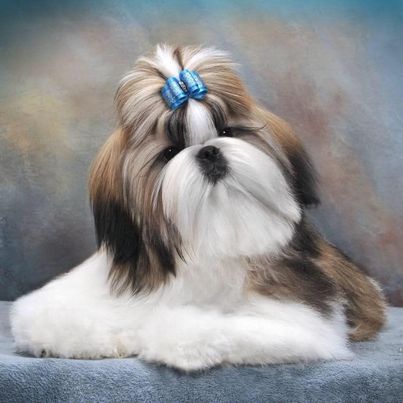
The Shih-Tzu’s appearance can be both enchanting and endearing. In the show ring, where their long tresses are allowed to grow out, they are among the most enchanting of all breeds. At home, where their hair is more often cut in a perky bob, they are among the most endearing of all creatures.
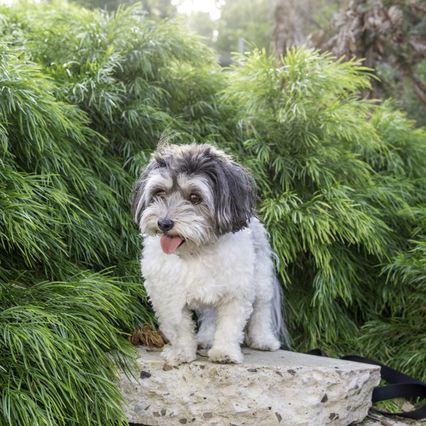
Watch any dog show, and you can’t help but be mesmerized by the Shih Tzu’s trailing locks of hair, giving the illusion of a parade float moving across the floor without any feet touching the ground, their coat flowing behind. Even their face is covered with long hair, with the top knot gathered in a spectacular bouffant do-up. The whole appearance is one of glamor, with a certain air of arrogance. But the Shih Tzu at home may seem like a totally different dog. Most often, they are clipped to a moderate length, leaving just enough around the face to look like a flower peering up at you. While the show dog looks like a movie star gliding along the red carpet, the at-home dog looks like a living doll making themself at home in your lap. The Shih Tzu is a very small dog that fits in almost anyone’s lap. They can even be carried around town in large doggy purses—although at 9 to 16 pounds, your arm may get a work-out. The expression, whether the coat is clipped short or left long, is warm, sweet and wide-eyed, giving the feeling of trust and friendliness. The ears hang. They have a short muzzle, and the bottom teeth protrude in front of the upper teeth in a slight undershot bite. This short face gives it a perpetual puppy look. The tail is carried over the back in a perky manner. The body is compact, but slightly longer than tall. The long, thick straight coat comes in a wide variety of colors, many mixed with white.

Grooming

The Shih Tzu may be a natural beauty, but that beauty needs a lot of grooming to shine. That means daily combing, even if you clip the coat. And if you do clip the coat, it means professional grooming every two months or so.
Whether you plan to let your Shih Tzu’s coat grow out, or clip it short, your dog needs to be trained from an early age to enjoy grooming. You can use a grooming table, complete with a grooming arm, or simply train your dog to lie in your lap as you brush and comb. Don’t overdo it at first, and make sure you don’t get in a situation where you are pulling on tangles and mats. Of course, use plenty of treats so your puppy will want to do it again! If your goal is to have the long tresses of a show dog, you’ll need to use a pin brush and comb every day or two to remove tangles, and also be sure to remove any twigs or leaves from the coat immediately, as these form the central points for mats. A clean coat mats and tangles less, so frequent bathing, with a coat conditioner added while drying, will help. Most people prefer the easier maintenance of a clipped coat. You can learn to clip the coat yourself, but the results will be much better if you take your Shih Tzu to a professional groomer every six weeks or so. You’ll still need to comb out any tangles every few days, but it will be much easier. Shedding is not a big problem no matter how you keep the coat. Trim the nails as needed, check the ears (don't clean them unless they’re dirty) weekly and brush the teeth daily to prevent periodontal disease.
Show groomed Shih Tzu with blue bow
Img:

Valstons Shih Tzu

Breed temperament and characteristics

The Shih Tzu is a vivacious and fun-loving friend that makes an ideal companion for people of all ages. Gentle, playful, and openly affectionate, they love cuddling, playing—and getting into mischief.
The Shih Tzu is known for their happy temperament. They are a well-rounded breed that makes a great cuddle-companion, playmate and partner in neighborhood walks and downtown shopping adventures. They enjoy lounging in your lap of luxury, or claiming your pillow as theirs, but don’t expect them to spend all their time taking it easy. In fact, they are quite energtic and playful. They will do their best to entice you off the couch or out of bed so you can play tug, fetch or keep-away with them. They are gentle with the elderly and with children, but because of their small size, very young children should be supervised around them lest the dog get hurt. They have the temperament to be a service dog, but may be too small for many service dog jobs.

Exercise

This breed is full of energy and full of life, so don’t expect it to just sit happily in your lap and never run amok. Although energetic, the Shih Tzu’s exercise needs can be met in a small area.
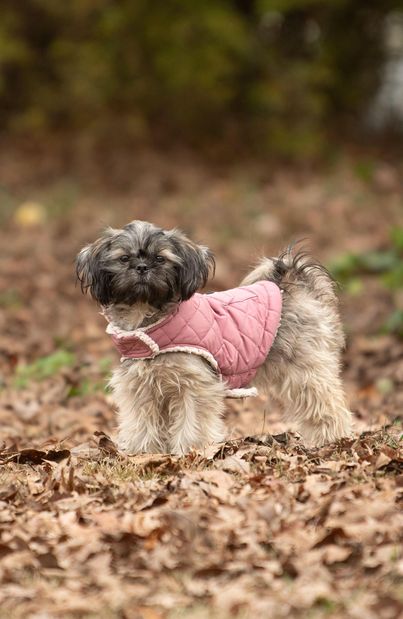
Especially when young, the Shih Tzu needs lots of exercise time—just not much space. These little dogs can tire themselves out running around an apartment, even playing games of fetch and find amidst the furniture. They enjoy games of tug, but you do have to let them win! Just because they can exercise indoors, doesn't mean they always should. Like all dogs, they relish the chance to go outside, roll in the grass, sniff the sidewalk, and meet the neighbors. Although you can carry a Shih Tzu around, in safe areas please let them walk. They need to be a dog! The Shih Tzu is generally a well-behaved dog park attendee, but only if the park has a separate section for very small dogs, as they could be too easily injured by larger dogs. In fact, wherever you walk your Shih Tzu, you must be vigilant. Carry a dog purse to place them in or pick them up if needed. Safety is important for this breed when exercising in public areas.
Shih tzu stands in fallen leaves with a pink jacket on
Img:

Dream and Arrow's

Training

Shih Tzus can be trained to the highest levels of obedience—but only if they want to. They are quick to learn, but equally quick to refuse to do something they don’t feel like doing. In fact, many call them stubborn.
Shih Tzus are eager to learn. But only as long as things are going their way. They respond well to reward-based training, but will dig in their heels if you try to coerce them into doing something. Think of training a Shih Tzu as less like giving orders to an employee and more like working out a business arrangement with a partner. Expect to make compromises. They especially like learning tricks, and are able to perform a wide variety of circus-like feats. Several have been trained to high levels of dog sports such as obedience and agility, although they are not generally regarded as top prospects in those competitions.

Diet and nutrition

Shih Tzus generally require no special diet, but puppies must avoid hypoglycemia, and adults may do better with smaller sized bites. Also beware that a small snack for a big dog is a huge snack for a tiny dog. It’s very easy for the snacks to result in an overweight dog.
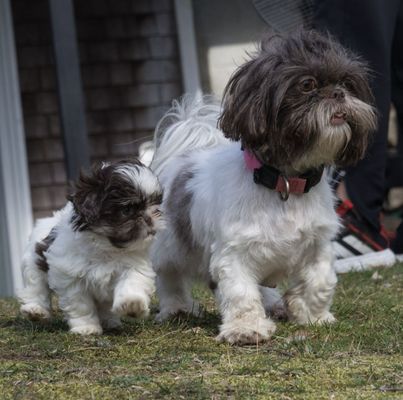
A high-quality commercial dog food formulated for small dogs will usually be fine. Small dogs with flat faces are more likely to have dental problems, so you may need to keep that in mind when selecting a diet. Tiny young puppies can become hypoglycemic if they go too long between meals. Aim for feeding your young Shih Tzu puppy about every 4 hours, and don’t have your baby puppy exercise before bed, when no food will be available overnight.Hypoglycemia is potentially fatal, and a real emergency. Signs start with the puppy being hard to rouse, and acting wobbly. You can treat it by rubbing corn syrup on the puppy’s gums and rushing to the emergency vet. As your puppy ages, you can gradually cut back on the number of meals offered each day. Fortunately, most Shih Tzus will outgrow this danger by the time they’re 6 months old. When choosing treats, beware that many commercial dog treats are choking size for small dogs. You can squish or break some of the commercial treats or find those formulated specifically for smaller breeds. Shih Tzus seem to be a naturally trim breed, but their pleading faces make it way too easy to give them too many snacks and cause them to become overweight. You have to be able to say “No” when it comes to living with a Shih Tzu. Otherwise they will coerce you out of every morsel they can. Your veterinarian may advise you about special diets if your Shih Tzu has a special concern.
A white and brown adult and puppy shih tzu running through the grass.
Img:

C&A Shih Tzu

Health issues

Shih Tzus are generally healthy and long-lived. For such a popular breed, the number of significant hereditary diseases is seemingly low.

Lifespan: 10 to 18 years.

Renal dysplasia

A developmental defect of the kidneys, is more common in Shih Tzus than other breeds, but severe cases are uncommon. Biopsy studies indicate a majority of the breed is affected, but most cases are mild. Rarely, a Shih Tzu can die from it.

Hip dysplasia

This complex condition involves both genetic and environmental factors and arises when the head of the femur doesn’t fit in the pelvic socket, causing arthritis and lameness. No genetic test is available to date, therefore, the recommended screening test is x-rays.

Patellar luxation

This is when the kneecap slips out of the groove in which it should be nested, causes lameness and arthritic changes. It occurs mostly in small breed dogs.

Eye problems

A number of eye problems can be found in the breed, but most at low numbers. Some examples include glaucoma, dry eye, cherry eye, and some lid and eyelash disorders.

Intervertebral disc disease

A degenerative condition that can impact your dog's spinal cord and cause painful mobility issues (even paralysis), is more common in some breeds, including Shih Tzus.

Liver shunt (portosystemic shunt)

This occurs at a higher rate than normal in the breed, but is still rare. It occurs when the blood vessels to the liver are abnormal, allowing blood to bypass the liver.

Brachycephalic obstructive airway syndrome

The Shih Tzu is considered a brachycephalic breed, which can lead to heat intolerance, and in rare cases in this breed, breathing obstruction.

Learn more about health issues that may impact Shih Tzus

History

One of the oldest existing breeds, both China and Tibet claim the Shih Tzu as originally theirs. These days, the entire world claims them.
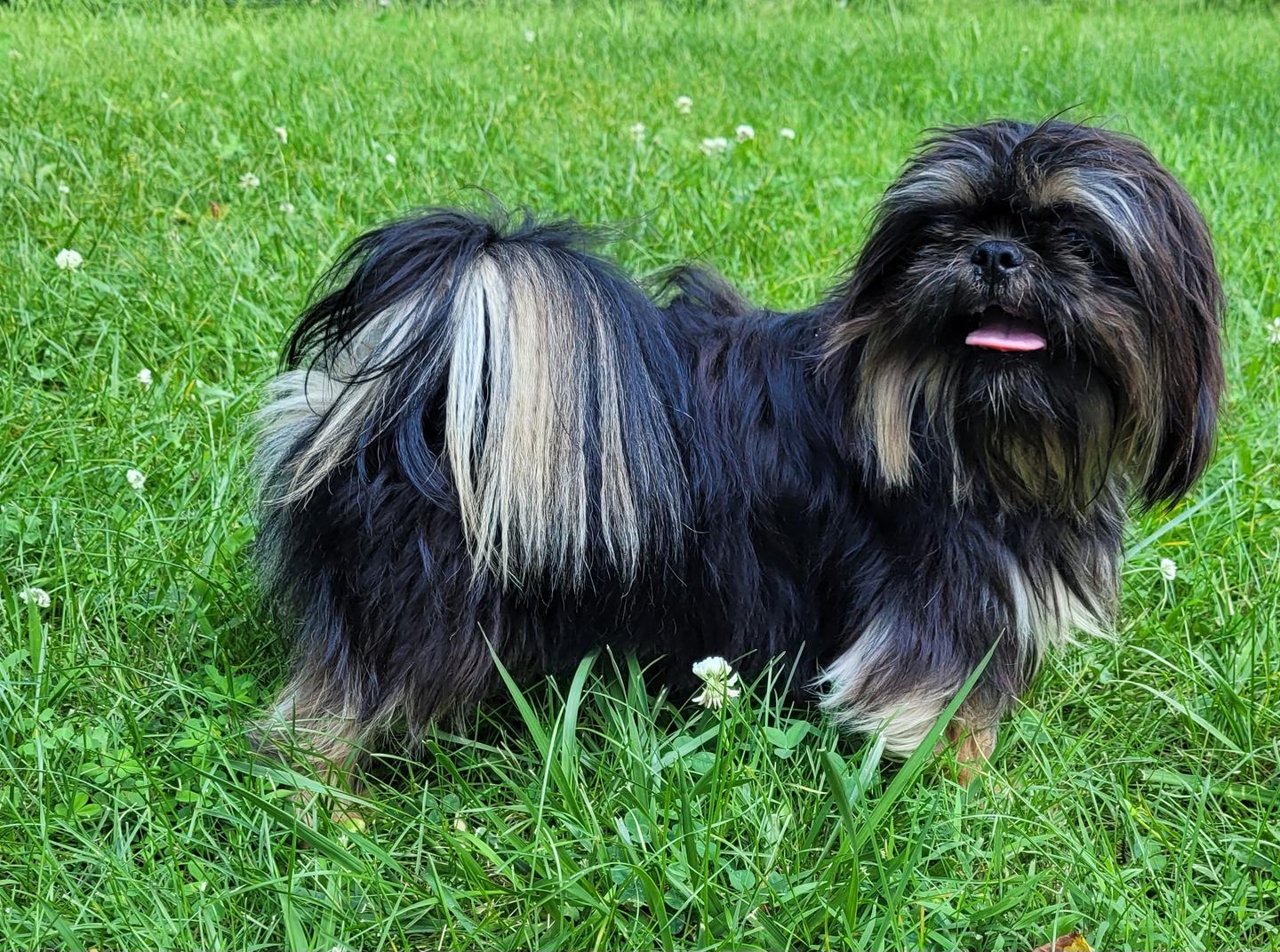
DNA analysis indicates the Shih Tzu is one of the oldest existing breeds. The earliest records go back to the year 625. Their modern history begins in the 1600s, when so-called Tibetan Lion Dogs came to China from Tibet. These dogs were later interbred with Pekingese, Pugs, and other ancient Chinese dogs to create the Shih Tzu. With the Communist revolution in China, the royal dogs were killed or taken as loot, as they were seen as symbols of pampered royalty. Several ended up with various European royal families. The name Shih Tzu means “little lion,” but the breed has also been called the chrysanthemum dog. Seven males and seven females make up the foundation stock of all modern Shih Tzu. The American Kennel Club (AKC) recognized the breed in 1969 in the Toy Group. It soon grew to become one of most popular of all breeds in the United States. Celebrity owners include the Dowager Empress T’zu Hsi, the Dalai Lama, Queen Elizabeth, Bill Gates, Vidal Sassoon, Colin Farell, Katherine Heigl, Beyonce, Geri Halliwell, and Mariah Carey.
About the author

Canine specialist, Caroline Coile, Ph.D., is the author of 34 dog books, including the top-selling Barron's Encyclopedia of Dog Breeds. She’s written thousands of magazine and web articles about dogs. She specializes in canine science, health, breeds and competitions. Caroline has won 20 national dog-writing awards, and was a 2015 Inductee into the Dog Writers Association of America Hall of Fame.

Breed Scorecard

Characteristics and temperament
  • Affectionate with family

    5

  • Watchdog level

    4

  • Playfulness

    4

  • Adaptability

    3

  • Social needs

    4

  • Temperament

    Playful, gentle, affectionate, stubborn

  • Intelligence

    3

  • Good with other dogs

    5

  • Good with cats or other pets

    5

  • Friendly with strangers

    3

  • Good as a service dog

    1

  • Good for apartments

    4

  • Barking level

    4

Appearance
  • Height

    9-10"

  • Size

    Extra small

  • Colors

    Chocolate and tan, Tricolor, Chocolate, Lilac, Black and tan, Sable, Cream and white, Sable and white, Red and tan, Black, Liver, Blue, Gold, Red, Silver, Brindle and white, Silver gold and white, White, Black gold and silver, Gold and white, Liver and white, Red and white, Silver and white, Black gold and white, Black and white, Black white and silver, Blue and white, Brindle

  • Coat texture

    Silky

  • Coat length

    Long all over including face, straight

Training
  • Trainability

    3

Exercise
  • Exercise needs

    2

  • Exercise time

    Half hour daily

  • Mental exercise needs

    2

  • Favorite activities

    Playing, trick training, fetching, keep-away

Grooming
  • Grooming needs

    4

  • Brushing frequency

    Daily

  • Needs professional grooming?

    Yes

  • Drooling level

    1

Health issues
  • Renal dysplasia

  • Hip dysplasia

  • Patellar luxation

  • Eye problems

  • Intervertebral disc disease

  • Liver shunt (portosystemic shunt)

  • Brachycephalic obstructive airway syndrome

Other
  • Bred for

    Lapdog

  • Country of origin

    China

  • Popularity level

    5

FAQs

  • On Good Dog, you can search for Shih Tzu puppies or dogs in rescues and shelters. Adopting a Shih Tzu from a shelter or rescue is generally less expensive than buying a puppy from a breeder with ethical practices. Across the United States, there are dedicated rescues that specialize in specific breeds and may even help transport a Shih Tzu dog to you from another part of the country. Although it can be more cost-effective, adopting the exact breed you're looking for is typically more difficult than working with a responsible breeder. Learn more about adopting a dog from a shelter or rescue.

  • Prices for Shih Tzu puppies for sale vary by breeder and individual puppy. On Good Dog today, Shih Tzu puppies are typically around $1,900. Because all breeding programs are different, you may find dogs for sale outside that price range.

  • Generally, yes. They don't shed much, and because they can run full speed inside, they can run off excess energy instead of using that energy to destroy your home. Plus, they’re too small to do much damage. However, like all toy dogs, they can be a challenge to housetrain. Many pet parents find it easiest just to use a litter box, pee-pads or panties.

  • They tend to be above-average barkers. They don't bark incessantly, but they do make good watchdogs and do tend to bark when excited or when they want you to pick them up.

  • Yes, if you want them to look like the show dogs with their long flowing coats. No, if you want them to have a cute clip. They're still medium maintenance, as you’ll need to comb the shorter coat every couple of days, and have it clipped every couple of months. Exercising them can be done in a small space.
Caroline Coile, Ph.D.

Caroline Coile specializes in canine science, health, breeds and competitions. Caroline has won 20 national dog-writing awards, and was a 2015 Inductee into the Dog Writers Association of America Hall of Fame. She’s written thousands of magazine and web articles about dogs in addition to 34 dog books.

Content on Good Dog is generated, fact-checked, and evaluated by qualified writers and veterinarians.

Caroline Coile, Ph.D.

Caroline Coile specializes in canine science, health, breeds and competitions. Caroline has won 20 national dog-writing awards, and was a 2015 Inductee into the Dog Writers Association of America Hall of Fame. She’s written thousands of magazine and web articles about dogs in addition to 34 dog books.

Content on Good Dog is generated, fact-checked, and evaluated by qualified writers and veterinarians.