Understanding service, guide and emotional support dogs
What's required of dogs and how do these roles differ?
Good Dog is on a mission to educate the public, support dog breeders, and promote canine health so we can give our dogs the world they deserve.
Good Dog is on a mission to educate the public, support dog breeders, and promote canine health so we can give our dogs the world they deserve.
Good Dog is on a mission to educate the public, support dog breeders, and promote canine health so we can give our dogs the world they deserve.
by Dr. Mikel Delgado, PhD
Dogs have worked closely with humans for thousands of years. Some dogs fill specific roles to help humans, including performing specific tasks that can assist people with disabilities. There are three common designations for dogs who work in supportive roles, but these roles have different legal definitions and rights and require varying amounts of specialized training.
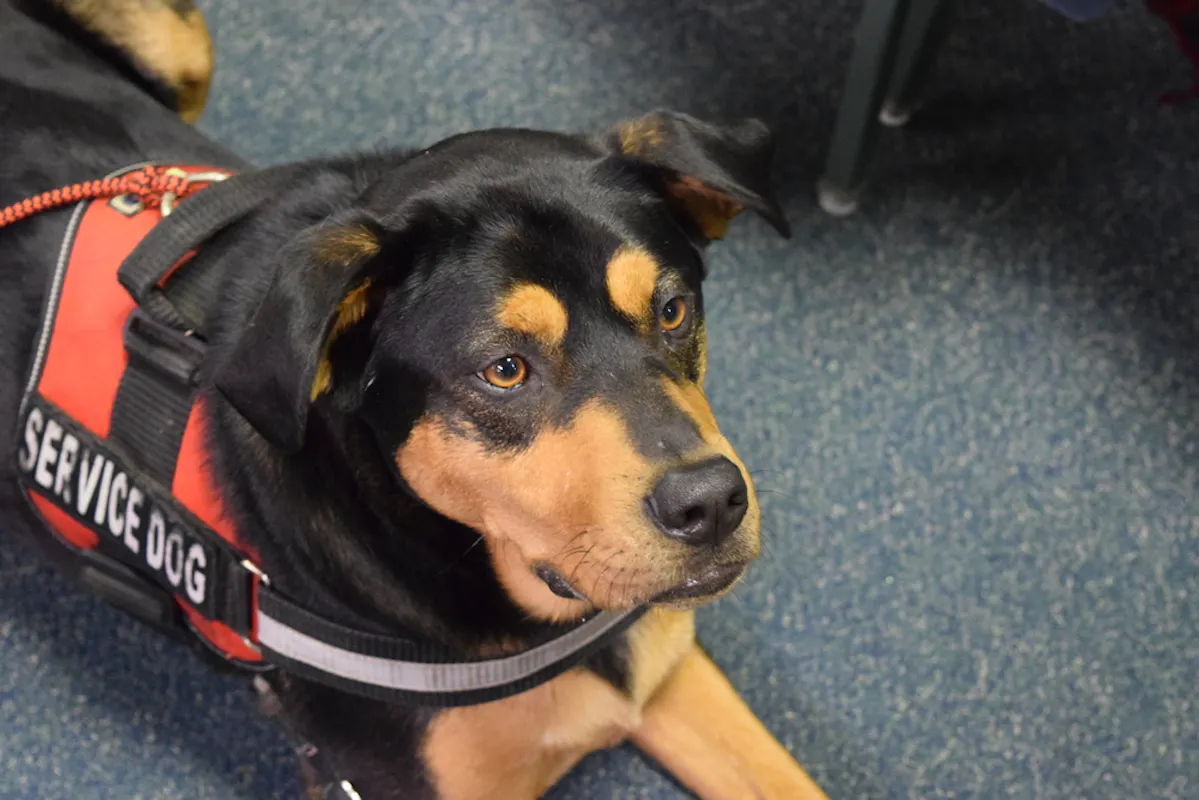
Service dogs help people with disabilities, as defined by the American Disabilities Act (ADA). Service dogs are trained to do specific tasks, such as helping with navigation, alerting someone with hearing loss to sounds, or recognizing seizures.
Legally, service dogs are not considered pets per se (their human may disagree!) and have strict requirements as to their training. They are allowed in all public areas when working. Service dogs are subject to other local laws regarding licensing and vaccinations, but they are not required to be registered in the United States.
Therapy dogs volunteer in clinical or other environments (e.g., hospitals, nursing homes, schools), where they provide comfort and affection. Therapy dogs are trained and socialized to enjoy new places and people.
Therapy dogs do not have specific legal rights because they are not considered service animals by the ADA. There may be local or state laws related to therapy dogs, and in general, it is recommended that therapy dogs have a good disposition and be well-trained.
The benefits of therapy dogs are unclear; some studies suggest they improve self-reported levels of stress or pain, but the beneficial effects have not been found to be consistent.
Emotional support dogs provide a person with comfort but are not necessarily trained to perform any tasks that specifically aid with a disability. They are considered pets and not service animals, so are not subject to the same accommodations under the ADA. To legally be considered an emotional support animal, a licensed mental health provider must prescribe the animal.
What dogs make good service animals?
The most common breeds of service dogs are German Shepherd Dogs, Standard Poodles, Labrador Retrievers, Golden Retrievers and Labrador x Golden crosses, but ANY breed of dog has the potential to be a service dog. They must be trained to do a task, and they must be physically capable of the task (such as opening doors, or carrying bags).
Sometimes it’s not until after investing years into a dog’s rearing and training that it becomes apparent they are not a good fit, so researchers are increasingly focused on developing a better understanding of what predicts whether a dog will be a successful service animal.
Excessive vocalization, poor problem solving skills, and anxiety were strong predictors of failing a training program. Elbow and hip dysplasia can also prevent dogs from being a good match for service work.
Training a service dog
Not all dogs are cut out for the service life. Being well socialized and trainable helps. But dogs are not born ready to work as a service dog, and you can’t purchase a “service puppy.” It can be a multi-year investment to train a service dog, and organizations dedicated to training service dogs estimate that it takes one to two years to train a dog, at a cost of over $25,000 per dog.
You do not have to obtain a service dog from one of these organizations, and you are allowed to train your own service dog or hire a dog trainer to help you. The ADA does not require that service dogs are trained by a professional trainer. However, the ADA does allow for a business to ask you two specific questions if it is not obvious that a dog is a service animal:
(1) is the dog a service animal required because of a disability?
(2) what work or task has the dog been trained to perform?
Can anyone falsely claim that their dog is a service animal?
Unfortunately, because of a lack of regulation and enforcement, many people fraudulently claim their dogs are service animals. Although this practice may seem harmless, fraudulently claiming a dog as a service animal can impact community health and safety, while threatening the rights of people with disabilities. Fraudulent service animals have created a huge market for registrations or certifications that have no legal value. It’s also confusing for the public to see dogs that are clearly not trained in areas limited to service animals, and this can send mixed messages to the public about the roles that service dogs play.
Is it fair to the dog to be a service animal?
Service dogs are still dogs, and need all the exercise, enrichment and positive attention that any dog needs. That said, service dogs are trained to be good at what they do, and when they are “off the clock” they get plenty of time to play and relax. Service dogs are typically retired at 8-10 years of age, to be a pet for their golden years.
Trained service dogs provide an incredible service that provides many people with independence, safety and social connections! However, for a dog who is not well-trained or socialized, they may not be a good fit for ANY type of assistance, whether as a service, therapy or emotional support animal. Traveling and being in very stimulating environments will be stressful for some dogs. It’s important to be realistic about whether your dog is going to be happy as a helper, and not force them into a job they are not well-suited for.
References/Resources
ADA Revised Requirements: Service Animals
Guide Dog Foundation Accessibility Information
AKC Recognized Therapy Dog Organizations
AVMA report: Assistance animals: rights of access and the problem of fraud

Join our Good Breeder community
Are you a responsible breeder? We'd love to recognize you. Connect directly with informed buyers, get access to free benefits, and more.