Muzzle training: It’s a good thing!
Muzzles show you care about the safety of other people AND your dog.
Good Dog is on a mission to educate the public, support dog breeders, and promote canine health so we can give our dogs the world they deserve.
Good Dog is on a mission to educate the public, support dog breeders, and promote canine health so we can give our dogs the world they deserve.
Good Dog is on a mission to educate the public, support dog breeders, and promote canine health so we can give our dogs the world they deserve.
by Dr. Mikel Delgado, PhD
Unfortunately, the muzzled dog is stigmatized as aggressive or as an attack dog; we often see it as a signal that something must be wrong. But muzzles are a good thing! They show that you care about the safety of other people, and of your dog. Muzzles also mean that you are prepared for an emergency, or situation where your dog may be more stressed than usual.
Muzzles can be important if your dog does have a history of biting, but they aren’t just for dogs with a bite history. Even if your dog is not a “biter,” some animals may bite when they feel threatened or are in pain. An unexpected bite can cause injuries, and depending on the extent of the bite and where you live, may result in a rabies quarantine. In addition to preventing bites, muzzles can be helpful for situations like introducing your dog to new people and animals and for keeping staff safe during veterinary visits. Some cities require muzzles for some dog breeds, so you may not have much choice in the matter.
The most important thing to know about muzzles is that you should train your dog to accept wearing one before you need it. Training your dog ahead of time means that if and when you need the muzzle, you are ready. For example, if you have to help your bitch when she is giving birth, a muzzle will reduce the risk of bites as a result of pain or fear. But… if she’s never worn a muzzle before, labor isn’t the time to try to get her to accept it! So plan ahead, and start training your dog to accept a muzzle now.
What to look for in a muzzle: Basket muzzles
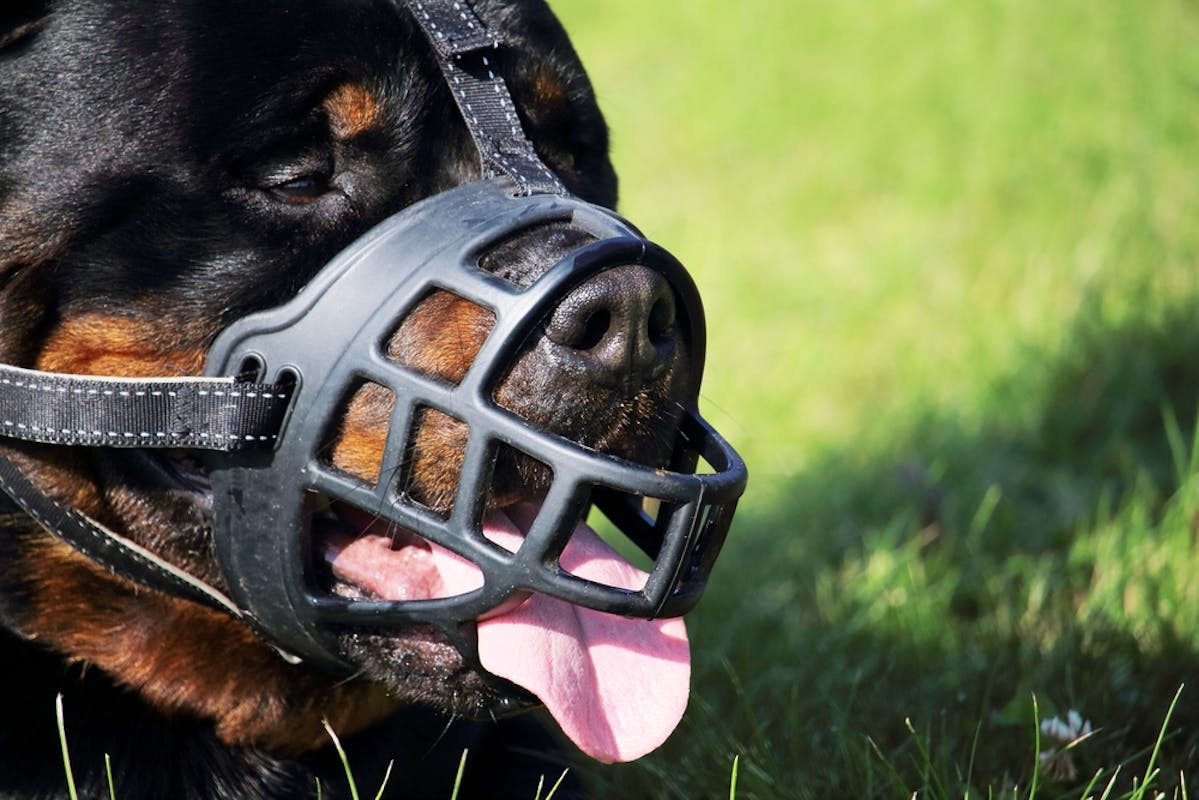
Basket muzzles are preferred because they allow drinking, eating treats, and less restricted breathing. Fabric (cloth/nylon) muzzles do not allow your dog to open their mouth, which can be hazardous in hot weather. Dogs need to be able to pant to cool off, which is difficult when their mouth is held closed by this type of muzzle. A nylon muzzle can also be uncomfortable, and perhaps most disappointingly for your dog, does not allow you to deliver treats while your dog is wearing it.
Look for a good fit
To help your dog accept a muzzle, it has to fit properly. The muzzle should be snug, but not too tight. Also, note that the muzzle should be a...muzzle. Head halters and Gentle Leaders (head collar) are not muzzles. Finally, keep in mind that due to the shape of their faces, pugs and other “flat-faced” (brachycephalic) dogs may need an air muzzle or e-collar as an alternative. The Morcco Italian basket muzzle may also work well for small dogs.
Tips for muzzle training
It is much easier to prevent a fear response by going slowly, than to go too quickly and create a situation where your dog is afraid of or bothered by the muzzle. There’s no reason that wearing a muzzle needs to be a negative experience if you do a slow and positive introduction!
Each step of the training process may require several repetitions over the course of a few days or even a week or two. It also helps to put the muzzle away when not actively training, so that your dog learns quickly that when the muzzle comes out, so do the treats!
A plan for training
- Hold the muzzle at the same height as your dog’s face so they can easily investigate
- Introduce a cue early in the process -- say “Muzzle” or “Muzzle up” as your dog approaches the muzzle
- Offer treats near the muzzle and for any active interaction with the muzzle
- Place peanut butter or squeeze cheese along the rim of the muzzle
- Allow your dog to eat the treat off the muzzle
- Move the treats further inside the basket of the muzzle
- Do not place the muzzle on your dog’s face - allow your dog to place their face in the muzzle to eat the treats
- Think of the muzzle as a “treat basket” - you can smear squeeze cheese inside or offer treats underneath the muzzle so your dog must place his face in the muzzle to access them
- Repeat until your dog is actively placing their head inside the muzzle to get to the delicious treats
- Acclimate your dog to the sounds of the muzzle clips/buckle moving while they are eating treats - but do not fasten the muzzle yet
- Slip the muzzle on for a few seconds without fastening it, remove, give more treats
- Start getting your dog used to the sound and feel of the muzzle being fastened, just for a few seconds at first
- Gradually increase the time the muzzle is worn, offering treats before, during and after
- End muzzle sessions on a high note when possible, when your dog is happy and not stressed
- Practice going out with the muzzle on, in situations that will not upset your dog, Keep sessions short
- If you are using a muzzle specifically prevent the bites: now you can use the muzzle in situations when there might be a conflict or stressor
What not to do with a muzzle
- Muzzles should never be used to keep your dog’s mouth shut or for other behavior issues aside from preventing biting (e.g., for barking or chewing)
- Never use a muzzle to correct or punish your dog - you will only create negative associations with the muzzle
- For safety reasons, do not leave a muzzle on an unattended dog
What muzzles can’t do
A muzzle isn’t a replacement for addressing why your dog bites or gets upset in the first place. A dog who wants to bite who is wearing a muzzle...still wants to bite. You may need professional help from a veterinary behaviorist, dog trainer, or your regular primary care veterinarian if your dog has issues with biting or other aggressive behaviors. But in the short term, muzzles can protect everyone.
Further reading:

Join our Good Breeder community
Are you a responsible breeder? We'd love to recognize you. Connect directly with informed buyers, get access to free benefits, and more.