How To Drive Safely With Your Dog
A step-by-step guide to keeping your dog safe and comfortable in the car and on the road.

By
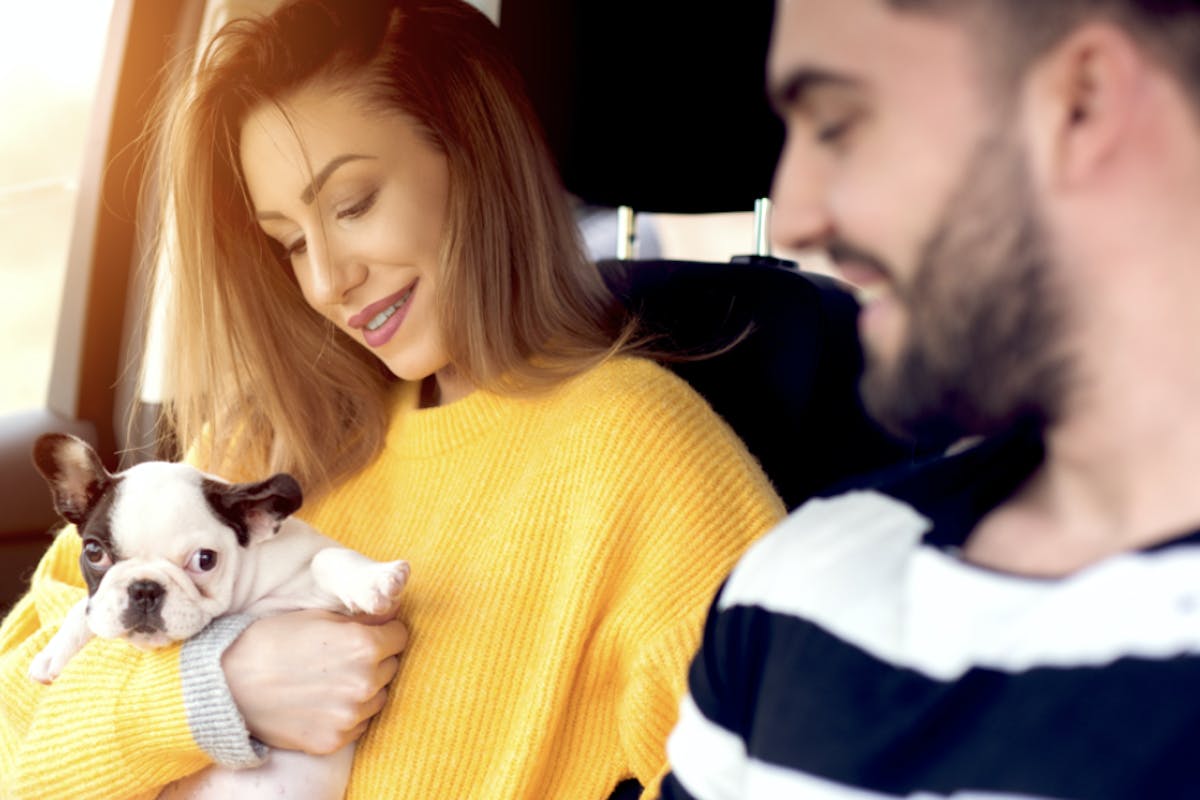
Few things in life are as fun as hitting the road to bring your puppy home. But driving with your best friend isn’t as simple as tossing a blanket over the back seat and making sure his food and water bowls are full. Whether you’re taking a short drive to meet your breeder or embarking on a long road trip, there are certain products, precautions, and on-the-road actions you can take to ensure the journey is safe and comfortable for both you and your dog.
First thing’s first
Don’t let your dog roam in the car
The most common mistake dog owners make on the road is “not securing them in any way,” Lindsey Wolko, the founder and CEO of the Center for Pet Safety (CPS), an independent nonprofit that evaluates pet products, told Good Dog. Restraining your dog in a travel harness or containing them in a travel carrier, she said, is “critically important.”
Remember: The front seat is for humans. Keep your dog in the back seat or, if you have an SUV or station wagon, the rear cargo area, in which case the carrier or harness should be secured to the car’s anchor points.
There’s a difference between safety products that prevent distraction (that is, your dog climbing into the front seat) and those that offer crash protection (designed to prevent injuries to you and your dog in an accident). “Dog restraints or seat belts are useful for preventing your dog from roaming around the car and being a distraction to the driver,” according to The Humane Society of the United States (HSUS), “but they haven't been reliably shown to protect dogs during a crash.” Wolko’s CPS has a list of vetted crash-protection products that are crash test–certified.
“If you don’t have a crash-protection carrier, you want something that can fit on the floor behind the driver or passenger seat,” Wolko said. “That’s one of the safest places in the vehicle for a dog.”
Before you go
Get your dog’s health information in order
If you’re going on a longer, multi-state journey, a health certificate and other medical records may be required by law. (Check out each state’s rules on traveling with a dog here.)
Within 10 days of the trip, schedule a veterinarian appointment to check that your dog is healthy enough to travel, receive a health certificate if required, and get a copy of all your dog’s recent medical records, just in case. Now is a good time to make sure your pup is up-to-date on any vaccinations and booster shots, and pick up whatever medications he’ll need on the trip.
Before your trip, Wolko recommends going to the website of the American Animal Hospital Association (AAHA) and using the AAHA-accredited hospital locator. “In case you have an emergency, you’ll know the closest ER and veterinary practitioner to your destination,” she said.
Have your dog microchipped
While nobody wants to imagine this scenario, pets do get lost or go missing. Tags and collars identify a dog and his owner, but they can be removed, break off, or become illegible. Pet microchips, on the other hand, are permanent. According to AKC Reunite, having your dog microchipped—an injection that’s no more invasive than a vaccination — makes it 20 times more likely that he’ll be reunited with you if he’s lost or stolen and ends up at an animal shelter or veterinary office. “We always recommend that you have your dog microchipped,” Wolko said.
Make sure your harness or carrier is age- and size-appropriate
Your dog’s carrier should be well-ventilated, durable, and clearly labeled with your contact information. It should also have enough room for your dog to stand, sit, turn around, and stretch out when lying down. The American Kennel Club (AKC) has some additional guidance on choosing the right carrier for your dog.
If you have a puppy, Wolko recommends a carrier, not a harness, for “multiple veterinary reasons” — their bone structure isn’t advanced and their growth plates haven’t solidified.
Help your dog acclimate to his harness or carrier
“You can’t just buy a harness, put it on the dog, and expect them to tolerate it,” Wolko said. Start acclimation training at least two to three months before traveling so your dog can get used to his harness or carrier.
For a harness, put it on your dog at home and take him on short walks, making them longer over time. Go for short car trips with your dog in his harness, and extend the drives 10 minutes at a time. “Eventually, you’ll get to a longer time frame where the dog is calm and relaxed in the car,” Wolko said.
For a carrier, start by placing it in the area where he spends most of his time. Create a positive association with the carrier by feeding your dog meals or giving him treats inside it. Give it a familiar, reassuring scent with an old shirt or his favorite blanket and have your dog spend gradually longer periods of time in the carrier.
Your dog might do well in a harness, or it might prefer the shelter of a carrier. “It really comes down to the individual personality and temperament of the dog,” Wolko said.
What to bring
Medical supplies
The most important thing to bring on any trip with your dog is a first-aid kit. You can either buy one or make a DIY first-aid kit at home. Don’t forget to pack a copy of your dog’s health information, too, as well as those prescriptions you picked up earlier.
Dog-friendly travel kit
You’ll want to pack food and water, and their respective bowls. Also grab a leash, a waste scoop and/or disposable bags, grooming supplies, a blanket, and any other comfort items. These are the basics of any travel kit for your dog.
You’ll also want to make the ride cozy for your dog with a toy or two. If you’re traveling with a puppy, you’ll need pee pads, because accidents happen. And to dispose of those pee pads and clean up any messes on long car rides, bring a trash bag and paper towels.
Pictures of you and your dog together
“If something happens and your dog gets away from you during travel, pictures of you together are a good way to establish ownership,” Wolko said.
On the road
Don’t leave your dog alone in the car
You wouldn’t leave your infant alone in the car in any weather, right? Treat your dog the same way. “Never leave your dog unattended during travel at any time, for any reason,” Wolko said. “The issue isn’t just heatstroke, it’s also pet theft.”
Don’t let your dog stick his head out the window
If your dog is properly restrained or contained, this won’t be an issue. But it’s still worth mentioning: A dog with his head out the window is at risk of injuries from passing debris or, in the case of a sudden stop or accident, being thrown out the window.
Plan to stop more than you expect
Puppies, especially, pee a lot. So plan to make frequent stops for potty breaks and exercise, which can make your dog calmer in the car.
Rest stops, with their germs and general uncleanliness, can be dangerous for puppies. Young puppies haven't been fully vaccinated yet, so you'll want to keep them off the ground and on their pee pad, away from other dogs. Keep this in mind as you’re planning your stops.
Now enjoy the ride!