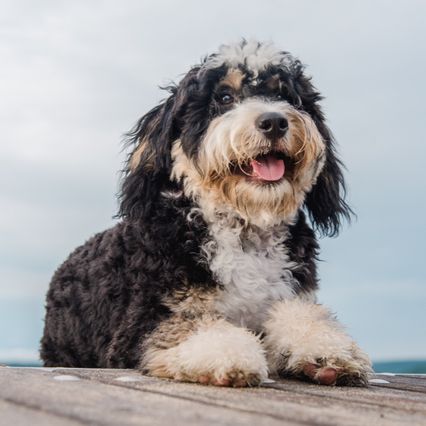
An adult Bernese Mountain Dog poses for their portrait
Get to know

Bernese Mountain Dogs

Written by
Caroline Coile, Ph.D.,
 author of 34 dog books.
Written by
Caroline Coile, Ph.D.,
 author of 34 dog books, including the top-selling Barron's Encyclopedia of Dog Breeds.
| | | | |

The Bernese Mountain Dog is surprisingly popular for such a large breed. And like a Berner puppy, their popularity keeps on growing and growing!

The Bernese Mountain Dog is among the 20 most popular breeds in American Kennel Club (AKC) registrations, and has been in the Top 10 breeds in Canada for over a decade.
Browse available puppies

Connect with reputable breeders to find the dog of your dreams
At a glance

Moderate Energy

Energy level

3/5

Low Maintenance

Grooming

3/5

Extra large

Size

Calm, gentle, reserved

Temperament

7-10 years

Lifespan

Average Trainability

Training

3/5

Medium Vocality

Barking

3/5

At a glance

  • Energy level

    Moderate Energy

  • Grooming

    Low Maintenance

  • Size

    Extra large

  • Temperament

    Calm, gentle, reserved

  • Lifespan

    7-10 years

  • Training

    Average Trainability

  • Barking

    Medium Vocality

Why people love the breed

People love their Berners because the breed is a jack of all trades, Berners love with all their heart, and Berners are beautiful to look at.
The Bernese Mountain Dog was bred to be an all-purpose farm dog. A day’s jobs might include guarding or driving a flock, pulling a cart carrying goods, forging a trail through the snow, and scaring off intruders. Today’s Berner continues to welcome any new assignment. They live to please their people, trying their best to figure out what is wanted, and doing it. They are gentle giants, calm in the house and athletic outdoors. They won’t overwhelm you with constant need to play, but may be in your face with a constant need for love. Yes, they’re big, but Berner lovers love big dogs. That’s a huge part of their appeal. And it's fun when people think you’re walking a bear down the street. Everybody is drawn to them wherever they go. In addition, they fill the eye with their beauty. No other breed consistently combines their intense rust, bright white and coal black depths of color on a longer coat. They’re graceful giants, both majestic and magnificent. Plus, cuddling with one is like cuddling with a warm mink coat set on a down pillow. They’re the perfect living bearskin rug in front of the fireplace.

Appearance

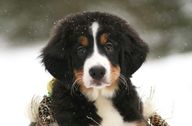
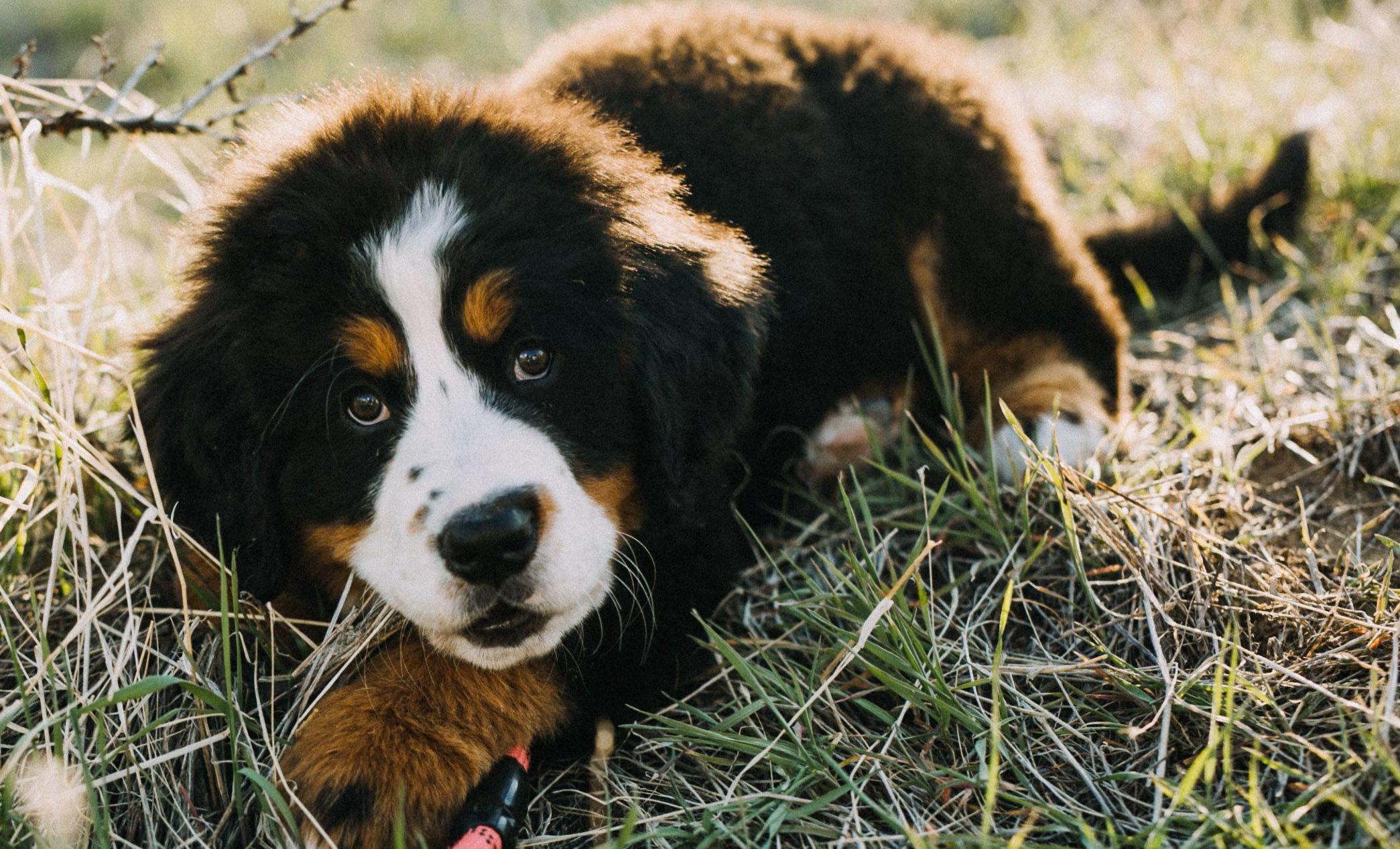
The Bernese Mountain Dog is dogdom’s answer to a giant teddy bear. The plush coat, imposing physique, sweet face and bold coloration makes this a truly stunning breed.
The Berner is built on general Mastiff lines. They are a very big breed, stocky but still retaining a look of grace. They are slightly longer than tall, but appear almost square. The topline is level, the tail long, bushy, and carried low. The head is broad with a flat, wide skull. The ears are medium sized, triangular and hang close to the head. The expression is gentle. The coat is medium to moderately long, very thick, and straight to slightly wavy. The color is striking: it is always tri-color, that is, black with white and deep rust markings. Overall, the breed should give the impression of a dog capable of having the strength required to pull a cart and the speed required to drive a flock and to do either in extremely cold conditions.

Grooming

The Bernese Mountain Dog has a thick doublecoat covering a large body. When they shed, they shed a lot. Really, really a lot.
The good news is that matting does not usually occur. If burrs get caught in the tail and you don’t remove them, the tail can mat. Small mats might also form under the ears. But unless really neglected, matting is not usually a great concern. Shedding is another story. The Berner coat is very thick, with an extremely dense undercoat. It also covers a lot of dog. During shedding season, this hair starts to come out in clumps. Be prepared for regular grooming sessions, including brushing twice daily during shedding season, which occurs twice a year and lasts a couple of weeks. Also be prepared to buy the best pet vacuum available, and possibly have to replace it. Some people actually collect the hair to make yarn. Bathing may be needed every few months. It takes a long time but isn’t complicated. The hardest part is bending over for a long time if you must bathe on the ground. A raised tub helps make it more comfortable for you, but you need a large, sturdy one for a Berner. Bathing in warm water helps loosen hairs that are ready to be shed, which can help get rid of them faster. Blow drying while brushing and combing can also help speed things up.
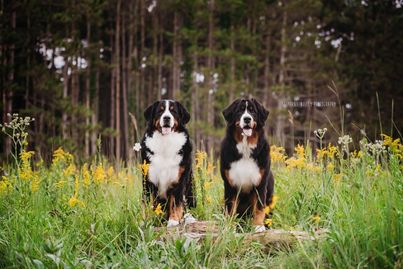
Two Bernese Mountain Dogs pose in yellow flowers and tall grass
Img:

Gusto Bernese Mountain Dogs

Breed temperament and characteristics

Devoted. Calm. Willing to please. These are the character traits most often heard when asking about the Bernese Mountain Dog.
When young, Bernese Mountain Dogs are typical bulls in china shops. But as they mature, they become calm and careful, more like well-mannered guests. Of course, they do need training in order to get them to that point. Bernese Mountain Dogs want to be good. They want to please, and they will try their best to do what you want. They love their family deeply, and are amazingly gentle with the elder members and even tiny children. They’re accepting of, but not fawning to, strangers, preferring the attention of their special people over making new friends. They’re lovers, not fighters, and tend to get along with other dogs, even strange ones. They usually get along well with other household dogs and pets, and seem to take special pleasure in cuddling with the smallest household members, even kittens. But again, this is true for adults, not necessarily puppies, who don’t understand how large they are and that they must learn to control their strength.

Exercise

Bernese Mountain Dogs are large but calm—at least when mature. A puppy needs a lot of exercise, but an adult may not need as much.
Puppies are energetic and into everything. They need several active bouts of running and playing every day until they’ve matured. Then they tend to calm down and need less exertion. Most adults are content to jog around the block or go for a long walk on leash, combined with some play in the yard. Beware that youngsters especially can pull very hard, hard enough to pull a person down, so training is essential. They especially like to pull things, such as carts or wagons. Some enjoy weight-pulling, in which they are challenged to pull heavy weights. Many Berners enjoy swimming too. They also enjoy herding and if they have the chance, flock guarding. Berners love cold weather and cold weather sports. But because of their large body size and thick coat, they’re not a good match for warm weather. Arrange for your Berner to exercise when it’s cool, and take it easy when it’s warm.
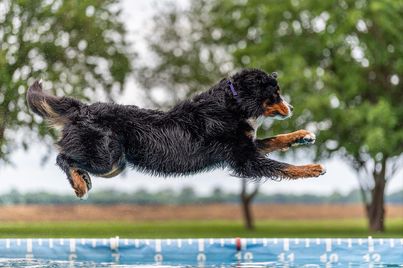
A Bernese Mountain Dog dives into a pool
Img:

Tollhaus Bernese Mountain Dogs

Training

Berners love to please, and will do their best to do what you ask of them—eventually. They're just not always super fast about it.
Bernese Mountain Dogs are known for their sweet, willing nature. They want nothing more than to find ways to please their people. That said, they don’t follow you around awaiting your next command. Instead they wait for you to have an idea and then they’re willing to be your partner. Nor do they race to comply. They will do it, just on their own time. Remember that one of the Berner’s traditional jobs was as a drover, which meant they had to be attuned to the shepherd’s cues at all times. But they weren’t the type that dashed from one side of the flock to the other. Their style tends to be more slow and steady but determined. This basic nature remains today. Because of their size, it’s essential to teach this breed to walk nicely on lead without pulling, as they have a tendency to pull and the strength to pull you down. Use treats and positive reinforcement to reward them by walking calmly at your side on a loose leash. If they do pull, just turn in the other direction, or stand still and act like a tree until they stop. Then reward by walking again, handing out a treat once they’re walking a few steps without pulling. Bernese Mountain Dogs do fairly well in competitive obedience, but because they don’t respond as quickly as some other breeds, and aren’t often high-precision workers. They can compete in agility as well, but don’t tend to have fast times in part because such courses were designed for much smaller dogs.

Diet and nutrition

Berners are big dogs with big appetites. They need big nutrition.
Bernese Mountain Dogs do best eating diets specifically formulated for large dogs. This is especially critical for puppies. Many studies have shown that growing too fast increases the chance of many developmental joint diseases to which Berners are already susceptible, including hip and elbow dysplasia. They are balanced in fat, calcium, phosphorus and vitamin D. Free-feeding is not recommended for large breed puppies, as they tend to overeat, increasing their growth rate and the chance of developmental joint disease. Instead feed several small meals over the course of a day, starting with three to four meals as a little puppy, then two meals at about four months of age, transitioning to an adult diet at around 9 months. Always monitor your Berner’s weight. You should be able to feel the ribs with gentle probing, and there should be an indication of a waist, with no dimple over the tail or roll of fat over the withers. Obesity makes joint disease worse, so always keep your Berner trim. Factor in all the treats you may be doling out during training. The calories can add up faster than you might think. Always consult with your veterinarian if your dog has a particular health problem. Many specialized diets are available that are scientifically formulated for a variety of conditions.
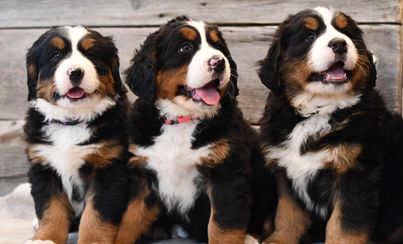
Three perfect Bernese Puppies sit together and smile
Img:

Bernese by Barzees

Health issues

Like most giant breeds, the Berner does not have the longest lifespan. It also has some specific diseases that plague it.

Lifespan: 7 to 10 years.

Histiocytic sarcoma

An aggressive cancer found in different parts of the body. Histiocytic sarcoma has different forms called localized (usually occurring in bones, joints, skin, and lungs), disseminated (affects multiple organ systems at once), and hemophagocytic (starts with the spleen and follows a more rapid course).

Elbow Dysplasia

Found more often in larger breeds, this is a condition in which the elbow joint develops inappropriately, causing arthritis and lameness. No genetic test is available to date, therefore, the recommended screening test is x-rays.

Hip Dysplasia

Common in large breed dogs, this complex condition involves both genetic and environmental factors and arises when the head of the femur doesn’t fit in the pelvic socket, causing arthritis and lameness. No genetic test is available to date, therefore, the recommended screening test is x-rays.

Osteochondritis Dissecans (OCD)

An abnormality of cartilage development causing an inflammatory condition when the disease's cartilage separates from the underlying bone, can occur in large breed puppies, especially if not eating an appropriately formulated large breed puppy food

Liver shunts

In which an abnormal connection allows blood to flow around the liver. It can cause stunted growth, abnormal behavior, and possible seizures.

Gastric Dilatation-Volvulus (GDV)

Bernese Mountain Dogs, like most deep-chested breeds, are at increased risk for GDV, a life threatening emergency in which the stomach twists within the abdomen.

Degenerative myelopathy

A hereditary disorder similar to Lou Gehrig’s disease in which the dog gradually exhibits weakness and paralysis in the rear legs. A DNA test is available, but many dogs with the target gene never develop the disorder.

Learn more about health issues that may impact Bernese Mountain Dogs

History

The Bernese Mountain Dog was developed as a draft dog, flock guardian, drover, herder, and general farm dog that could withstand the frigid Alpine weather.
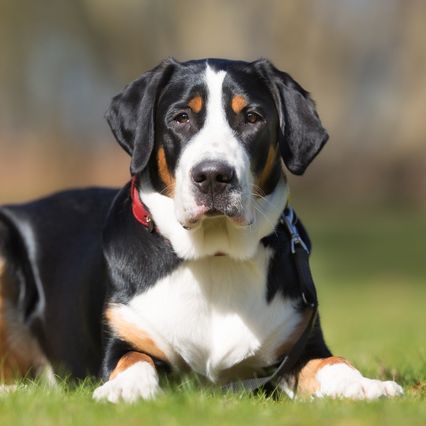
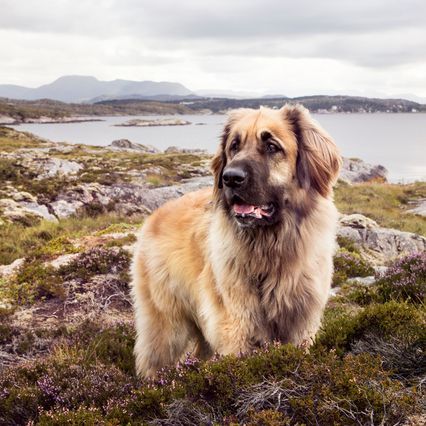
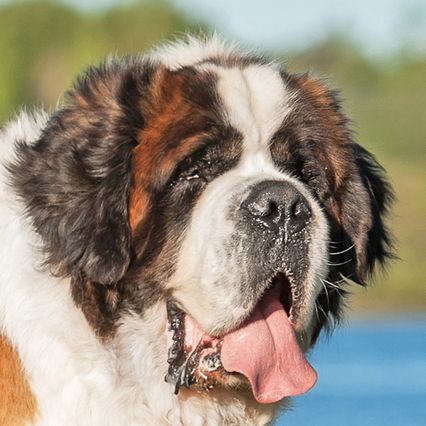
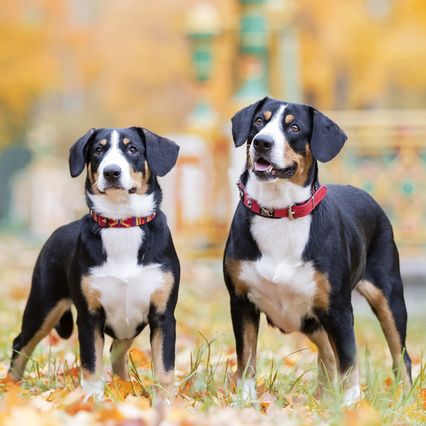
DNA research shows that of the breeds studied, the Berner’s closest relative is the Swiss Mountain Dog, followed by the Leonberger and Saint Bernard. The breed’s early history is unknown. Some believe it is derived from Roman mastiffs that accompanied the Roman invasion of Switzerland. These dogs were then crossed with native Swiss flock-guarding dogs to produce the family of Swiss mountain dogs, or Berner Sennenhund. There are four breeds of Sennehund: Bernese Mountain Dog, Greater Swiss Mountain Dog, Entlebucher Mountain Dog, and Appenzeller Mountain Dog. The Berner is the only long-coated dog in the family. The breed had almost died out when a few were found in the valleys of the lower Swiss Alps. These dogs were promoted throughout Europe and the breed was rescued. The first Bernese Mountain Dog came to the United States in 1926. The AKC recognized them in 1937. Celebrity owners include Robert Redford, Robert De Niro, Julia Child, Nick Faldo, Mark Harmon, David Arquette, and Francois Mitterand.
About the author

Canine specialist, Caroline Coile, Ph.D., is the author of 34 dog books, including the top-selling Barron's Encyclopedia of Dog Breeds. She’s written thousands of magazine and web articles about dogs. She specializes in canine science, health, breeds and competitions. Caroline has won 20 national dog-writing awards, and was a 2015 Inductee into the Dog Writers Association of America Hall of Fame.

Breed Scorecard

Characteristics and temperament
  • Affectionate with family

    3

  • Watchdog level

    4

  • Playfulness

    2

  • Adaptability

    3

  • Social needs

    3

  • Temperament

    Calm, gentle, reserved

  • Intelligence

    3

  • Good with other dogs

    3

  • Good with cats or other pets

    4

  • Friendly with strangers

    2

  • Good as a service dog

    3

  • Good for apartments

    1

  • Barking level

    3

Appearance
  • Height

    23-28"

  • Size

    Extra large

  • Colors

    Black and rust (non-standard), Black rust and white, Black tan and white, Black and white (non-standard), Rust and white (non-standard), Tri-color

  • Coat texture

    Thick, with soft undercoat and slightly harsher outer coat

  • Coat length

    Medium

Training
  • Trainability

    3

Exercise
  • Exercise needs

    3

  • Exercise time

    1 hour daily

  • Mental exercise needs

    2

  • Favorite activities

    Carting, draft work, skijoring, weight-pulling

Grooming
  • Grooming needs

    3

  • Brushing frequency

    Weekly (daily when shedding)

  • Needs professional grooming?

    No

  • Drooling level

    4

Health issues
  • Histiocytic sarcoma

  • Elbow Dysplasia

  • Hip Dysplasia

  • Osteochondritis Dissecans (OCD)

  • Liver shunts

  • Gastric Dilatation-Volvulus (GDV)

  • Degenerative myelopathy

Other
  • Bred for

    Cart pulling, flock guarding, farm dog

  • Country of origin

    Switzerland

  • Popularity level

    5

FAQs

  • On Good Dog, you can search for Bernese Mountain Dog puppies or dogs in rescues and shelters. Adopting a Bernese Mountain Dog from a shelter or rescue is generally less expensive than buying a puppy from a breeder with ethical practices. Across the United States, there are dedicated rescues that specialize in specific breeds and may even help transport a Bernese Mountain Dog dog to you from another part of the country. Although it can be more cost-effective, adopting the exact breed you're looking for is typically more difficult than working with a responsible breeder. Learn more about adopting a dog from a shelter or rescue.

  • The typical price for Bernese Mountain Dog puppies for sale may vary based on the breeder and individual puppy. On average, the price of Bernese Mountain Dog puppies from a breeder is $3,050.

  • Like any large dog, they take a lot of room in your home, vehicle and bed. They don’t like hot weather. They can pull hard when on leash. They can drool and they shed. They have a relatively short lifespan. That said, many people love the breed so much that they would never have any other. It’s all about your priorities.

  • They’re not great barkers, but they have a great, big bark. They bark if there's something, or somebody, to bark at, but don’t usually just bark incessantly for no reason.

  • Personality-wise, absolutely! They are calm, gentle and devoted. Appearance-wise, they are majestic and stunning. But from a practical viewpoint, they are large, can drool, and shed a lot.
Caroline Coile, Ph.D.

Caroline Coile specializes in canine science, health, breeds and competitions. Caroline has won 20 national dog-writing awards, and was a 2015 Inductee into the Dog Writers Association of America Hall of Fame. She’s written thousands of magazine and web articles about dogs in addition to 34 dog books.

Content on Good Dog is generated, fact-checked, and evaluated by qualified writers and veterinarians.

Caroline Coile, Ph.D.

Caroline Coile specializes in canine science, health, breeds and competitions. Caroline has won 20 national dog-writing awards, and was a 2015 Inductee into the Dog Writers Association of America Hall of Fame. She’s written thousands of magazine and web articles about dogs in addition to 34 dog books.

Content on Good Dog is generated, fact-checked, and evaluated by qualified writers and veterinarians.