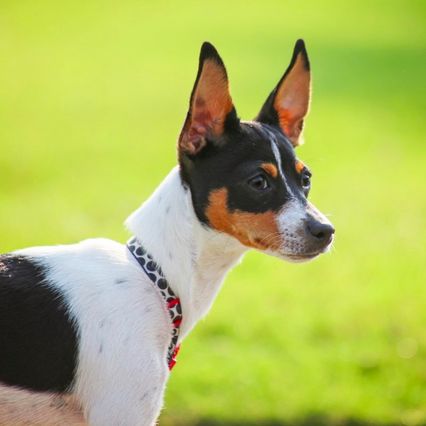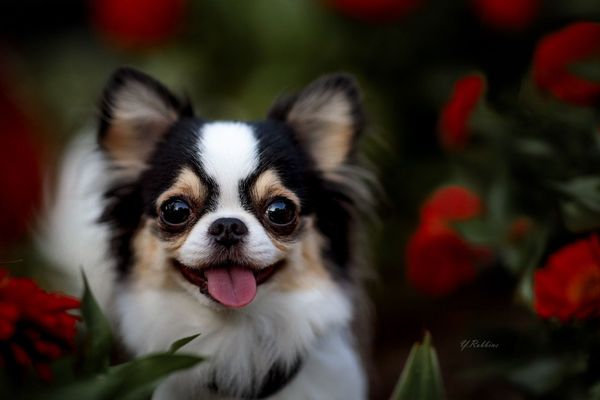
Chihuahua with flowers
Get to know

Chihuahuas

Written by
Caroline Coile, Ph.D.,
 author of 34 dog books.
Written by
Caroline Coile, Ph.D.,
 author of 34 dog books, including the top-selling Barron's Encyclopedia of Dog Breeds.
| | | | |

The pequeño perro from south of the border has one of the biggest personalities in the dog world.

Tiny but tough, Chihuahuas have a very high opinion of themselves—and of their closest friends. But nobody else. They’re picky about who they adore—and that’s why people adore them back.
Browse available puppies

Connect with reputable breeders to find the dog of your dreams
At a glance

Very Low Energy

Energy level

1/5

Very Low Maintenance

Grooming

2/5

Extra small

Size

Devoted, clannish, suspicious of strangers

Temperament

14-16 years

Lifespan

Moderate Trainability

Training

2/5

High Vocality

Barking

5/5

At a glance

  • Energy level

    Very Low Energy

  • Grooming

    Very Low Maintenance

  • Size

    Extra small

  • Temperament

    Devoted, clannish, suspicious of strangers

  • Lifespan

    14-16 years

  • Training

    Moderate Trainability

  • Barking

    High Vocality

Why people love the breed

People love Chihuahuas because who wouldn’t love somebody who had eyes only for you? And someone that you could carry with you wherever you went?
Chihuahuas have a reputation as lap dogs for little old ladies. And they’re very good at that. But they’re actually great dogs for anyone who wants a dog that loves them, and them only (or maybe a few other family members). Their tiny size makes them handy to live with. As one of the smallest breeds, these little dogs fit just about anywhere, are simple to travel with, and can even be carried in a doggy purse as a purse dog. They make great apartment dogs if your neighbors don’t mind the barking, and you don’t have to be an athlete to take them out for a walk. They’re even popular with truck drivers because they can play in a limited space. They can’t steal your food from your counters, and they can do limited damage to your furniture. Plus, their food bill is tiny! Almost everything costs less with a small breed. Yet they are also exciting, energetic dogs that make great companions for people of all ages. They will sit in the laps of the elderly, play with young children in the household, and go shopping with anyone who will take them. They’re even ferocious sounding watch dogs—although they can’t do much actual damage to anything except ankles. Most of all, though—they’re really cute!

Appearance

The diminutive Chihuahua is compact but graceful. They resemble many of the ancient Mexican dogs depicted in pottery.
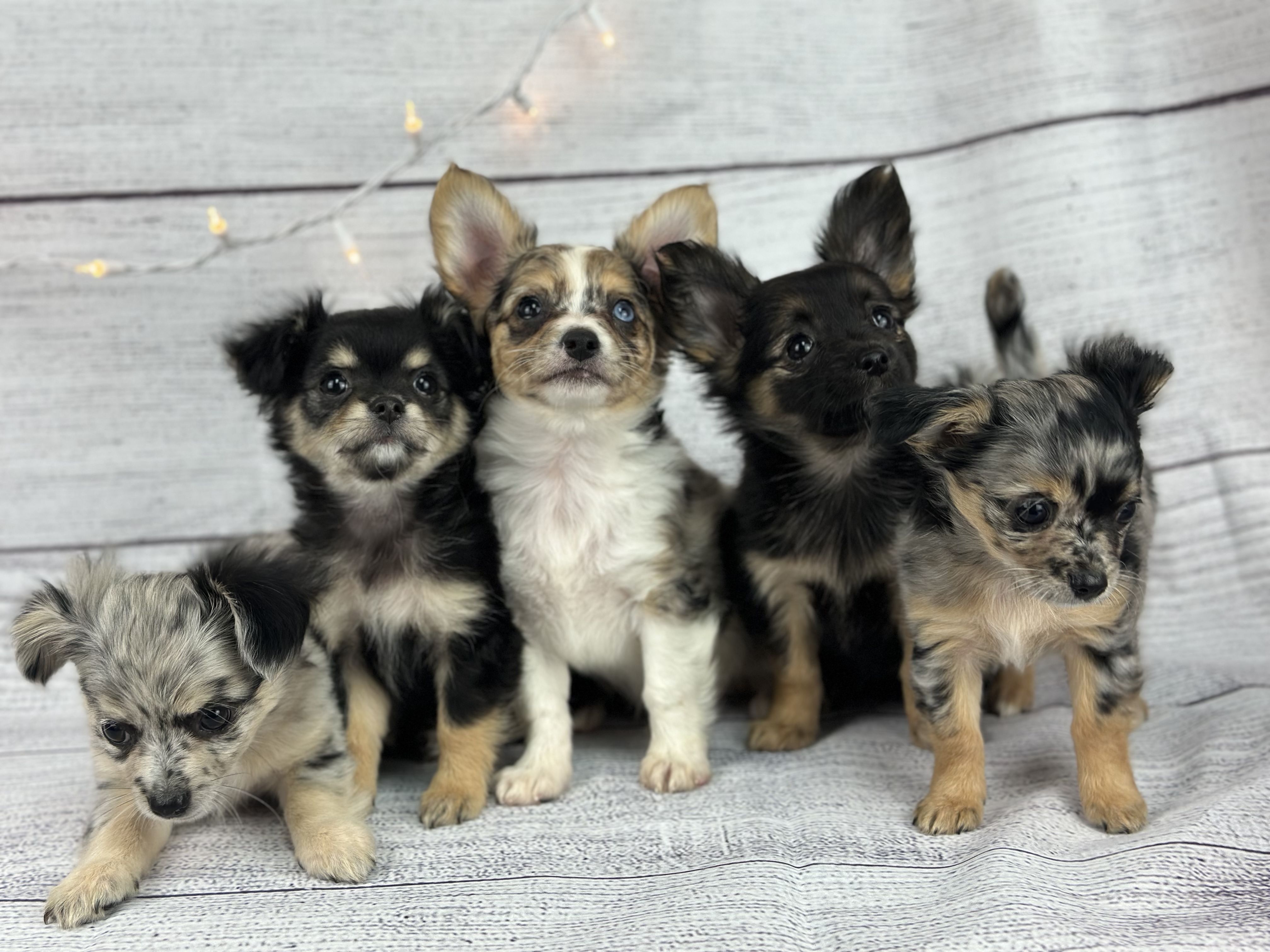
The Chihuahua’s body is solidly built, slightly longer than tall. The topline is straight, with the tail carried either up, out, or over the back. It has dainty feet. The height can be between 5 and 8 inches at the withers, and the weight should be under 6 pounds. The head is domed, the muzzle moderately short and slightly pointed. The ears are large and erect, coming off the head at a slight angle to the sides. The soulful eyes are full but not protruding. The entire expression is saucy, like a dog looking for adventure—or mischief. There are two different coat types, a short and smooth coat; or long coat, straight and feathered. It comes in any color, more colors and patterns than many other breeds.

Grooming

Grooming is so easy it’s over before you know it. And most of it can be done in your lap.
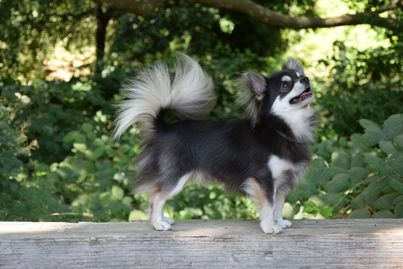
The smooth chihuahua coat needs only occasional bathing, plus brushing every week just to remove dead hair. The long-haired chihuahua coat is not super thick and has little undercoat, so it doesn’t tend to mat or shed excessively. Either way, there’s not much body area to cover so grooming and coat care really isn’t hard. The toenails are tiny and can be cut with cat toenail clippers. Be very careful not to cut too much. Check the ears for debris but don’t clean them unless needed. Small dog breeds tend to have more dental problems, so appropriate care is important to avoid disease. The teeth should be brushed every day using a doggy toothpaste. Have your veterinarian check for any other problems. Chihuahuas live a long time so you want them to keep their teeth well into old age.
Long-haired chihuahua standing outside
Img:

Bri Chis

Breed temperament and characteristics

The saucy Chihuahua is the prototypical big dog in a little body. But they’re not always as brave as they pretend to be.
First, there’s the private Chihuahua. That’s the one who snuggles on your pillow, curls in your lap, plays fetch in your living room, demands a bite of your dinner, struts to the door, and barks at the doorbell. The one that makes you wonder how so much love can be crammed into so little a being. Then there’s the public Chihuahua. That’s the one who seems to want to make a statement, either that they’re the toughest dog in town or just a frightened little homeless waif. So yes, some Chihuahuas put on a brave front, but they’re not always as brave as they appear. It may be that when you’re that small the best defense is a good offense. So some have a big personality and want to challenge visitors and any large dog they come across. But chances are they’ll back off if anyone challenges them back. On the flip side, other Chihuahuas are known for just sitting and shaking when company comes or they’re put in a new situation. But shaking doesn’t necessarily mean a Chihuahua is scared, as they have a tendency to get cold. Just be aware that the public Chihuahua can be very different from the private Chihuahua. The Chihuahua breed is quick to differentiate family from non-family. They love their family deeply. This includes their main person, but also other household members. It also includes other family dogs—especially fellow Chis—and pets. Non-family they don’t much care for. Most would rather not share their special people or their home with visitors, and they don’t go out of their way to greet strangers when outside the home. They love to snuggle with their fellow Chihuahuas, and tend to rule over any large household dogs, but either (wisely) avoid strange dogs or (unwisely) challenge them. By the way, Chihuahuas absolutely hate being cold. Give them a place in the sun to relax at home, and provide a sweater in cold weather.

Exercise

Chihuahuas are energetic and need to run and play, but they can get plenty of exercise indoors. Because of their small size, you need to take extra safety precautions if you go outside.
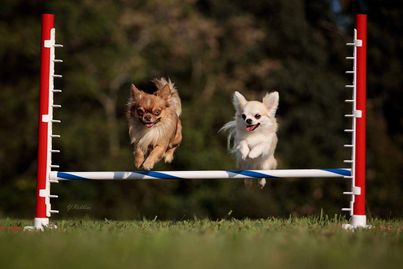
Although Chihuahuas definitely appreciate their down time, that only happens if they have plenty of exercise time as well. They are very active dogs. Most people just don’t notice how active, because when they run from one side of the house to the other, it’s like other dogs running around the yard—or maybe the block. But while you could leave them to self-exercise in the house, you shouldn't. They really need to get outdoors and sniff the bushes, see the sights, and share some adventures with you. If you can’t get outside, though, you can throw a toy and play a game of fetch inside. Your Chihuahua will still enjoy the playtime because it’s with you. A word of caution on the great outdoors. Their tiny size makes them vulnerable to attacks from dogs or other animals even when on leash. You can’t safely leave your dog in the yard unsupervised, but particularly if you have a Chihuahua and live where coyotes or other predators roam—or even fly. In addition, because of their small size, dog parks are generally not a good idea. Only consider a dog park if it has a separate area for small dogs, and if the dogs look too big, be prepared to leave. But really, dog parks are not high on most Chihuahuas’ list of fun things to do. They’re not exactly social butterflies, especially when it comes to strange dogs. Most dog sports are just on too large a scale for a tiny dog. They can do agility, but it takes forever for the teeter to come down. Dock diving would be like high-diving for them. You could knock them unconscious if you tried to play Frisbee. Weight pulling would be futile. And while they might enjoy attack dog training, they couldn’t reach high enough to grab the bite sleeve!
Two Chihuahua's on an agility course
Img:

Dilusso Chihuahuas

Training

Chihuahuas are quick studies. But perhaps because of their small size, few people train them to their potential.
Chihuahuas learn quickly, and have reached the highest levels of obedience competitions. Chihuahuas were never bred for a job in which obedience was necessary, so it’s not foremost in their way of thinking. Even today, few people train them. Perhaps it’s simply because they are so easy to live with without formal training. For example, people may find it easier to carry them than have them walk at their side in heel position. It’s difficult in some ways to train a tiny dog that is often way down at your feet, but you just need to make some adjustments. A tip is to use a long stick with a target on the end when you Chi is on the ground. You can smear peanut butter on the end to guide your Chihuahua by the nose, or train them to follow a target by rewarding them every time they tap it with their nose. In this way you can guide where they go without having to bend over all the time. Chihuahuas do well with treat-based training, but you have to make the treats tiny unless you want to make them your dog’s entire meal. Or, you can hand-feed their dinner using each morsel as a treat. Many Chihuahuas enjoy mental challenges such as trick training, obedience, and nose-work.

Diet and nutrition

Chihuahuas can easily eat too much and end up obese. Remember, every morsel counts when it comes to tiny dog nutrition.
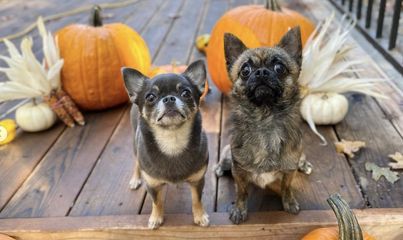
A high quality commercial dog food formulated for small dogs will usually be fine. Small dogs with tiny muzzles can have dental problems as they age, so you may need to feed a smaller kibble food that requires less chewing, or even a soft food if there is tooth loss or pain. Chihuahua puppies, especially very young or very small ones, must be guarded against hypoglycemia. Hypoglycemia occurs when the level of sugar in the blood drops too low, usually because a young puppy has gone too long between meals. Aim to feed your young Chihuahua puppy at least every 4 hours. Don’t have your baby puppy exercise before bed, when no food will be available overnight. Hypoglycemia is potentially fatal, and a real emergency. Signs start with the puppy being hard to rouse, and acting wobbly. You can help to increase blood sugar by rubbing corn syrup on the puppy’s gums and rushing to the emergency vet. As your puppy ages, you can gradually cut back to three meals a day. Fortunately, most Chihuahuas will outgrow this danger by the time they’re 6 months old, and then go to two meals a day. When choosing treats, beware that many commercial dog treats are choking size for small dogs, butyou can squish or break some of them. Chihuahuas are smart when it comes to coaxing you out of treats from your dish. You have to be able to say “No,” or you'll have an obese Chihuahua on your hands. A little bite for you is a whole meal for a Chihuahua. Your veterinarian may advise you about special diets if your Chihuahua has a special concern.
Two Chihuahuas with pumpkins
Img:

Red Paw Chihuahuas

Health issues

Like all tiny dogs, Chihuahuas have some specific health conditions. But they are amongst the healthiest and longest-lived breeds.

Lifespan: 14 to 16 years.

The list of health problems in Chihuahua is amazingly short considering their popularity. Most Chihuahuas live well into their teens.

Collapsing trachea

Diagnosed more often in small breed dogs. It occurs when the rings of cartilage surrounding the trachea degenerate and soften, causing coughing and difficulty breathing. Chihuahuas should be walked using a harness instead of a collar.

Patellar luxation

When the kneecap slips out of the groove in which it should be nested, causes lameness and arthritic changes. It occurs mostly in small breed dogs.

Some Chihuahuas have an open fontanelle or molera

This is an opening in the top of the skull leaving a soft spot. It usually doesn’t cause any problems, and isn’t always an indication of hydrocephalus, but it needs to be shielded from injury as there’s no protective bony covering over the brain in that area.

Double Merle

Chihuahuas with the merle coat color pattern should never be bred to one another, as they can produce “double-merle,” resulting in puppies which can be blind and deaf.

Hydrocephalus

A condition in which excess cerebrospinal fluid accumulates around the brain, can be fatal, or can cause behavior abnormalities, sensory defects, or seizures.

Liver shunts (portosystemic shunts)

These occur when blood bypasses the liver due to abnormal vessels.

Learn more about health issues that may impact Chihuahuas

History

It’s a cliche to say a breed’s origin is shrouded in mystery, but in the Chihuahua’s case it’s true. Still, the breed’s recent history is interesting enough.
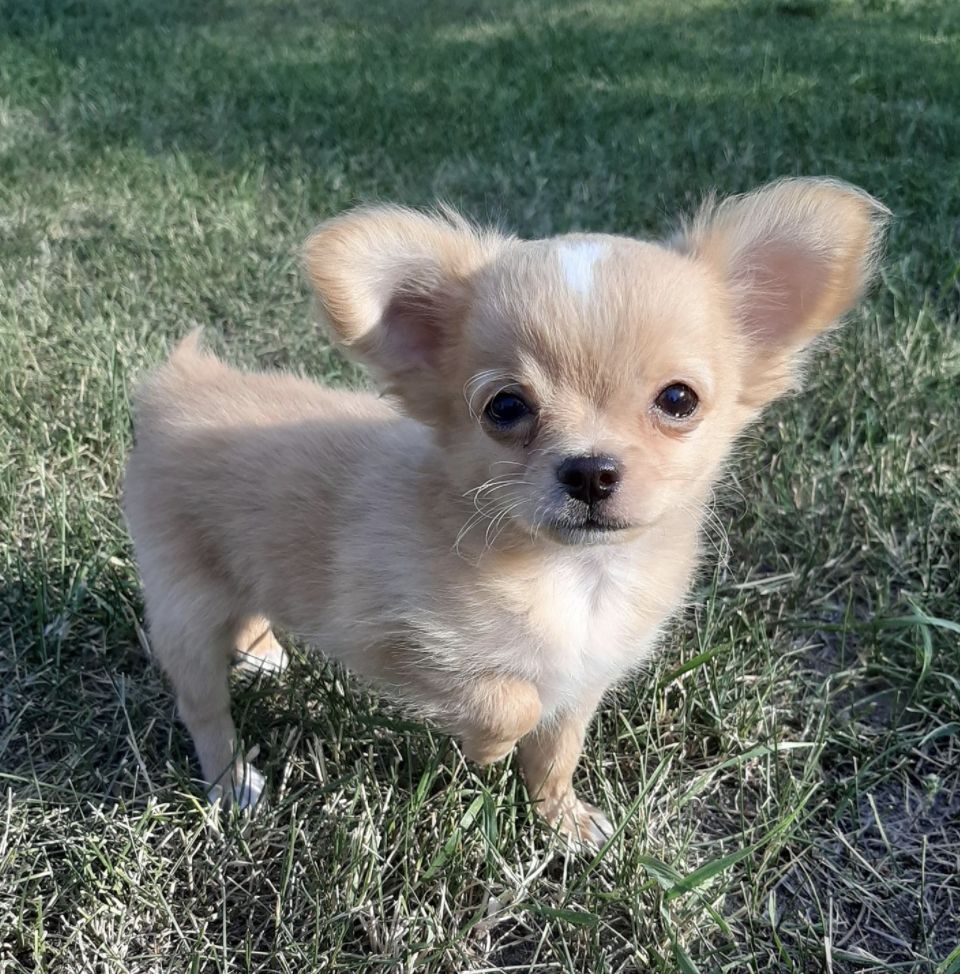
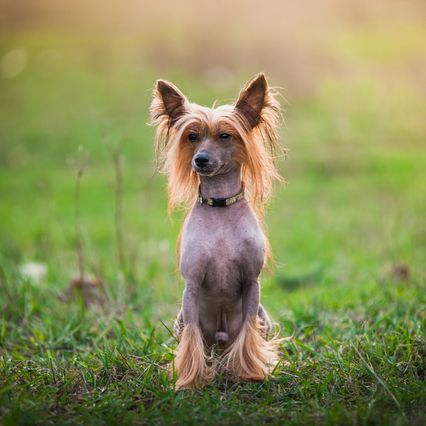
DNA evidence shows that the Chihuahua’s closest relative is the Chinese Crested. Nobody knows how the Chihuahua came to be. The most popular theory is that it descends from an ancient dog indigenous to Mexico called the Techichi. Evidence of the Techichi goes back to the 9th century. They were used in religious ceremonies by the Aztecs and Toltecs. They were also seen as a healing dog as they were thought to draw out pain and disease if you placed them on a hurt body part. Many were buried with their owners, perhaps to guide the soul to the underworld. After the Aztec civilization fell in the 16th century, nobody knows what happened to the Techichi. Some believe it existed as a feral animal, but this is unlikely. The modern Chihuahua was discovered in the 1800s in the Mexican state of Chihuahua. The American Kennel Club (AKC) recognized the breed in 1908. It is in the AKC Toy breed group. The Chihuahua's big break came in the 1940s when Xavier Cugat (“The Rumba King”) held his Chihuahua “Pepito” while conducting his orchestra. They appeared in many live performances and in films, introducing the Chihuahua to enthralled audiences. In 1964, the Chihuahua was the third most popular breed in the United States. Celebrity owners include Paris Hilton, Marilyn Monroe, Madonna, Paula Abdul, Billie Holiday, Jayne Mansfield, Britney Spears and the Osbournes. Chihuahuas have appeared in advertising (the Taco Bell Chihuahua) and films (Legally Blonde and Beverly Hills Chihuahua).
About the author

Canine specialist, Caroline Coile, Ph.D., is the author of 34 dog books, including the top-selling Barron's Encyclopedia of Dog Breeds. She’s written thousands of magazine and web articles about dogs. She specializes in canine science, health, breeds and competitions. Caroline has won 20 national dog-writing awards, and was a 2015 Inductee into the Dog Writers Association of America Hall of Fame.

Breed Scorecard

Characteristics and temperament
  • Affectionate with family

    3

  • Watchdog level

    5

  • Playfulness

    2

  • Adaptability

    2

  • Social needs

    3

  • Temperament

    Devoted, clannish, suspicious of strangers

  • Intelligence

    3

  • Good with other dogs

    3

  • Good with cats or other pets

    4

  • Friendly with strangers

    2

  • Good as a service dog

    1

  • Good for apartments

    5

  • Barking level

    5

Appearance
  • Height

    5-8"

  • Size

    Extra small

  • Colors

    Black, Sable spotted white, Merle, Chocolate, Cream, Fawn, Red, Black sabled fawn (non-standard), Black sabled silver (non-standard), Blue (non-standard), Blue brindled fawn (non-standard), Blue fawn (non-standard), Chocolate blue, Chocolate brindled fawn (non-standard), Chocolate sabled fawn (non-standard), Fawn brindled black (non-standard), Gold (non-standard), Silver (non-standard), White (non-standard), Blue and tan, Chocolate and white, Silver and white, Red and white, Gold and white, Fawn and white, Blue merle, Blue and white, Black and white, Black and silver, Black and red, Chocolate and tan, Black and tan, Cream and white

  • Coat texture

    Long: Silky; Smooth: Soft.

  • Coat type

    Long, Smooth

  • Coat length

    Long: long; Smooth: short

Training
  • Trainability

    2

Exercise
  • Exercise needs

    1

  • Exercise time

    1 hour daily

  • Mental exercise needs

    3

  • Favorite activities

    tricks

Grooming
  • Grooming needs

    2

  • Brushing frequency

    Long: 2 to 3 times weekly. Smooth: weekly

  • Needs professional grooming?

    No

  • Drooling level

    1

Health issues
  • Collapsing trachea

  • Patellar luxation

  • Some Chihuahuas have an open fontanelle or molera

  • Double Merle

  • Hydrocephalus

  • Liver shunts (portosystemic shunts)

Other
  • Bred for

    Ceremonial, companion

  • Country of origin

    Mexico

  • Popularity level

    5

FAQs

  • On Good Dog, you can search for Chihuahua puppies or dogs in rescues and shelters. Adopting a Chihuahua from a shelter or rescue is generally less expensive than buying a puppy from a breeder with ethical practices. Across the United States, there are dedicated rescues that specialize in specific breeds and may even help transport a Chihuahua dog to you from another part of the country. Although it can be more cost-effective, adopting the exact breed you're looking for is typically more difficult than working with a responsible breeder. Learn more about adopting a dog from a shelter or rescue.

  • Prices may vary based on the breeder and individual puppy for sale. On Good Dog, Chihuahua puppies are around $2500. We recommend speaking directly with your breeder to get a better idea of their price range

  • They are about average overall. They’re very smart, but they also tend to be independent. They don’t come from a genetic background in which being obedient really mattered, so it’s not a priority with most Chihuahuas-–or their owners.

  • Chihuahuas like to be cuddled as long as they don’t feel like they’re being smothered. They prefer to cuddle on their terms, which means climbing in your lap or lying on your head. They tend to get cold easily, so they are more likely to cuddle when it’s chilly!

  • Some breeds simply bark more than others, and it seems the smaller the dog, the more enthusiastic the bark. They tend to sound the alarm if there’s a knock on the door, a passing cat, or a stealthy intruder.
Caroline Coile, Ph.D.

Caroline Coile specializes in canine science, health, breeds and competitions. Caroline has won 20 national dog-writing awards, and was a 2015 Inductee into the Dog Writers Association of America Hall of Fame. She’s written thousands of magazine and web articles about dogs in addition to 34 dog books.

Content on Good Dog is generated, fact-checked, and evaluated by qualified writers and veterinarians.

Caroline Coile, Ph.D.

Caroline Coile specializes in canine science, health, breeds and competitions. Caroline has won 20 national dog-writing awards, and was a 2015 Inductee into the Dog Writers Association of America Hall of Fame. She’s written thousands of magazine and web articles about dogs in addition to 34 dog books.

Content on Good Dog is generated, fact-checked, and evaluated by qualified writers and veterinarians.