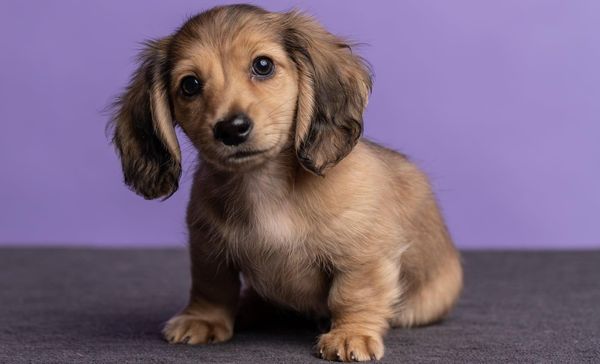
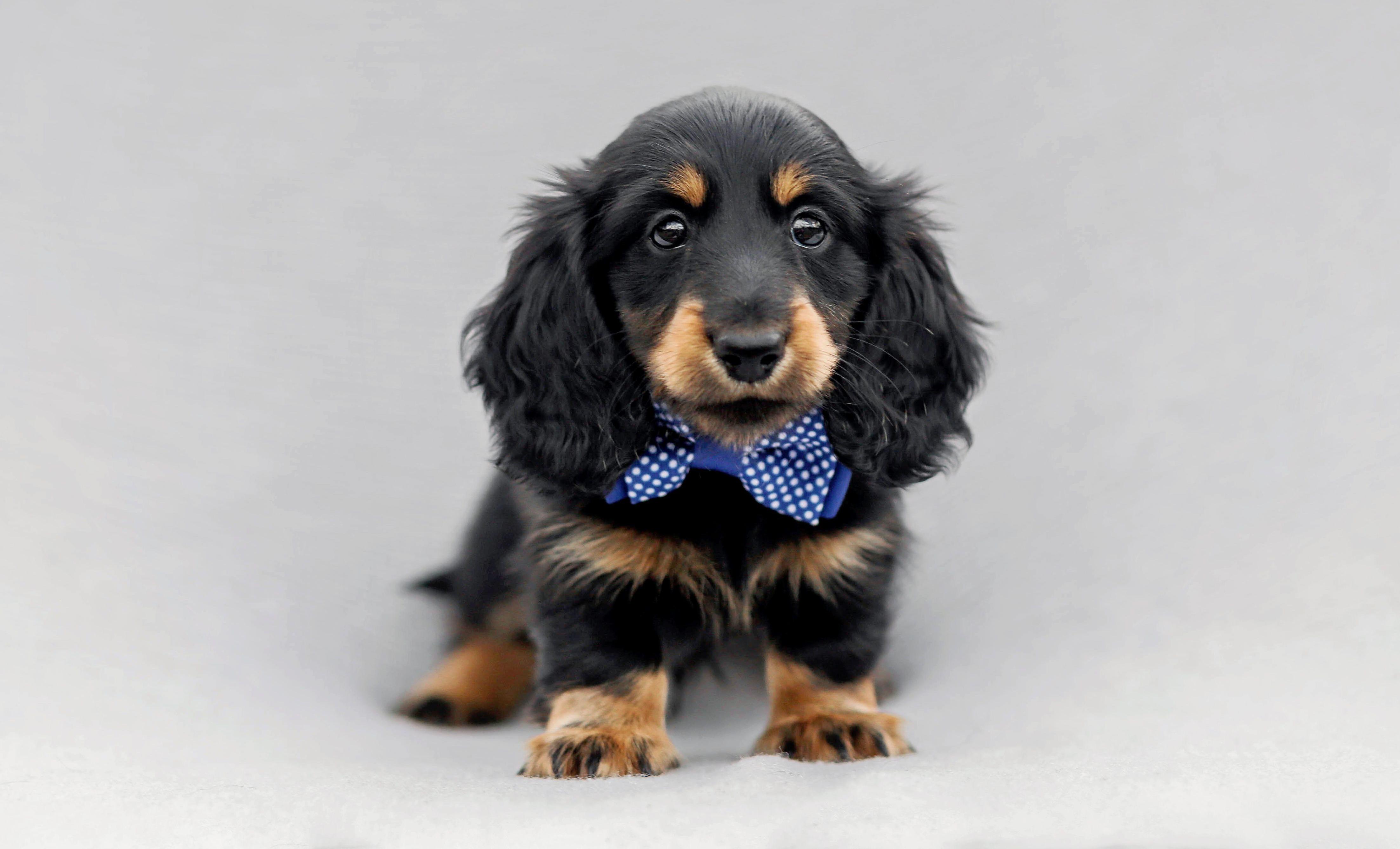
Puppy longhaired dachshund sits with a purple backdrop
Get to know

Dachshunds

Written by
Caroline Coile, Ph.D.,
 author of 34 dog books.
Written by
Caroline Coile, Ph.D.,
 author of 34 dog books, including the top-selling Barron's Encyclopedia of Dog Breeds.
| | | | |

Low on leg, high on life - Dachshunds make you smile. Maybe that’s why everyone loves a Dachshund, whether Standard or Miniature, and Smooth, Long, or Wirehaired.

Variety is the spice of life, and Dachshunds (Doxies to their friends) are about as spicy as it gets in the world of AKC dog breeds. They’re one breed with three coat types (smooth, long and wire) and two sizes (standard and miniature). The coat types may actually have slightly different personalities, but they’re all daring, brash - and spicy!
Browse available puppies

Connect with reputable breeders to find the dog of your dreams

At a glance

Moderate Energy

Energy level

3/5

Very Low Maintenance

Grooming

2/5

Miniature: Extra Small Standard: Small

Size

Bold, Adventurous, Active

Temperament

12-16 years

Lifespan

Highly Trainable

Training

5/5

Medium Vocality

Barking

3/5

At a glance

  • Energy level

    Moderate Energy

  • Grooming

    Very Low Maintenance

  • Size

    Miniature: Extra Small Standard: Small

  • Temperament

    Bold, Adventurous, Active

  • Lifespan

    12-16 years

  • Training

    Highly Trainable

  • Barking

    Medium Vocality

Why people love the breed

Dachshunds make you smile. They’re funny, brash and fearless to a fault, that best buddy who’s always pushing the boundaries. And who doesn’t love that?
Living with a Dachshund is like hanging out with that friend who’s always getting into trouble—and then charming their way out of it. They’re that friend who won’t back down from a dare, who won’t take no for an answer, who laughs in the face of danger—but that you alone know is really a sweetheart. They may just dig in their heels when you tell them to come, kick the dirt higher when you tell them to stop digging, or bark back defiantly when you tell them to shush. But their sweet side makes up for it, and they save it for their special few. You’ll know that when they snuggle against you on the couch, lay their head in your lap and gaze up at you as though it’s just the two of you against the world. It’s only partly their personality. It’s also their looks. Sausage dog, weiner dog—their nicknames show the humor people get from their long body and short legs. And with a choice of coat types, sizes and colors, there are Doxies to meet every preference.

Appearance

With those stubby legs and a body that seems to keep going and going and going, the Dachshund’s body may seem comical, but it’s built for business.
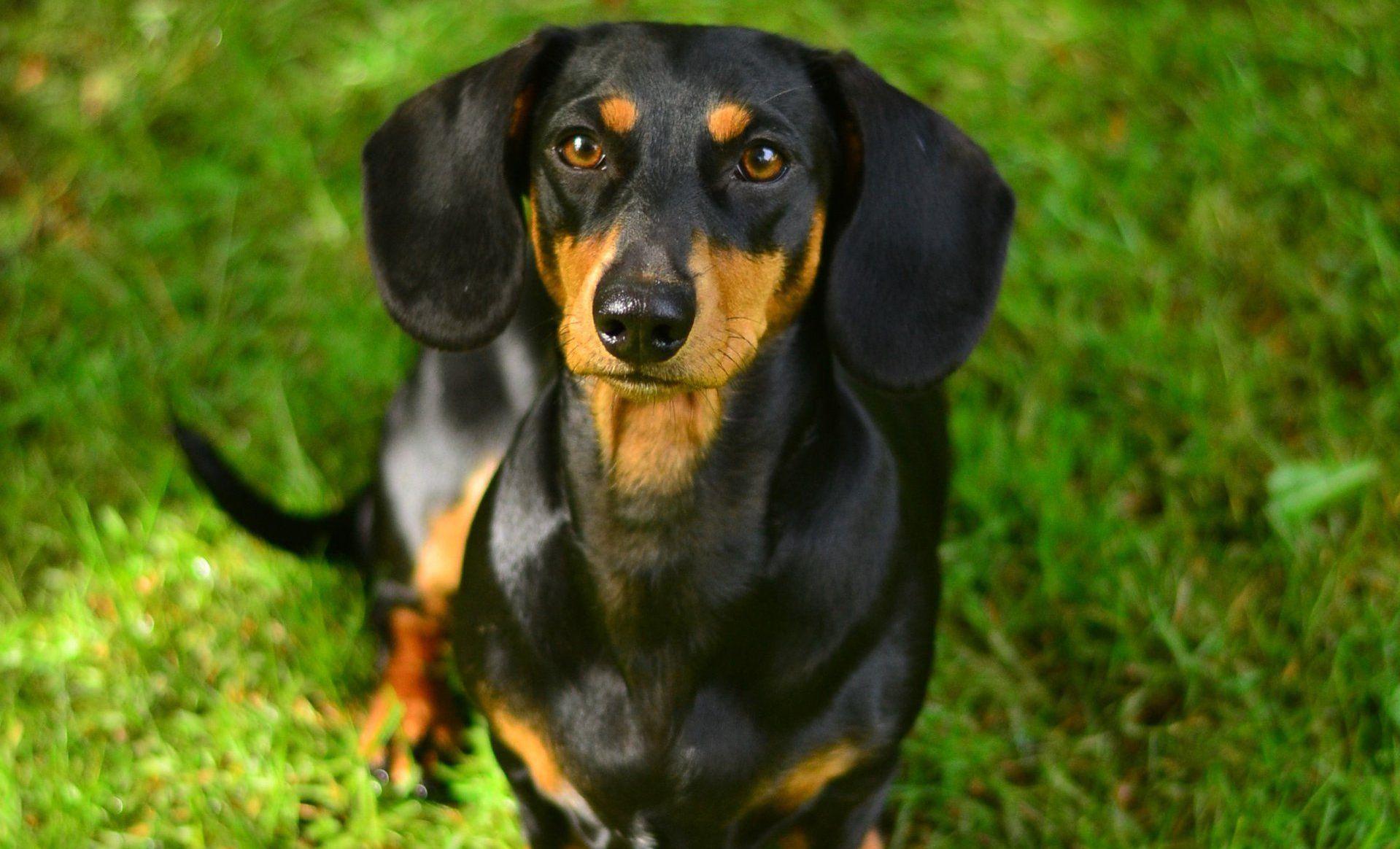
Dachshunds are the low-riders of the dog world. They acquired that low-slung physique because they were used for hunting badgers and needed to be able to enter deep into a badger’s den without getting stuck, but they also needed to have a larger body and jaws to fight and overpower the badger within the den. The answer was to put short legs on a normal sized dog. Dachshunds come in two sizes, the larger Standard size was bred for badger hunting. The Miniature was bred to hunt rabbits. Doxies also come in three coat varieties. The original Smooth coat is sleek and streamlined. The Wirehaired is saucy and dapper looking. And the Longhaired variety looks soft and sweet, almost like a stuffed animal. They come in a variety of colors and patterns, including sable, red, cream, black, chocolate, gray, fawn, brindle, dapple, piebald, and wild boar.

Grooming

Whether Long, Smooth or Wire, grooming a Dachshund is relatively easy. Wirehaired do have a learning curve though.
Grooming your Dachshund depends on which coat type you have. The easiest Dachshund to groom is the wash-and-wear Smooth Dachshund, which benefits from a quick brushing with a bristle brush every week or so. Bathe as needed. The Longhaired Dachshund’s coat is the next easiest. The long coat could use brushing with a pin brush, as well as combing, once or twice a week. Bathe as needed. The Wirehaired variety takes the most grooming. The coat should be combed every week or so, but the main challenge is regularly (at least twice yearly) stripping the dead hairs to prevent the dog from looking like a tumbleweed. And even though the main stripping, as it’s called, will only be needed twice a year, regular weekly stripping will keep your Doxie looking trim year-round. Bathe as needed. Never shave a wire coat—it ruins the texture. Trim the nails as needed, check the ears (don't clean them unless they’re dirty) weekly and brush the teeth daily.
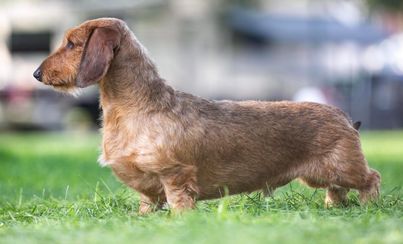
Wirehaired dachshund standing in the grass
Img:

HighStyle Dachshunds

Breed temperament and characteristics

The Dachshund’s temperament is one of its most appealing traits. If you need some mischief and mayhem to spice up your life, here’s the Dachshund!
Dachshunds tend to rush in at the hint of adventure, sometimes when a prudent dog might hang back-–or at least come back when you call. They’re unlike any other hound, being bred to perform both hound duties (hunting and trailing) and terrier duties (digging and going underground after tough prey). Like both hounds and terriers, they tend to be very independent and apt to head off hunting on their own. They’re bold, brash, active and sometimes mischievous. They are equally loving, cuddly and (occasionally) obedient. Dachshunds are generally good with all members of the family, but the bigger concern is whether young children can be good with Dachshunds. Because of their common back problems, children (and anyone) must be careful to pick them up appropriately, not drop them, not encourage them to jump, or do anything that could hurt their back. In addition, dachshunds need to be socialized so they realize visiting children (as well as adults) are their friends as well. They also need to get to know cats and other small pets while they are still puppies, so they realize that they, too, are part of the family, and not just fun toys to chase. Although there’s considerable overlap, owners report that the three coat varieties tend to act slightly differently. The Smooth is the prototypical mixture of sweet and sassy, while the Long emphasizes the “sweet” and the Wire the “sassy.”

Exercise

Exercising your Dachshund is crucial for good behavior. While active, their small size means they can exercise in a smaller area.

The Dachshund is a hunter at heart, so loves to get out and explore the wilds. If they find a scent, they may follow their nose despite your pleas to return. And if you've ever seen Weiner dog races, you know that despite their short legs, Dachshunds are fast. Those short legs do take a lot more energy to get from one place to another, so a long walk or play session—about 45 minutes to an hour long— may be enough to satisfy their exercise needs. They can get plenty of running room in most backyards, and possibly even inside the house or apartment. Doxies do enjoy digging, and some people have even set up digging areas in their yard to encourage it all in one place rather than haphazardly around the flower beds. Dachshunds can compete in special Dachshund field trials, where they follow a rabbit scent through the wilds to a den. Dachshunds are not known for their skill at swimming or retrieving. They prefer dry land, and are apt to take a ball and just keep running with it. Because of the threat of back problems, the best Dachshund activities are those that involve steady walking and trotting rather than jumping or wild running. Agility can be pursued, but no title is worth injury, so be sure to only train if your dog is physically fit for such activity and compete at appropriate jump heights.
cream dachshund laying on a blanket
Img:

English Cream Dachshunds

Training

Independent, tenacious and clever, Dachshunds can be challenging to train. They can excel as long as you make it a game, however.
Dachshunds are independent and can be headstrong. They weren’t bred to follow orders, and many stay true to this heritage. Historically, a Dachshund that constantly checked back for instructions would fail when it came to following a badger into its den and confronting it without human intervention. Today's Dachshund is equally independent, with an attitude that clearly says they know better than you do. The breed is also tenacious (some would say stubborn), another virtue when facing off against a formidable adversary like a badger. The key to training them is to avoid a battle of the wills. Instead, challenge them to prove they’re as smart as they think they are by making training a challenging game. Doxies are very smart and quick. Several Dachshunds have gone on to become top obedience competitors. In fact, the first AKC Obedience Trial Champion (OTCH) in the Hound group was a Dachshund.

Diet and nutrition

Don’t overfeed your Dachshund; they need a trim physique to avoid health issues such as back problems. Otherwise feeding is relatively simple.
It’s vital that you keep your Dachshund at a trim weight. Extra weight puts an added strain on the back, making dogs already at risk for intervertebral disc disease (IVDD) at even greater risk. Otherwise, Dachshunds typically do not need a special diet. Puppies should eat puppy food three to four times a day until ~4 months of age, then two a day until ~9 months of age, transitioning to an adult diet at that time. For puppies, feed them as directed by your veterinarian, but if they start to be chubby as older puppies you may have to restrict their amounts. Your veterinarian may advise you about special diets if your Dachshund has a special concern.
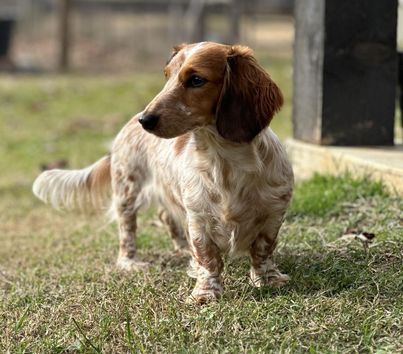
red and white piebald longhaired dachshund stands in the grass looking out into the distance.
Img:

Diamond K Miniature Dachshunds

Health issues

Dachshunds are long-lived and generally healthy, but can suffer from a serious back problem called intervertebral disc disease.

Lifespan: 12 to 16 years.

Intervertebral Disc Disease (IVDD)

Intervertebral disc disease, a degenerative condition that can impact your dog's spinal cord and cause painful mobility issues (even paralysis), is more common in dwarf breeds, including Dachshunds.

Mitral valve disease (MVD)

A common disease of the heart in which one of its valves doesn’t close completely due to degenerative changes, resulting in a heart murmur and eventually congestive heart failure.

Progressive Retinal Atrophy (PRA)

This disorder occurs due to a group of diseases that cause the receptors of the eye’s retina to gradually deteriorate, causing blindness. Various DNA tests are available, depending on breed. Ophthalmic exams performed by ophthalmologists are recommended as well.

Patellar luxation

Patellar luxation, in which the kneecap slips out of the groove in which it should be nested, causes lameness and arthritic changes. It occurs mostly in small breed dogs.

Learn more about health issues that may impact Dachshunds

History

Bred in Germany to hunt badgers underground, the Dachshund’s history includes royalty, media appearances and lots of celebrity owners.
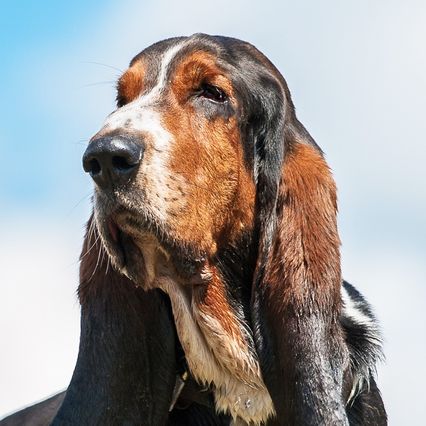
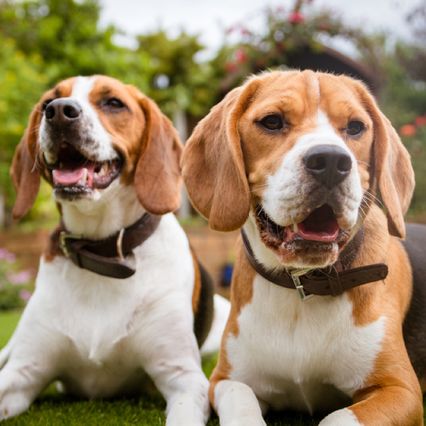
Dachshunds are in the AKC Hound group. According to DNA studies, Dachshunds are most closely related to the Petit Basset Griffon Vendeen and next, the Basset Hound, followed by other scent hounds (dogs that trail by scent). Short-legged dogs were around in ancient times, but the first description of dogs that were probably Dachshunds was from around 1700. By 1800, they were well established in Germany. These Dachshunds (so named because Dach means badger and hund means dog) had to be enough of a small breed to fit in a badger hole, but strong enough to overpower the badger. Those under 20 pounds just weren’t big enough. The solution was a short-legged dog with a normal sized body. Smaller Dachshunds were used to hunt rabbits. The first mention of a Wirehaired Dachshund was in 1812, and of Longhaired dachshunds in 1820. The different coat types were developed for hunting in colder weather or thicker underbrush. The German nobility prized the breed. When Germany’s Prince Albert married England’s Queen Victoria in 1939, Dachshunds came to England and became popular there. Dachshunds came to the United States of America in the mid to late 1800s. The AKC recognized the breed in 1885. They became very fashionable but had a popularity crisis when World War I broke out against Germany. The AKC combatted this by changing the breed’s name to Badger Dog but it didn’t work, so they changed it back in 1923. During WWI their popularity declined so much that only 23 Dachshunds were registered in 1923. But by 1940 they had rebounded to be the sixth most popular AKC breed. They have remained one of America's favorite breeds since then. Note that in Germany they are called “Teckels.” Dachshunds have been favorites in popular culture: A Dachshund (“Waldi”) was the official mascot for the 1972 Summer Olympics in Germany. Picasso often included his own Dachshund, “Lump,” in his work. Andy Warhol, also a Dachshund owner, included them in his works as well. Cartoonist Gary Larson included Dachshunds so often the works are gathered in a book called Weiner Dog Art. Dachshunds have starred in several movies, including Dicky’s Demon Dachshund (1915), Fancy Pants (1950) and The Ugliest Dachshund (1966). They are also known as the “wiener dog.” Celebrity owners include Joan Crawford, Brooke Astor, Doris Day, James Dean, Patty Duke, David Hasselhoff, Winona Judd and Priscilla Presley.
About the author

Canine specialist, Caroline Coile, Ph.D., is the author of 34 dog books, including the top-selling Barron's Encyclopedia of Dog Breeds. She’s written thousands of magazine and web articles about dogs. She specializes in canine science, health, breeds and competitions. Caroline has won 20 national dog-writing awards, and was a 2015 Inductee into the Dog Writers Association of America Hall of Fame.

Breed Scorecard

Characteristics and temperament
  • Affectionate with family

    3

  • Watchdog level

    5

  • Playfulness

    3

  • Adaptability

    3

  • Social needs

    4

  • Temperament

    Bold, Adventurous, Active

  • Intelligence

    4

  • Good with other dogs

    3

  • Good with cats or other pets

    2

  • Friendly with strangers

    2

  • Good as a service dog

    3

  • Good for apartments

    4

  • Barking level

    3

Appearance
  • Height

    5-9"

  • Size

    Miniature: Extra Small Standard: Small

  • Colors

    Sable, Piebald, Gray (blue) (non-standard), Cream, Red, Wild boar, Black (non-standard), Chocolate (non-standard), Fawn (Isabella) (non-standard), Brindle, Chocolate and cream, Wild boar and tan, Wild boar and cream, Gray (blue) and cream, Gray (blue) and tan, Black and cream, Black and tan, Blue and tan, Chocolate and tan, Wheaten, Blue and cream, Fawn (isabella) and tan, Fawn (isabella) and cream, Dapple

  • Coat texture

    Long: silky; Smooth: sleek, smooth; Wire: coarse, hard

  • Coat type

    Longhaired, Smooth, Wirehaired

  • Coat length

    Long: long, drop, feathered, slightly wavy; Smooth: very short, close; Wire: wiry, tight, mustached

Training
  • Trainability

    5

Exercise
  • Exercise needs

    3

  • Exercise time

    1 hour daily

  • Mental exercise needs

    3

  • Favorite activities

    Hunting, blood trailing, hiking, terrier trials, barn hunt, tracking

Grooming
  • Grooming needs

    2

  • Brushing frequency

    Long: weekly; Smooth: monthly; Wire: monthly

  • Needs professional grooming?

    Yes

  • Drooling level

    1

Health issues
  • Intervertebral Disc Disease (IVDD)

  • Mitral valve disease (MVD)

  • Progressive Retinal Atrophy (PRA)

  • Patellar luxation

Other
  • Bred for

    Hunting Badgers

  • Country of origin

    Germany

  • Popularity level

    5

FAQs

  • On Good Dog, you can search for Dachshund puppies or dogs in rescues and shelters. Adopting a Dachshund from a shelter or rescue is generally less expensive than buying a puppy from a breeder with ethical practices. Across the United States, there are dedicated rescues that specialize in specific breeds and may even help transport a Dachshund dog to you from another part of the country. Although it can be more cost-effective, adopting the exact breed you're looking for is typically more difficult than working with a responsible breeder. Learn more about adopting a dog from a shelter or rescue.

  • Prices may vary based on the breeder and individual puppy for sale. On Good Dog, Dachshund puppies are around $1,950. We recommend speaking directly with your breeder to get a better idea of their price range.

  • They can be feisty and won’t back down from another dog. With their people they tend to be even-natured. Some may nip at visitors until they know them.

  • Some, but not all, Dachshunds can bark a lot. They seldom bark at nothing, but they will often bark at what they consider something.

  • Dachshunds can make great pets for people of all ages. They love outdoor adventures but they also make affectionate companions at home. They can be challenging if you want your dog to drop everything and follow commands - that’s probably not going to happen - but if you like a challenge, and a dog that makes you laugh, they’re hard to beat.
Caroline Coile, Ph.D.

Caroline Coile specializes in canine science, health, breeds and competitions. Caroline has won 20 national dog-writing awards, and was a 2015 Inductee into the Dog Writers Association of America Hall of Fame. She’s written thousands of magazine and web articles about dogs in addition to 34 dog books.

Content on Good Dog is generated, fact-checked, and evaluated by qualified writers and veterinarians.

Caroline Coile, Ph.D.

Caroline Coile specializes in canine science, health, breeds and competitions. Caroline has won 20 national dog-writing awards, and was a 2015 Inductee into the Dog Writers Association of America Hall of Fame. She’s written thousands of magazine and web articles about dogs in addition to 34 dog books.

Content on Good Dog is generated, fact-checked, and evaluated by qualified writers and veterinarians.