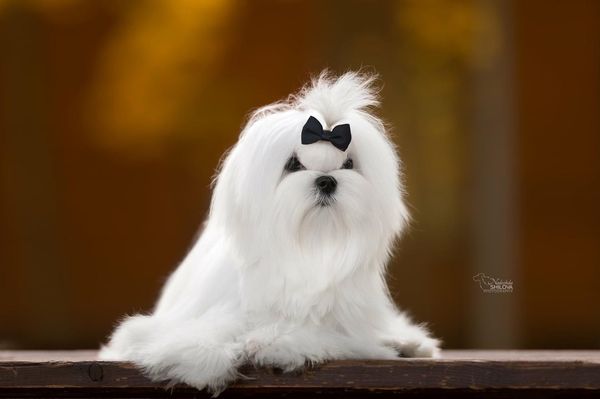

A well-groomed Maltese with a bow
Get to know

Maltese

Written by
Caroline Coile, Ph.D.,
 author of 34 dog books.
Written by
Caroline Coile, Ph.D.,
 author of 34 dog books, including the top-selling Barron's Encyclopedia of Dog Breeds.
| | | | |

Maltese are an enchanting combination of exuberance, elegance, and mischief.

The Maltese is like a young royal wrapped in the finest robes—the sort of royal who doesn’t realize they’re supposed to be regal at all times, not rolling in mud puddles.
Browse available puppies

Connect with reputable breeders to find the dog of your dreams

At a glance

Very Low Energy

Energy level

1/5

Regular Maintenance

Grooming

4/5

Extra small

Size

Playful, active, willing to please

Temperament

12-15 years

Lifespan

Average Trainability

Training

3/5

Vocal

Barking

4/5

At a glance

  • Energy level

    Very Low Energy

  • Grooming

    Regular Maintenance

  • Size

    Extra small

  • Temperament

    Playful, active, willing to please

  • Lifespan

    12-15 years

  • Training

    Average Trainability

  • Barking

    Vocal

Why people love the breed

People love Maltese because they are cute, elegant, gentle, sweet and amiable. Plus, they’re a convenient size.
Maltese have a practical aspect. Their small size makes them economical, incurring lower food, boarding and veterinary bills. Their size also makes it easy to take them shopping or traveling with you. Most of all, their size makes it possible for them to cuddle in laps. They also have an aesthetic aspect. Maltese are beautiful. A Maltese with a well-cared for coat catches eyes wherever it goes. The coat shimmers with brightness, its silken locks reaching the ground. More often, Maltese kept as pets are kept in an easily cared for shorter clip, accentuating the breed’s cuteness. But most of all, people love Maltese because they are sweet, fun, loving, gentle, and engaging which makes great family dogs.

Appearance

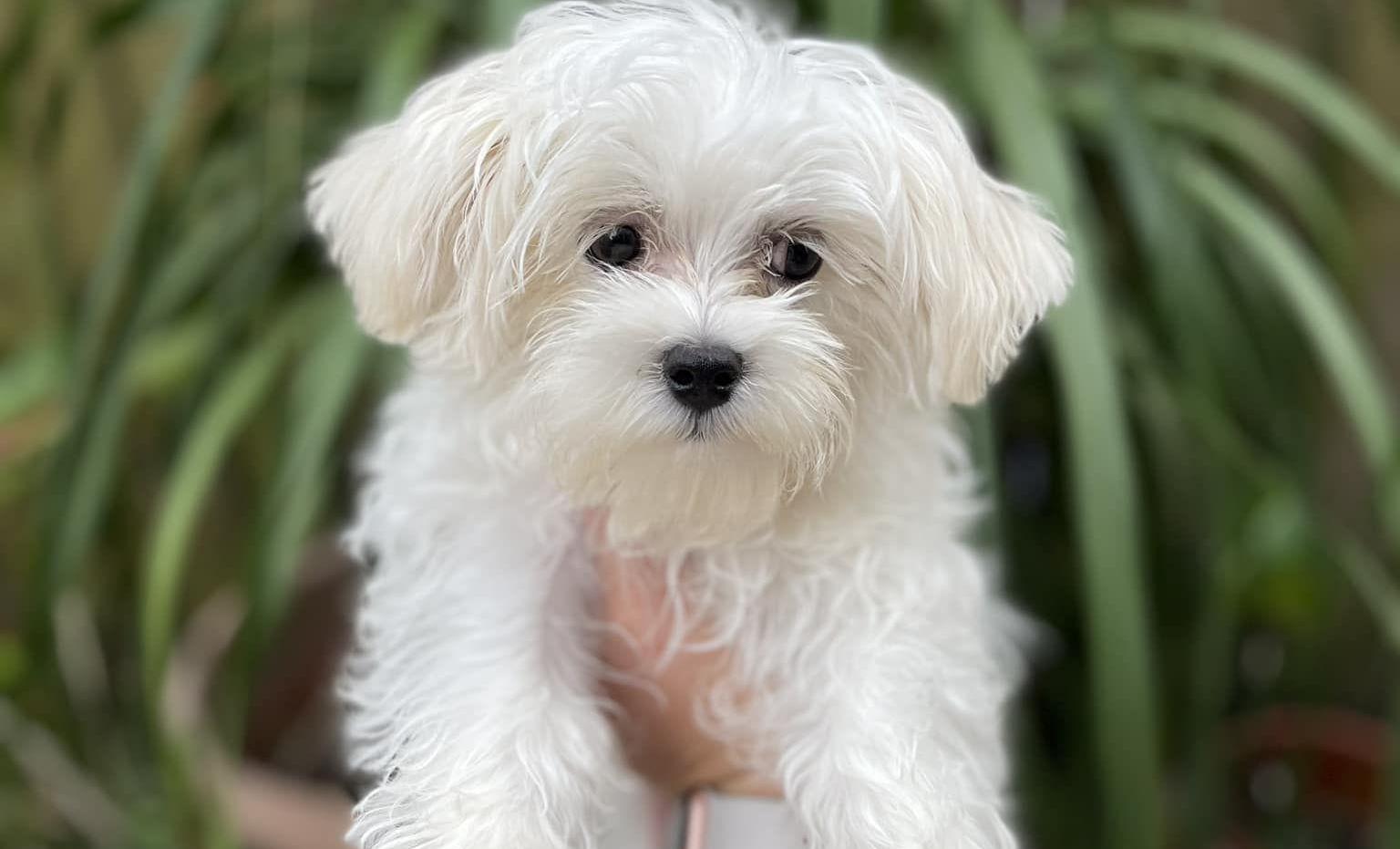
The Maltese is a diminutive dog known for its long, silky white tresses. But even clipped short, they’re hard to beat for cuteness.
Below the white coat is a compact, square body with a straight, level topline. The long tail is carried over the back, its tip lying to one side. The head is delicate with a fine muzzle of medium length. The ears are set low and hang down. The eyes are round. The pigment of the eyes, nose and lips is dark. The entire expression is alert and gentle. The dog is covered all over with a long, flat, silky coat. Left unclipped, it can hang to the ground. It is always pure white. Many owners elect to clip their Maltese in a shorter cut. In this case the hair is still left a little long, especially around the face, so they look really cute. When trotting, the Maltese seems to float across the ground with a jaunty, vigorous gait.

Grooming

The Maltese’s dazzling white locks take a lot of work to maintain–but are well worth it. Still, many people elect to clip their Maltese so they look cute and perky instead.
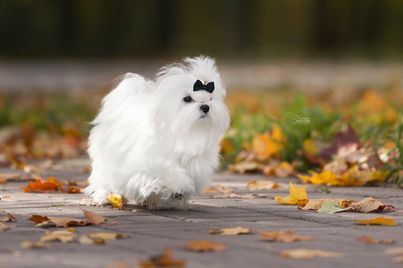
Maltese dogs shed very little, which is better for allergy sufferers, but that may be the only thing easy about grooming them. If you want your Maltese to have a long, flowing, white coat, be prepared to comb it every day and wash it often. You may need to restrict your dog from running where it can get mud, twigs, and leaves in the coat. More likely, you’ll find the ease of caring for a clipped Maltese preferable. This way your dog can run and swim without worry. Most people have a professional groomer clip their Maltese every 4 to 6 weeks. Groomers usually clip the body short but leave more on the head to give the dog a cuter look. They may also leave more on the tail, or clip to a uniformly shorter length all over to resemble a puppy. You still need to comb the longer hair every few days, and wash between grooming appointments. Keeping the pure-white maltese coat can be a challenge. The long hair around the mouth and beneath the eyes can easily become stained from saliva and tears unless you keep it clean constantly. You may elect to clip hair beneath the eyes and mouth shorter for easy maintenance. Clip the nails as needed, examine the ears weekly but clean only if necessary, and brush the teeth to provide dental care daily. Small dogs are prone to dental disease so keeping them clean and healthy will help your Maltese throughout their life.
A well-groomed Maltese trots in the autumn leaves
Img:

Leona's Maltese

Breed temperament and characteristics

The Maltese may be a lap dog, but they’re full of feistiness and adventure.
The Maltese is one of the very earliest breeds selected as a lapdog. It is very good at its job. But they are still dogs, so don’t expect them to just sit quietly in your lap. They have a definite wild side and like to do doggy things, including chasing squirrels, romping in mud, and even challenging larger dogs. Some have even been known to catch mice and even rats. Maltese are feisty, and that goes for standing up to larger dogs as well. They don’t have the bulk to back up their threats, so you have to prevent them from trying to pick on others. They are very loving and affectionate, and make great companions for people of all ages. They are gentle and get along with other dogs and pets. Because of their small size, very young, small children as well as larger dogs should be supervised around them lest the tiny Maltese get hurt. They tend to be somewhat reserved with strangers. They are playful and enjoy games of fetch and keep away. They can bark a lot in excitement, and make great watchdogs (but poor protection dogs). While energetic, they are not hyperactive, and enjoy taking it easy at your side or in your lap.

Exercise

The vivacious Maltese is full of energy and has a zest for adventure. Don’t expect them to just sit happily in your lap unless that time is balanced with activity.
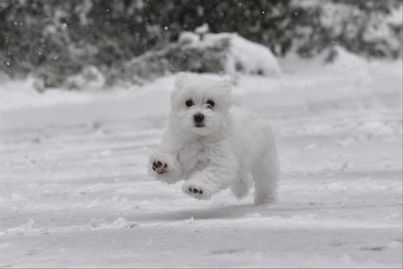
Although energetic, Maltese owners can meet their exercise needs in a small area. They can tire themselves out running around a small apartment, playing games like fetch and find, or running from room to room. Just because they can exercise indoors, doesn't mean they always should. Like all dogs, they relish the chance to go outside, roll in the grass, sniff the sidewalk, and meet the neighbors. Although you can carry a Maltese in your arms or doggie purse, in safe areas let them walk so that they can get mental and physical exercise. The Maltese is generally a well-behaved dog park attendee, but only if the park has a separate section for very small dogs, as they could be easily injured by larger dogs. If you plan to let your Maltese spend time in the yard, make sure your area is free from roaming wild animals, such as coyotes, or large birds of prey that could carry your dog away (especially as a tiny puppy). A covered run or porch may be a good option.
A Maltese puppy frolics in the snow
Img:

Riverview Maltese

Training

Maltese are fast learners, but tend to only mind when they feel like it.
Maltese are eager to please and they respond well to reward-based training. They do better when treated as co-workers rather than servants—although they may treat you like their servant. Clicker training may be effective, especially when they are on the ground, since it can be hard to reward them immediately as they’re so small. Clicker training makes it easy to communicate to them from a distance when they’ve done something right. Maltese especially like learning tricks, and are able to perform a wide variety of circus-like feats. Several have been trained to high levels of obedience and agility, although they are not generally regarded as top prospects in those competitions.

Diet and nutrition

Maltese need a diet that can fuel their high activity level, grow their luxurious coat, and as puppies, guard against hypoglycemia.

Tiny dogs need to eat more per pound of body weight compared to larger dogs. When feeding tiny dogs the balance of the diet becomes harder to maintain. A few unhealthy handouts won’t greatly affect a big dog’s total nutrition, but the same amount will make up a much larger percentage of your tiny dog’s total nutrients. They can unbalance the diet or add way more calories than you planned to feed. So you have to be extra careful when feeding tiny dogs. Their coats and energy levels can be taken into consideration when selecting a diet. Additionally, tiny Maltese teeth may have difficulty crunching up some kibbles. The answer is to get a high quality commercial food especially formulated for small dogs. When choosing treats, beware that some dog treats are choking size for small dogs. So be sure to select a treat that is appropriate for a smaller pup. Maltese puppies, especially very young or very small ones, must be guarded against hypoglycemia. Hypoglycemia occurs when the level of sugar in the blood drops too low. Aim to feed your young Maltese puppy about every 4 hours. Don’t have your puppy exercise before bed, when no food will be available overnight. Hypoglycemia is potentially fatal, and a real emergency. Signs start with the puppy being hard to rouse, and acting wobbly. You can help to increase blood sugar by rubbing a small amount of corn syrup on the puppy’s gums and rushing to the emergency vet. As your puppy ages, you can gradually cut back to three meals a day. Fortunately, most Maltese will outgrow this danger as they mature, and then go to two meals a day. Ask your veterinarian about special diets should your Maltese develop a medical condition that a diet can help manage.
Two Maltese puppies in the garden
Img:

Leonas Maltese

Health issues

Maltese share a few health concerns with other tiny dogs, but overall are extremely healthy.

Lifespan: 12 to 15 years.

Patellar luxation

When the kneecap pops out of the groove in which it normally sits, occurs in small dogs, including Maltese, at higher frequencies than larger dogs.

Hypothyroidism

When low amounts of thyroid hormone are produced by the thyroid gland, is diagnosed at a higher frequency in Maltese compared to other breeds.

Hydrocephalus

When cerebrospinal fluid accumulates around the brain.

Liver shunts

When an abnormal connection allows blood to flow around the liver. It can cause stunted growth, abnormal behavior, and possible seizures.

Patent ductus arteriosus

When a shunt connecting the aorta to the pulmonary artery remains open after birth (when it normally closes).

Shaker syndrome occurs

A disorder known for most commonly occurring in small, white breeds. It involves generalized head and body tremors.

Other health issues

Other health conditions that affect Maltese include Protein losing enteropathy and Necrotizing meningoencephalitis.

Learn more about health issues that may impact Maltese

History

The Maltese is among the most ancient of breeds, and very likely the most ancient toy dog.
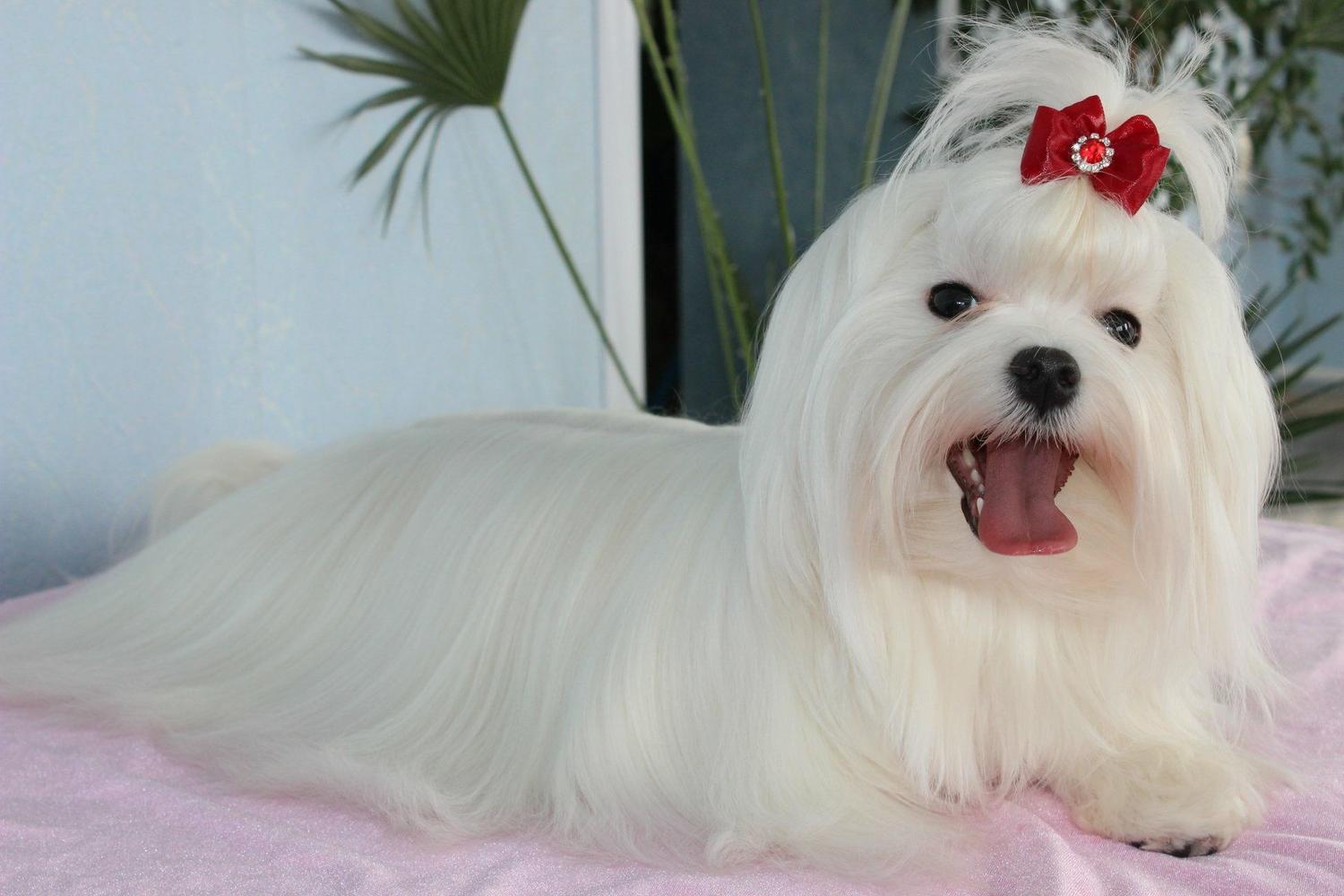
The breed is a member of the Bichon family of dogs, which originated in the Mediterranean region and also includes other small dog breeds such as the Bichon Frise, Havanese, Coton de Tulear and Bolognese. Aristotle mentioned a tiny dog he referred to as a Canis Melitae (dog of Malta). Greek vases show the first Maltese-like dogs as early as 500 B.C. Early sailors took the dogs on ships as ratters and trade items, distributing them to distant ports. Maltese became favored lapdogs of the upper class in 1800s England. They were one of the first breeds exhibited in the show ring at dog shows, as the Maltese Terrier. “Terrier” was dropped in 1918. The Maltese is in the American Kennel Club (AKC) Toy group. Celebrity owners include Elizabeth Taylor, Barbra Streisand, Marilyn Monroe, Elvis Presley, Tony Bennett, Liberace, Britney Spears, Torrie Wilson, Sarah Michele Geller, Eva Longoria and Lindsey Lohan. A Maltese named Trouble was once the richest dog in the world, having been left a $12 million trust fund from her owner Leona Helmsley.
About the author

Canine specialist, Caroline Coile, Ph.D., is the author of 34 dog books, including the top-selling Barron's Encyclopedia of Dog Breeds. She’s written thousands of magazine and web articles about dogs. She specializes in canine science, health, breeds and competitions. Caroline has won 20 national dog-writing awards, and was a 2015 Inductee into the Dog Writers Association of America Hall of Fame.

Breed Scorecard

Characteristics and temperament
  • Affectionate with family

    3

  • Watchdog level

    5

  • Playfulness

    4

  • Adaptability

    4

  • Social needs

    4

  • Temperament

    Playful, active, willing to please, gentle, amiable

  • Intelligence

    3

  • Good with other dogs

    3

  • Good with cats or other pets

    3

  • Friendly with strangers

    2

  • Good as a service dog

    1

  • Good for apartments

    5

  • Barking level

    4

Appearance
  • Height

    7-10"

  • Size

    Extra small

  • Colors

    White, White and lemon (non-standard), White and tan (non-standard)

  • Coat texture

    Silky

  • Coat length

    Long

Training
  • Trainability

    3

Exercise
  • Exercise needs

    1

  • Exercise time

    One hour daily

  • Mental exercise needs

    3

  • Favorite activities

    Games, trick training

Grooming
  • Grooming needs

    4

  • Brushing frequency

    Daily

  • Needs professional grooming?

    No

  • Drooling level

    1

Health issues
  • Patellar luxation

  • Hypothyroidism

  • Hydrocephalus

  • Liver shunts

  • Patent ductus arteriosus

  • Shaker syndrome occurs

  • Other health issues

Other
  • Bred for

    Lapdog

  • Country of origin

    Island of Malta

  • Popularity level

    2

FAQs

  • On Good Dog, you can search for Maltese puppies or dogs in rescues and shelters. Adopting a Maltese from a shelter or rescue is generally less expensive than buying a puppy from a breeder with ethical practices. Across the United States, there are dedicated rescues that specialize in specific breeds and may even help transport a Maltese dog to you from another part of the country. Although it can be more cost-effective, adopting the exact breed you're looking for is typically more difficult than working with a responsible breeder. Learn more about adopting a dog from a shelter or rescue.

  • These little dogs are known to most people for their shimmering long white hair that can drag the ground, giving them the appearance of a snow-themed parade float. But for those who live with them, they are known for their cuteness!

  • Prices may vary based on the breeder and individual puppy. Responsibly-bred maltese puppies typically range in price from $2,000 to $3,100. We recommend speaking directly with your breeder to get a better idea of their price range.

  • Absolutely. They are conveniently sized, filled with fun, affectionate, and sweet.
Caroline Coile, Ph.D.

Caroline Coile specializes in canine science, health, breeds and competitions. Caroline has won 20 national dog-writing awards, and was a 2015 Inductee into the Dog Writers Association of America Hall of Fame. She’s written thousands of magazine and web articles about dogs in addition to 34 dog books.

Content on Good Dog is generated, fact-checked, and evaluated by qualified writers and veterinarians.

Caroline Coile, Ph.D.

Caroline Coile specializes in canine science, health, breeds and competitions. Caroline has won 20 national dog-writing awards, and was a 2015 Inductee into the Dog Writers Association of America Hall of Fame. She’s written thousands of magazine and web articles about dogs in addition to 34 dog books.

Content on Good Dog is generated, fact-checked, and evaluated by qualified writers and veterinarians.