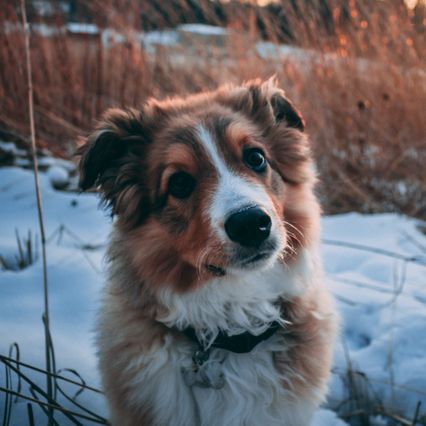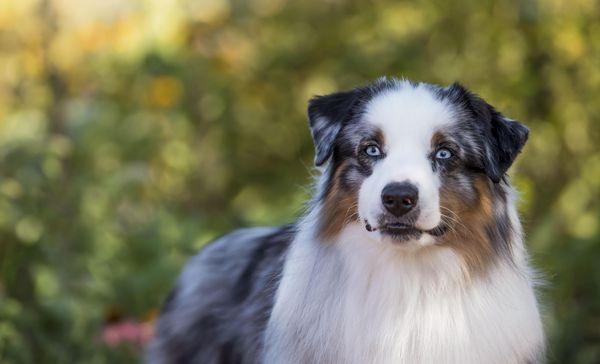
Blue merle MAS
Get to know

Miniature American Shepherds

Written by
Caroline Coile, Ph.D.,
 author of 34 dog books.
Written by
Caroline Coile, Ph.D.,
 author of 34 dog books, including the top-selling Barron's Encyclopedia of Dog Breeds.
| | | | |

More than just a small Aussie—

The Miniature American Shepherd (MAS), may be a smaller version of the Australian Shepherd, but while smaller in body some say they are bigger in personality. The breed is based on their ancestor’s herding skills but then further emphasized their companion aspects. The result is a smaller, nimble dog that many believe is even more responsive and affectionate than the original!

At a glance

Very High Energy

Energy level

5/5

Low Maintenance

Grooming

3/5

Small

Size

Alert, active, easily trained

Temperament

12-13 years

Lifespan

Highly Trainable

Training

5/5

Medium Vocality

Barking

3/5

At a glance

  • Energy level

    Very High Energy

  • Grooming

    Low Maintenance

  • Size

    Small

  • Temperament

    Alert, active, easily trained

  • Lifespan

    12-13 years

  • Training

    Highly Trainable

  • Barking

    Medium Vocality

Why people love the breed

They’re everything an Australian Shepherd is—but in a smaller package!
These dogs were bred down from full-sized Australian Shepherds. Full-sized “Aussies” are great dogs but they can be a bit larger than some households prefer. Just like their larger ancestors, “Mini Aussies,” as they were first called (and sometimes still are) are super smart, eager to please, easy to train, keen for almost any activity, and extremely sociable. Because they were selected for companionship above all, many owners contend they make even better family pets. Plus, they come in the same assortment of colors and patterns.

Appearance

Like an Australian Shepherd, but smaller and even lighter on their feet.
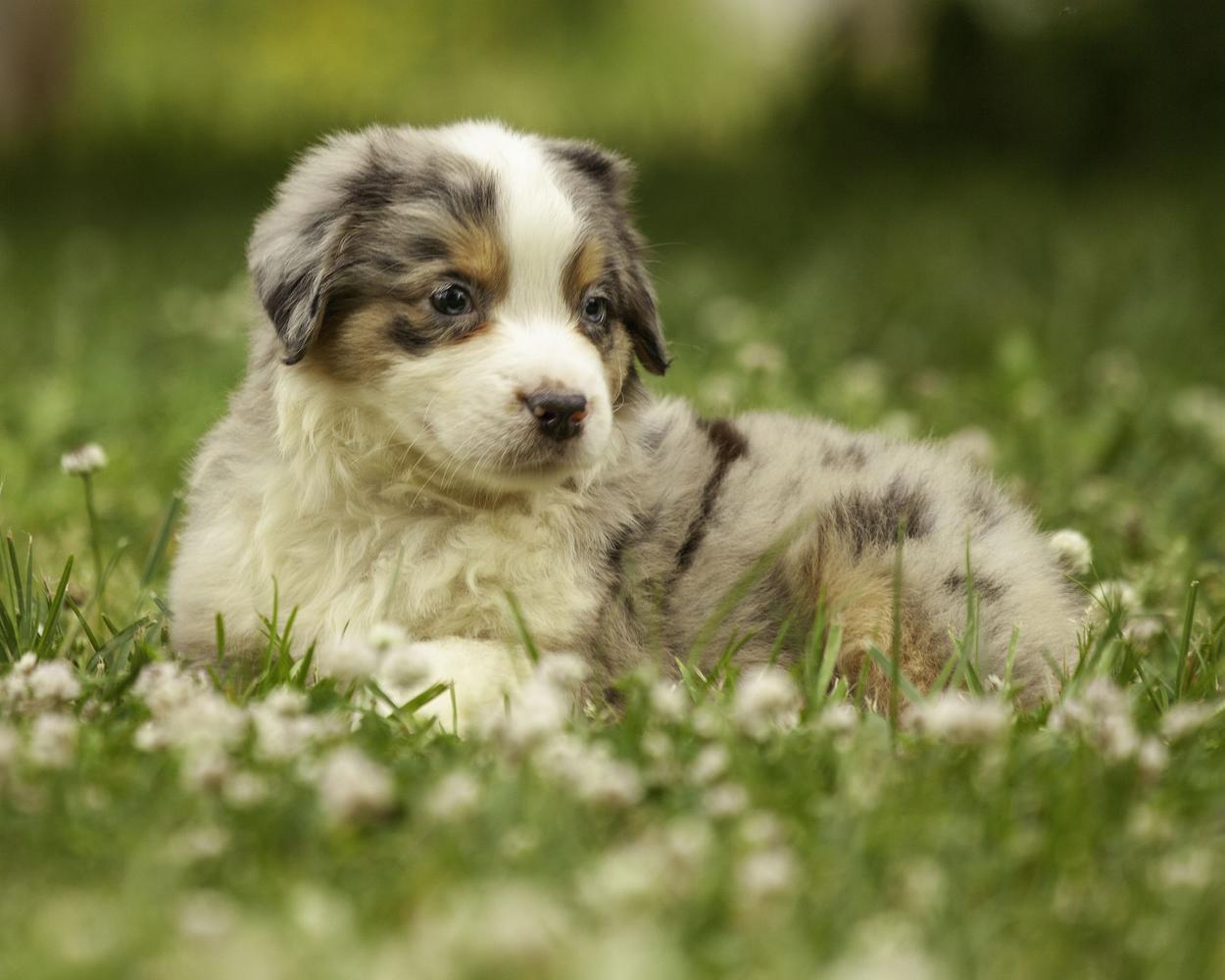
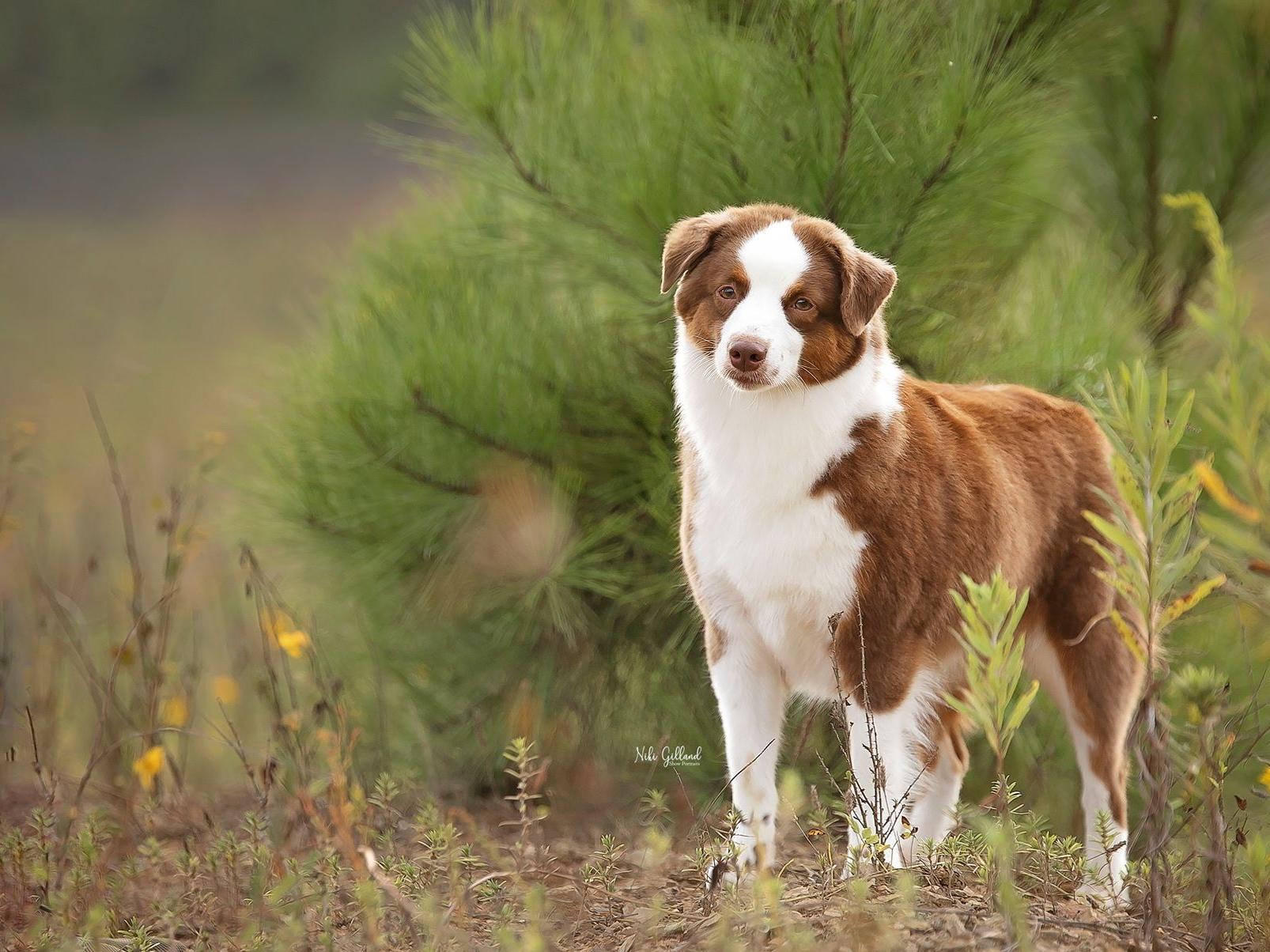
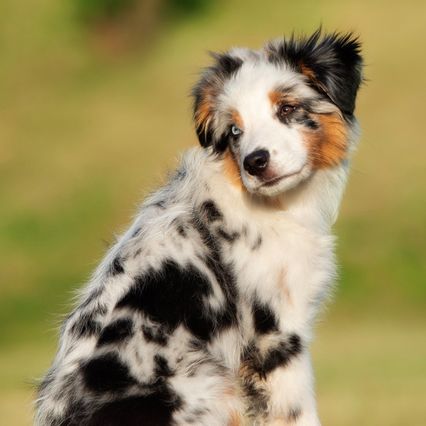
The Miniature American Shepherd is a moderate dog in every way, with nothing extreme or overstated. They are both smaller and slighter of bone than the Australian Shepherd. Although there are subtle differences in conformation between the two breeds, most differences are only obvious to breed connoisseurs and are not important to most owners. They are slightly longer than tall, with a fairly broad head, small drop ears and a thick medium length coat. The movement is agile and lithe, able to move or change direction almost instantly. In countries where it’s legal, most breeders have the tail docked close to the body at birth, so most Miniature American Shepherds have virtually no tail. If allowed to grow out, the tail is plumed. The coat comes in several colors and patterns, notably, blue merle or red merle, black or red, all with or without tan or white markings.

Grooming

Grooming is pretty easy, but does take some work during shedding seasons.
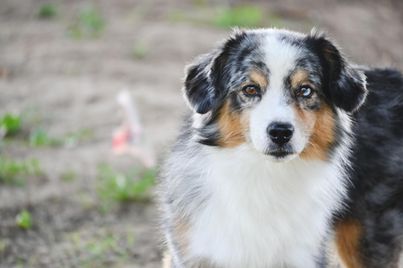
You’ll need to brush your Miniature American Shepherd once a week at least, more often when shedding. Use a pin brush to get down to the skin. Some slight tangling and matting can occur on the longer fur of the britches or the tail (if undocked), especially if they get into brambles. When shedding, you’ll want to brush your pup daily to remove the loose dense undercoat. They do best with regular bathing, although they can go for longer periods of time. More frequent bathing helps loosen hair that’s about to be shed, and prevents oils that can help tangle the hair. Trim their nails as needed and brush the teeth every day.
Blue merle MAS headshot
Img:

Stellar Miniature American Shepherds

Breed temperament and characteristics

Eager to work and eager to please, the Miniature American Shepherd is easily trained but has an independent side.
To understand the Miniature American Shepherd, all you need is to understand their ancestors. First, they descend from the Australian Shepherd, a breed developed to herd unruly cattle in hostile terrain. Herding fractious cattle requires dogs to attend to the herder’s instructions, but also to think for themselves. So while their ancestors were smart and easily trainable, they did exhibit more independence than many herding breeds. The Miniature American Shepherd further descended in part from Australian Shepherds that earned their keep doing tricks at rodeos; again, these were highly trainable dogs that didn’t flinch from a challenge. Many of the smaller ones became stable dogs, traveling with the horses to rodeos—once again, a job that required obedience. The end result is a breed that is smart, very easily trained, amiable, but with a touch of independence and even some stubbornness. They are very active dogs that may be too active for some families. Oddly, like many herding breeds, some have a tendency to be shy.

Exercise

Need an exercise coach? Meet the Miniature American Shepherd!
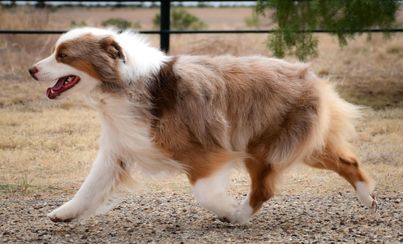
Don’t plan to spend your weekends watching TV. Your Miniature American Shepherd has other plans. The same for every other day of the week. Prepare to spend a couple of hours doing something with your Miniature American Shepherd, whether it's hiking, jogging, Frisbee, swimming or training-–preferably all of them every day, if your Miniature American Shepherd had their way! But given this outlet, they can be content lying quietly inside, awaiting the next chance to get going. Miniature American Shepherds are extremely talented when it comes to sports requiring mental challenges, and you should incorporate such activities into your daily exercise. They especially enjoy dog sports such as herding, agility, obedience, trick training, barn hunt and nosework. They are one of the better breeds for dog parks.
Red merle MAS trotting
Img:

RLA Miniature American Shepherds

Training

They are super easy to train to do things; a bit harder to train not to do things!
Given their herding and especially rodeo trick dog ancestry, it’s no surprise that the Miniature American Shepherd loves to learn, loves to please, and loves to show off what it’s learned. Their clever mind works overtime to understand what you’re asking and figure out how to do it. They also work overtime to figure out their own inventions, and if you let training go too slowly, or ask your Miniature American Shepherd to be still for too long, don’t be surprised if your Miniature American Shepherd thinks up its own tricks—which you may not like! The key to training is to keep it all fast-paced and challenging, and combine it with physical challenges when possible. Some Miniature American Shepherds can be shy, so early socialization is very important. Expose them slowly, not forcing them into a situation that makes them uncomfortable. Always make sure you don’t overwhelm your Miniature American Shepherd by trying to go too fast.

Diet and nutrition

They may need a lot of calories for their size.
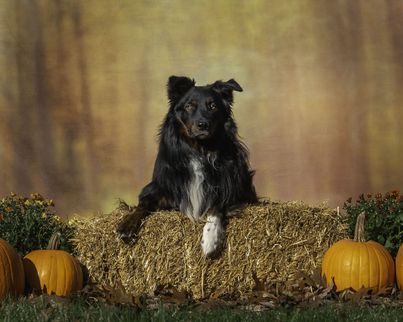
Very young puppies will require feeding three to four times a day, then two times a day after reaching ~4 months of age. For puppies, feed them as directed by your veterinarian, but if they start to be chubby you may have to adjust their intake. The Miniature American Shepherd is an active dog so may need to eat a diet designed for high-energy dogs. Take care you don’t overfeed though. You should still be able to feel the ribs and hips without much probing. Your Miniature American Shepherd should have a slightly hourglass shaped view from the top, with a well tucked up abdomen.
A black tri MAS lays on a straw bale
Img:

Rust Belt Farms

Health issues

The Miniature American Shepherd is an exceptionally healthy breed.

Lifespan: 12 to 13 years.

Hip dysplasia

This complex condition involves both genetic and environmental factors and arises when the head of the femur doesn’t fit in the pelvic socket, causing arthritis and lameness. No genetic test is available to date, therefore, the recommended screening test is x-rays.

Multidrug resistance 1 (MDR1)

Miniature American Shepherds can inherit a genetic variant in their ABCB1 gene that makes them sensitive to certain drugs. This mutation can allow certain drugs and toxins to build up or even cross into the brain, causing severe and sometimes fatal reactions. A DNA test is available, and all Miniature American Shepherds should be tested to know if they need to avoid high doses of these drugs. It’s better to know early rather than wait until your dog may need one in a hurry.

Progressive retinal atrophy (PRA)

This disorder occurs due to a group of diseases that cause the receptors of the eye’s retina to gradually deteriorate, causing blindness. Various DNA tests are available, depending on breed. Ophthalmic exams performed by ophthalmologists are recommended as well.

Cataracts

An opacity in the lens, occur in Miniature American Shepherds.

Collie eye anomaly

One of the eye problems that affect Miniature American Shepherds. It is a hereditary condition impacting the development of the eye that can lead to blindness and retinal detachment.

Degenerative myelopathy

A disease affecting the spinal cord, resulting in slowly progressive hind limb weakness and paralysis. A DNA test is available that indicates if dogs are at greater risk.

Learn more about health issues that may impact Miniature American Shepherds

History

Made in the USA!
They are in the American Kennel Club (AKC) Herding group. The Miniature American Shepherds' roots lie with the Australian Shepherd, which in turn was developed from European herding dogs that came to America by way of Australia. These dogs had been used in Australia to control tough cattle, and were ideal for similar work in the American West. In later years some Aussies found a second job as rodeo entertainment performing tricks. Offspring of these dogs were often sold to rodeo-goers and competitors as family dogs or stable dogs. A large percentage of them were on the small side, too small to be cattle herders, but ideal for these other jobs. Many people clamored for the small Australian Shepherds. In the 1960s some breeders realized they would make a perfect breed, and set about breeding the smaller ones to one another—and probably to some other small breeds. First called Miniature Australian Shepherds, they were admitted to the American Kennel Club (AKC) Herding group in 2015 under one condition—they changed their name to Miniature American Shepherd. This emphasized that they probably had other breeds in them, made the Australian Shepherd people happy, and mostly, correctly noted their country of origin. They have rapidly grown in popularity, racing to the top 30 in just a few years.
About the author

Canine specialist, Caroline Coile, Ph.D., is the author of 34 dog books, including the top-selling Barron's Encyclopedia of Dog Breeds. She’s written thousands of magazine and web articles about dogs. She specializes in canine science, health, breeds and competitions. Caroline has won 20 national dog-writing awards, and was a 2015 Inductee into the Dog Writers Association of America Hall of Fame.

Breed Scorecard

Characteristics and temperament
  • Affectionate with family

    5

  • Watchdog level

    4

  • Playfulness

    5

  • Adaptability

    4

  • Social needs

    5

  • Temperament

    Alert, active, easily trained, friendly, playful

  • Intelligence

    5

  • Good with other dogs

    4

  • Good with cats or other pets

    4

  • Friendly with strangers

    4

  • Good as a service dog

    4

  • Good for apartments

    3

  • Barking level

    3

Appearance
  • Height

    13-18"

  • Size

    Small

  • Colors

    Black tri, Black & white, Red tri-color, Red & white, Black, Red merle, Blue merle, Red

  • Coat texture

    Coarse

  • Coat length

    Straighter outer coat, dense soft undercoat

Training
  • Trainability

    5

Exercise
  • Exercise needs

    5

  • Exercise time

    2 hours daily

  • Mental exercise needs

    5

  • Favorite activities

    Herding, agility, obedience, trick training, hiking, Frisbee

Grooming
  • Grooming needs

    3

  • Brushing frequency

    Twice weekly

  • Needs professional grooming?

    No

  • Drooling level

    1

Health issues
  • Hip dysplasia

  • Multidrug resistance 1 (MDR1)

  • Progressive retinal atrophy (PRA)

  • Cataracts

  • Collie eye anomaly

  • Degenerative myelopathy

Other
  • Bred for

    Herding, rodeo entertainment, equestrian companion

  • Country of origin

    United States

  • Popularity level

    2

FAQs

  • On Good Dog, you can search for Miniature American Shepherd puppies or dogs in rescues and shelters. Adopting a Miniature American Shepherd from a shelter or rescue is generally less expensive than buying a puppy from a breeder with ethical practices. Across the United States, there are dedicated rescues that specialize in specific breeds and may even help transport a Miniature American Shepherd dog to you from another part of the country. Although it can be more cost-effective, adopting the exact breed you're looking for is typically more difficult than working with a responsible breeder. Learn more about adopting a dog from a shelter or rescue.

  • Prices for Miniature American Shepherd puppies for sale vary by breeder and individual puppy. On Good Dog today, Miniature American Shepherd puppies are typically around $2,100. Because all breeding programs are different, you may find dogs for sale outside that price range

  • Breeders prefer to call them “active.” But yes, they are very active! Their ancestors were bred to herd all day, so don’t expect them to relish a life of leisure. They are energetic and inquisitive, so you need to find ways to exercise and entertain them and are a good match for an active home.

  • They have a pretty thick undercoat, so during shedding seasons, which are about twice a year, they can shed a lot! If you brush them daily for these couple of weeks, you will collect the hair in your brush and not your home.

  • They are great dogs as long as they get enough exercise! They are friendly and get along with kids, the elderly, strangers and other dogs. And they are easy to train!
Caroline Coile, Ph.D.

Caroline Coile specializes in canine science, health, breeds and competitions. Caroline has won 20 national dog-writing awards, and was a 2015 Inductee into the Dog Writers Association of America Hall of Fame. She’s written thousands of magazine and web articles about dogs in addition to 34 dog books.

Content on Good Dog is generated, fact-checked, and evaluated by qualified writers and veterinarians.

Caroline Coile, Ph.D.

Caroline Coile specializes in canine science, health, breeds and competitions. Caroline has won 20 national dog-writing awards, and was a 2015 Inductee into the Dog Writers Association of America Hall of Fame. She’s written thousands of magazine and web articles about dogs in addition to 34 dog books.

Content on Good Dog is generated, fact-checked, and evaluated by qualified writers and veterinarians.