Corporations
Good Dog is on a mission to educate the public, support dog breeders, and promote canine health so we can give our dogs the world they deserve.
Good Dog is on a mission to educate the public, support dog breeders, and promote canine health so we can give our dogs the world they deserve.
Good Dog is on a mission to educate the public, support dog breeders, and promote canine health so we can give our dogs the world they deserve.
A corporation is a legal entity made up of either companies or individuals. While we realize that most breeders would not need to form a corporation, we are providing the option for informative purposes.
There are two main types of corporations:
- C corporation - this is the default form of a corporation.
- S corporation - in order to form as a S corporation you need to specify to the state that you want to form an S corp; you must file an additional form (Form 2553).
C corporations are treated as a separate legal entity from its owners and for tax purposes are considered its own legal person. Any profits generated by the company are taxed at the corporate level. Any profits then passed to any shareholders are taxed at the personal level. This means the entity itself would be taxed and then any money you make from the entity will be taxed again on your personal income taxes. If a corporation is sued the individual shareholders or employees are not personally liable for the legal action, meaning someone can not come after your individual assets, only the assets of the corporation. To form a corporation in most states you must file articles of incorporation with the state. Typically after incorporating, a corporation will issue stock to its shareholders who then become the partial owners of the company.
S corporations only are taxed at the personal level. Profits pass through to the shareholders and they pay the taxes on their personal tax returns. They are similar to C corporations in most ways, but the amount of shareholders is capped at 100.
How to set-up a Corporation
Click image to enlarge:
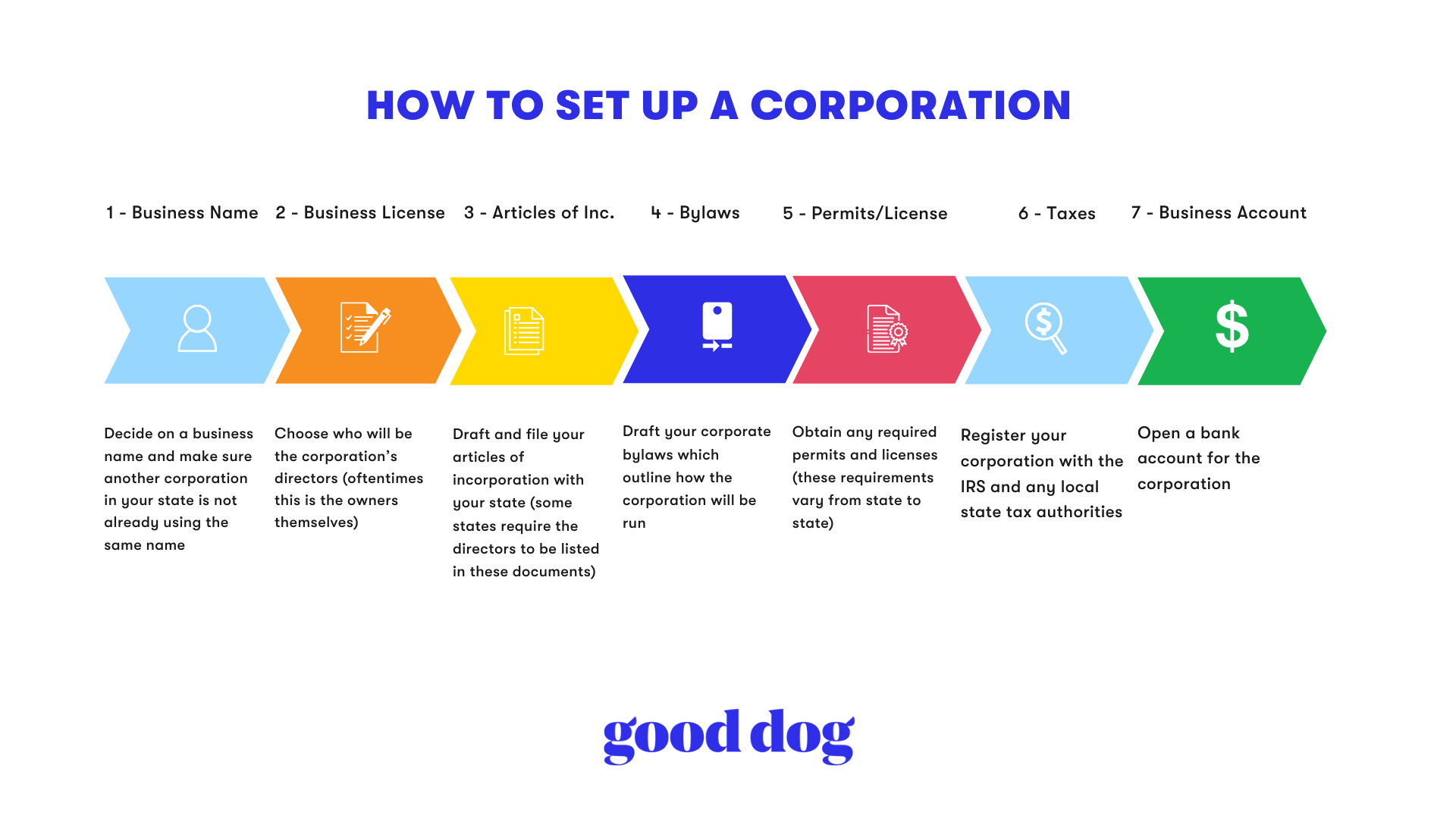
Starting a corporation is a bit more involved than starting a sole proprietorship or partnership and the requirements vary from state to state. The type of corporation (S versus C) also requires specific rules, the below is just a general guide. As mentioned above, it may be helpful to consult an attorney or financial advisor if you have any questions.
- Decide on a business name and make sure another corporation in your state is not already using the same name
- Choose who will be the corporation’s directors (oftentimes this is the owners themselves)
- Draft and file your articles of incorporation with your state (some states require the directors to be listed in these documents)
- Draft your corporate bylaws which outline how the corporation will be run
- Obtain any required permits and licenses (these requirements vary from state to state)
- Register your corporation with the IRS and any local state tax authorities
- Open a bank account for the corporation
If you have further questions it would be helpful to consult a lawyer or financial professional in your specific state to help decide.
Join our Good Breeder community
Are you a responsible breeder? We'd love to recognize you. Connect directly with informed buyers, get access to free benefits, and more.