Sole Proprietorship
A Sole Proprietorship consists of 1 owner.
Good Dog is on a mission to educate the public, support dog breeders, and promote canine health so we can give our dogs the world they deserve.
Good Dog is on a mission to educate the public, support dog breeders, and promote canine health so we can give our dogs the world they deserve.
Good Dog is on a mission to educate the public, support dog breeders, and promote canine health so we can give our dogs the world they deserve.
A sole proprietorship is an unincorporated business owned by one person. There is no legal distinction between the business owner and the business. This means that you, as the owner, will be personally and legally responsible for all debts and liabilities of your business.
Sole proprietors can still hire employees - you do not have to work alone to be considered a sole proprietor. However, you should obtain an employer identification number (EIN) before hiring staff. If your business has a DBA (Doing Business As), which allows you to conduct business under a name other than your own, but you do not hire staff, you do not need an EIN and your tax identification number is your social security number.
How to set-up a Sole Proprietorship
Click image to enlarge:
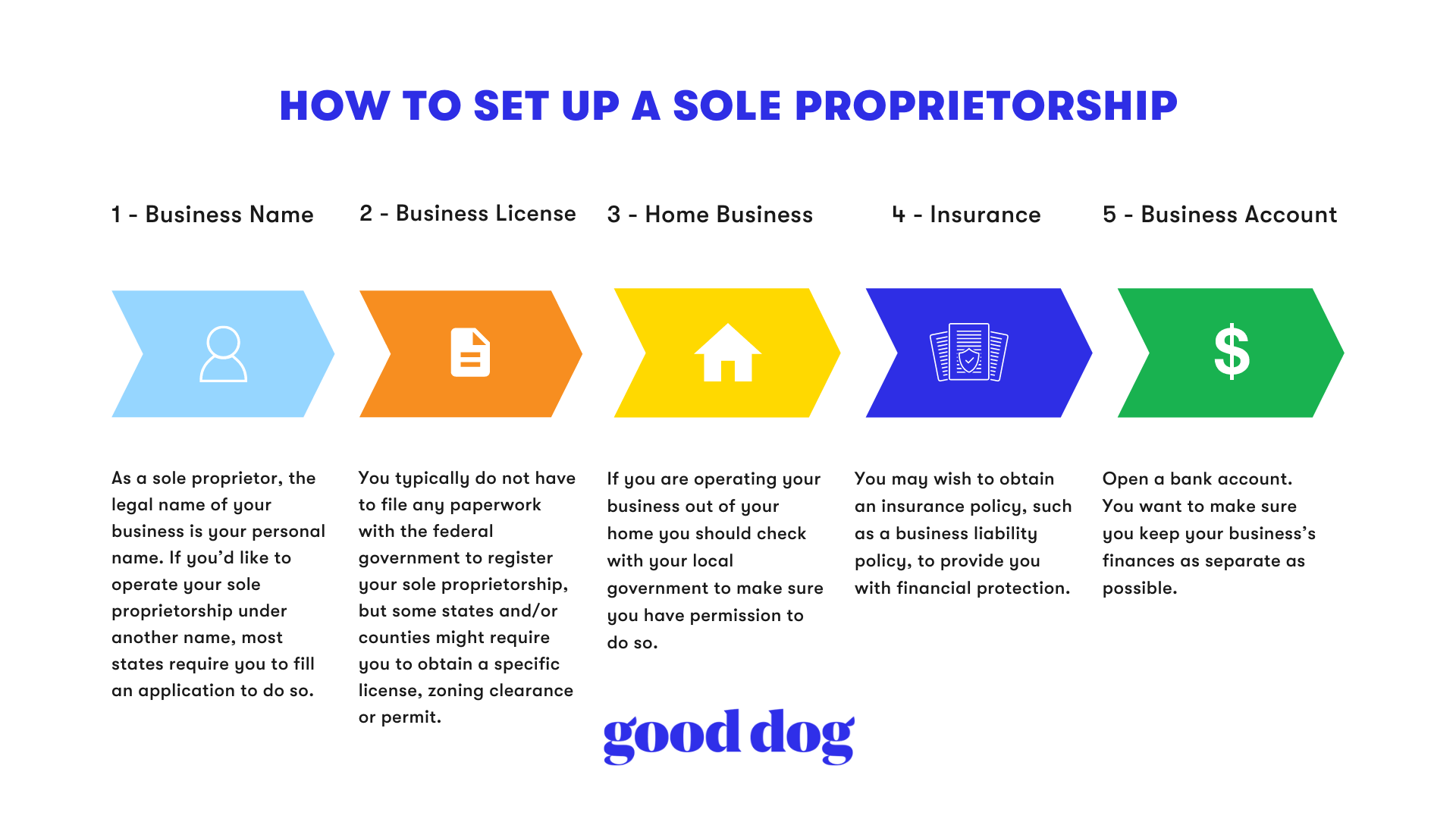
- Decide on a business name -- as a sole proprietor, the legal name of your business is your personal name. If you’d like to operate your sole proprietorship under another name, most states require you to fill an application to do so.
- File for a business license -- you typically do not have to file any paperwork with the federal government to register your sole proprietorship, but some states and/or counties might require you to obtain a specific license, zoning clearance or permit. You should consider checking with your city and county governments.
- If you are operating your business out of your home you should check with your local government to make sure you have permission to do so.
- You may wish to obtain an insurance policy, such as a business liability policy, to provide you with financial protection.
- It may be helpful to set-up a business bank account to keep your spending separate from your personal account.
If you have further questions it would be helpful to consult a lawyer or financial professional in your specific state to help decide.
Join our Good Breeder community
Are you a responsible breeder? We'd love to recognize you. Connect directly with informed buyers, get access to free benefits, and more.