General and Limited Partnerships
A Partnership consists of 2 or more owners.
Good Dog is on a mission to educate the public, support dog breeders, and promote canine health so we can give our dogs the world they deserve.
Good Dog is on a mission to educate the public, support dog breeders, and promote canine health so we can give our dogs the world they deserve.
Good Dog is on a mission to educate the public, support dog breeders, and promote canine health so we can give our dogs the world they deserve.
There are two main types of partnerships:
- General Partnerships
- Limited Partnerships
A General Partnership functions similar to a sole proprietorship but with multiple owners. If you're working with a breeding partner or have another partner in your business, but you prefer the advantages of a sole proprietorship, a general partnership may be a good structure for your business. Similarly to a Sole Proprietorship, there is no legal distinction between the partners and the business itself, meaning all profits are shared by the partners and they are also responsible for all debts and liabilities of the business. General Partnerships require no formal agreement and can be created through a verbal or implied agreement.
A Limited Partnership is created by a formal agreement between two or more partners. It must be filed with the state. A Limited Partnership is made up of at least one limited partner and one general partner. The general partner typically manages the day to day operations of the business and is fully liable for the debts and liabilities of the business. A limited partner typically is just an investor in the company and does not involve themselves in the day to day operations of the business. As their name implies, the limited partners are limited in their liability based on their ownership percentage. They are not held liable for any debts greater than their investment, meaning if the partnership is sued they cannot be sued for more than they invested. There are also limited liability partnerships (LLP), which are similar to limited partnerships but do not require a general partner.
How to set-up a Partnership
Click image to enlarge:
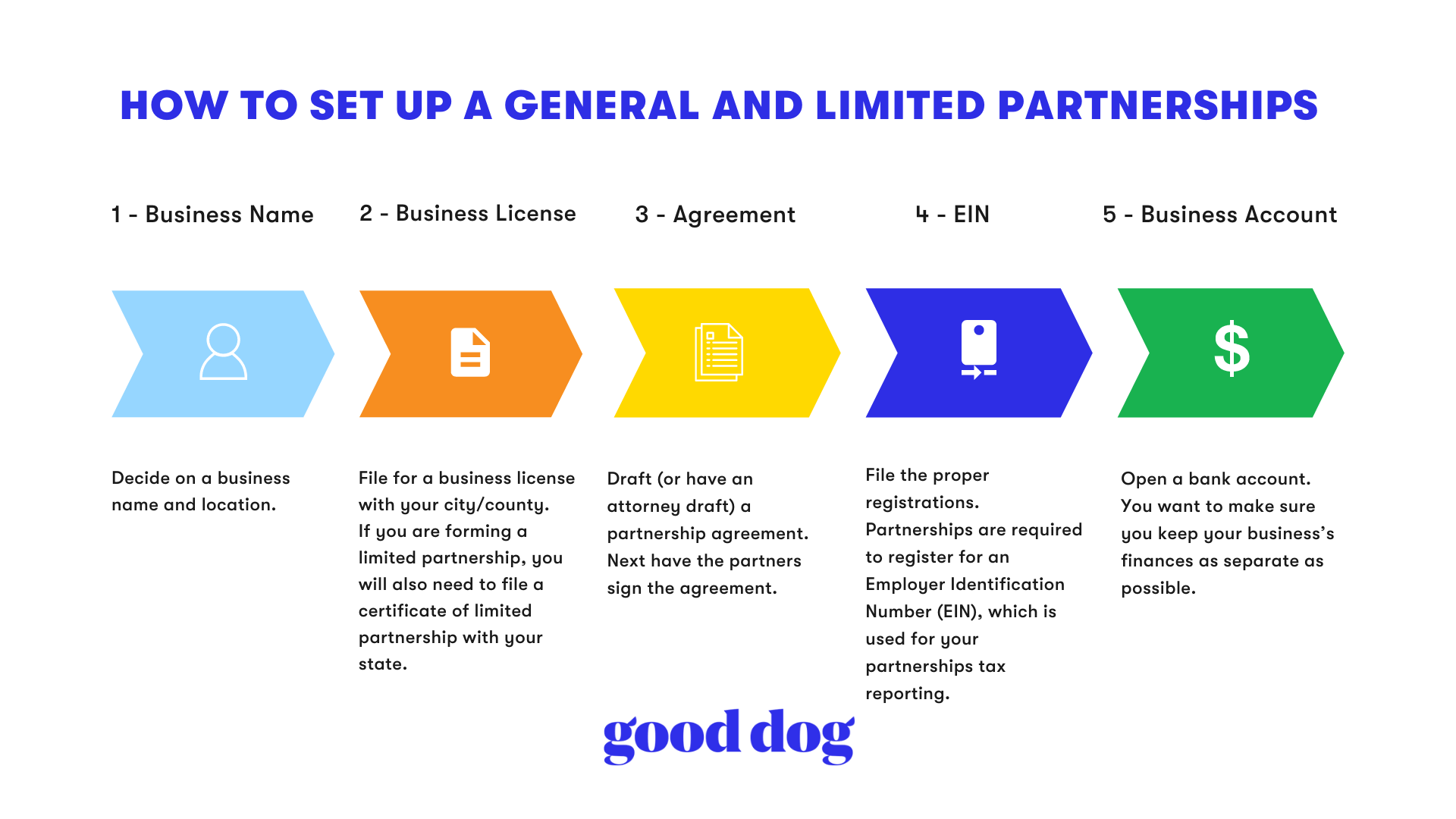
Starting a partnership is similar in many aspects to a proprietorship. It may be helpful to consult an attorney or financial advisor if you have any questions.
- Decide on a business name and location.
- File for a business license with your city/county. If you are forming a limited partnership, you will also need to file a certificate of limited partnership with your state.
- Draft (or have an attorney draft) a partnership agreement. The partnership agreement is important because it outlines the rules and responsibilities surrounding the partnership and a well drafted agreement can prevent legal issues down the line if there is ever a partnership dispute. After drafting the agreement the next step is to have the partners sign it.
- File the proper registrations. Partnerships are required to register for an Employer Identification Number (EIN), which is used for your partnerships tax reporting. You may also need to obtain proper licensing.
- Open a bank account. You want to make sure you keep your business’s finances as separate as possible.
If you have further questions it would be helpful to consult a lawyer or financial professional in your specific state to help decide.
Join our Good Breeder community
Are you a responsible breeder? We'd love to recognize you. Connect directly with informed buyers, get access to free benefits, and more.