What is canine elbow dysplasia?
This complex condition is typically seen in larger dog breeds, and is heritable. What you need to know about screenings.
by Rachel Jefferds
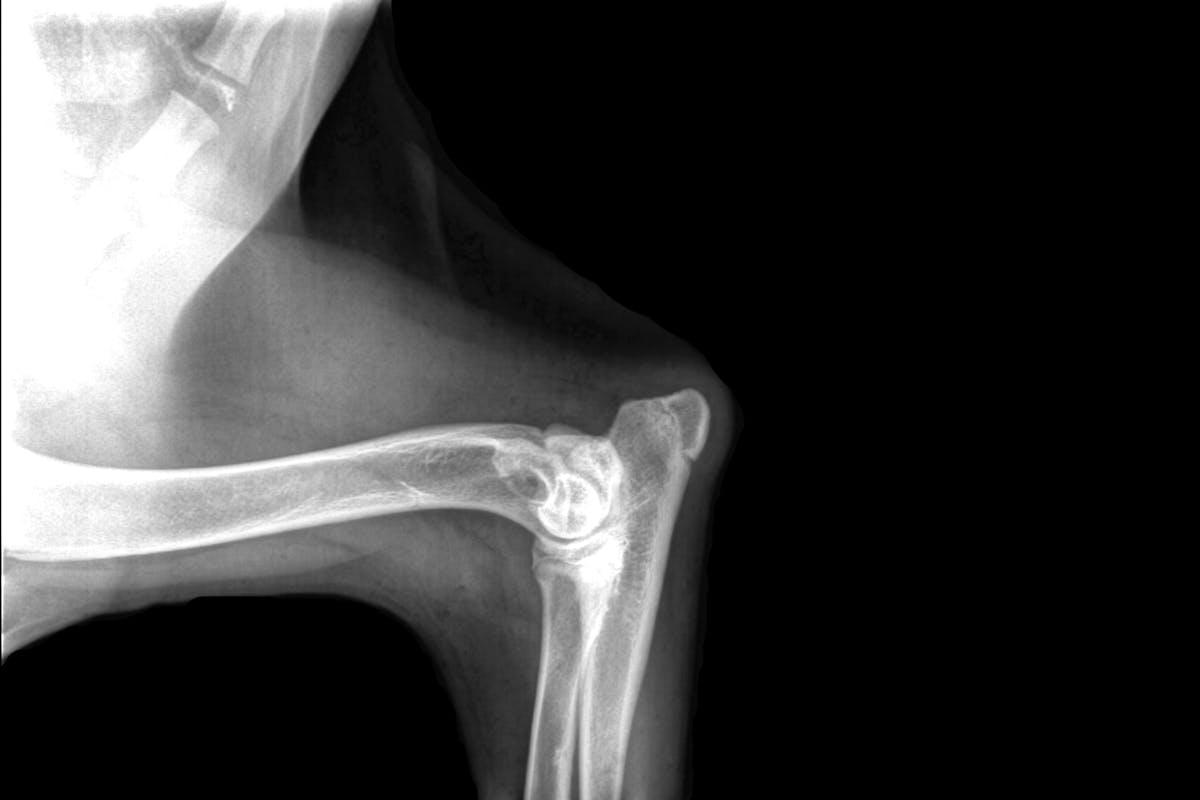
What you need to know about canine elbow dysplasia
Elbow dysplasia is an inherited condition resulting from three different abnormalities that can occur independently or together. This is a complex condition involving both genetic and environmental factors, and it can cause varying degrees of pain and loss of function in the affected joint. The environment that a dog is raised in, as well as injuries, can play a significant role in the development of elbow dysplasia. Elbow dysplasia is most commonly observed in large and giant dog breeds. Diet and body condition of pups will impact how the bones and joints develop; puppies who are not provided proper nutrition or who are overweight are at greater risk for orthopedic conditions.
There is also a large genetic component to elbow dysplasia with heritability estimates ranging from 0.01 to 0.90, averaging 0.29 and varying by breed. Unfortunately, many genes are involved so no genetic test is available to date. Therefore, veterinary specialists recommend x-rays to screen potential breeding dogs. While a slow process, controlled breeding programs lead to improved scores in elbow dysplasia over several generations. It is very important to decrease the incidence of elbow dysplasia, as there are no procedures that can significantly change the progression of or cure the disorder.
The three conditions that contribute to elbow dysplasia are:
- Fragmented Coronoid Process (FCP): A defect in one of the coronoid processes (bony part at the end of the ulna) within the elbow joint that can cause a crack or fissure, separating from the rest of the bone. FCP can lead to pain and instability in the joint.
- Osteochondrosis (OCD): Abnormal development of cartilage on the end of the bones of a joint. Cartilage separates from the underlying bone and can continue to grow, leading to inflammation and disrupting movement of the joint.
- Ununited Anconeal Process (UAP): Occurs when the growth plates between the ulna and the elbow joint do not fuse correctly during development.
Some dogs may only be affected by one condition, while others can have them in combination.
The American College of Veterinary Surgeons provides further information about symptoms, diagnostics, treatment, and outcomes for dogs affected with elbow dysplasia.
Screening for elbow dysplasia is done using radiographs. Typically, some form of chemical restraint, anesthesia or sedation, is recommended for muscle relaxation allowing better positioning and a less fearful experience for the dog. Most general practitioners are able to take the radiographs, verify the identity of the dog, and aid in submitting documents to the screening and registration organization.
Organizations that provide screening and registration for elbow dysplasia
Orthopedic Foundation for Animals (OFA)
Definitive screenings
Submitted radiographs are sent to 3 randomly selected board-certified veterinary radiologists who independently evaluate the films. There is no grade assigned if the phenotype of the elbow is normal; abnormal elbows are given a grade of 1-3 based on the severity of the dysplasia.
Dogs must be at least 2 years old to have elbows certified as normal by OFA.
Preliminary screenings
Preliminary screenings are available for dogs less than 2 years of age. Preliminary radiographs are reviewed using the same assessment method but are graded by a single in-house radiologist, a less rigorous assessment procedure. There are no long-term studies on the effectiveness of preliminary screenings to predict future elbow dysplasia.
Step by step directions for submitting films to OFA can be found here.
British Veterinary Association (BVA) employs a system whereby two expert veterinary surgeons review radiographs, screening for abnormalities and assigning a score which can then be compared to the breed median. Dogs must be at least 1 year of age to undergo screening. Submission information can be found here.
SV is a german program for German Shepherd Dogs that screens elbow films and records the results in the studbook and on the pedigree to work toward improving the breed. Dogs diagnosed with moderate or severe elbow dysplasia may not be used for breeding. Dogs must be at least 1 year of age at the time of assessment.
Federation Cynologique Internationale (FCI) is the European-based international canine organization. Dogs must be at least 1 year of age or 18 months for large and giant breeds at time of screening. The radiograph must be interpreted and scored by a veterinary specialist approved by the national breed club.
References
Cook, C. R., & Cook, J. L. (2009). Diagnostic imaging of canine elbow dysplasia: a review.Veterinary Surgery,38(2), 144-153.
Michelsen, J. (2013). Canine elbow dysplasia: aetiopathogenesis and current treatment recommendations.The Veterinary Journal,196(1), 12-19.
William, J. H., Alida, P. W., Seth, T. W., & Kurt, S. S. (2000). Canine elbow dysplasia: the early radiographic detection of fragmentation of the coronoid process.Veterinary Clinics: Small Animal Practice,30(2), 257-266.
Join our Good Breeder community
Are you a responsible breeder? We'd love to recognize you. Connect directly with informed buyers, get access to free benefits, and more.