OFA examination and registration of hip dysplasia
Good Dog is on a mission to educate the public, support dog breeders, and promote canine health so we can give our dogs the world they deserve.
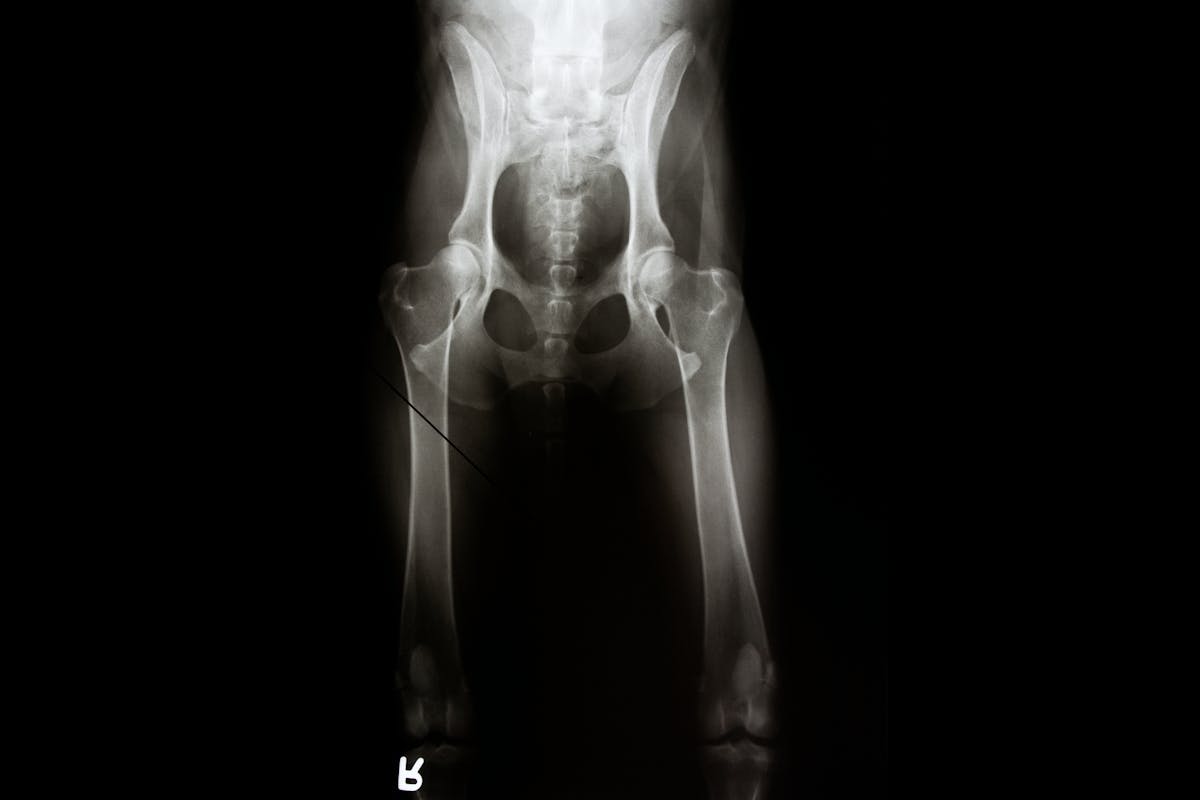
Good Dog is on a mission to educate the public, support dog breeders, and promote canine health so we can give our dogs the world they deserve.
Good Dog is on a mission to educate the public, support dog breeders, and promote canine health so we can give our dogs the world they deserve.
by Regan Abromitis
Hip dysplasia is a condition that develops as dogs age, resulting in laxity or instability of the joint. Over time, the abnormalities in the joint conformation can result in the breakdown of cartilage, and associated pain and lameness. Signs will vary depending on the severity of the dysplasia. The Orthopedic Foundation for Animals (OFA) is one organization that assesses and grades radiographs submitted for review. As part of their review, OFA sends submitted radiographs to three randomly selected board-certified veterinary radiologists for independent evaluation. Each radiologist reviews the x-rays, assessing nine different anatomic areas of the joint for deviations consistent with hip dysplasia. Breed, age, and sex are also considered in the assessment. A grade is assigned based on the phenotype, or appearance, of the hip conformation:
- normal includes the grades excellent, good and fair;
- dysplastic includes mild, moderate or severe; and
- borderline for those that can’t be determined to be either normal or dysplastic.
OFA numbers are only assigned to dogs that are 24 months of age or older at the time of radiograph. The OFA offers a preliminary evaluation for dogs under 24 months of age.
While not required, some form of chemical restraint, anesthesia or sedation, is recommended for muscle relaxation, optimum patient positioning and a truer representation of the hip status. Chemical restraint may minimize the need for repeat radiographs (less radiation exposure) while providing a less fearful experience for the dog.
Note: Registration of test results is imperative for advancing canine health. Data from health registries support research efforts into canine diseases, establish validated diagnostic criteria, and maintain the reported test results in a reliable public database. Registered data can be used to identify newly emerging conditions, monitor the efficacy of interventions in decreasing the prevalence of conditions, and help breeders make informed breeding decisions.
How do I get my dog screened and registered with the OFA?
Step 1
Schedule an appointment with your veterinarian. Download, print, and bring the OFA form to your appointment (found here).
Note:
- Discuss the use of sedation with your veterinarian prior to the appointment.
- Due to the impact of reproductive hormones on laxity of ligaments, it is recommended that films be taken at least one month after weaning puppies and one month before or after a heat cycle.
Step 2
When you arrive for your appointment, your veterinarian will examine your dog, give appropriate sedation when indicated and take x-rays of your dog. Be sure to have all the appropriate paperwork ready for your veterinarian to complete.
Step 3
Your veterinarian will complete and sign the application form for OFA, identify the radiograph with your dog’s registration name or number, the date of the radiograph, and the veterinarian’s name or hospital name.
Note: It is recommended that the permanent identification of the dog (e.g., tattoo, microchip) is verified by the veterinarian at the time of the evaluation.
Step 4
Once the application form is completed either you or your veterinarian will then submit the radiographs via one of the methods listed here.
Note: The radiograph, application and fees will need to be sent together, either by your veterinarian or yourself, depending on method of submission.
Send to: Orthopedic Foundation for Animals
2300 E Nifong Blvd, Columbia, MO 65201
Phone (573) 442-0418 / Fax (573)875-5073 / www.ofa.org
Fee schedule (as of July 2022)
Note: this does not include the cost of your veterinary exam and radiographs
For Dogs 24 months or older:
- Hip Evaluation: $55 each
- Hip and Elbow Evaluations together: $50
- A litter of 3+ dogs submitted together: $120 total
- Kennel Rate (5+ dogs submitted together): $25 each
For Dogs 24 months or younger:
- Preliminary Hip Evaluation: $35
- Preliminary Hip and Elbow Evaluations together: $40
- A litter of 3+ dogs submitted together: $100
**The attending veterinarian and owner are encouraged to submit all evaluations, whether normal or abnormal. This is so a complete data set is available in order to understand the true prevalence of the condition in the population.
Step 5
For dogs over 24 months of age, the films will be evaluated and scored by three board-certified veterinary radiologists. Dogs receiving a score of excellent, good or fair will be listed on the public database within 2-3 weeks. Dogs scored borderline, mild, moderate or severely dysplastic will have a report generated. The results will not be publicly available unless the owner has elected for the open database.
For dogs under 24 months of age (preliminary evaluations) the radiograph will be evaluated by the radiologist on staff at OFA. Results will only be listed on the database IF the dog is over 12 months of age AND is microchipped/tattooed AND the owner consented to release ALL results (including abnormal).
Note: The veterinary radiologist on staff at the OFA screens all the submitted radiographs for diagnostic quality and proper identification.

Join our Good Breeder community
Are you a responsible breeder? We'd love to recognize you. Connect directly with informed buyers, get access to free benefits, and more.