AHED of the Herd

- Rochester, WA
- Responds within a few days
Meet the breeder
I'm Susan D., the breeder behind AHED of the Herd located in Rochester, WA.


Getting a puppy from Susan
Susan has been certified by Good Dog’s screening team for responsible and trusted breeding practices. When you’re ready, reach out to ask about the puppies or anything else on your mind. You’ll get to know each other through messaging, phone, or video and pay securely, all on Good Dog.
Together, you’ll choose the puppy that’s right for you, stay in touch with regular updates, and plan how to bring your new puppy home.
Price
“Price includes health cleared, vaccinated puppy (as appropriate per age per vet), socialization, microchip, and blanket with mom's and siblings' scent. If there is no puppy born matching your requirements, such as sex, color, etc., your deposit can be refunded or put toward a future litter.”
Contract & health guarantee
Susan may provide a written contract or health guarantee when you purchase a puppy. This helps protect both you and your breeder, ensuring that you both have a clear understanding of the terms of your puppy purchase. If Susan offers a contract or guarantee, the details will be personalized by them. If you have any questions or want to know more, don't hesitate to reach out to Susan directly.
You’re protected
on Good Dog
When you pay and communicate on Good Dog, you’re covered by Payment Protection.
What's included
From Good Dog
- Lifetime support from Good Dog’s Care Team
- 10% lifetime discount on Figo pet insurance
- Puppy Training Program & private community
Enrichment & socialization
- Various sounds
- Car rides
- Surface & tactile stimulation
- Socialized with children
- Socialized in new places
- Daily handling
- Socialized with other dogs
- Introduced to people of different ages and appearances
- Socialized with other animals
Puppy health practices
- Vet check
- First round of shots and deworming
- Vet records
- Microchip
Extras
- Initial potty training
- Blanket with mom & littermates’ scent
Location & pick-up
You can drive or fly to pick up your puppy from Susan.
Breeder's location
Meet in Rochester, WA
Other pick-up locations
Meet at Portland Airport
More about Susan
Susan has been a member of Good Dog for about 1 year
Susan was screened for responsible practices and has been a member since 2025.


Susan is a trusted Good Dog breeder
AHED of the Herd meets or exceeds our community standards in these areas:
- Responsible breeding practices
- Health of breeding dogs and puppies
- Puppy environment and enrichment
- Buyer education and policies
Litter and program updates

Susan D.
Litter update on 16 Dec 2025 •…From an English Shepherd group chat: Social Maturity in Dogs: When Your Dog Decides the World Is Not a Playground There comes a moment in every dog’s life when they wake up and think: “Actually… I don’t like everyone.” Welcome to social maturity. For owners, handlers, and trainers alike, this is one of the most misunderstood, mislabelled, and emotionally charged phases in a dog’s development. It’s also the point where many dogs are unfairly branded as reactive, dominant, aggressive, or needing more socialisation, when in reality they’re simply growing up. Let’s break it down properly, what social maturity really is, how it affects dogs, when it shows up, what can go wrong, and how to handle it without losing your mind (or your dog’s reputation at the park). What Is Social Maturity in Dogs? Social maturity is the stage in a dog’s development where they move from juvenile, socially tolerant behaviour to adult, selective social behaviour. In plain English: • Puppies and adolescents tend to be socially promiscuous • Adults become socially selective A socially mature dog no longer feels the need to: • Greet every dog • Play with every dog • Tolerate rude dogs • Put up with poor canine manners • Be everyone’s best mate This isn’t a failure of training. It’s normal biological development. Social maturity is driven by: • Neurological development • Hormonal changes • Emotional regulation • Experience and learning • Genetics and breed purpose It is not something you “train out” of a dog, nor should you. When Does Social Maturity Happen? This is where people often get caught out. Social maturity does not arrive neatly on a birthday. Rough guide: • Small breeds: 12–18 months • Medium breeds: 18–24 months • Large & working breeds: 24–36 months (sometimes later) And yes, this is why: • “He was fine until he turned two” • “She suddenly doesn’t like other dogs” • “Nothing changed except his age” Because something did change: Your dog’s brain finally caught up with its body. What Does Social Maturity Look Like? Social maturity rarely announces itself politely. It tends to arrive with behaviours such as: • Reduced interest in random dogs • Avoidance of boisterous or rude dogs • Clear boundary-setting (growling, snapping, posturing) • Frustration when forced into close contact • Less tolerance for adolescent nonsense • Increased confidence in saying “no” This is often mistaken for: • Reactivity • Aggression • Poor socialisation • Training failure In reality, it’s often improved social awareness. Your dog hasn’t become worse. They’ve become honest. Why Do So Many Dogs “Change” at Social Maturity? Because puppyhood lies. Puppies: • Are hard-wired to be socially forgiving • Avoid conflict at almost all costs • Tolerate behaviour they wouldn’t accept as adults Adult dogs: • Value personal space • Expect appropriate social signals • Have opinions • Enforce boundaries Think of it like this: A puppy is the dog equivalent of a toddler at a soft-play centre. An adult dog is someone trying to do the weekly shop in Tesco on a Saturday afternoon. Same species. Very different tolerance levels. Is There Any Fallout From Social Maturity? There can be, but the fallout doesn’t come from social maturity itself. It comes from how humans respond to it. Common Human Errors • Forcing dog-dog interactions • Labeling normal boundaries as “bad behaviour” • Flooding dogs with social exposure • Punishing communication (growls) • Over-socialising instead of teaching neutrality • Continuing off-lead chaos “because they used to love it” This is how normal social maturity turns into: • Reactivity • Frustration-based aggression • Defensive behaviour • Learned helplessness • Suppressed communication followed by explosions The dog isn’t broken. The expectations are. Social Maturity vs Reactivity: Not the Same Thing This is critical. A socially mature dog: • May not want interaction • Can disengage when allowed • Uses appropriate distance-increasing signals • Is often calm once space is respected A reactive dog: • Is emotionally overwhelmed • Struggles to disengage • Reacts explosively to triggers • Is often stuck in chronic stress Social maturity can look reactive when: • The dog is repeatedly put in situations they don’t want • The handler ignores early warning signs • Space is not advocated for Respect the maturity, and many “reactive” dogs magically improve. Funny that. Breed Matters (A Lot) Some breeds mature socially earlier and harder than others. Common examples: • Shepherds • Malinois • Akitas • Mastiffs • Bull breeds • Livestock guardians • Protection and guarding lines These dogs were never bred to be dog-park butterflies. Expecting lifelong sociability from genetically selective breeds is like being disappointed that a Border Collie won’t switch off at a picnic. Biology always wins. How Do You Know Your Dog Is Socially Mature? Signs your dog has “arrived”: • They prefer neutrality over interaction • They disengage rather than escalate (if allowed) • They are confident, not fearful • They choose space, not chaos • They are more focused on their handler than other dogs • They tolerate known dogs but avoid unknown ones This is not antisocial behaviour. It’s adult behaviour. What Should We Be Aiming For Instead? Not sociability. Neutrality. A socially mature, well-trained dog should: • Walk past other dogs calmly • Ignore environmental noise • Focus on their handler • Engage by choice, not compulsion • Have permission to say “no” Neutrality is the gold standard, not friendliness. Friendly dogs get you likes on Instagram. Neutral dogs get you peace. The Big Takeaway Social maturity is not a problem. It is not a diagnosis. It is not a failure. It is not something to “fix”. It is a natural developmental stage that requires: • Adjusted expectations • Better advocacy • Clear boundaries • Structure • Leadership • Respect for the dog in front of you If your dog has stopped loving every dog they meet, congratulations. They’ve grown up. And frankly, so should we.


Cole and Molly's litter
Susan D.
Litter update on 09 Nov 2025 •https://www.akc.org/expert-advice/training/how-to-potty-train-a-puppy/
Cole and Molly's litter
Susan D.
Litter update on 09 Nov 2025 •…With three puppies left who don’t nurse anymore, it seemed time to give Molly a bath. This is what her easy care coat looks like when it’s clean. Much fluffier looking.
Cole and Molly's litter
Susan D.
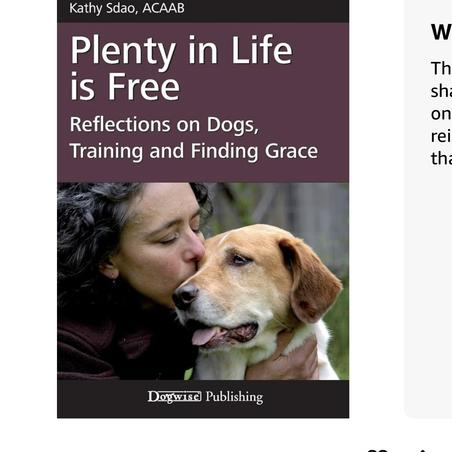
Litter update on 02 Nov 2025 •…This is a great book when training your pup. It’s on sale on Amazon for $14.95 right now. Also remember that the fear stage for puppies begins around 12 weeks. So make sure to spend time just exposing pups to new stuff before they hit 12 weeks.
Cole and Molly's litter
Susan D.
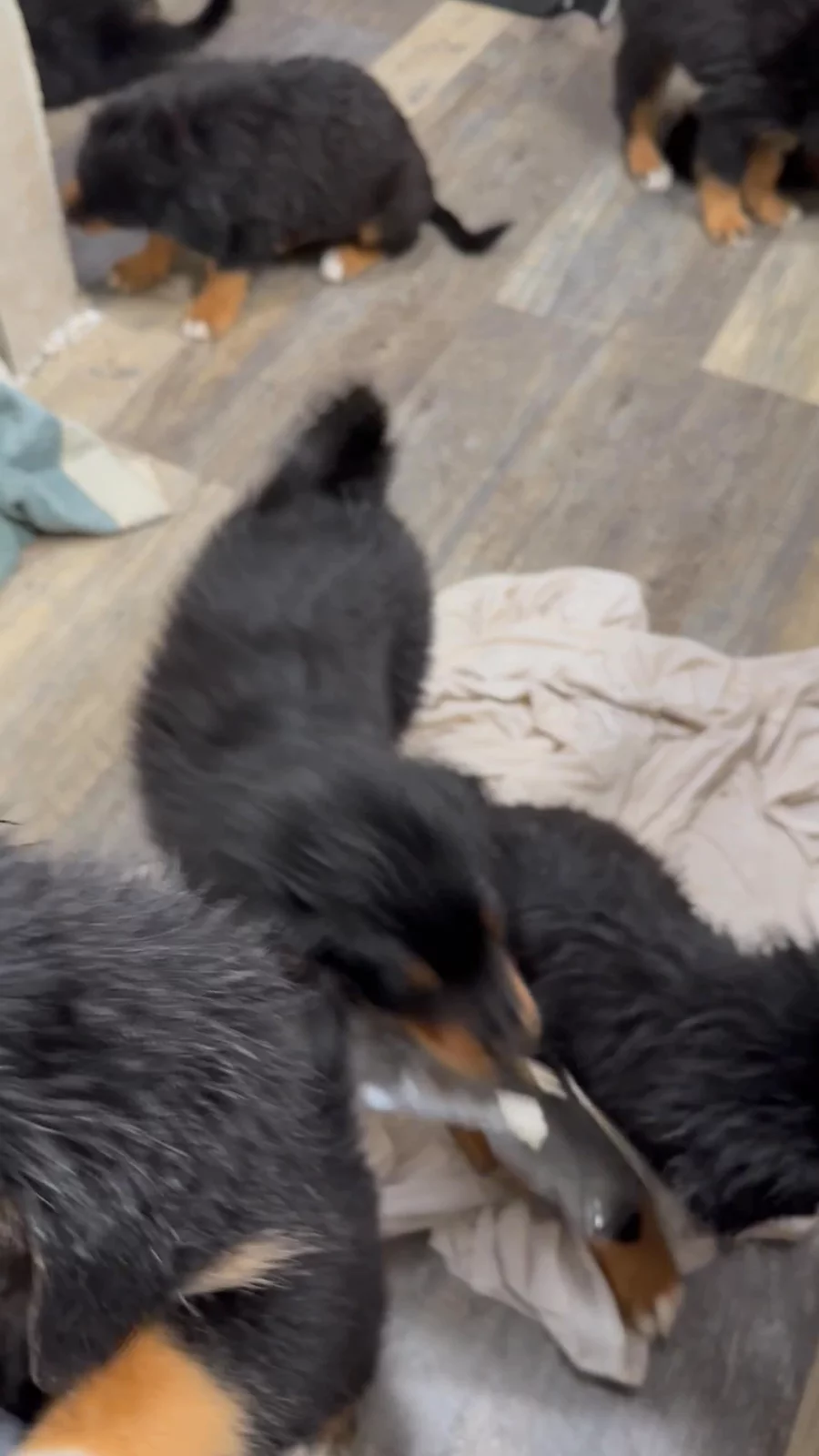
Litter update on 31 Oct 2025 •Just washed everyone. The room is super heated so they can air dry while they run amok.
Cole and Molly's litter
Susan D.
Litter update on 25 Oct 2025 •…For those of you who may be interested, Emily Schwartz, one of the founders of the Shadow Shepherd Project, and one of my mentors, has offered to create a Facebook Messenger group for those of you who will be providing a home for Molly’s puppies. She’s a trainer in addition to being super knowledgeable about English Shepherds and especially Molly’s extended family. She would be willing to help with free training advice via the messenger. If that interests you, let me know and Emily will set up the group and invite folks.
Cole and Molly's litter
Susan D.
Litter update on 21 Oct 2025 •…Goodness what a long afternoon. A couple of puppies did get car sick on the ride back, but that’s to be expected. Everyone is in good health. All males’ testicles are descended (always a concern - it’s good to get confirmation). Everyone is vaxxed, dewormed, and microchipped. Puppies got bored waiting and crashed at the vet’s office. As folks choose their puppies I will be asking for your contact information so I can register your puppy’s microchip to you.
Cole and Molly's litter
Susan D.
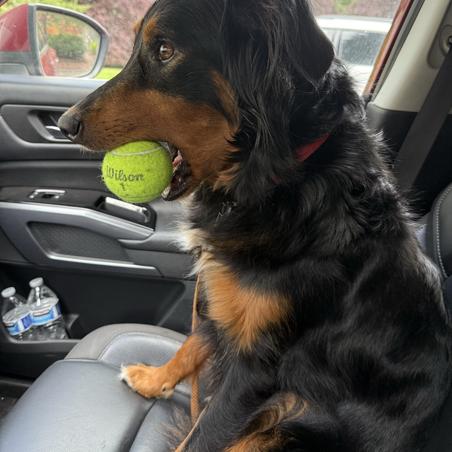
Litter update on 20 Oct 2025 •Molly found a tennis ball in the car.
Cole and Molly's litter
Susan D.
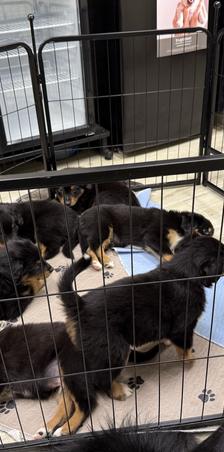
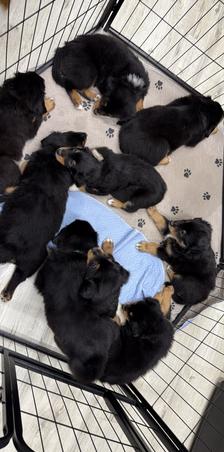
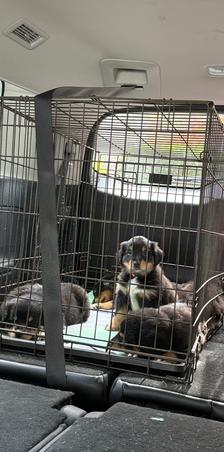
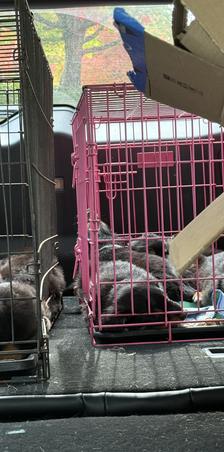
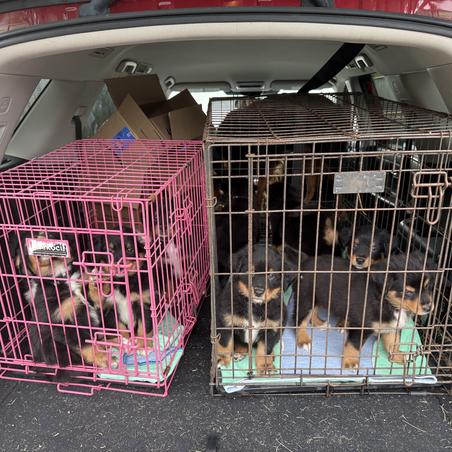
Litter update on 20 Oct 2025 •…And this is them after arrival. No one threw up despite the half hour drive into town, and all but one decided that the ride and the music were a good time for a nap. They do prefer when I play music as we drive - a little soft rock and a little country seems to hit the spot for the puppies.
Cole and Molly's litter
Susan D.
Litter update on 20 Oct 2025 •Puppies loaded up before leaving for vet to get shots, deworming, and microchips.
Cole and Molly's litter
Parent dogs
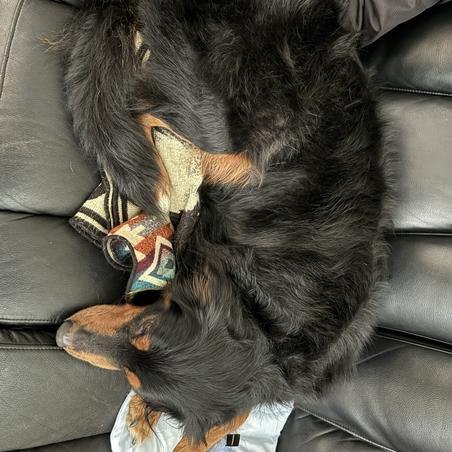
Molly, mom
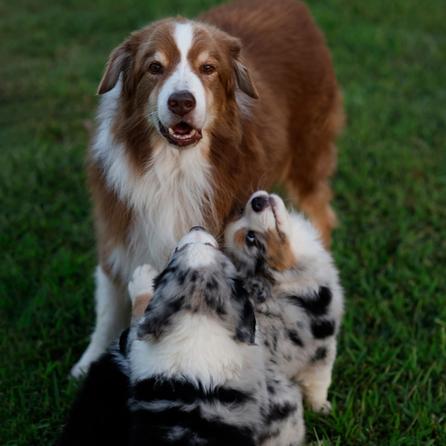
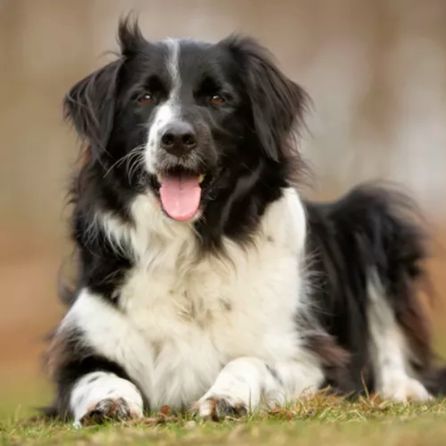
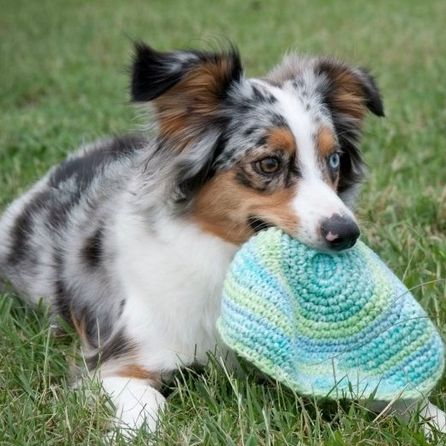
English Shepherd
About Molly
Molly is a companion dog living on just over three acres with her human parents and two "dog brothers." She loves people, kids, and other dogs. She helps her humans feed the goats and ducks every morning and night, is doing scent work with a private trainer at this time, has her Canine Good Citizen, and is very bonded to her humans. She's good at matching energy, whether it's a lazy stay at home day or a five mile hike!
Good health testing
DNA Disease Panel, Elbow Dysplasia Finals (OFA, BVA, SV, FCI), +1 more.

Parent health testing
Good level
AHED of the Herd reports to performing the health tests below on their breeding dogs. Ask your breeder about the tests performed on the parents of your litter. Learn more about health testing for English Shepherds.
Hip Dysplasia
Hip testing reduces the chance of passing down hip dysplasia, which is primarily found in large breed dogs and can cause hip pain and the eventual loss of the function of the hip joint.
Elbow Dysplasia Finals (OFA, BVA, SV, FCI)
Elbow testing reduces the chance of passing down elbow dysplasia, which is primarily found in large breed dogs and can cause arthritis in the elbow joint and front leg lameness.
DNA Disease Panel
Genetic testing reduces the chance of passing down a wide variety of hereditary diseases of differing prevalence and severity such as Progressive Retinal Atrophy (an eye disease) and Von Willebrand's Disease (a blood disease).