Lazuli Pugs

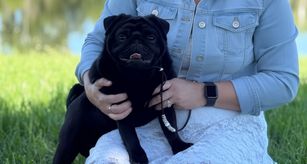

- Windsor, CO ·
- Responds within a few days
Meet the breeder
I'm Lazuli P., the breeder behind Lazuli Pugs located in Windsor, CO. Our dogs are bred for health and temperament with a focus on correct conformation. We are dedicated to providing our families with wonderful, healthy family pets that follow AKC breed standards.

Q. & A. with Lazuli
Why did you start breeding?
I fell in love with the goofy, comical personalities of all my pug patients that I cared for working as a Veterinary Technician.What makes your program special?
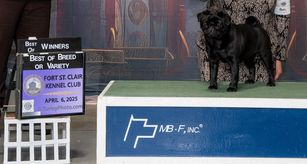
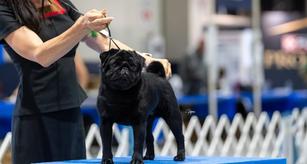
Excelling in AKC Conformation as well as meeting and exceeding OFA CHIC requirements for the breed.What are the different breed coat colors in your program?
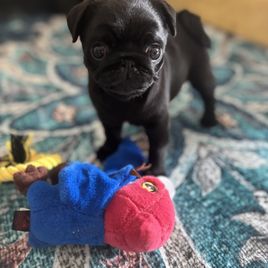
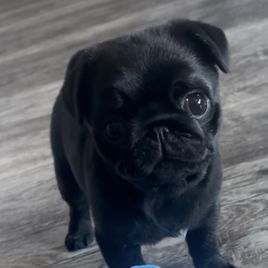
Our puppies are black. Colors will vary depending on the parent dogs.Where do your breeding dogs live?
They live in my home.

Getting a puppy from Lazuli
Lazuli has been certified by Good Dog’s screening team for responsible and trusted breeding practices. When you’re ready, reach out to ask about the puppies or anything else on your mind. You’ll get to know each other through messaging, phone, or video and pay securely, all on Good Dog.
Lazuli partners with buyers to find the best match as the puppies develop and their personalities take shape. Typically, matches are finalized when the puppies reach about 10 weeks old.
“We take great care in placing each puppy with the right family. Puppies are matched once they're old enough for us to evaluate their temperaments and personalities — typically around 7-8 weeks. We reserve the right to retain any puppies from any given litter. ”

Price
“The price includes a health guarantee, AKC registration (once spayed/neutered), dewclaw removal, vet exam with age appropriate vaccines, and deworming. Deposits are accepted after 2 weeks old on a case by case basis.”
Contract & health guarantee
Lazuli may provide a written contract or health guarantee when you purchase a puppy. This helps protect both you and your breeder, ensuring that you both have a clear understanding of the terms of your puppy purchase. If Lazuli offers a contract or guarantee, the details will be personalized by them. If you have any questions or want to know more, don't hesitate to reach out to Lazuli directly.
You’re protected
on Good Dog
When you pay and communicate on Good Dog, you’re covered by Payment Protection.
What's included
From Good Dog
- Lifetime support from Good Dog’s Care Team
- 10% lifetime discount on Figo pet insurance
- Puppy Training Program & private community
Enrichment & socialization
- Various sounds
- Car rides
- Surface & tactile stimulation
- Socialized with children
- Socialized in new places
- Scent introduction
- Daily handling
- Socialized with other dogs
- Introduced to people of different ages and appearances
- Socialized with other animals
Puppy health practices
- Vet check
- First round of shots and deworming
- Vet records
- Microchip
Extras
- AKC registration
- Blanket with mom & littermates’ scent
- Initial potty training
- Puppy starter kit
- Toys
- Food & treats
- Basic obedience & manners
Location & pick-up
You can drive or fly to pick up your puppy from Lazuli.
Breeder's location
Meet in Windsor, CO
1455 miles away
·
Other pick-up locations
Meet at Denver Airport
1447 miles away
·
Meet in Greeley, CO
1445 miles away
·
More about Lazuli
Club memberships
Lazuli is a member of Pug Club of Canada and Pug Dog Club of America, Inc..
Certifications & recognitions
CHIC Certified, AKC Breeder with H.E.A.R.T..
Lazuli has been a member of Good Dog for about 5 years
Lazuli was screened for responsible practices and has been a member since 2021.

Lazuli is a trusted Good Dog breeder
Lazuli Pugs meets or exceeds our community standards in these areas:
- Responsible breeding practices
- Health of breeding dogs and puppies
- Puppy environment and enrichment
- Buyer education and policies
Parent dogs
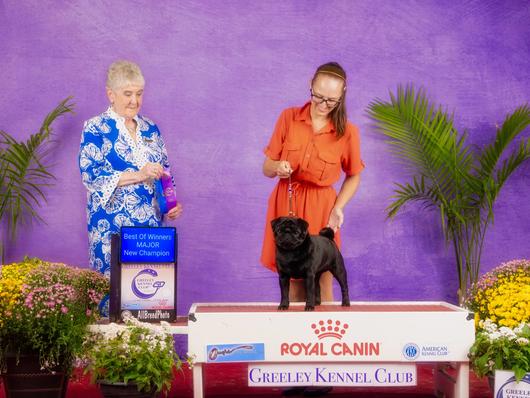
Moonie, dad
Pug
About Moonie
Moonie is our newest boy imported from Czech. He obtained his AKC Championship at the age of 15 months old. He will be working towards his AKC Grand Championship towards the end of 2026!
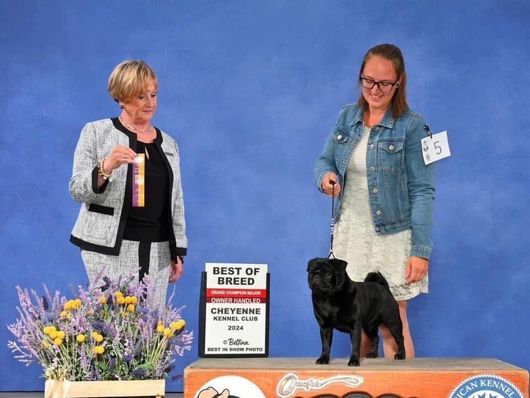
Eli, dad
Pug
About Eli
Meet Eli! Eli is the foundation of Lazuli. He is out of CH Dillpepah's Wise Guy & CH BlkThndr & Woowoos Moonlight & Magnolias. Eli obtained his AKC Championship at the young age of 13 months old and went on to complete his AKC Grand Championship at 15 months old. But that's not all, he's not just a pretty face! Eli has also received his Canine Good Citizen, Trick Dog, Farm Dog, and Fit Dog, and Temperament test titles!

Anika, mom
Pug
About Anika
Anika is our beautiful Ukrainian import and she is currently working towards her AKC Championship title.
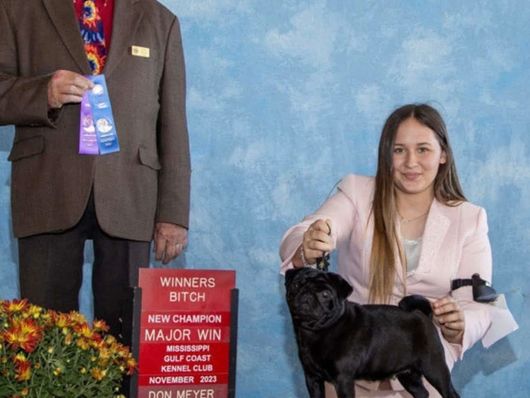
Katy, mom
Pug
About Katy
Katy completed her AKC Championship and will occasionally continue to show as a Junior’s dog in 2025. We are excited to work on backend titles for Katy in the near future!
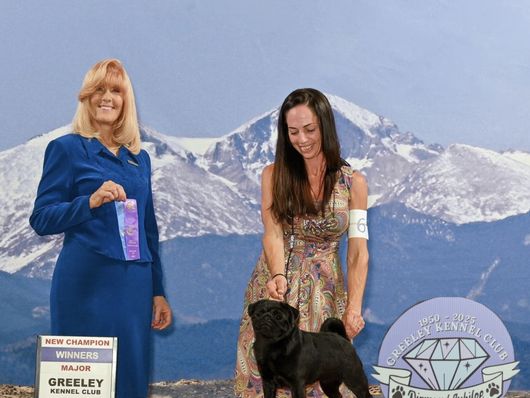
Eko, mom
Pug
About Eko
Meet Eko! She is out of GCH CH Wincastle Primer & CH Flash Of Joy Flamenco TKI FDC. Eko obtained her AKC Championship at 17 months old after a long break from showing. Eko will continue showing to towards her AKC Grand Championship if limited showing.
Parent health testing
Excellent level
Lazuli Pugs reports to performing the health tests below on their breeding dogs. Ask your breeder about the tests performed on the parents of your litter. Learn more about health testing for Pugs.
Hip Dysplasia
Hip testing reduces the chance of passing down hip dysplasia, which is primarily found in large breed dogs and can cause hip pain and the eventual loss of the function of the hip joint.
Eye Certification (CAER, registered with OFA)
Eye testing reduces the chance of passing down a wide range of hereditary eye illnesses including retinal dysplasia, lens luxation, and glaucoma, which can cause impared vision or blindness.
Cardiac Evaluation (registered with OFA)
Heart testing reduces the chance of passing down congenital heart disease, which can cause a range of symptoms ranging from trouble exercising to heart failure.
Patellar Luxation
Knee testing reduces the chance of passing down Patellar Luxation, which results in the kneecap becoming displaced or dislocated and can cause mild to severe joint pain.
Spine (OFA, FCI), Tracheal Hypoplasia
A breeder may perform additional tests on their dogs that do not fall into these general categories. These tests may be more uncommon or very specific to a particular breed.
Dominant Black DNA Test, DNA Profile, Degenerative Myelopathy (DM; SOD1A), Pug Dog Encephalitis (PDE)
Genetic testing reduces the chance of passing down a wide variety of hereditary diseases of differing prevalence and severity such as Progressive Retinal Atrophy (an eye disease) and Von Willebrand's Disease (a blood disease).
Verified owner stories
Hear what other owners say about working with Lazuli to bring home their puppies.

Shannen M.
Verified owner · Sept. 2025
For anyone wanting a to the point summary, working with Wicked Kennel was an all around great experience, and we recommend them 100%. In more detail, my fiancé and I are both in the veterinary field and decided to get our first dog together before our Wicked puppy was even born. We had been looking seriously for several months when we finally found Wicked Kennel. Working in the veterinary field there is pressure from the community to a certain extent to “adopt don’t shop.” All of my dogs besides my family dog growing up were rescues, I loved them dearly but several of them had significant behavioral issues that I was never able to correct. Because of this I always felt some level of sadness because they missed out on activities that they would have been able to experience had they had a good start. My fiancé wanted a puppy from a breeder and I was still stuck on the idea of adopting from a shelter. His point was that although rescuing animals is well intentioned and applicable for some people, in many ways the best way to mitigate the number of dogs that end up in shelters is creating high standards for the breeding of companion animals as well as creating a more widespread understanding that owning an animal is a privilege, not a right. I couldn’t be more impressed with the thoughtful care of Wicked’s dogs and puppies, breeders like them are at the forefront of changing how our society views animal ownership. Having a puppy who has had an impeccably happy and healthy first stage of life makes a world of difference. Can’t thank Wicked enough!!