Setting up the Whelping Box
Preparing the whelping and nursery area
These courses are for educational and informational purposes only and are not a substitute for professional veterinary advice, diagnosis, or treatment. Always consult your veterinarian before making decisions about your dog's health, including administering supplements, changing their diet, or implementing training techniques that could affect their wellbeing.
Preparing the whelping and nursery area
When your bitch is getting ready to give birth, she will naturally seek out a place to “nest.” You can support her by setting up a whelping box that is comfortable, cozy, and safe. A great whelping box will help her express her nesting instincts and allows your dam to care for her puppies with minimal stress. Ideally, this box is set up in the last few weeks of your dog’s pregnancy to help her get familiar with it at her own pace and in plenty of time before the puppies arrive.
Location in the home: Where to place the whelping box
The first thing to consider is where you will place the whelping box. The ideal room allows you to secure her away from other dogs with a baby gate or door. Offices or spare bedrooms are great options. For convenience, choose an area where you can also easily take the dam out to eliminate as needed.
Solo time for mom
Even if your dog gets along great with the other dogs in your household, whelping time is a time for the new mom to be alone with her puppies. She may be very protective of her puppies, and now is not the time to put her in a situation where she feels stressed or defensive!
The ideal environment for the whelping box
In addition to being closed off and away from other dogs, the ideal room for the whelping box is relatively quiet and away from high traffic areas in the home, so be aware of any noises inside or outside of the home that might bother your dam. To that end, while your dog is whelping, be mindful of the number of people coming and going – although everyone will want to see the puppies, it’s important to consider how stressful that can be for your dog and limit visitors as much as possible.
It’s important to keep puppies warm and dry so the room should be temperature-controlled and draft free. Keep the room between 70 and 75° F. A great way to test if the room is too drafty is to hang a string or ribbon above the whelping box. If the ribbon moves, there's a draft.
As for the lighting in the whelping area, avoid bright lights and dim the lights if possible, but it’s also okay to follow the natural light cycle.
Whelping box
You have several options for the whelping box itself. If you prefer to purchase a whelping box, three commonly used brands include Jonart, EZWhelp, and Durawhelp. A plastic kiddie pool can work great for many dogs and is affordable and sanitizable.
Some breeders prefer to build their own whelping box, or use a disposable cardboard box for whelping, which can work for smaller dogs. However, keep in mind that the box may get dirty, and you want something that can be sanitized, and stay clean and dry.
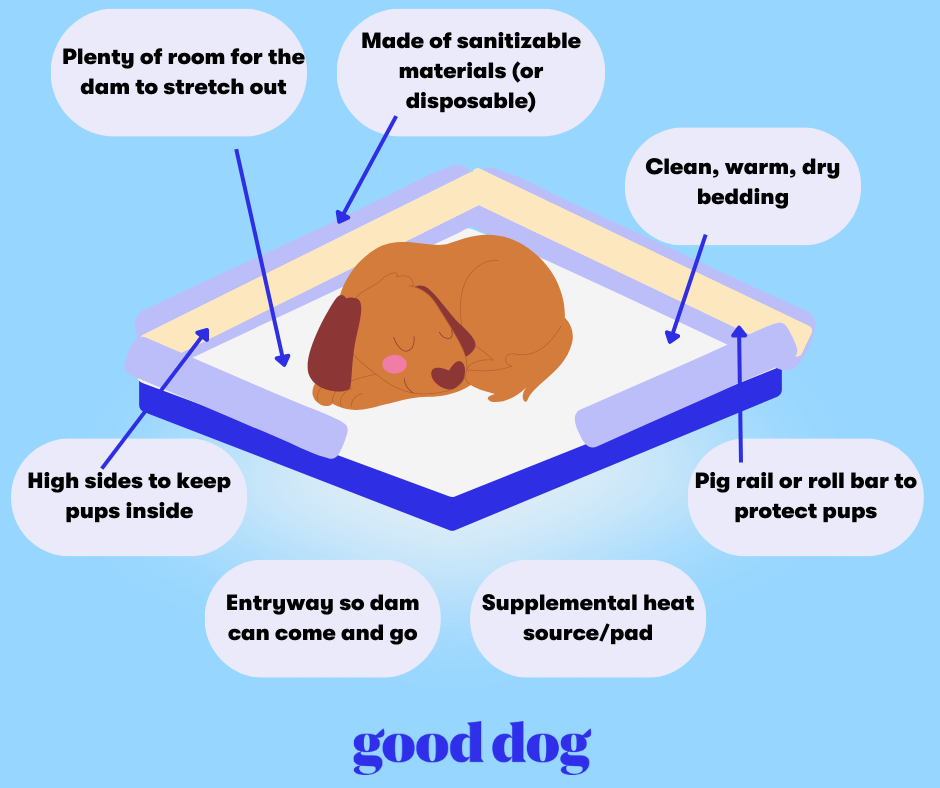
The box needs to be large enough for the dam to move around and take breaks away from the puppies. A good rule of thumb is 1.5 times her body length. It should be relatively low-sided or if high-sided, have an entryway so she can get in and out easily, but the pups stay inside.
What goes inside the whelping box?
1. A railing, sometimes called a pig rail, is recommended for the whelping box. This is a slightly elevated rail that follows the edge of the whelping box. It prevents a dam from crushing a puppy against the edges of your whelping box. Most commercial whelping boxes include a pig rail. Plans for DIY options (made out of PVC pipes or pool noodles) are easy to find online if you have built your own whelping box or are using a kiddie pool.
2. An extra heat source is recommended to keep puppies comfortable. They cannot regulate their body temperature for the first few weeks, and may need an external source of warmth. You can use a regular heating pad, ideally one made for pets, or use a microwavable heated disc. The heated pad or disc should have a washable fabric cover. Other breeders may choose to use an overhead heat lamp.
Puppies need to be able to move or roll away from the heat source, so there should be areas of the whelping box that are unheated. If puppies cannot move away from a heat source, there is a risk of overheating or being burned.
Be sure to monitor the puppies and the heat source to make sure it’s safe and appropriate. If it’s too cold in the whelping box, puppies will be constantly huddling for warmth; if it’s too warm, they will be scattered away from any heat source.
3. Bedding: The ideal bedding material should be highly absorbent, easily cleaned, and provide good traction for mom and pups. We recommend Vet Fleece, Wonder Fleece, Sherpa or similar fabrics. Blankets and towels are not recommended because puppies can get tangled and injured in them.
4. Puppy pads or newspapers: These materials will help absorb any fluids during whelping. They’ll also come in handy in a few weeks when the puppies start eliminating.
Cleaning the whelping box
You’ll want to keep that whelping box clean! That means cleaning up any visible waste when observed, and otherwise cleaning and disinfecting the whelping box at least once a day.
A great time to clean the whelping box is when the dam is already out of the box - such as when she is taken out to eliminate. This minimizes stress to the bitch as you do not have to ask her to leave her puppies without good reason. Her potty break is also a good time to weigh the puppies. You can gently place the puppies in a fleece-lined box or crate while you clean the whelping box, then weigh each before returning them to the whelping box.
- Remove the bedding and any puppy pads.
- Remove any debris from the box.
- Wipe down the whelping box with a gentle cleaning solution
- Disinfect with an appropriate pet disinfectant, following all instructions
- Replace the puppy pads and bedding as needed
Other biosecurity considerations
- If you have multiple litters on the way at around the same time, it is best if all dams have completely separated areas for whelping.
- If you are attending to multiple litters at the same time, or if any of your other dogs leave your property, you may want to use shoe covers when entering the whelping room, and be sure to wash your hands thoroughly between handling different dogs.
- Different litters should not be “mixed” – keep litters completely separate to reduce inadvertent exposure to disease or parasites.
Resources
VCA: Breeding for Pet Owners - Whelping in Dogs
Purina: How A Whelping Box Nurtures The Maternal Nesting Instinct
Revival Animal Health: Dr. Greer’s Dog Breeding, Pregnancy and Whelping Plan
Dendoncker, P. A. (2019). Biosecurity measures for dog merchants and canine breeding kennels. Biosecurity in Animal Production and Veterinary Medicine, 433.
Join our Good Breeder community
Are you a responsible breeder? We'd love to recognize you. Connect directly with informed buyers, get access to free benefits, and more.

