Cleaning, Disinfecting & Sanitizing
Keeping your dogs safe from dangerous germs
Good Dog is on a mission to educate the public, support dog breeders, and promote canine health so we can give our dogs the world they deserve.
Good Dog is on a mission to educate the public, support dog breeders, and promote canine health so we can give our dogs the world they deserve.
Good Dog is on a mission to educate the public, support dog breeders, and promote canine health so we can give our dogs the world they deserve.
By Dr. Mikel Delgado, PhD
Small and large breeding programs alike can experience outbreaks of infectious diseases or parasites. To protect your dogs, it is critically important to prevent pathogens and parasites from entering your home and kennel.
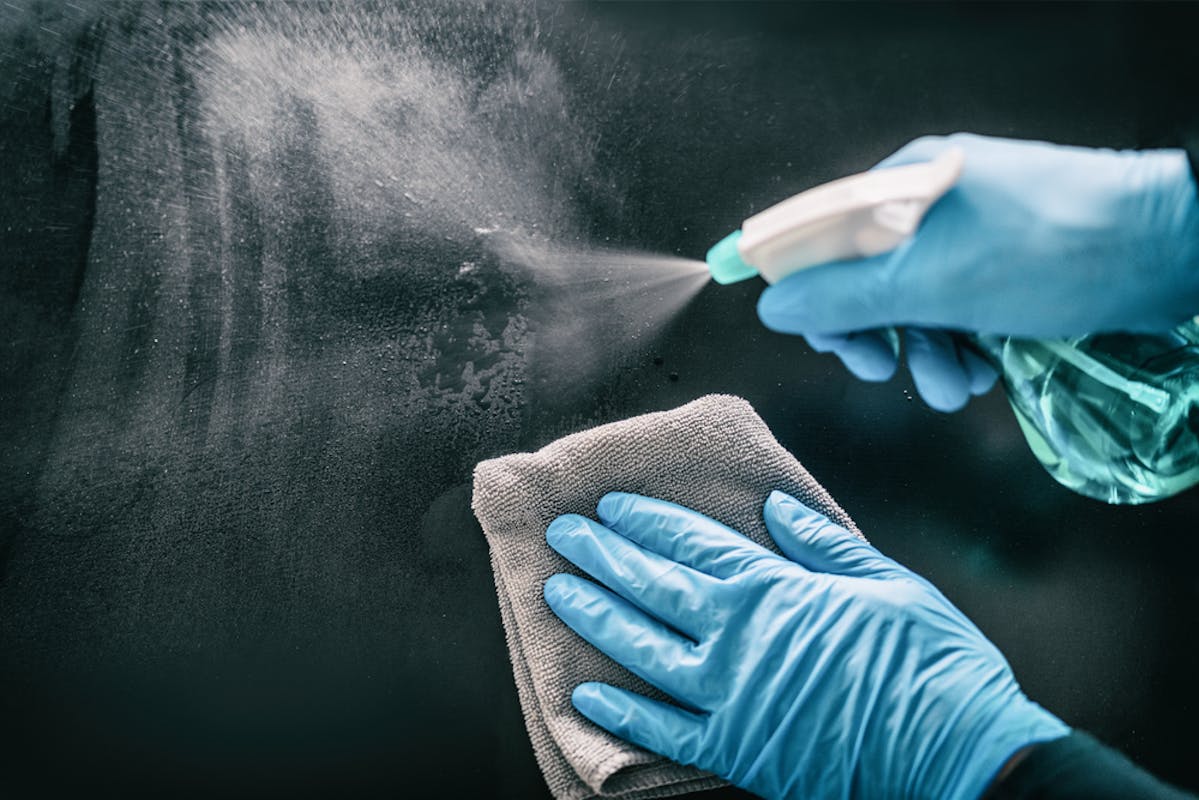
One essential tool to help keep harmful diseases from infecting your animals is to routinely clean, disinfect, and sanitize the areas where your dogs live.
How can germs and microbes get into your home and kennels?
Unfortunately, germs and parasites can be very opportunistic and can easily make their way onto your property. Depending on the source of infection, they can live on grass, hang out on your shoes, or be transmitted by contact with other dogs or shared water sources. Once they enter your home, some viruses, larvae, eggs, or other infectious organisms can live on surfaces for several hours, days, or even years. These surfaces are often referred to as fomites.
Fomite: | any surface that can transmit an infection |
|---|
Just a few examples of sources of germs and parasites:
- Your shoes
- Wildlife outside
- Dog parks or other contact with outside dogs
- Visitors to your home or kennel
- Stud dogs on site or new dogs in your program
- Dog shows
- Volunteering in an animal shelter
By being aware of potential sources of infectious organisms, you can limit their ability to contaminate your home.
Prevention of infection
How can you prevent your dogs from being infected by dangerous or annoying germs and parasites?
- Vaccinate all of your dogs against common infectious diseases
- Have an established deworming protocol for your dogs and puppies
- Test all breeding dogs for brucellosis before every breeding or every six months, whichever is more frequent
- Quarantine new dogs or those exposed to disease until cleared for diseases, including brucellosis
- Isolate any sick dogs
- Sanitize your dog’s living areas routinely and thoroughly
Quarantine: | Separating animals who may have been exposed to disease, or new animals added to your program, from other animals in your program |
|---|---|
Isolation: | Separating sick animals from unaffected animals in your program to prevent the spread of disease |
Am I sanitizing, cleaning, or disinfecting?
Although all three of these activities are important to do for your breeding program, they aren’t exactly the same thing. What you need depends on the level of risk your program is exposed to.
Sanitization: | lowering germs to safe levels by either cleaning or disinfecting |
|---|---|
Cleaning: | removing visible dirt and debris |
Disinfecting: | killing pathogens with chemicals (such as bleach) |
Ideally, you should deep clean your kennels and dog living areas weekly (or more), removing visible dirt and debris by sweeping, vacuuming, and mopping. Cleaning does not remove infectious organisms but is essential before disinfecting. Always clean BEFORE you disinfect. Any organic material such as feces, dirt, or oils will prevent the disinfecting chemicals from working properly.
Disinfecting removes germs, bacteria, viruses, fungi, worms, and the like, but most disinfectants will not remove dirt and grease. That is why cleaning and disinfecting are best done TOGETHER.
Sterilization: | the process of removing all organisms (bacteria, spores, etc.) from a surface. |
|---|
Most breeders will not require equipment that is sterilized. However, if you use any reusable equipment such as clamps or hemostats, please discuss with your veterinarian the best way to sterilize this equipment. Extreme heat, pressure, and/or chemicals are necessary to adequately sterilize tools.
Setting up your space
When setting up your dog housing, use surfaces that can be cleaned, disinfected, or replaced. Stainless steel, PVC and fiberglass are all good because they are easy to disinfect and are not as welcoming to germs. Wood, carpet, unsealed concrete, astroturf, grass, and dirt are all porous and difficult, if not impossible, to disinfect.
A few simple preventative measures can reduce the risk of infection in your program: be sure to clean up any animal waste as soon as possible. It’s also a good idea to take off your shoes when you enter the house and dog areas, or use shoe covers. Foot baths are not recommended as they do not provide long enough contact with disinfectant, and the disinfectant solution can become contaminated quickly, leading to further spread of germs. Be sure all visitors to your home or kennel wear shoe covers.
All surfaces have the potential to house bacteria, viruses, and parasites. Take a good look at your home and kennels and assess what could be sources of infection. Don’t forget items such as stethoscopes, scales, food dishes, and toys.
Laundering bedding weekly will reduce germs and bacteria (as well as dander and mites), although laundering cannot disinfect surfaces. Wash and dry with the highest temperature setting that the bedding can withstand, and use detergent and bleach to remove the greatest amount of pathogens.
When cleaning inside, start from the top of a space (i.e., the ceiling) and work your way down (walls, flooring). Make sure your cleaning tools (such as sponges and mops) can also be disinfected or replaced.
Steam cleaning can be appropriate and when used correctly, can kill up to 99% of organisms. However, some home surfaces can be damaged by heat. A 2014 study found that steam cleaning was effective in reducing bacteria on several surfaces (such as a concrete run, and stainless steel kennels) by 75 to 95%.
Using disinfectants
- Disinfectants must be used correctly to have the desired effect! Disinfectants will have specific minimum contact time (how long the disinfectant must remain wet on a surface), which can range from 15 seconds to up to 10 minutes - do not wipe surfaces dry before that time has passed.
- Measure your water and disinfectant accurately. This is not the time to “eyeball” amounts.
- Mix and label chemicals appropriately, noting the date the disinfectant was diluted; dilutions expire and if used past expiration, will not be effective.
- Do not mix old with new dilutions – empty a bottle of solution completely, then clean and rinse the bottle before mixing a new solution.
- Ensure the area you are disinfecting is well ventilated, and follow any precautions listed on the label of the disinfectant, such as wearing eye protection or gloves.
Appropriate products for use in dog breeding programs
- Products with Accelerated Hydrogen Peroxide (AHP) use a specially patented technology with hydrogen peroxide, and other ingredients. These products are considered highly safe, effective, and environmentally friendly. Brands include Rescue and Peroxigard.
- Virkon (formerly known as Trifectant): a broad spectrum disinfectant that comes in powder and tablet form
- KennelSol (Quaternary ammonium compound based): Broad spectrum product that both cleans and disinfects
- Bleach - bleach is considered safe for use to disinfect dog kennels if used at the correct dilution and contact time
- Wysiwash - a power wash system for calcium hypochlorite (similar to chlorine) that is used with a standard garden hose. It is considered safer but similar in efficacy to bleach.
Note: Phenol-based disinfectants (e.g., Lysol) are not recommended as they are considered potentially toxic to companion animals.
Product | Effective for... | Reference sheet |
|---|---|---|
Rescue | broad spectrum of bacteria and viruses, including canine distemper, adenovirus, and parvovirus, and E.coli | https://rescuedisinfectants.com/wp-content/uploads/2017/07/REF067_Rescue-RTU-Ref-Sheet_17-069-2.pdf |
Peroxigard | broad spectrum of bacteria and viruses, including canine distemper, parvovirus, and E.coli | https://peroxigard-us.bold-staging.com/wp-content/uploads/2018/08/PeroxiGard-RTU-Reference-Sheet-US.pdf |
Virkon | bacteria, fungi, viruses including canine distemper, adenovirus and parvovirus, ringworm, and E.coli | https://www.mccaskie.co.uk/media/1498/virkons-data-sheet.pdf |
KennelSol | bacteria, fungi, viruses, and parasites including canine distemper and parvovirus*, E.coli, giardia | https://www3.epa.gov/pesticides/chem_search/ppls/062472-00002-20101028.pdf |
Bleach | bacteria, fungi, viruses, and parasites including parvovirus, distemper, E.coli, giardia | |
Wysiwash | bacteria, fungi, viruses, and parasites including canine distemper and parvovirus, giardia | https://www.wysiwash.com/technical-info |
*Independent studies have shown that Quaternary ammonium compound based products do not reliably kill parvovirus, see this link for more information
References and resources
Medline Plus: Cleaning, Disinfecting, and Sanitizing
AAHA: Keep it clean: Infection control and biosecurity in veterinary medicine
Revival Animal Health: Disinfectants: Choose Wisely
Iowa State University: Disinfection 101
Dendoncker, P. A., Moons, C., Sarrazin, S., Diederich, C., Thiry, E., De Keuster, T., & Dewulf, J. (2018). Biosecurity and management practices in different dog breeding systems have considerable margin for improvements. Veterinary Record, 183(12), 381-381.
Wood, C. L., Tanner, B. D., Higgins, L. A., Dennis, J. S., & Luempert, L. G. (2014). Effectiveness of a steam cleaning unit for disinfection in a veterinary hospital. American Journal of Veterinary Research, 75(12), 1083-1088.

Join our Good Breeder community
Are you a responsible breeder? We'd love to recognize you. Connect directly with informed buyers, get access to free benefits, and more.