Mouthy Behavior in Puppies
How to keep the nipping under control
Good Dog is on a mission to educate the public, support dog breeders, and promote canine health so we can give our dogs the world they deserve.
Good Dog is on a mission to educate the public, support dog breeders, and promote canine health so we can give our dogs the world they deserve.
Good Dog is on a mission to educate the public, support dog breeders, and promote canine health so we can give our dogs the world they deserve.
by Dr. Mikel Delgado, PhD
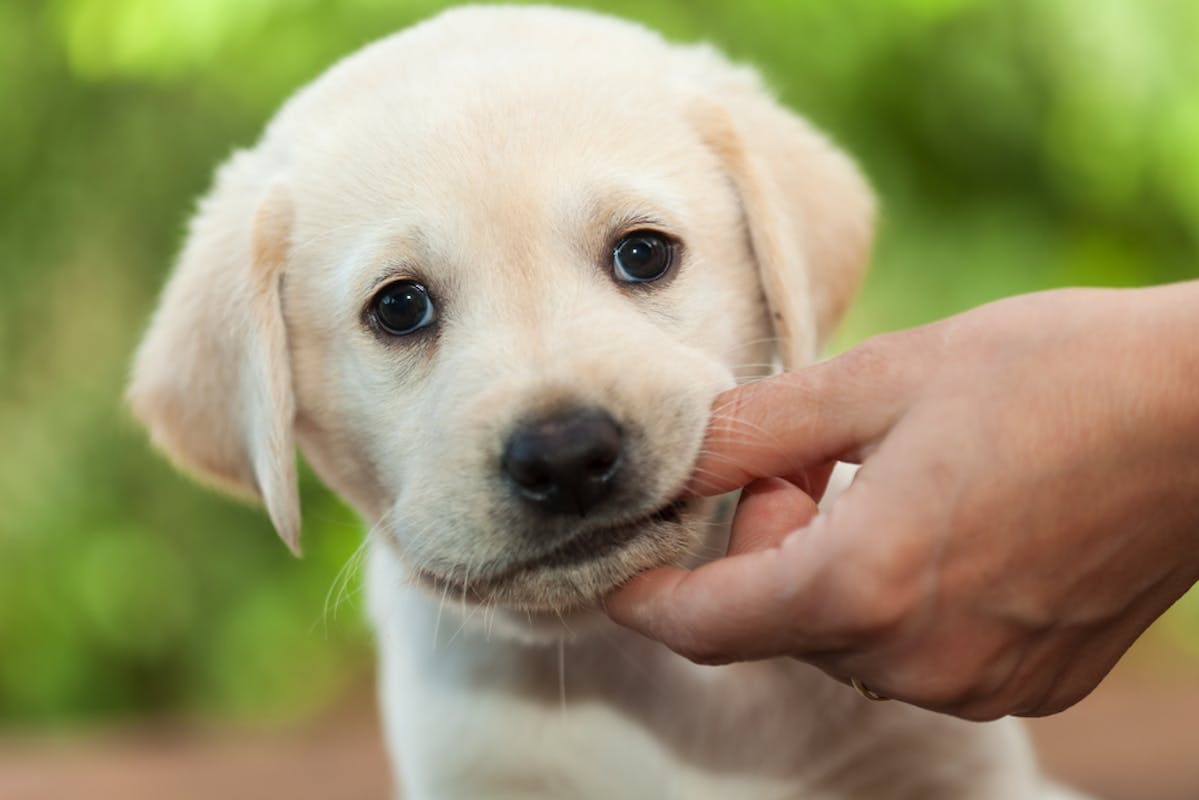
Just as puppies like to chew on household objects, they might try to nibble on your hand. Puppies are also used to rough and tumble play - with other puppies.
Although nipping and biting might be cute when your puppy is young and small, it will be significantly less cute, and also a potentially dangerous problem when your pup is older. Prevention and an appropriate response to mouthy behavior will help you raise a dog who is safe AND fun for everyone they meet.
Set your puppy up for success
Send your puppy the right message from the get-go. Hands are for gentle interaction and care, and toys are for pulling, chewing, tugging and biting! Be sure to give your puppy lots of appropriate chew toys, and things to keep them busy.
When you play with your dog, try toys that keep your hands away from their mouth. For example, a well-made tug toy is durable and has a handle for you. A flirt pole (a toy attached to the end of a pipe or stick) is a great option for dogs who need a lot of exercise, or who need an outlet for their prey drive!
In general, your puppy needs regular exercise and activity to keep them busy, so be sure to maintain a routine of gentle walks, self-play toys, and training to tire out their bodies and minds.
Puppies need continuing socialization with other puppies, or friendly dogs. When safe for your puppy, classes or playdates give your puppy rough and tumble play with other dogs, where they can learn about soft-biting. Dogs are good at communicating with each other when they’re getting too rough, which can teach your puppy how to be more gentle!
Keep interactions with people positive: be sure to recognize when your puppy might be too excited for cuddles or petting, and always supervise any puppy or dog with young children.
If your puppy gets mouthy
Don’t over-react to your puppy’s mouthiness – you don’t want to scare them or get them more excited. Redirect their mouthy behavior to a toy. If they continue nipping, stop the play and turn away from your puppy for a short time (10-20 seconds is sufficient) - you are sending a message that if your puppy is too mouthy, the human attention and play go away.
Never physically punish or yell at your puppy for biting or nipping. Instead, focus on appropriate play, prevention, and training your puppy about the behaviors you DO want using positive reinforcement training methods. If you are concerned about your puppy’s biting behavior, talk to your veterinarian or a qualified behavior professional.

Join our Good Breeder community
Are you a responsible breeder? We'd love to recognize you. Connect directly with informed buyers, get access to free benefits, and more.