Crate training: What is it and does your pup need it?
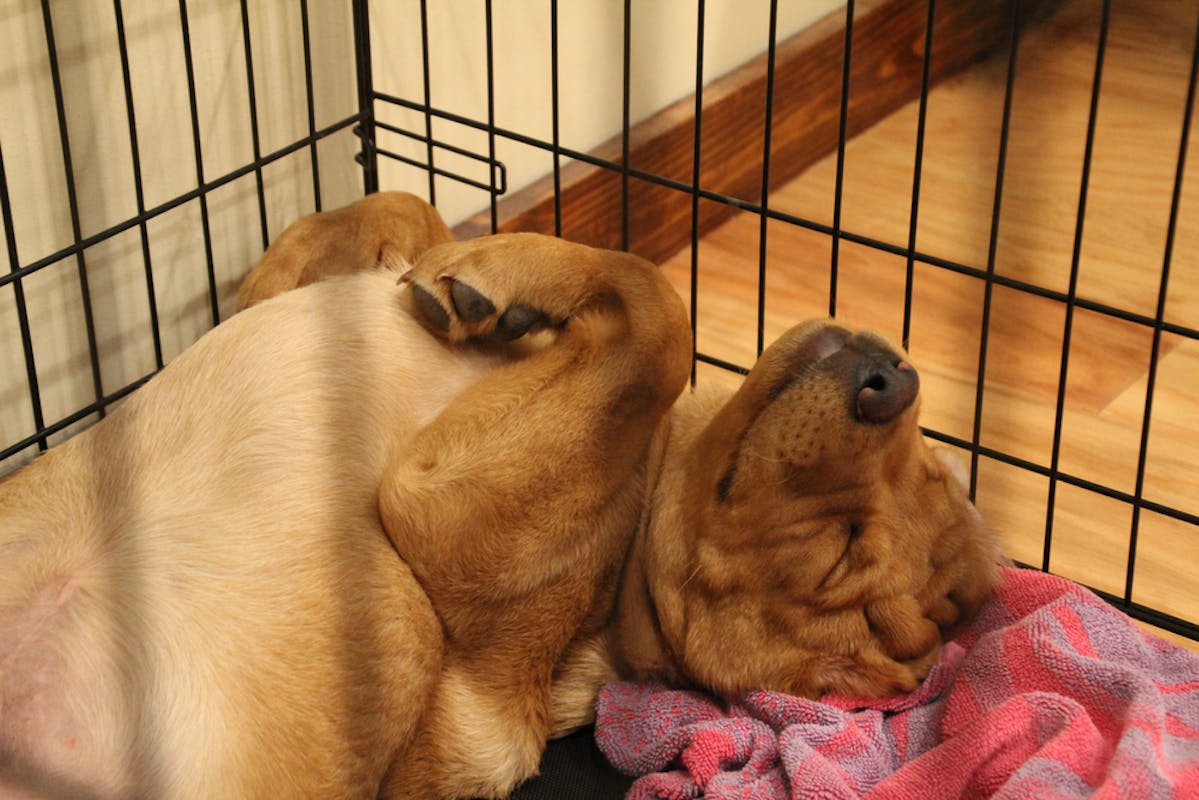
Crate training can give our dogs a safe space
Good Dog is on a mission to educate the public, support dog breeders, and promote canine health so we can give our dogs the world they deserve.
Good Dog is on a mission to educate the public, support dog breeders, and promote canine health so we can give our dogs the world they deserve.
Good Dog is on a mission to educate the public, support dog breeders, and promote canine health so we can give our dogs the world they deserve.
by Dr. Mikel Delgado, PhD
Crate training gives our dogs a safe space they can feel calm in, and can also be helpful for things such as potty training, travel, and emergencies.
Choosing a crate
A dog crate should be:
- Rigid/Hard-sided
- Large enough to give an adult dog room to stand, lie down, and turn around (some crates come with dividers so you can adjust the size as your pup grows)
- Well-ventilated
- In a good location: you can place the crate in an area where you and your family spend time, such as your living room, home office, or kitchen.
Having a second crate in your bedroom will help alert you when your puppy needs to be taken outside to eliminate during the night. Keeping the crate nearby prevents your dog from associating the crate with social isolation.
Setting up the crate
Make the crate attractive to your puppy by placing your pup’s favorite bedding inside. Add safe chew toys or a food puzzle. You can also start feeding your puppy their meals (1) first near and then (2) later inside the crate so they get used to spending time there. Try playing fetch or tug near and in the crate. The goal is to make it a space where good things happen!!
When should you use a crate
A crate can be helpful with puppies when you can’t directly supervise them, or when things in the house are just too active or overwhelming for your dog (such as when there are houseguests).
However, dogs should not be crated for longer than they can retain urine. For adult dogs this generally means not for more than 4-5 hours; for puppies it’s a much shorter period: around one hour per month of age. See our guide to potty training for more information.
An important note: Never use the crate as a punishment - that will make your dog LESS interested in spending time there in the future.
Safety first: To prevent injury, remove your dog’s collar before they enter the crate.
Training your dog to go in the crate when asked
The first thing to know is what NOT to do: Do not try to force your puppy in the crate. First impressions matter, and you do not want to set up your puppy to be fearful of the crate.
Getting started
It’s helpful to choose a time that your pup is tired and/or hungry to have a training session. Ideally they will be motivated to settle down in the crate with a food puzzle and then take a nap!
First, lure your puppy into the crate with tasty treats, leaving the door open so they can come and go as they please. Once your puppy readily enters the crate, you can start closing the door BRIEFLY - just a few seconds, then open the door. The goal is to gradually increase the amount of time the crate door is closed, all while ensuring that your pup has something fun to do inside the crate. You may even find that when you open the door, she’s content to lay inside with a toy.
Introduce a cue
As your pup walks into the crate to get the treats, start introducing your cue such as a “crate” or “go to bed” and pointing to the crate. Once they are in the crate, say “good dog” or “yes!” and drop a few treats through the door as you close it.
Gradually you can stop using treats to lure your pup into the crate, and the cue will be enough. You will want to continue to give the response (“yes!”) and treat for entering the crate during the training period.
Start gradually increasing the time your puppy is in the crate.
Opening the door
When you go to open the crate door, ask your pup for a sit, or wait until they have been quiet for 5 seconds first. The goal is rewarding and releasing for calm, quiet behavior.
What if they whine?
Do not immediately open the door if your puppy whines -- or soon they will have you trained to rush to check on them anytime they cry. Most puppies will settle down quickly if you ignore their whining.
If problems arise
However...some dogs will panic in their crate, or not settle down. If your pup is truly distressed and continues vocalizing, do not continue crate training without talking to your veterinarian or a qualified behavior professional. Although most dogs do just fine and pick up crate training quickly, some need some extra help (or an alternative approach).
Alternatives to crate training
There are alternatives that you can use instead of or in addition to a crate, such as using a baby gate or exercise pen to restrict your dog to one area when confinement is necessary. Some people choose to hire a dog trainer/walker to let their dog out for a potty break during the day. Once a dog is potty trained and the home is dog-proofed, many dogs are allowed free access in their home when their owners are gone. You can do what works best for you and your dog!
References
Best Friends Step by Step Plan for Crate Training (more detail)
AKC Guide to Crate Training Your Dog
VCA: Life Skills for Pets: Crate Training and Confinement for Puppies and Dogs
Borchelt PL (1984). Behaviour development of the puppy in the home environment. In RS Anderson (Ed), Nutrition and Behavior in Dogs and Cats: Proceedings of the First Nordic Symposium on Small Animal Veterinary Medicine. New York: Pergamon.
Lindsay, S. (2013). Handbook of Applied Dog Behavior and Training, Etiology and Assessment of Behavior Problems (Vol. 2). John Wiley & Sons.
Majumder, S. S., Paul, M., Sau, S., & Bhadra, A. (2016). Denning habits of free-ranging dogs reveal preference for human proximity. Scientific reports, 6(1), 1-8.

Join our Good Breeder community
Are you a responsible breeder? We'd love to recognize you. Connect directly with informed buyers, get access to free benefits, and more.