Managing your puppy's chewing
Chewing is normal but can be annoying or even dangerous. Here's what to do.
Good Dog is on a mission to educate the public, support dog breeders, and promote canine health so we can give our dogs the world they deserve.
Good Dog is on a mission to educate the public, support dog breeders, and promote canine health so we can give our dogs the world they deserve.
Good Dog is on a mission to educate the public, support dog breeders, and promote canine health so we can give our dogs the world they deserve.
by Dr. Mikel Delgado, PhD
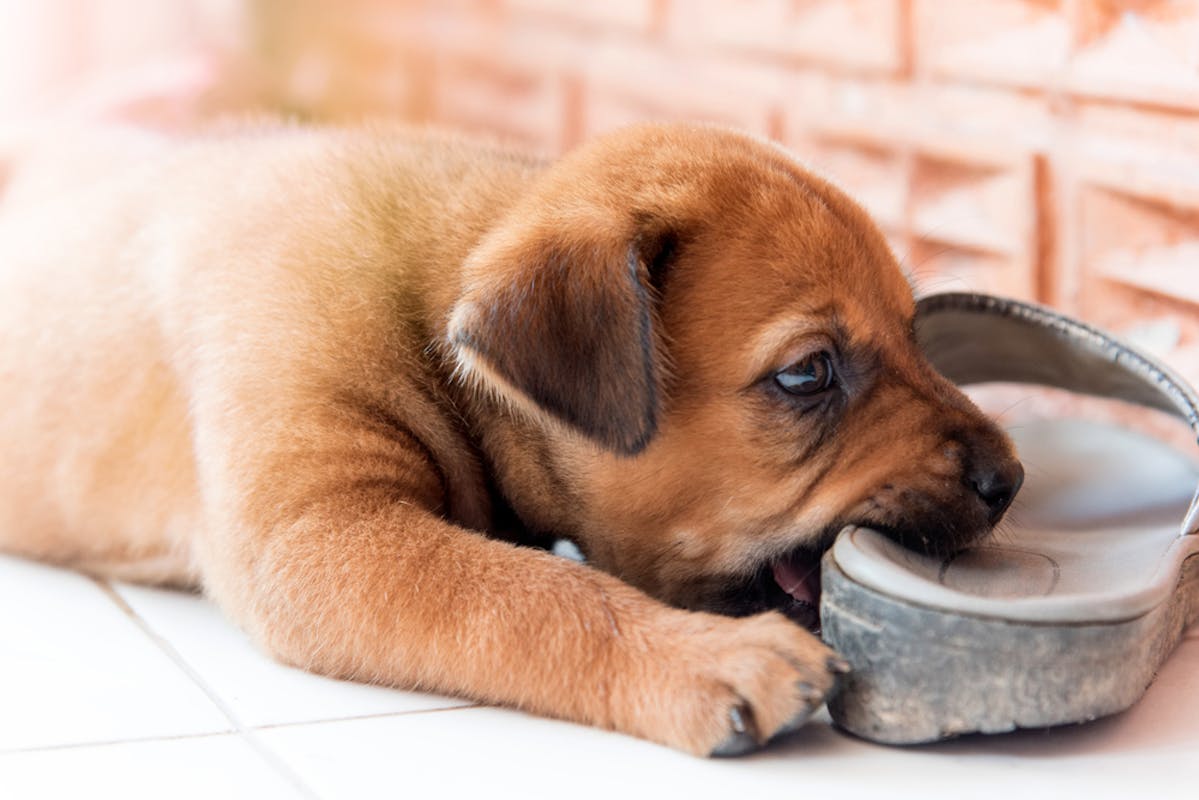
Shoes, clothing, books, pillows, garbage, the remote control. Nothing is off limits to a teething puppy. Puppies explore their world, in large part, with their teeth! Chewing is natural to puppies, but when chewing gets directed to things we don’t want chewed, chewing can be annoying or even dangerous.
Get started with chew-training right away, so you can let your pup know it’s okay to chew, just not on your shoe.
Why do puppies chew
Chewing is a natural canine behavior, but it needs an acceptable outlet.
Puppies chew on household items for multiple reasons, including:
- There’s nothing appropriate for them to chew on instead
- Boredom or stress - puppies need lots to keep them entertained!
- Teething - chewing can soothe irritated gums when your puppy’s adult teeth are coming in
Preventing chewing behavior
Prevent destructive chewing by giving your pup something appropriate to chew. The chew toy should be sturdy, but soft enough that you can place an indentation in it with a fingernail. Chew toys that are too hard can break a puppy’s teeth. Rawhide, Nylabones, Kongs, latex/rope toys and stuffed toys are generally safe options.
Supervise your pup at first, and talk to your veterinarian if you need any specific recommendations for chew toys.
Prevention of chewing problems isn’t just about chewing! You should keep your dog busy in general. The old mantra is “a tired dog is a good dog.” Keep your dog on a regular, age- and breed- appropriate exercise schedule, making sure they have toys and enrichment activities indoors as well.
Food toys and Kongs
Kongs and food puzzles give your dog an outlet for their need to chew, while slowing down their feeding. Kongs are durable, rubber chew toys with a cavity that can be stuffed with dog food, or other treats. Food toys (or “puzzles”) and snuffle mats also require your dog to interact with them to release a bit of dry food. These can keep your dog busy, and get them using their problem solving skills while eating their regular meals.
Management
Watch your puppy carefully, and be sure to “dog-proof” the environment. This means putting away tempting items especially when you aren’t around to supervise. To be safe, secure trash bins, cabinets, and hampers.
Chewing dos and don’ts
- DO give your dog chew toys that are appropriate.
- DO be consistent - DON’T allow your dog to chew your old shoes and socks. They won’t know it’s okay to only chew the old ones!
- DON’T punish your dog for chewing. Chewing is a natural behavior.
- DO give your pup appropriate outlets for chewing behavior.
- DO teach your puppy to give you objects (“Drop it”) in exchange for something better.
- DO be realistic. Puppies chew, and when you live with a pet, it is likely that at some point, SOMETHING will get damaged!
- DO reach out to your veterinarian or a qualified behavior professional if you need help with your dog’s chewing behavior.

Join our Good Breeder community
Are you a responsible breeder? We'd love to recognize you. Connect directly with informed buyers, get access to free benefits, and more.