Training your dog: What you need to know
why and how you should train your dog and finding qualified help
Good Dog is on a mission to educate the public, support dog breeders, and promote canine health so we can give our dogs the world they deserve.
Good Dog is on a mission to educate the public, support dog breeders, and promote canine health so we can give our dogs the world they deserve.
Good Dog is on a mission to educate the public, support dog breeders, and promote canine health so we can give our dogs the world they deserve.
By Dr. Mikel Delgado, PhD
Why train your dog
Training a dog isn’t really about making them do whatever you want, whenever you want (although sometimes that happens too!). It’s about building a relationship with your dog and giving them the skills they need to be a good companion in our home AND a good citizen of the world! Training your dog for basic manners and to be well-socialized provides them with mental stimulation, allows them to take part in and enjoy social situations, and prevents them from developing behavior problems that can negatively affect the dog-human relationship.
Why hire a dog trainer?
When it comes to training our dogs, sometimes we need a little help.
Maybe you are a new dog owner who has never trained an animal before. Perhaps you are experiencing a particular behavior concern with your own dog and need some strategies on how to resolve it. You might want to do some fun activities with your dog, like teaching them some “parlor tricks” or to do agility exercises.
In any of these situations, it can be helpful to bring in an outside eye - a dog trainer who can provide you with an objective assessment, a structured plan, and years of experience to help YOU learn how to communicate effectively with your dog. Perhaps the most important benefit of learning to train your dog is that it is a skill you can return to again and again throughout your relationship with them.
Think carefully about what your expectations of your dog are and make sure they are realistic. The goal isn’t necessarily to suppress behaviors but to direct them in appropriate ways. Then you can focus on the important basics, such as “sit,” “stay,” and “down.”
Training should be fun
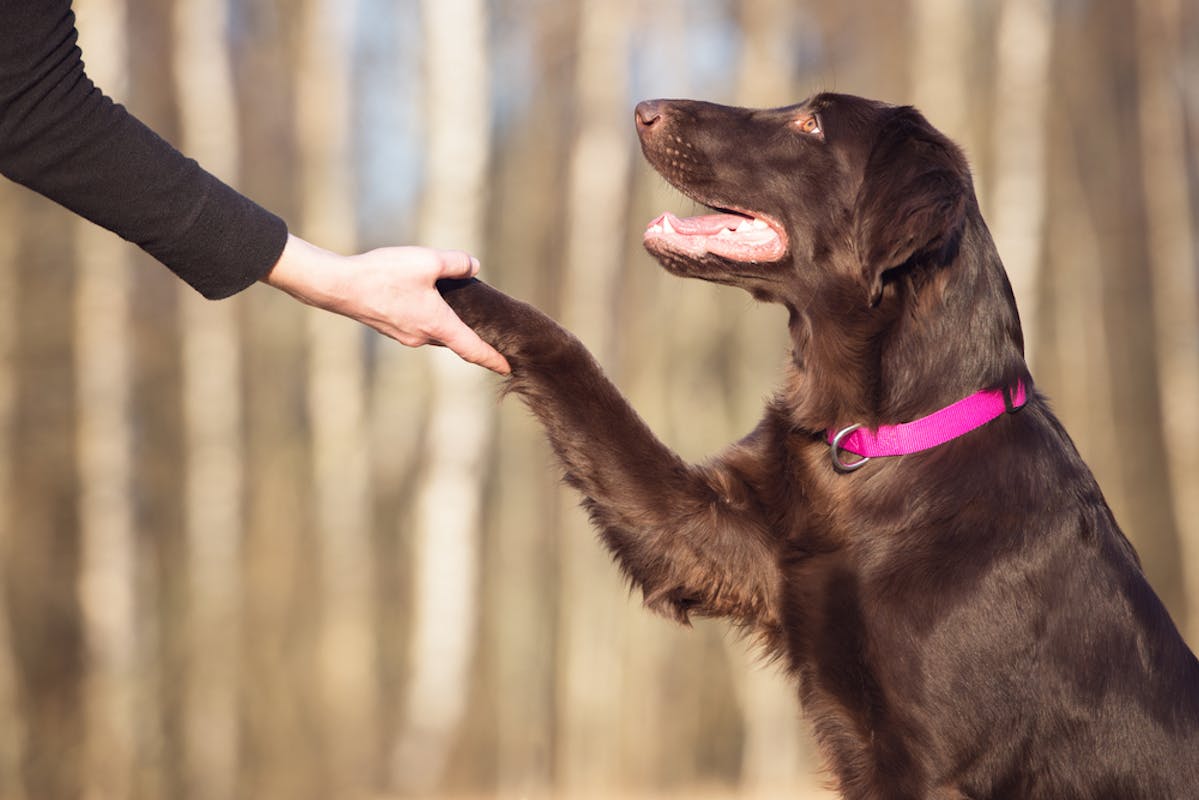
Training should be a positive experience for you and your dog! It’s a bonding opportunity, and a way to enhance your communication with your dog.
Dogs do their best learning when we use a method called positive reinforcement. Positive reinforcement means rewarding a dog for “good behaviors,” making the dog more likely to do those behaviors in the future. The response to less desirable behaviors is generally to ignore them or withhold rewards when the dog does them.
A holistic approach to training
The goals for a training plan might look something like this:
- To have a tired dog who has outlets for normal energy and behaviors
- To tell your dog what you WANT them to do instead of focusing on what you don’t want
- To ignore undesirable behaviors when safe to do so
- To manage your pup’s behavior as needed to keep them safe and prevent them from practicing undesirable behavior
As an example, perhaps your pup greets visitors when they arrive at your home by jumping on them. What are some things you can do to stop this behavior?
- If you are planning to have visitors, try taking your pup on a walk beforehand, and provide them with a stuffed Kong when you return home, so they are busy when guests arrive.
- Train your puppy that if they sit (“four on the floor”) when the door opens, delicious treats will arrive.
- Visitors should be instructed to stay still if your pup tries to jump on them -- no eye contact, no talking to the dog, no attention!
- Finally, while you work on the training, you may want your dog to be in a crate or behind a baby gate when visitors arrive to prevent the jumping. Behaviors aren’t learned overnight, so sometimes we need to give our dogs a little help to do the right thing.
Punishment: Is it so bad?
Often, people turn to punishing their dogs to try to change behavior. Although punishments such as squirt bottles, yelling, prong collars and the like might have a short-term impact in suppressing a behavior, they often aren’t effective in the long-term. Meaning, you find yourself yelling or jerking the dog’s collar for the same behavior later. The message isn’t getting through. And part of the reason for this is that punishment tells a dog what NOT to do, but doesn’t tell them what TO DO instead, which can be confusing.
Punishment can also come with some side effects, such as fear, pain, anxiety and increased aggression. One study found an association between physical punishment and a dog’s aggressive behaviors toward their owner. Two review-based studies of the published research both found that aversive training methods were related to signs of compromised dog health and well-being (you can read the studies here and here). Punishment can deteriorate your relationship with your dog.
Multiple studies have demonstrated that punishment-based methods are not more effective than positive-reinforcement based methods. For example, one study found no advantage over positive reinforcement when using an electronic collar to train a specific behavior or for general obedience.
On the flip side, positive reinforcement training may actually improve your bond with your dog: in one study, dogs who were trained with positive reinforcement methods were more attentive to their humans than those trained with aversive methods!
How do you find a trainer?
As you begin your search for a dog trainer, keep in mind that there are few, if any, regulations around dog training. Pretty much anyone can advertise themselves as a dog trainer with little to no training or oversight of their practices. For this reason, it’s good to do a little homework and choose carefully.
Beware of catchphrases like “leadership” or “dominance,” or trainers that reference “pack” or wolf-like behavior, or a need to be “alpha” over your dog. These trainers are not up-to-date on the science of dog behavior and training methods (or dog ancestry!).
Where to start
Professional organizations
One sign of a good trainer is if they are a member of a professional organization, especially one that requires some level of continuing education and agreement to a code of ethics to maintain membership. For example, the Association of Professional Dog Trainers, and the International Association of Animal Behavior Consultants both have guidelines and ethical requirements for their members. These organizations also provide regular opportunities for education, mentorship, and collaborations which are all key to professional growth.
Training programs
Good Dog also recommends looking for trainers who have certification by these programs, which produce ethical and effective dog trainers:
CPDT-KA, CPDT-KSA, or CBCC-KA: assessed by the Certification Council for Professional Dog Trainers
PCT-A or PCBC-A: assessed by the Pet Professional Accreditation Board
CTC: a two-year program on dog training and behavior from the Academy for Dog Trainers
KPA CTP: The Karen Pryor Academy, which is a six month program on dog training.
VSA-CDT: graduates of the Victoria Stilwell Academy Dog Training program
VSPDT: a licensed Victoria Stilwell Positively Dog Trainer
PMCT: Peaceable Paws Pat Miller Certified Trainer
Why do we recommend starting here? Because these trainers have gone through a certain level of training based in scientifically-supported methods, with an eye to dog behavior and welfare. There are certainly great trainers outside this list, but be sure to inquire about their experience, credentials, training philosophy and ask for references!
Summary
Training isn’t about obedience: it’s about the relationship you have with your dog. Many dog owners benefit from the process of training their dog and from working with a professional dog trainer. We hope that this guide has provided you with a good place to get started on your dog training journey!
References
American Veterinary Society for Animal Behavior’s position statement on dominance theory

Join our Good Breeder community
Are you a responsible breeder? We'd love to recognize you. Connect directly with informed buyers, get access to free benefits, and more.