Chewing
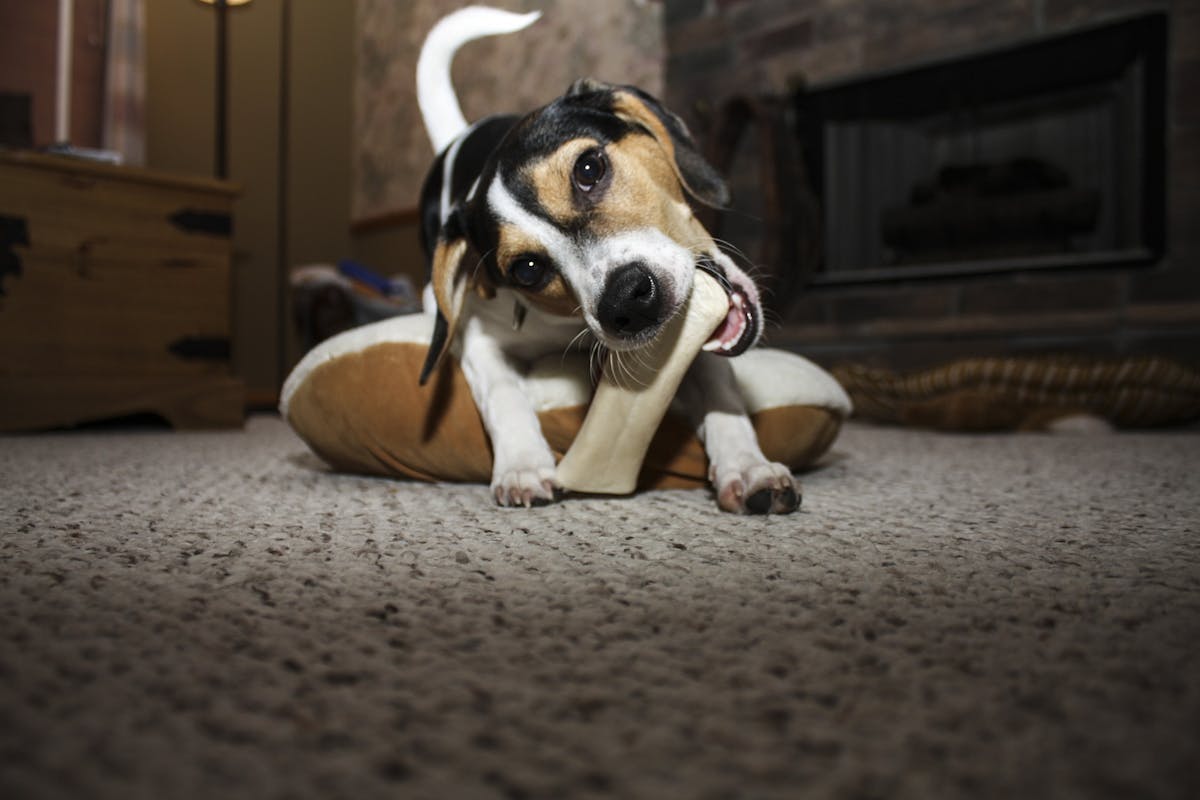
To set the record straight, most normal, healthy dogs of all ages chew. Let's talk about how to control it!

By
Good Dog is on a mission to educate the public and make it simple for people to get dogs from good sources and for reputable breeders, shelters and rescues to put their dogs in good homes.
Good Dog is on a mission to educate the public and make it simple for people to get dogs from good sources and for reputable breeders, shelters and rescues to put their dogs in good homes.
Good Dog is on a mission to educate the public and make it simple for people to get dogs from good sources and for reputable breeders, shelters and rescues to put their dogs in good homes.
- Introduction
- Types of Chew Toys
- Chews We Don’t Recommend
- Rules for Developing Good Chewing Habits
- Correcting Inappropriate Chewing
Introduction
To set the record straight, most normal, healthy dogs of all ages chew. If your dog is chewing, it is simply being a dog! If your dog is still a puppy, it is definitely normal because puppies chew throughout puppyhood, not just while teething.
- Puppies explore the world using their mouths.
- Chewing eases tooth pain during teething and at other times in a pup’s life.
- Dogs find chewing fun and stimulating.
- Bored dogs may occupy themselves with chewing and thus develop a serious chewing habit.
- Many breeds, such as retrievers and working dogs, have been bred to put things in their mouths.
As an owner, it is your job to develop good chewing habits in your pup. “Good” chewing habits means your puppy knows what to chew and will make an effort to go and get an appropriate chew toy, rather than grabbing the closest piece of furniture. This educational effort should start when your pup is very young (6-8 weeks) and continue past teething (3-7 months) and into adulthood. Habits take a while to develop so your diligence and consistency is essential during the learning process.
Types of Chew Toys
Think of your puppy as a chewing machine. How are you going to feed the machine because it will get fed with or without your help? Your goal is to feed it with lots and lots of safe, good quality chew toys. All chew toys should be monitored and regularly checked for loose pieces that your pup could choke on or that can change shape and cut or otherwise injure your dog.
The suggested chew toys below are those that are less likely to break into small pieces easily or are made to break into pieces that are easily swallowed and passed. They are typically rugged enough to withstand a dog’s jaws for quite some time without becoming hazardous. And, finally, they are ones that dogs find interesting enough to keep chewing. However, it is your job to determine the safest chew toys for your individual dog.
Unlimited Safe Chew Toys
Here are some safe chew toys that can be given to most dogs in unlimited amounts, after a gradual introduction. When selecting sizes of these items, err on the side of getting a larger one than smaller. Dogs usually outgrow “puppy” versions of these products by 10 weeks of age. When choosing marrow bones, do NOT get small soup bones or even 2” slices. Dogs can easily get their jaws caught in these small bones, which may not be overly dangerous but will require a trip to the vet to get them sawed off.
- Kongs
- Nylabones
- Raw or smoked bones (marrow or knuckle)
Safe Chew Toys for Moderate Use
These chews are best offered in moderation. For many dogs, these are treats rather than chew toys but they can be effective in attracting a dog that is determined to chew on your couch. These items are fatty so can cause diarrhea in sensitive dogs and may cause your dog to put on weight.
Chews We Don’t Recommend
Unsafe chew toys that should not be offered are:
- Poor quality rawhide
- Hooves – some owners like using hooves but they can splinter so if you use them, check them daily
- Pressed rawhide
Rules for Developing Good Chewing Habits
- Exercise your pup! Bored puppies tend to become compulsive chewers because they have nothing else to do to occupy them.
- Manage your pup’s environment. Until well beyond the teething months (3-7 months), your puppy should be confined with a number of interesting chew toys if you aren’t directly supervising. If your older pup has already developed bad chewing habits, confine it until you can teach better ones.
- Have chew toys in every room that your pup spends time in. Your puppy needs lots and lots of good, easily available things to chew. Your pup should not have to go find a chew under the bed or couch when it wasn’t to gnaw on something.
- Make safe chew toys attractive. Dogs need new or fresh toys that are not stale but have interesting smells or tastes.
- Teach your pup “Find your chew” so that it will go looking for a chew toy when it feels the urge to chew. Do this initially by playing with your dog with the chew toys. Start with fetch, saying “find your chew” when you toss it a few feet. If your dog doesn’t fetch, then tie a string on the toy and drag it enticingly across the floor. Then, rather than tossing the toy, help him look for one that is nearby and make a big deal out of him when he finds it. Gradually make this into a game of hide and seek where your dog will search out hidden chew toys.
- Positively reinforce good chewing. Look for times when your dog grabs a safe chew toy and lies down for a gnaw. Lavish quiet praise on him when he does this. Kongs should be stuffed with interesting goodies (treats, vegetables, cheese, peanut butter or frozen with broth in the summer). You can use Kongs to feed your dog his breakfast if you are going out. Nylabones and rawhide can be dipped in broth to make them more enticing.
- Teach your dog to “leave it.” Once he knows this, take him around the house telling him “leave it” on some of the most obvious things he might want to chew: table legs, chair rungs, corners, etc. Then, encourage him to get a chew toy and praise, praise, praise.
- Use bitter-tasting sprays on areas where your dog shouldn’t chew. Bitter Apple and Bitter Yuck are two that are widely available. If your pup isn’t deterred by these products, you want to make the connection for him between the smell and taste of the spray. To do this, fold a paper towel into a small square and saturate it with the bitter spray. Put the paper towel into your dog’s mouth and gently hold it closed for 15-30 seconds. Let him spit out the towel. Don’t worry if he drools, shakes his head or even retches. Most likely, your pup will now find the taste unpleasant. Ideally, he’ll now recoil from it. This concentrated taste experiences is usually enough to make pups avoid the smell of the sprays.
Correcting Inappropriate Chewing
- If you see your dog chewing on something it shouldn’t, calling its name sharply but not angrily and telling your pup to “LEAVE IT!”
- Follow that immediately with “Find your chew! Find your chew!” in a happy, excited voice.
- Help your dog find a chew toy and praise enthusiastically when it does.
- Do not punish your pup in any way for inappropriate chewing. It will not understand your actions and will think you are crazy. Instead, resolve to be more diligent in confining your dog and ensuring it has attractive, safe toys to chew.


