Get to know
American Pit Bull Terriers

American Pit Bull Terriers, also called APBTs, are amongst the most controversial breeds in the world, with detractors claiming they are inherently dangerous and proponents claiming it’s “all how you raise them.” The truth is in the middle.
Browse available puppies
Connect with reputable breeders to find the dog of your dreams

At a glance
Moderate Energy
Energy level
3/5
Minimal Maintenance
Grooming
1/5
30 to 60 pounds (Medium)
Size
Playful, boisterous, often dog aggressive
Temperament
12-12 years
Lifespan
Average Trainability
Training
3/5
Medium Vocality
Barking
3/5
At a glance
Energy level
Moderate Energy
Grooming
Minimal Maintenance
Size
30 to 60 pounds (Medium)
Temperament
Playful, boisterous, often dog aggressive
Lifespan
12-12 years
Training
Average Trainability
Barking
Medium Vocality
Why people love the breed
APBTs are the only breed for some people. They love the breed for its playfulness, loyalty and affectionate nature.
Appearance
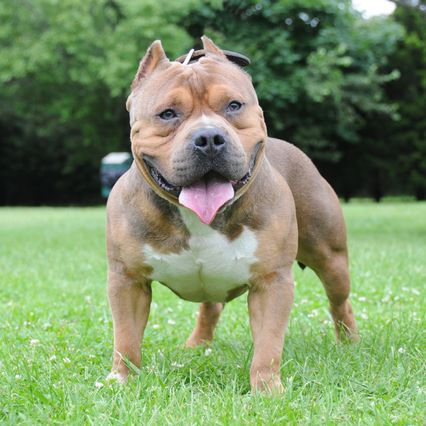
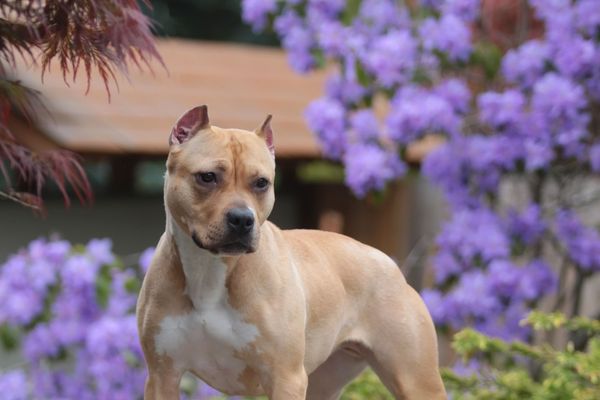
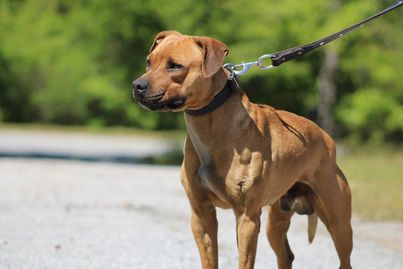
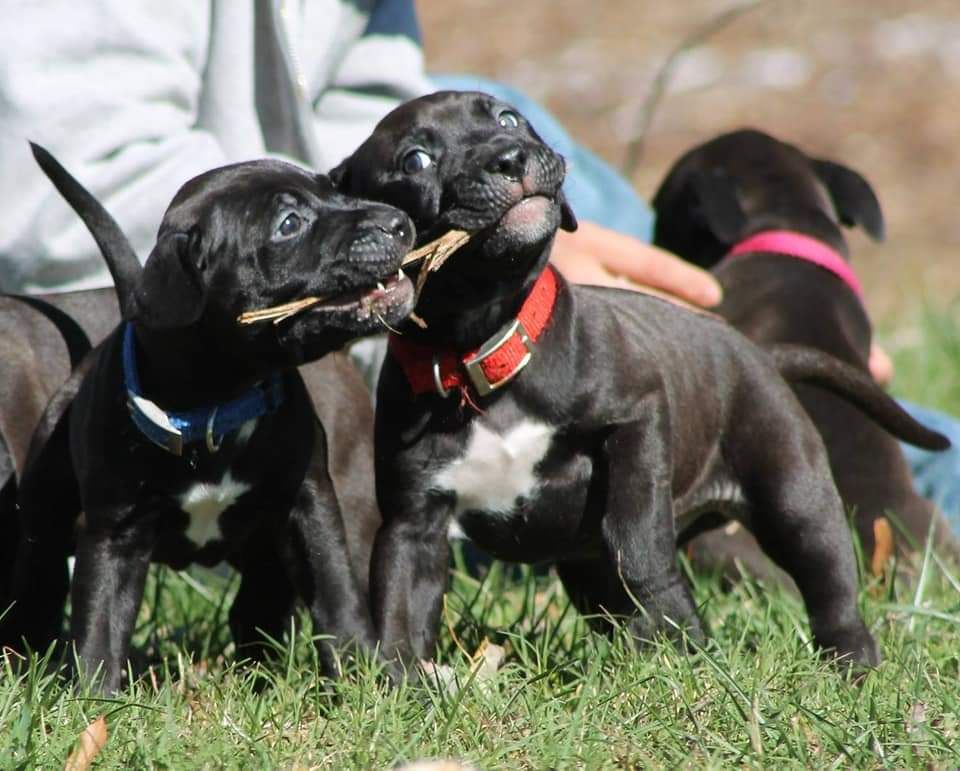
The APBT is like the body-builder of dog breeds, with well-developed muscles and ideally, not a bit of fat.
Grooming
Grooming is extremely easy, requiring only occasional brushing and bathing.
Axios Kennels
Breed temperament and characteristics
When they are good, they are very, very good. In fact, APBTs are so popular because they make great pets. Unfortunately, when they are bad, they can be very, very bad. Understanding the risks helps you avoid them.
Exercise
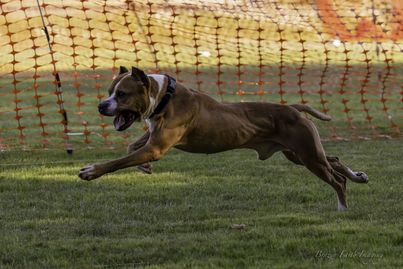
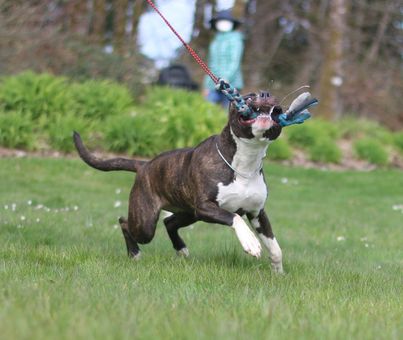
APBTs love to push themselves to the limit, especially when it comes to tests of strength.
Axios Kennels
Training
APBTs want to please, but they don’t want to be forced.
Diet and nutrition
APBTs do well on high quality commercial foods and most need nothing special beyond that.
Leland APBTS
Health issues
One of the APBT’s appealing features is its good health.
Lifespan: 12 to 12 years.
Hip dysplasia
Hip dysplasia, in which the ball of the femur fails to seat properly in the socket of the pelvis, causing lameness and arthritis, is the breed’s most common finding. It is reported in 23% of APBT’s recorded with the Orthopedic Foundation for Animals (OFA). Many APBTs that appear affected on radiographs nonetheless don’t exhibit outward signs.
Elbow dysplasia
Elbow dysplasia, in which the elbow joint fails to develop normally, causing lameness and arthritis, is reported in 18% of APBTs recorded with the OFA.
Degenerative myelopathy (DM)
Degenerative myelopathy (DM), in which the rear of the dog gradually becomes paralyzed and works its way forward, is a complicated disease resembling human Lou Gerhrig’s disease. It requires the interplay of several genes, only one of which currently has a DNA test. A high percentage (22%) of APBTs test positive for the abnormal gene, but that doesn’t mean they will get the disease as other genetic factors must also be present. In fact, statistics aren’t available for how many APBTs are actually affected by DM, raising the possibility that they do not carry the other genetic factors needed to develop the disease.
Hypothyroidism
Hypothyroidism, in which the thyroid gland fails to secret the proper level of hormones, resulting in weight gain and other health problems, occurs in about 15% of the breed, higher than in most breeds.
Other health issues
Other conditions that occur at a slightly increased rate compared to other breeds include retinal dysplasia, cranial cruciate ligament rupture, heart disease (pulmonic stenosis, subvalvular aortic stenosis, and mitral valve prolapse), and stomach cancer.
History
The Pit Bull’s roots trace back to the ancient Roman gladiator dogs that were used to fight wild animals.
About the author
Canine specialist, Caroline Coile, Ph.D., is the author of 34 dog books, including the top-selling Barron's Encyclopedia of Dog Breeds. She’s written thousands of magazine and web articles about dogs. She specializes in canine science, health, breeds and competitions. Caroline has won 20 national dog-writing awards, and was a 2015 Inductee into the Dog Writers Association of America Hall of Fame.
Breed Scorecard
Characteristics and temperament
Affectionate with family
5
Watchdog level
4
Playfulness
5
Adaptability
4
Social needs
4
Temperament
Playful, boisterous, often dog aggressive
Intelligence
3
Good with other dogs
1
Good with cats or other pets
2
Friendly with strangers
3
Good as a service dog
3
Good for apartments
1
Barking level
3
Appearance
Height
17-21"
Size
30 to 60 pounds (Medium)
Colors
Black, Black brindle, Blue, Brown, Fawn, Liver, Red, Blue brindle, Blue fawn, Blue fawn brindle, Brown brindle, Fawn brindle, Fawn sable, Liver brindle, Red brindle, White, Red sable, Seal brown
Coat texture
Hard
Coat length
Short
Training
Trainability
3
Exercise
Exercise needs
3
Exercise time
1 to 2 hours daily
Mental exercise needs
4
Favorite activities
Tugging, pulling, running
Grooming
Grooming needs
1
Brushing frequency
Monthly
Needs professional grooming?
No
Drooling level
2
Health issues
Hip dysplasia
Elbow dysplasia
Degenerative myelopathy (DM)
Hypothyroidism
Other health issues
Other
Bred for
Dog fighting
Country of origin
USA
Popularity level
1
FAQs
On Good Dog, you can search for American Pit Bull Terrier puppies or dogs in rescues and shelters. Adopting an American Pit Bull Terrier from a shelter or rescue is generally less expensive than buying a puppy from a breeder with ethical practices. Across the United States, there are dedicated rescues that specialize in specific breeds and may even help transport an American Pit Bull Terrier dog to you from another part of the country. Although it can be more cost-effective, adopting the exact breed you're looking for is typically more difficult than working with a responsible breeder. Learn more about adopting a dog from a shelter or rescue.
Yes and no. They are among the most fun and loving of all breeds. But in rare instances, they are also the most deadly. Anyone choosing any Pit Bull breed should do so with full acknowledgement that it is not “all how you raise them” although that is certainly a factor.
Pitbull is a generic name that refers to several breeds, including but not limited to the APBT, American Staffordshire Terrier, Staffordshire Bull Terrier, and other bully breeds. Pit Bull is probably most strongly associated with the APBT, but actually most Pit Bulls are probably unregistered dogs or Pit Bull mixes.
The old version of the English Bulldog and terriers.