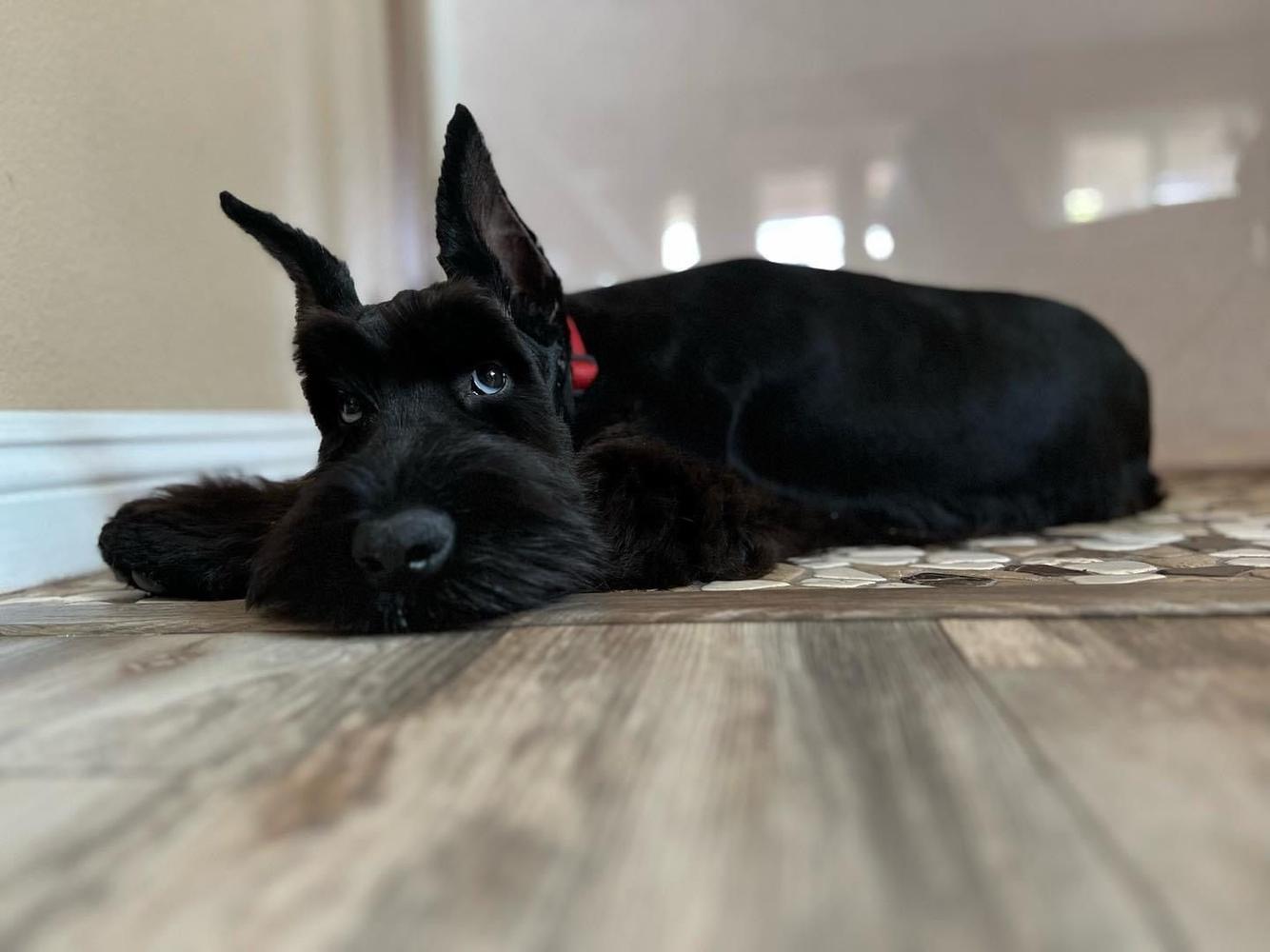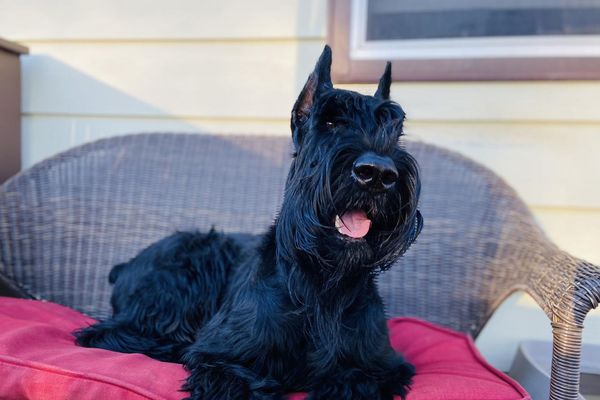
Giant Schnauzer laying on patio furniture
Get to know

Giant Schnauzers
Written by
Caroline Coile, Ph.D.,
 author of 34 dog books.
Written by
Caroline Coile, Ph.D.,
 author of 34 dog books, including the top-selling Barron's Encyclopedia of Dog Breeds.
| | | | |

Giant Schnauzers (or just “Giants” for short) are like the 007s of the dog world: resourceful, suave, ever alert to threats, and always looking sharp.

Browse available puppies

Connect with reputable breeders to find the dog of your dreams
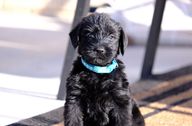
At a glance

High Energy

Energy level

4/5

Low Maintenance

Grooming

3/5

Large to Extra Large

Size

Protective, rambunctious

Temperament

12-15 years

Lifespan

Average Trainability

Training

3/5

Medium Vocality

Barking

3/5

At a glance

  • Energy level

    High Energy

  • Grooming

    Low Maintenance

  • Size

    Large to Extra Large

  • Temperament

    Protective, rambunctious

  • Lifespan

    12-15 years

  • Training

    Average Trainability

  • Barking

    Medium Vocality

Why people love the breed

People love Giant Schnauzers because these striking dogs are like living with a body guard that moonlights as a movie star. Few breeds boast of such a strong combination of protectiveness along with dapper good looks.
Not only is a Giant a head-turning companion when you walk down the street, but also a fun friend at home, an adventurous partner in the wilds, and a devoted family member. They are alert without being hyperactive, protective without being aggressive.

Appearance

Like the more familiar Miniature Schnauzer, the Giant gives the impression of great power, agility, and alertness.
The Giant Schnauzer is basically a square-proportioned dog with a short, straight back, alert carriage, and noticeable tuck-up. The tail is traditionally docked to the second or third joint, and whether docked or not, carried high and confidently. The head is rectangular, further emphasized by its long beard. The ears may be cropped or uncropped. When cropped, they stand erect and come to points. When uncropped, they hang and are V-shaped. The eyes are deep-set and oval. The coat consists of a soft undercoat and a harsh, wiry overcoat that tends to have a slight wave. It has a long harsh beard and eyebrows. The coat can be either black, which is most popular, or pepper and salt. The gait is powerful and free, with good reach and drive.

Grooming

To maintain their sharp-dressed appearance, Giants need regular at-home brushing, plus occasional professional shaping.
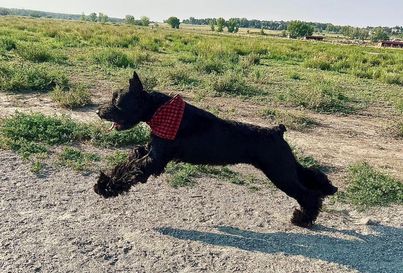
At-home maintenance is pretty simple, requiring brushing with a pin-brush, or combing, to ensure no tangles form in the undercoat. This should be done once or twice a week. Without this they can develop mats that may need professional grooming to remove. In order to maintain a dapper appearance, professional grooming is needed at least four times a year to shape the coat. Show dogs require regular plucking as well as scissoring to create the perfect silhouette. Most non-show Giants are instead clipped rather than plucked because it’s much faster and easier. However, clipping exposes the soft undercoat and the dog loses its proper harsh jacket. Giants don’t need a lot of bathing but an occasional bath will help prevent tangles and keep the dog smelling its best. You will want to bathe the beard much more frequently, as it tends to get food and saliva in it and can get icky and smelly. Just dipping it in a bucket of water after meals may help. The beard will tend to be wet a lot because it drags in the water bowl. Trim the toenails as needed, brush the teeth daily, and inspect the ears for debris weekly.
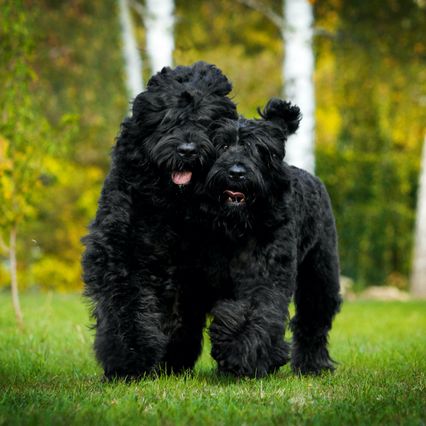
Giant Schnauzer running in the grass
Img:

Pawsh K9’s

Breed temperament and characteristics

Courageous, bold, and protective, the Giant is nonetheless a kid at heart that loves to play and even occasionally cuddle.
The Giant Schnauzer was developed to herd ornery cattle and to guard them and the homestead. The Giant is not easily intimidated, and once started on a project, doesn’t quit. Much of its work was done on its own, with little human direction. This can translate to a dog that is self-sufficient, courageous, but also independent, strong-willed and even stubborn. Giants are excellent home guardians, They are alert but don’t bark indiscriminately. They are protective but not aggressive. They are brave but don’t go looking for a brawl. They are active but not hyperactive, and given adequate exercise can be content to snooze inside or outside. They are calm and gentle enough to be good with children and the elderly, but they can be overly boisterous and inadvertently knock down even a strong person. They enjoy playing games, and love to go exploring. While generally willing to please, they value their own judgment and won’t hesitate to disobey if they feel it’s warranted.

Exercise

Giants are large, energetic, athletic dogs, and they need a good deal of both physical and mental exercise. They are not hyperactive, but do need at least an hour daily, preferably more. Given that, they are well-mannered and calm dogs.
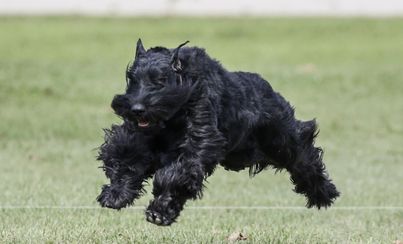
Giants need to run and play every day, whether in the form of athletic games or long jogs or hikes. They should not be let off lead except in fenced areas. They are not good dog park candidates as they can overpower other dogs there. Herding is one of their favorite activities. They also enjoy swimming and hiking, and games such as fetch, tug, and Frisbee. Other favorite activities are dock-diving, protection work, coursing, or just running amok. Basically, if you propose it, most Giants will think it’s great fun.
Giant Schnauzer lure coursing
Img:

Tailwind Kennel

Training

Giants are a study in contrasts. They can be independent and strong-willed, refusing to do anything you say. Or they can be amongst the best obedience dogs, capable of working with military precision. It’s all in how you train them.
Training a Giant means walking a fine line between being a pushover and an authoritarian; neither will go well. If your Giant senses they have the upper hand, they will take advantage and do as they wish. If they sense they’re being bullied, they will dig in and determine to win. So you must be firm but gentle, never unreasonable. Give ample rewards for doing as asked, and hold back on them for not doing as asked. There's no need to be rough. Remember, Giants were bred to continue on in the face of adversity. This is a breed that is smart, willing to please and biddable, but also has a lot of pride and determination. Make those all work for you with treats, games and praise, and you can develop an exceptional obedience dog. Giants have achieved the very highest levels of competitive obedience. They also can excel at other dog sports such as agility, nose work, tracking, herding, and protection sports, all of which require a lot of training. Because of their protective nature, Giants need a lot of socialization as youngsters so they realize they have friends everywhere.

Diet and nutrition

Most Giants need a high-calorie food to fuel their high activity level. Fortunately, they do well on many “performance” commercial dog foods—or you can make your own (only following consultation with a veterinary nutritionist).
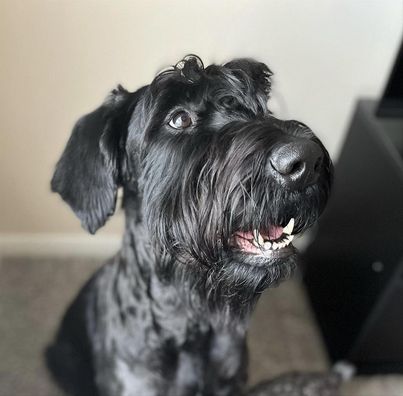
Giant Schnauzer puppies should be fed a food formulated for large breeds. These foods are designed to regulate growth rate. Young Giants are more likely to be underweight because of their high energy. But with age they will tend to gain weight, especially if neutered or spayed. Proper weight is when the body has an hourglass figure viewed from both the top and side, with a noticeable tuck-up. No ribs or vertebrae should show, but you should be able to feel the ribs without digging for them. This is a powerful dog that should have well-developed muscles, but not fat. If the dog begins to be overweight, discuss with your veterinarian. Although Giants are not prone to diet-related disorders, like any dog, they can develop health problems that do best with special food. Your veterinarian can advise you.
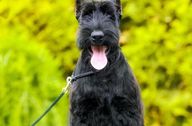
Giant Schnauzer looks upwards
Img:

Elevated Pearl Giants

Health issues

The breed is at an increased risk for a number of disorders.

Lifespan: 12 to 15 years.

Hip dysplasia

Common in large breed dogs, this complex condition involves both genetic and environmental factors and arises when the head of the femur doesn’t fit in the pelvic socket, causing arthritis and lameness. No genetic test is available to date, therefore, the recommended screening test is x-rays.

Elbow dysplasia

Found more often in larger breeds, this is a condition in which the elbow joint develops inappropriately, causing arthritis and lameness. No genetic test is available to date, therefore, the recommended screening test is x-rays.

Hypothyroidism

A condition in which the thyroid gland produces reduced levels of hormones, often due to the immune system attacking the gland.

Ocular issues

Such as cataracts, glaucoma, and progressive retinal atrophy occur in Giant Schnauzers.

Learn more about health issues that may impact Giant Schnauzers

History

The Giant Schnauzer was developed from the smaller Standard Schnauzer, and has worked a variety of jobs throughout history.
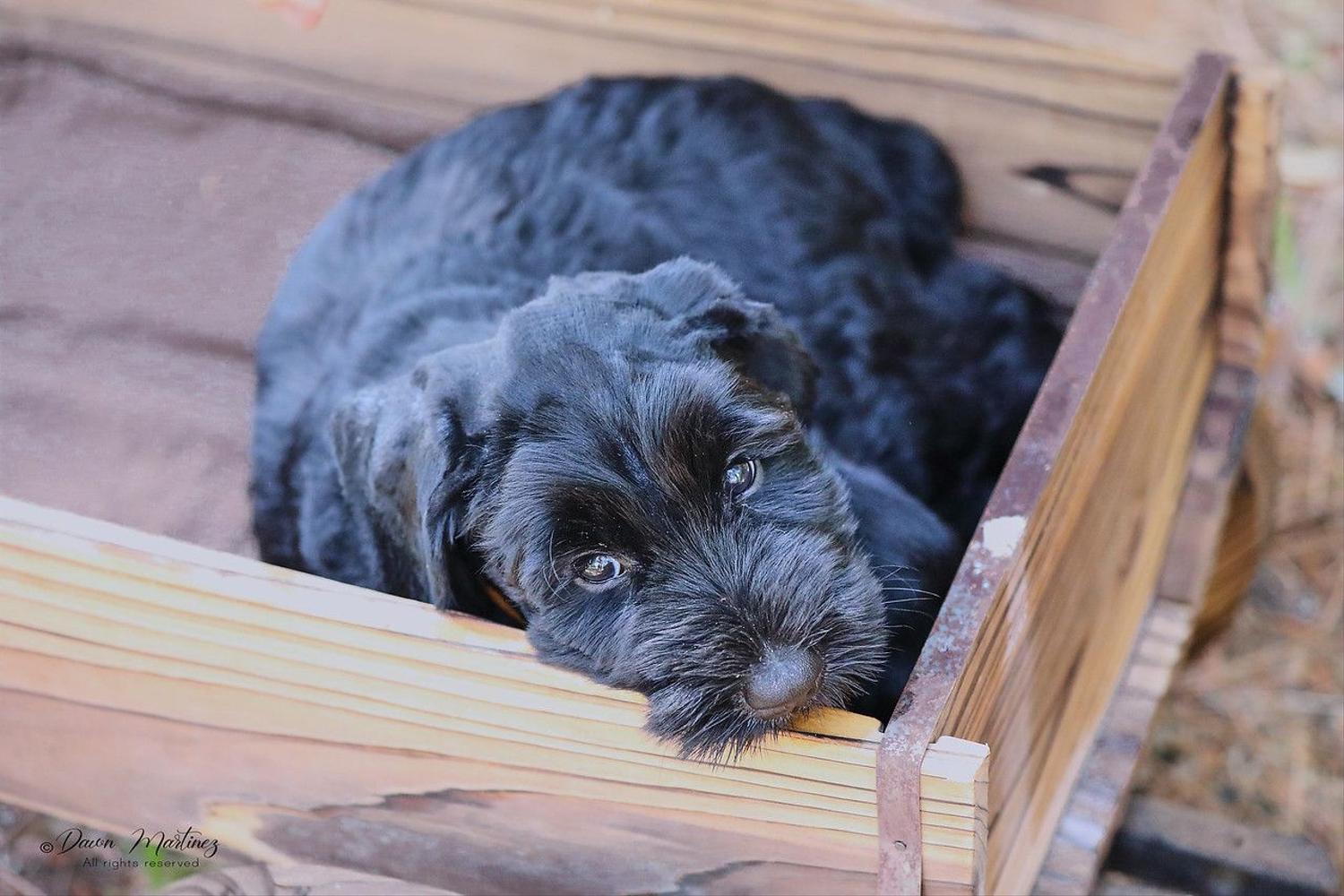
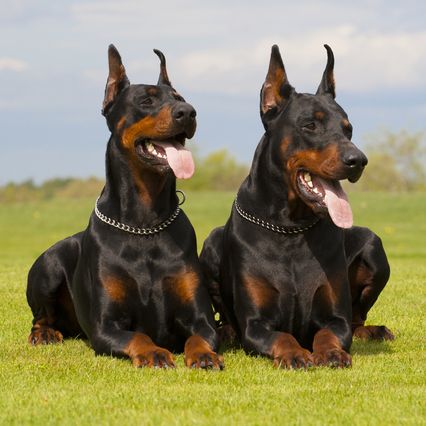
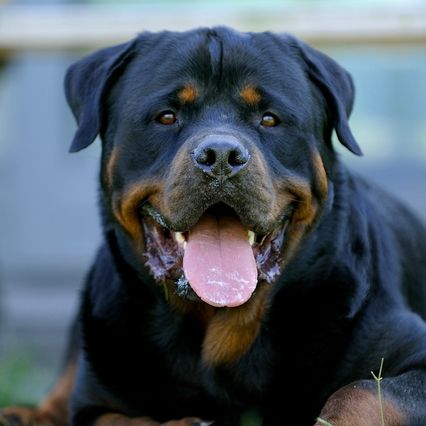
The Standard Schnauzer originated in Germany in the Middle Ages, developed as an all-around farm dog that targeted vermin, guarded the property, and controlled livestock. In the 1600s German cattlemen wanted a larger version they could use to drive cattle, so they crossed Standard Schnauzers with their larger, smooth-coated cattle driving dogs. They later probably added Bouvier des Flandres, Great Danes, and other breeds. DNA studies show the Giant is closely related to the Rottweiler and Doberman Pinscher, more so than to the Great Dane. They were called Muncheners. The name Schnauzer was first used in 1842 and probably comes from the German word for nose or beard. Giants became more popular as butcher’s dogs, and even later, brewery guard dogs. In World War I they became police and military dogs. The breed was officially recognized by the American Kennel Club (AKC) in 1930, It is a member of the Working group.
About the author

Canine specialist, Caroline Coile, Ph.D., is the author of 34 dog books, including the top-selling Barron's Encyclopedia of Dog Breeds. She’s written thousands of magazine and web articles about dogs. She specializes in canine science, health, breeds and competitions. Caroline has won 20 national dog-writing awards, and was a 2015 Inductee into the Dog Writers Association of America Hall of Fame.

Breed Scorecard

Characteristics and temperament
  • Affectionate with family

    2

  • Watchdog level

    5

  • Playfulness

    4

  • Adaptability

    3

  • Social needs

    2

  • Temperament

    Protective, rambunctious

  • Intelligence

    4

  • Good with other dogs

    3

  • Good with cats or other pets

    3

  • Friendly with strangers

    1

  • Good as a service dog

    4

  • Good for apartments

    1

  • Barking level

    3

Appearance
  • Height

    23-27"

  • Size

    Large to Extra Large

  • Colors

    Black, Black and tan (non-standard), Fawn (non-standard), Pepper and salt

  • Coat texture

    Harsh

  • Coat length

    Medium, wavy, bearded

Training
  • Trainability

    3

Exercise
  • Exercise needs

    4

  • Exercise time

    1 to 2 hours daily

  • Mental exercise needs

    3

  • Favorite activities

    Protection work, hiking, tracking

Grooming
  • Grooming needs

    3

  • Brushing frequency

    Weekly

  • Needs professional grooming?

    Yes

  • Drooling level

    1

Health issues
  • Hip dysplasia

  • Elbow dysplasia

  • Hypothyroidism

  • Ocular issues

Other
  • Bred for

    Guarding, herding cattle

  • Country of origin

    Germany

  • Popularity level

    3

FAQs

  • On Good Dog, you can search for Giant Schnauzer puppies or dogs in rescues and shelters. Adopting a Giant Schnauzer from a shelter or rescue is generally less expensive than buying a puppy from a breeder with ethical practices. Across the United States, there are dedicated rescues that specialize in specific breeds and may even help transport a Giant Schnauzer dog to you from another part of the country. Although it can be more cost-effective, adopting the exact breed you're looking for is typically more difficult than working with a responsible breeder. Learn more about adopting a dog from a shelter or rescue.

  • Giants can be fabulous family dogs for active families. They excel at being protective and devoted. But they may be too rambunctious for families with toddlers.

  • They are medium-maintenance. Their coat does require regular brushing and either plucking or professional clipping occasionally.

  • The major ancestor was the Standard Schnauzer. Other crosses aren’t well-documented but probably included German cattle drovers, Bouvier des Flandres, and Great Dane.

  • Prices may vary based on the breeder and individual puppy. On Good Dog, Giant Schnauzer puppies are around $2,900. We recommend speaking directly with your breeder to get a better idea of their price range.
Caroline Coile, Ph.D.

Caroline Coile specializes in canine science, health, breeds and competitions. Caroline has won 20 national dog-writing awards, and was a 2015 Inductee into the Dog Writers Association of America Hall of Fame. She’s written thousands of magazine and web articles about dogs in addition to 34 dog books.

Content on Good Dog is generated, fact-checked, and evaluated by qualified writers and veterinarians.

Caroline Coile, Ph.D.

Caroline Coile specializes in canine science, health, breeds and competitions. Caroline has won 20 national dog-writing awards, and was a 2015 Inductee into the Dog Writers Association of America Hall of Fame. She’s written thousands of magazine and web articles about dogs in addition to 34 dog books.

Content on Good Dog is generated, fact-checked, and evaluated by qualified writers and veterinarians.