Get to know
Miniature Schnauzers

The Miniature Schnauzer is a perennial favorite, and it deserves to be.
Browse available puppies
Connect with reputable breeders to find the dog of your dreams
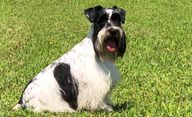
At a glance
Moderate Energy
Energy level
3/5
Regular Maintenance
Grooming
4/5
Small, 11 to 20 pounds
Size
Active, alert, confident
Temperament
12-15 years
Lifespan
Average Trainability
Training
3/5
Vocal
Barking
4/5
At a glance
Energy level
Moderate Energy
Grooming
Regular Maintenance
Size
Small, 11 to 20 pounds
Temperament
Active, alert, confident
Lifespan
12-15 years
Training
Average Trainability
Barking
Vocal
Why people love the breed
Miniature Schnauzers have a long history of popularity. And with good reason: They make their people smile both at their antics and at their love.
Appearance
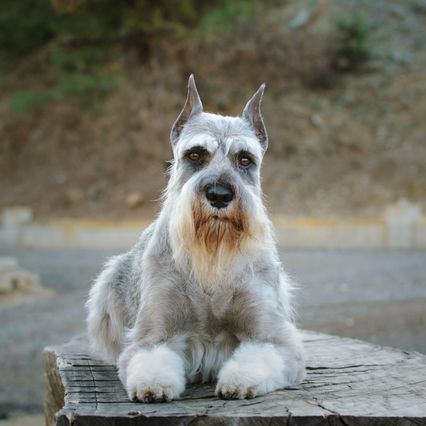
The Miniature Schnauzer appears perpetually poised for action, always alert and capable of taking on any adversary.
Grooming
To look their best, the Miniature Schnauzer should be professionally groomed. But between professional sessions, work is minimal.
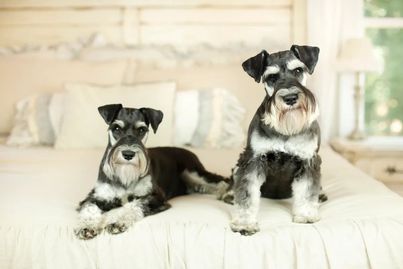
Peach State Miniature Schnauzers
Breed temperament and characteristics
The Miniature Schnauzer is among the more obedient and easy-going of Terriers. But they can still be a challenge.
Exercise
Although energetic, Miniature Schnauzers don't require non-stop action. They like to run and play, but also enjoy being alert but calm in the house.

Du Lac Miniature Schnauzers
Training
The Miniature Schnauzer is a combination of an extrovert that is eager to please and show-off, tempered by their need to assert itself and act stubborn. Let them think your training goals are their idea, and all will go well.
Diet and nutrition
Most Miniature Schnauzers are good eaters and do well on a variety of commercial diets.

Rivertree Miniature Schnauzers
Health issues
Miniature Schnauzers are a generally healthy breed.
Lifespan: 12 to 15 years.
Myotonia congenita
This is a disorder of the skeletal muscles which results in increased contractions and stiffening, increased muscle mass, enlarged tongue, difficulty getting up, stiff legged gait, and bunny-hopping. This condition occurs more in Miniature Schnauzers than any other breed. It is autosomal recessive and a DNA test is available.
Urolithiasis (urinary stones)
This is a condition in which minerals form stones in the urinary tract that can cause blockages. The most common stone compositions are calcium oxalate and struvite. The mean age of detection in this breed is 5 years.
Hyperadrenocorticism (Cushing’s disease)
When a tumor of the adrenal or pituitary gland results in increased thirst, urination, abdominal distention and hair loss.
Pancreatitis
In which the pancreas becomes inflamed, causing abdominal pain and vomiting.
Cataracts
An opacity in the lens that occurs in Miniature Schnauzers.
Diabetes mellitus
The failure of the pancreas to regulate blood sugar.
Other health issues
Liver shunts, immune-mediated hemolytic anemia, atherosclerosis, pulmonic stenosis, sudden acute retinal degeneration syndrome.
History
The Miniature Schnauzer is not your typical terrier. While most terriers come from the British Isles, the Schnauzer came from Germany. They were bred down from a much larger dog.


About the author
Canine specialist, Caroline Coile, Ph.D., is the author of 34 dog books, including the top-selling Barron's Encyclopedia of Dog Breeds. She’s written thousands of magazine and web articles about dogs. She specializes in canine science, health, breeds and competitions. Caroline has won 20 national dog-writing awards, and was a 2015 Inductee into the Dog Writers Association of America Hall of Fame.
Breed Scorecard
Characteristics and temperament
Affectionate with family
4
Watchdog level
5
Playfulness
4
Adaptability
4
Social needs
4
Temperament
Active, alert, confident, inquisitive, stubborn
Intelligence
4
Good with other dogs
3
Good with cats or other pets
3
Friendly with strangers
3
Good as a service dog
3
Good for apartments
3
Barking level
4
Appearance
Height
12-14"
Size
Small, 11 to 20 pounds
Colors
Wheaten (non-standard), White (non-standard), Parti (non-standard), Liver (non-standard), Black, Salt and pepper, Black and silver
Coat texture
Harsh
Coat length
Medium
Training
Trainability
3
Exercise
Exercise needs
3
Exercise time
1 to 2 hours daily
Mental exercise needs
4
Favorite activities
Earthdog, Nosework, agility
Grooming
Grooming needs
4
Brushing frequency
Daily
Needs professional grooming?
No
Drooling level
2
Health issues
Myotonia congenita
Urolithiasis (urinary stones)
Hyperadrenocorticism (Cushing’s disease)
Pancreatitis
Cataracts
Diabetes mellitus
Other health issues
Other
Bred for
Ratting
Country of origin
Germany
Popularity level
1
FAQs
On Good Dog, you can search for Miniature Schnauzer puppies or dogs in rescues and shelters. Adopting a Miniature Schnauzer from a shelter or rescue is generally less expensive than buying a puppy from a breeder with ethical practices. Across the United States, there are dedicated rescues that specialize in specific breeds and may even help transport a Miniature Schnauzer dog to you from another part of the country. Although it can be more cost-effective, adopting the exact breed you're looking for is typically more difficult than working with a responsible breeder. Learn more about adopting a dog from a shelter or rescue.
The typical price for Miniature Schnauzer puppies for sale may vary based on the breeder and individual puppy. On average, the price of Miniature Schnauzer puppies from a breeder is $1,910
They are amongst the very best choices for people wanting a smaller dog that is energetic, smart, playful, and affectionate. The downside is that many bark to excess, and some can be domineering over other dogs.
Not all, but most. This, along with their alert nature, makes them good watchdogs, but it can be a problem with neighbors.
They are higher maintenance than many breeds, but it really consists of visits to the groomer every 6 weeks or so. In between a twice-weekly combing of the longer hair will do.