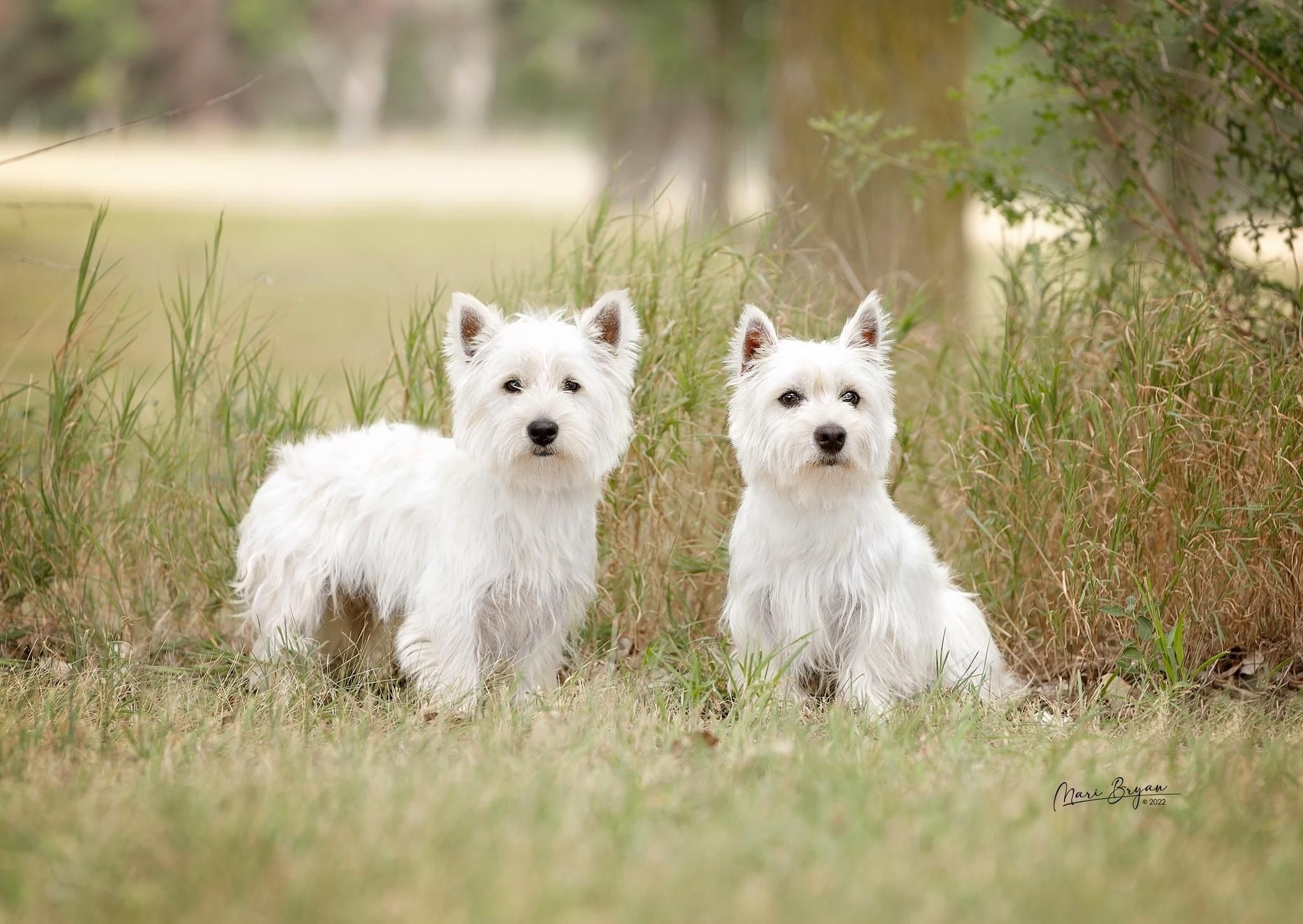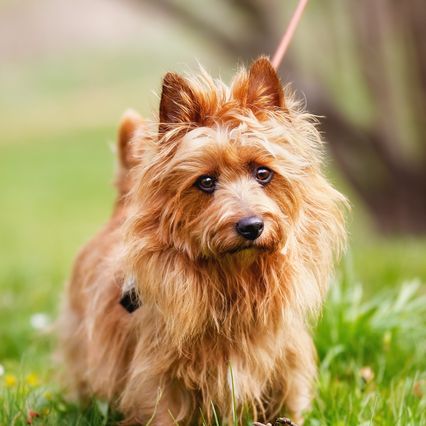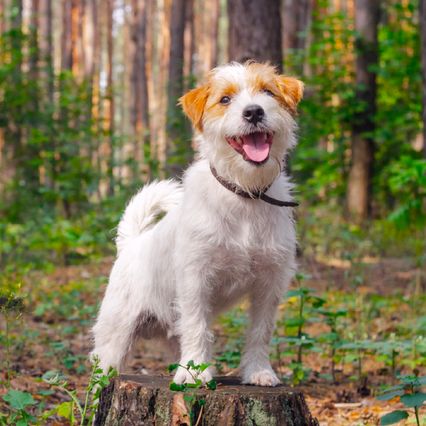
Two West Highland Terriers walking
Get to know

West Highland White Terriers

Written by
Caroline Coile, Ph.D.,
 author of 34 dog books.
Written by
Caroline Coile, Ph.D.,
 author of 34 dog books, including the top-selling Barron's Encyclopedia of Dog Breeds.
| | | | |

Like a tiny white tornado, the West Highland White Terrier is a blur of activity that will blow you away with cuteness.

At a glance

Moderate Energy

Energy level

3/5

Regular Maintenance

Grooming

4/5

Small, 15 to 20 pounds

Size

Happy, busy, friendly

Temperament

13-15 years

Lifespan

Quick to Learn

Training

4/5

Medium Vocality

Barking

3/5

At a glance

  • Energy level

    Moderate Energy

  • Grooming

    Regular Maintenance

  • Size

    Small, 15 to 20 pounds

  • Temperament

    Happy, busy, friendly

  • Lifespan

    13-15 years

  • Training

    Quick to Learn

  • Barking

    Medium Vocality

Why people love the breed

They’re cute, they’re eye-catching, they’re affectionate, they’re fun—and it’s all packed in a compact sized body.
Westies have legions of admirers. Most are initially attracted by the cute face and stunning white coat. But once they get to know them, they remain Westie lovers because of the breed’s balance of lovingness and playfulness. This is a great breed for people who want a dog that is equally talented at playing a wild game, cruising the neighborhood on a leash, and snoozing next to you on the couch. However, a sense of humor helps, as Westies do have a wild streak and are very capable of creating havoc. There’s the practical aspect as well. Their size is small enough to be easy to care for, without being so small that they’re fragile. This is actually a very rugged, little dog.

Appearance

This compact breed is built for function, but is also beautiful. It’s small, compact, and covered in pure white hair that frames the face.
The Westie was developed to hunt rats, often in small spaces in and under farm buildings, and to follow and confront foxes in their dens. To do so they had to be fairly small, and with short legs so they could maneuver within. They also had to have strong jaws and big teeth. The harsh coat protected them not only from the weather but from the fox’s teeth. And the thick tail had to be strong enough for a person to grab and use it to pull them out of the den. Today’s Westie still has those same traits. They’re small and compact, with short legs. It has a blunt muzzle with strong jaws, dark eyes, and a pronounced stop. The ears are small, erect, and pointed. The tail is relatively short, and carrot-shaped. The coat is harsh, especially the outer coat. It is groomed to accentuate the rounded head. It is always pure white. The white coat was to make sure the hunter did not mistake it for a fox.

Grooming

Grooming the show Westie requires considerable skill and time, but grooming the companion is much easier. Still, it requires a professional touch.
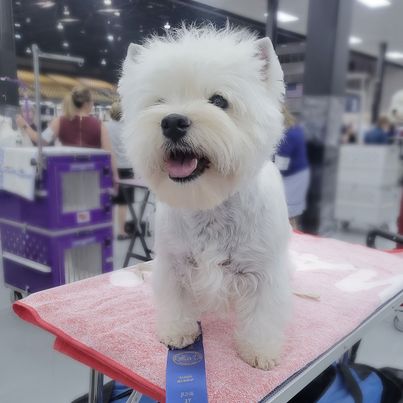
Preparing a Westie for the show ring is an art. It requires stripping the coat of the upper body, which means removing the dead hair by hand. This leaves the remaining hairs of the outer coat intact, maintaining the desired hard coat. It also requires carefully trimming the hair of the legs and face. And of course, being careful to prevent any coat staining. Maintaining the non-show Westie is much easier, Most people choose to have their Westie professionally groomed every three months. For the pet coat, the shorter hair is not stripped, but clipped, which exposes the soft undercoat. This creates a softer coat that is not ideal according to the breed standard but may be nicer to pet. The longer hair is trimmed to a more manageable length. Regardless, while they don’t need daily brushing, you still need to comb them a few times a week, and guard against staining by keeping them dry. You may need to wash the beard after eating.
A beautifully groomed West HIghland Terrier at a dog show
Img:

Astragus Darsy Doll

Breed temperament and characteristics

Vivacious, busy, and affectionate, the Westie is a fun-loving dog that likes its share of mischief, but can also calm down when needed.
The Westie’s cute looks may fool some people into not realizing it’s a true terrier, but they are indeed a terrier with all that entails: a love of action, mischief, investigation, digging, barking, hunting, and independence. They’re also one of the most affectionate terriers, and one of the easiest to train. In fact, despite their independent streak, they’re generally willing to please. They make excellent house dogs and affectionate family members. They are courageous and fun-loving, a great playmate for people of all ages. They can get into all sorts of trouble, however, as they tend to jump into any situation without thought of danger. The Westie tends to be good with young children and the elderly, and also friendly toward strangers. They even get along with other dogs much more so than most terriers. They also are usually friendly with the family cat, but should not be trusted with pet rodents, family or not. They’re a great watchdog but the trade-off is that some tend to bark to excess.

Exercise

Westies are busy dogs with busy minds. They plan to keep you busy too.
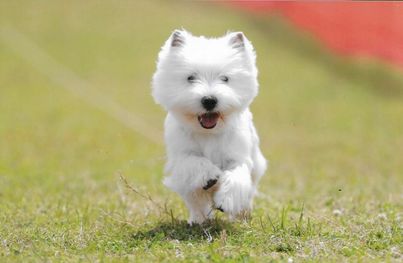
Don’t be lulled into thinking because they are small, they don’t need much exercise. It’s true that you can fulfill their physical needs in limited space and time. Even an hour playing in the yard is fine. But you will need more time and space to meet their mental activity needs. Fill your Westies exercise requirements by playing games, going for walks, training, and going on social outings. If you don’t, these imaginative dogs may think of ways to entertain themselves, and those usually involve digging and ransacking. Favorite activities include tug games, chasing, and fetch (although they want you to chase after them with the ball rather than returning it). Some swim, but most aren’t that interested in the water-–at least not over their head. They love organized sports such as Barn Hunt, Earth Dog, and Nose Work.
A West Highland Terrier running in the grass
Img:

Berkshire Highlanders

Training

Westies are one of the most trainable terriers. But don’t try to force them.
More than most terriers, Westies are eager to please. The trick is to let them think they’re training you to give them all sorts of treats, or even a short game, every time they comply. Keep training sessions short and stop when they still want to go on. These are such active dogs you need to sprinkle lots of active exercises amongst the slower-paced ones when training in order to keep their interest. Westies have successfully competed at the highest levels of organized obedience. They also do well in agility, and especially love trick training. It takes a while, because they can be destructive puppies, but they can eventually be trained to be well mannered household members. Training them not to bark is the biggest challenge, and may not be totally possible.

Diet and nutrition

Most Westies do well on regular commercial diets. But a few have allergies, skin problems, or other issues that may need special diets.
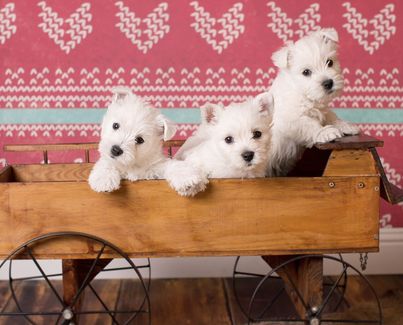
Westie puppies don’t require any special diets. Feed them as you would any puppy, but do not overfeed them. Feed them three meals a day until they are about 4 months old, then twice daily. Adult diets can be offered starting at around nine months of age twice daily. As your Westie ages, especially if neutered or spayed, they can start to pack on pounds. A Westie should be trim and muscular, with an indication from the side and top of a smaller waist. Ask your veterinarian's opinion if you worry your Westie may be over- or underweight. Discuss any special diet concerns with your veterinarian. Your Westie’s optimal diet may change with age. Some health problems require special diets that may only be available through prescription. Westies are susceptible to allergies and other problems that cause coat loss. If your Westie does develop allergies, there are a variety of elimination diet trials your veterinarian may implement.
Img:

Cascading Westies

Health issues

Although generally healthy, Westies do have a couple of disorders prospective owners should be aware of.

Lifespan: 13 to 15 years.

Craniomandibular Osteopathy

Sometimes called “Westie disease,” is the result of bone swelling during the growth of the bones of the skull and jaw.

Legg-Calve-Perthes Disease

A disease of the hip joint that causes pain and lameness.

Patellar Luxation

When the kneecap slides out of the groove in which it is normally seated.

Atopic Dermatitis (atopy)

When allergies cause the skin to become inflamed and itchy.

Keratoconjunctivitis Sicca (dry eye)

Inflammation of the eye from drying due to inadequate production of tear film.

Copper Storage Disease

Excessive amounts of copper accumulating in the liver due to inability to get rid of it and/or too much in the diet.

Inflammatory bowel disease

Caused by a reaction to chronic irritation of the intestinal tract.

Lymphoma

A cancer of the lymph nodes and lymphatic system.

Learn more about health issues that may impact West Highland White Terriers

History

The Westie is one of several breeds from Scotland that were bred to rid the countryside of rodents, foxes, badgers and other troublesome mammals.
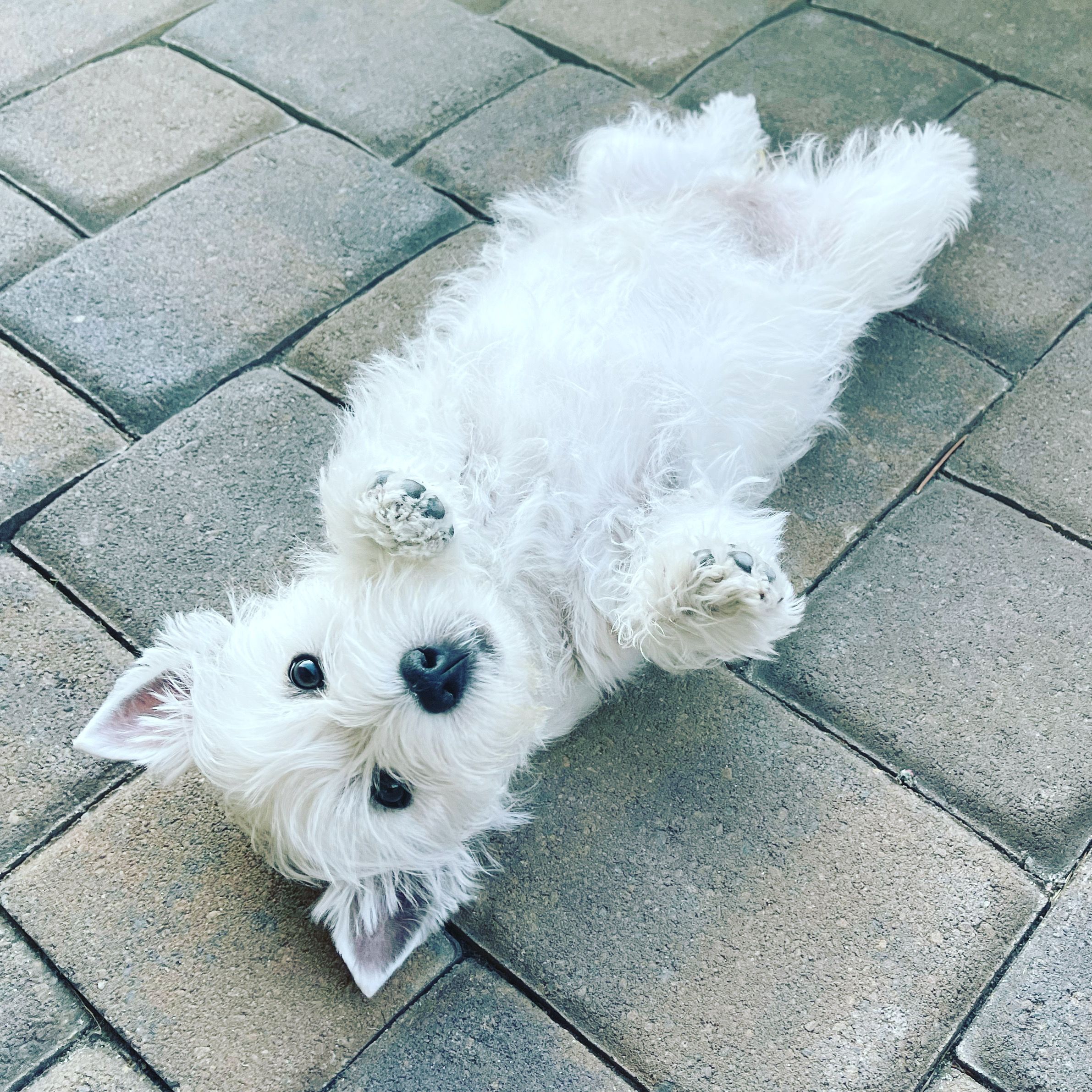
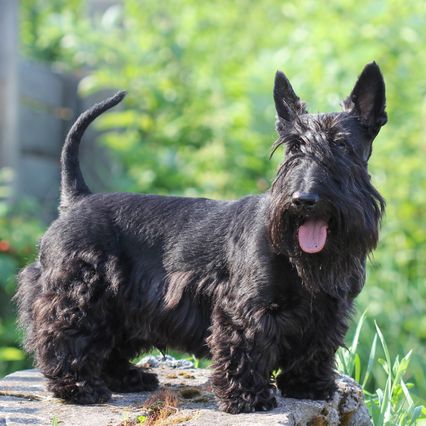
Westies, Scottish Terriers, Cairn Terriers, and Skye Terriers were originally all grouped together as Scotch Terriers, and were developed to rid Scottish farmers of vermin in and around the farm. However, DNA evidence shows the Cairn Terrier is the Westie’s closest relative out of the terrier breeds. Supposedly, the developer of the white Westie once mistook one of his terriers for a fox when it emerged from the brush. After that, he only would hunt with or breed white dogs so he would never make such a mistake again. This was Edward Donald Malcolm, 16th Laird of Poltalloch, and the white terriers were originally called the Poltalloch Terrier. However, Malcolm did not want credit as the developer of the breed, so the name was changed. The American Kennel Club (AKC) recognized it as the Roseneath Terrier in 1908, but changed the name to West Highland White Terrier in 1909. It is in the AKC Terrier group. This small dog breed has been amongst the more popular breeds in America since 1960. Celebrity owners include Cary Grant, Al Pacino, Jennifer Anniston, Matthew McConaughey, and Tommy Hilfiger.
About the author

Canine specialist, Caroline Coile, Ph.D., is the author of 34 dog books, including the top-selling Barron's Encyclopedia of Dog Breeds. She’s written thousands of magazine and web articles about dogs. She specializes in canine science, health, breeds and competitions. Caroline has won 20 national dog-writing awards, and was a 2015 Inductee into the Dog Writers Association of America Hall of Fame.

Breed Scorecard

Characteristics and temperament
  • Affectionate with family

    5

  • Watchdog level

    5

  • Playfulness

    3

  • Adaptability

    3

  • Social needs

    4

  • Temperament

    Happy, busy, friendly

  • Intelligence

    4

  • Good with other dogs

    3

  • Good with cats or other pets

    3

  • Friendly with strangers

    4

  • Good as a service dog

    2

  • Good for apartments

    4

  • Barking level

    3

Appearance
  • Height

    10-11"

  • Size

    Small, 15 to 20 pounds

  • Colors

    White

  • Coat texture

    Harsh

  • Coat length

    Long

Training
  • Trainability

    4

Exercise
  • Exercise needs

    3

  • Exercise time

    About an hour a day

  • Mental exercise needs

    3

  • Favorite activities

    Barn Hunt, Earth Dog, Nose Work

Grooming
  • Grooming needs

    4

  • Brushing frequency

    Daily

  • Needs professional grooming?

    No

  • Drooling level

    1

Health issues
  • Craniomandibular Osteopathy

  • Legg-Calve-Perthes Disease

  • Patellar Luxation

  • Atopic Dermatitis (atopy)

  • Keratoconjunctivitis Sicca (dry eye)

  • Copper Storage Disease

  • Inflammatory bowel disease

  • Lymphoma

Other
  • Bred for

    Hunting rodents, badger, and fox

  • Country of origin

    Scotland

  • Popularity level

    2

FAQs

  • On Good Dog, you can search for West Highland White Terrier puppies or dogs in rescues and shelters. Adopting a West Highland White Terrier from a shelter or rescue is generally less expensive than buying a puppy from a breeder with ethical practices. Across the United States, there are dedicated rescues that specialize in specific breeds and may even help transport a West Highland White Terrier dog to you from another part of the country. Although it can be more cost-effective, adopting the exact breed you're looking for is typically more difficult than working with a responsible breeder. Learn more about adopting a dog from a shelter or rescue.

  • Prices for West Highland White Terrier puppies for sale vary by breeder and individual puppy. On Good Dog today, Westie puppies are typically around $2,750. Because all breeding programs are different, you may find dogs for sale outside that price range.

  • Yes. But they should be eased into it. Having another dog or a cat can help.

  • Yes, along as you do your part and exercise their mind and body - otherwise, they can be destructive. Most are easy to house train.

  • Generally, no. They need an average amount of exercise and professional grooming. Those with skin allergies may need more care, however.
Caroline Coile, Ph.D.

Caroline Coile specializes in canine science, health, breeds and competitions. Caroline has won 20 national dog-writing awards, and was a 2015 Inductee into the Dog Writers Association of America Hall of Fame. She’s written thousands of magazine and web articles about dogs in addition to 34 dog books.

Content on Good Dog is generated, fact-checked, and evaluated by qualified writers and veterinarians.

Caroline Coile, Ph.D.

Caroline Coile specializes in canine science, health, breeds and competitions. Caroline has won 20 national dog-writing awards, and was a 2015 Inductee into the Dog Writers Association of America Hall of Fame. She’s written thousands of magazine and web articles about dogs in addition to 34 dog books.

Content on Good Dog is generated, fact-checked, and evaluated by qualified writers and veterinarians.