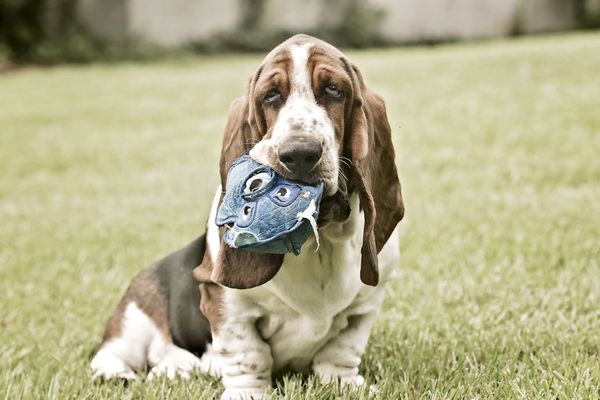
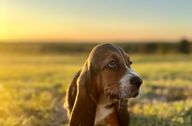
A Basset Hound holds his toy
Get to know

Basset Hounds

Written by
Caroline Coile, Ph.D.,
 author of 34 dog books.
Written by
Caroline Coile, Ph.D.,
 author of 34 dog books, including the top-selling Barron's Encyclopedia of Dog Breeds.
| | | | |

Low on legs, high on life.

The Basset Hound is a good-natured pup that knows how to take life easy. And they have a nose like a GPS.
Browse available puppies

Connect with reputable breeders to find the dog of your dreams
At a glance

Low Energy

Energy level

2/5

Very Low Maintenance

Grooming

2/5

Medium to Large

Size

Easygoing, amiable, good-natured

Temperament

12-13 years

Lifespan

Moderate Trainability

Training

2/5

Medium Vocality

Barking

3/5

At a glance

  • Energy level

    Low Energy

  • Grooming

    Very Low Maintenance

  • Size

    Medium to Large

  • Temperament

    Easygoing, amiable, good-natured

  • Lifespan

    12-13 years

  • Training

    Moderate Trainability

  • Barking

    Medium Vocality

Why people love the breed

The Basset Hound personifies lazy hound dog. They live life in the slow lane, and don't expect you to pass.
Basset Hound lovers adore their hangdog expression and laid back attitude. But Bassets are also fun and outdoorsy. They’re great for people who don’t want a dog following them from room to room or insisting on playing fetch or going jogging. They do like to go outdoors and explore though, just at a slower pace.

Appearance

The Basset is a large dog on short legs. They have sad eyes but a happy tail.
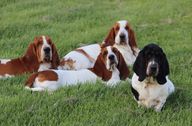
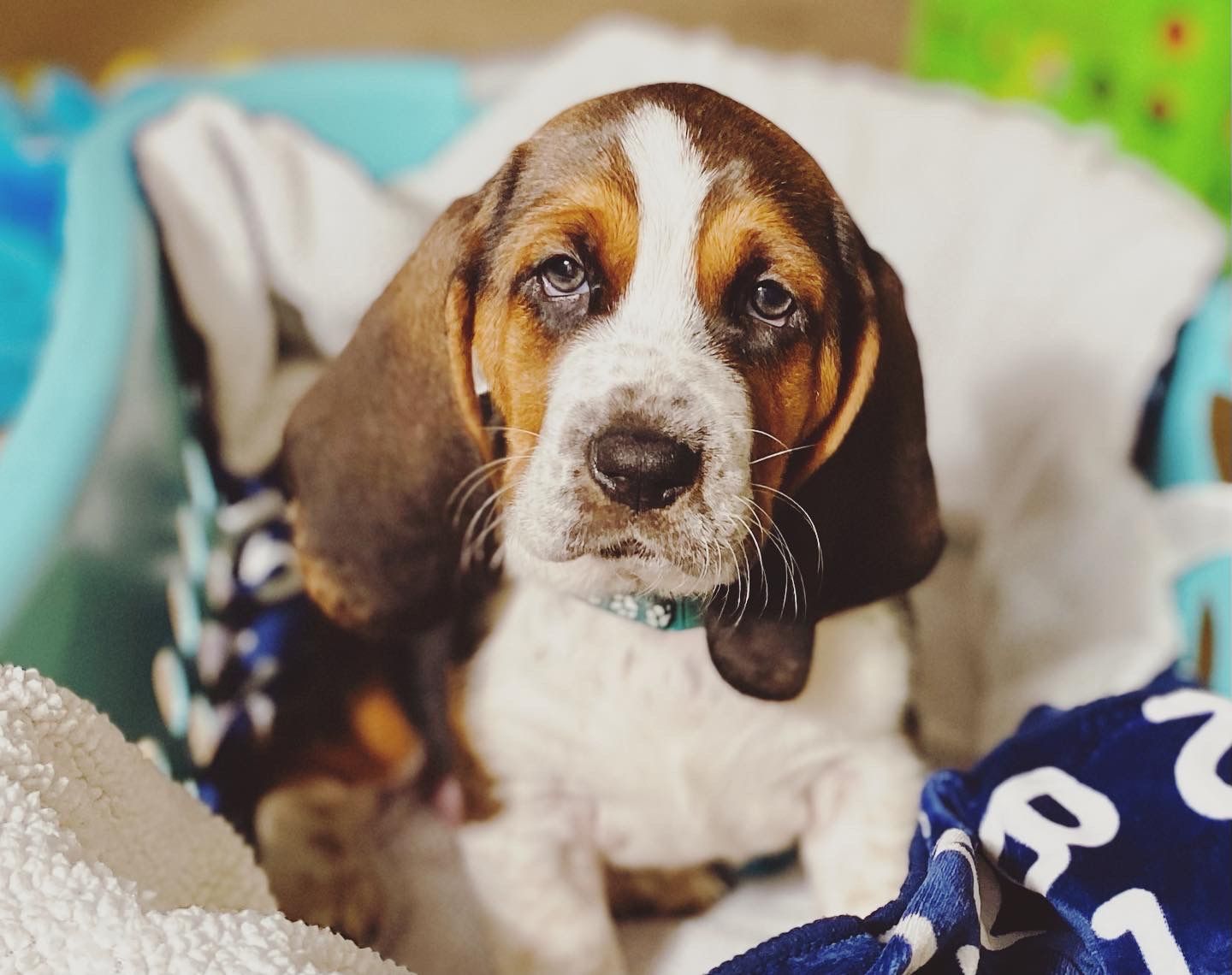
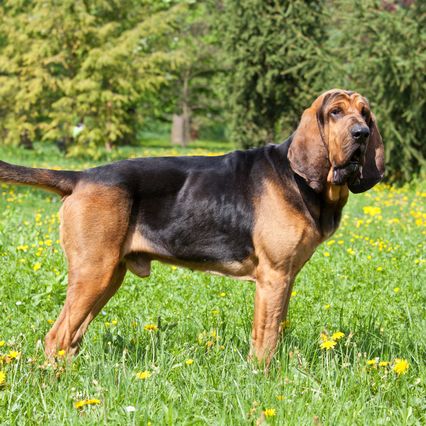
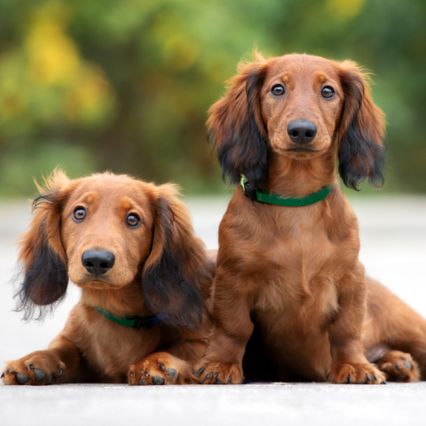
They’re sort of like a dwarf Bloodhound. So despite the Basset Hound’s short stature, they are actually a larger breed of dog. The body seems longer because of how short their legs are. Their bodies are very heavy, and their heads are large. The topline is level and the thick, slightly curved tail is often carried high when on a scent. Their large pendulous ears are low set, hanging, and very long. The forelegs are heavily boned, with large paws that turn out, all covered with loose skin. Their coats are dense and close-fitting. Most common colors are a combination of brown with a black saddle and white extremities, or white with lemon spots.

Grooming

The coat needs little grooming, but special attention must be paid to keep some parts from getting smelly. They are not known for being fastidious or careful about what they step in, so you may have to wipe their paws a lot.
Run a bristle brush over the coat once a week and you’re done. Even during shedding season, a bath or two to loosen dead hairs, coupled with rubber brush, will take care of the majority of shed fur. Basset Hounds can have doggy odor, so regular bathing will help your Basset stay fresh. Bassets Hounds tend to drool, and that drool can soak the front legs, chest, and chin. If these areas remain wet, bacteria can grow and it will stink. Many people have their Bassets wear a bib to protect the chest and forelegs, but they still need to wipe or wash the lips and chin daily. The long ears can harbor moisture and infections, so check them regularly for debris or bad odor, and treat them appropriately. The ear tips can drag on the ground and in the food, accumulating dirt and gunk. The droopy eyelids can expose the eyes to various irritants, setting up infections. Check them regularly and clean any discharge. Ask your veterinarian if other treatments may be needed. Brush the teeth daily. Clip the nails as needed. The large foot can easily become splayed if the nails are left to grow overly long.
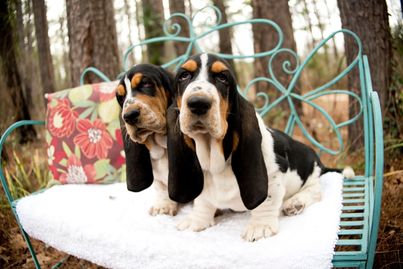
Two basset hound dogs on a bench
Img:

Mountain Ridge Basset Hounds

Breed temperament and characteristics

Bassets define easy-going-–unless there’s something to sniff and hunt. Then it’s all “have nose, will hunt.”
Bassets don’t get too excited about much, unless it’s running to their food bowl or chasing after a fresh rabbit trail. Around the house they are fairly low energy and they’re likely snoozing, or resting up from snoozing, or taking a nap between snoozing. But when they’re awake, they make the most of it. They are very loving and affectionate, gentle with everyone in the family. Their great joy is in using their nose, so they relish the chance to sniff around the yard, go on an outing into the wilderness, and just follow their nose. This can get them into trouble, as once on a trail they are not easily deterred, and will likely ignore your calls to return. Hounds in general were bred to be independent and the Basset Hound is no exception. A trailing dog that constantly looked to the hunter for directions would be a complete failure. They were bred to be self-reliant and go wherever their nose leads them. Don’t expect your Basset Hound to be a hop-to-it obedience dog; they’re not supposed to be.

Exercise

Just because they like to take life easy, doesn't mean they don’t need exercise.
Basset Hounds may conserve their energy, but they also need to expend it. They were bred to lay around until it was time to hunt, and then be on the trail for hours. You can’t expect your Basset Hound to just do the laying around part without the exercising part as this can lead to weight gain and boredom behaviors. Slow and steady defines the type of exercise Basset Hounds are best at. They do like to play and frolic but are not good candidates for sports such as Frisbee catching or jogging or dock diving—or even swimming. Nor are they longer distance runners or even agility prospects. But they absolutely just love to wander around and sniff. A walk around the neighborhood is great exercise for both of you. Their very favorite activity is tracking, While rabbit or hare hunting would be their choice, that’s not readily available in most places. However, tracking, in which your dog follows your scent trail, is, and is a great way for both of you to have fun and exercise. Basset Hounds are extremely successful in the American Kennel Club (AKC) sport of Tracking.
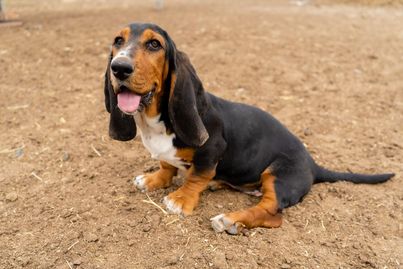
A Basset Hound takes a rest on the ground
Img:

The Dog Hills Farm

Training

A Basset obeys first their nose, second their stomach, and third their person. Your job is to figure out how to combine them.
Bassets were bred to be independent, following a scent trail without direction and ignoring distractions. They also enjoy a good meal. If you want your Basset to pay attention to you, consider using the chance to track, or at least a good treat, as rewards. But even when things go well, Bassets are not quick responders. They’ll take note of your command (or as they would call it, suggestion), consider it, and if it seems worthwhile, slowly get around to doing it. When it comes to obedience, their motto is, “What’s the big rush?” Bassets get bored very easily, so even more so than with most breeds it's important to keep training sessions short and fun. If you try to force them they will shut down—and good luck getting them back up. But remember they are intelligent dogs, and willing to please. You just have to go at their pace and remember this is not what they were bred to do. It should come as no surprise that only a few Bassets have been obedience or agility stars. But they shine when it comes to tracking and nosework.

Diet and nutrition

Bassets love their food, and aren’t particularly picky. Just make sure they don’t get chubby.
Bassets don’t tend to be picky, so you shouldn’t have a problem finding a good quality commercial food your Basset will enjoy. Start watching your Basset’s weight even from an early age. Talk to your veterinarian about reducing weight if your Basset starts to be pudgy. If your Basset has food allergies or any of several other disorders that can be managed with diet, be sure to talk to your veterinarian about the best food for your dog’s particular needs.
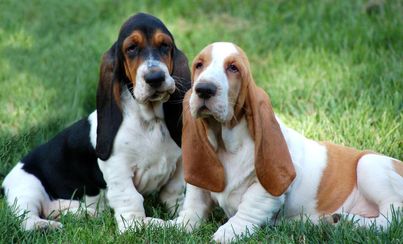
2 basset hound puppies sitting in the grass
Img:

Renaissance Bassets

Health issues

With their dwarfism, heavy bone and all those wrinkles, Basset Hounds seem to be a recipe for bad health. But actually, it’s surprisingly good.

Lifespan: 12 to 13 years.

Hip dysplasia

When the ball of the femur does not fit snugly into the socket of the pelvis, causing lameness and arthritis. No genetic test is available to date, therefore, the recommended screening test is x-rays.

Elbow dysplasia

When the elbow joint fails to develop normally, causing pain and lameness. No genetic test is available to date, therefore, the recommended screening test is x-rays.

Thrombopathia, Basset Hound Type

A bleeding disorder that leads to platelet dysfunction. Symptoms include nosebleeds, bleeding gums, and bruising. Dogs may be at risk from excessive bleeding during surgery or due to trauma. A genetic test is available.

Intervertebral disc disease

This is a degenerative condition that can impact your dog's spinal cord and cause painful mobility issues (even paralysis), is more common in dwarf breeds, including Bassets.

Gastric dilatation-volvulus (gastric torsion)

This is a medical emergency in which the stomach twists, trapping gasses inside and cutting off blood supply to organs. Without immediate medical help dogs can die.

Glaucoma

In which the pressure within the eye (intraocular pressure-IOP), is increased.

Ectropion

In which the eyelids roll outward.

Learn more about health issues that may impact Basset Hounds

History

The Basset Hound is one of the most recognizable breeds in the world. Now a favorite for advertising, it was once a favorite for rabbit hunting.
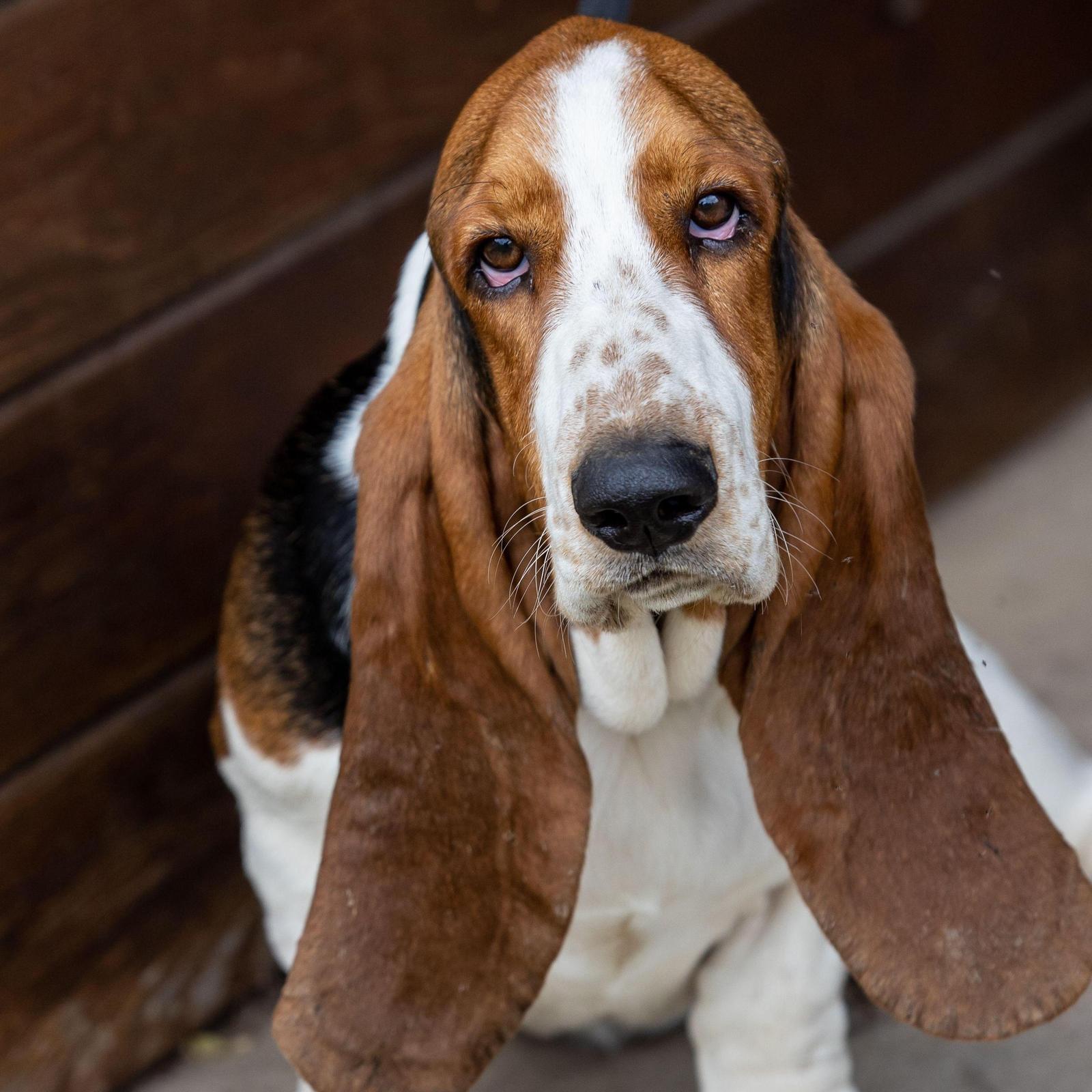
The word "Basset" comes from the French "bas" meaning low thing or dwarf. In the late 1700s French commoners needed a hunting hound that didn't require a horse to keep up with. There were already dwarf dogs, and these were probably the start of the Basset Hound. They are considered one of the best scenting dogs in the world. The long wide muzzle houses a large area for olfactory (scent) receptor cells, and it has more of these cells than most other breeds. Their long floppy ears drag the ground and stir up scent, while the supple, elastic skin around its neck helps trap the scent and funnel it toward the nostrils. Bassets came to America in the late 1800s, and were AKC recognized in 1885. They are now in the AKC Hound group, and further classified as a scent hound. The Hush Puppy dog is the best known Basset Hound. Other media and popular culture Bassets are Fred Basset and Droopy Dog. On television, Basset Hounds were owned by Columbo, and by Rosco in The Dukes of Hazzard. Elvis Presley sang "You Ain't Nothing But a Hound Dog" to a Basset Hound on the Steve Allen Show in 1956. Celebrity owners include Marilyn Monroe, Clint Eastwood, Bob Hope, James Earl Jones, and Dick Chaney.
About the author

Canine specialist, Caroline Coile, Ph.D., is the author of 34 dog books, including the top-selling Barron's Encyclopedia of Dog Breeds. She’s written thousands of magazine and web articles about dogs. She specializes in canine science, health, breeds and competitions. Caroline has won 20 national dog-writing awards, and was a 2015 Inductee into the Dog Writers Association of America Hall of Fame.

Breed Scorecard

Characteristics and temperament
  • Affectionate with family

    4

  • Watchdog level

    2

  • Playfulness

    2

  • Adaptability

    5

  • Social needs

    3

  • Temperament

    Easygoing, amiable, good-natured

  • Intelligence

    3

  • Good with other dogs

    4

  • Good with cats or other pets

    4

  • Friendly with strangers

    3

  • Good as a service dog

    1

  • Good for apartments

    4

  • Barking level

    3

Appearance
  • Height

    11-14"

  • Size

    Medium to Large

  • Colors

    Black brown and white, Black and white, Black and brown (non-standard), Black red and white (non-standard), Blue and white (non-standard), Black tan and white, Black white and brown, Black white and tan, Brown and white (non-standard), Brown black and white, Lemon and white, Mahogany and white, Red and white, Tan and white (non-standard), Blue tan and white (non-standard), White black and red (non-standard)

  • Coat texture

    Hard

  • Coat length

    Short

Training
  • Trainability

    2

Exercise
  • Exercise needs

    2

  • Exercise time

    1 hour daily

  • Mental exercise needs

    2

  • Favorite activities

    Hunting, tracking, nosework

Grooming
  • Grooming needs

    2

  • Brushing frequency

    weekly

  • Needs professional grooming?

    No

  • Drooling level

    4

Health issues
  • Hip dysplasia

  • Elbow dysplasia

  • Thrombopathia, Basset Hound Type

  • Intervertebral disc disease

  • Gastric dilatation-volvulus (gastric torsion)

  • Glaucoma

  • Ectropion

Other
  • Bred for

    Trailing rabbits for hunters on foot

  • Country of origin

    France

  • Popularity level

    2

FAQs

  • On Good Dog, you can search for Basset Hound puppies or dogs in rescues and shelters. Adopting a Basset Hound from a shelter or rescue is generally less expensive than buying a puppy from a breeder with ethical practices. Across the United States, there are dedicated rescues that specialize in specific breeds and may even help transport a Basset Hound dog to you from another part of the country. Although it can be more cost-effective, adopting the exact breed you're looking for is typically more difficult than working with a responsible breeder. Learn more about adopting a dog from a shelter or rescue.

  • The typical price for Basset Hound puppies for sale may vary based on the breeder and individual puppy. On average, the price of Basset Hound puppies from a breeder is $1,650.

  • They don’t yip, or constantly bark, but when excited, they do let loose with a deep loud bay or bellow that can rock the window panes. Most Basset owners find it melodic, although their neighbors may not.

  • If you want a calm, gentle dog, yes. If you want a dog that’s always ready to go run and play, no.

  • They are higher maintenance than they look and require proper care. It's not their coat, but the challenge of keeping the coat and wrinkles dry and clean from slobber. Still, you're only talking 5 minutes a day…
Caroline Coile, Ph.D.

Caroline Coile specializes in canine science, health, breeds and competitions. Caroline has won 20 national dog-writing awards, and was a 2015 Inductee into the Dog Writers Association of America Hall of Fame. She’s written thousands of magazine and web articles about dogs in addition to 34 dog books.

Content on Good Dog is generated, fact-checked, and evaluated by qualified writers and veterinarians.

Caroline Coile, Ph.D.

Caroline Coile specializes in canine science, health, breeds and competitions. Caroline has won 20 national dog-writing awards, and was a 2015 Inductee into the Dog Writers Association of America Hall of Fame. She’s written thousands of magazine and web articles about dogs in addition to 34 dog books.

Content on Good Dog is generated, fact-checked, and evaluated by qualified writers and veterinarians.