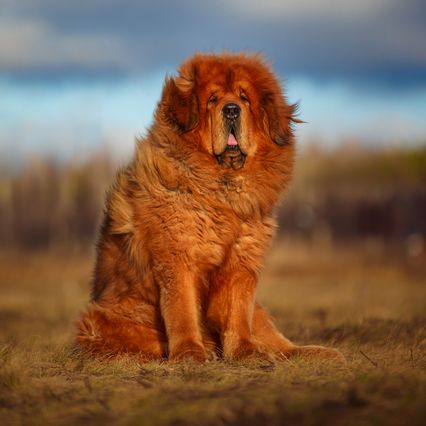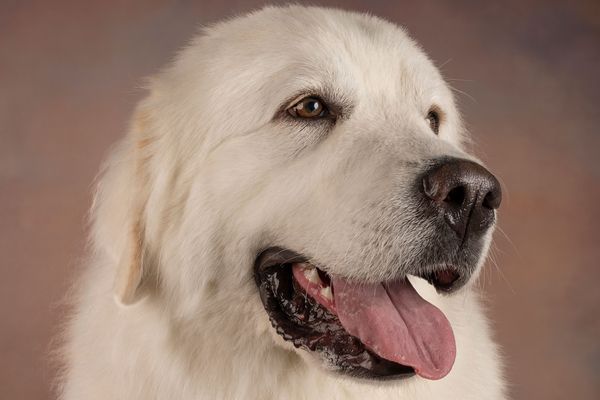
Great Pyr headshot, slightly panting
Get to know

Great Pyrenees

Written by
Caroline Coile, Ph.D.,
 author of 34 dog books.
Written by
Caroline Coile, Ph.D.,
 author of 34 dog books, including the top-selling Barron's Encyclopedia of Dog Breeds.
| | | | |

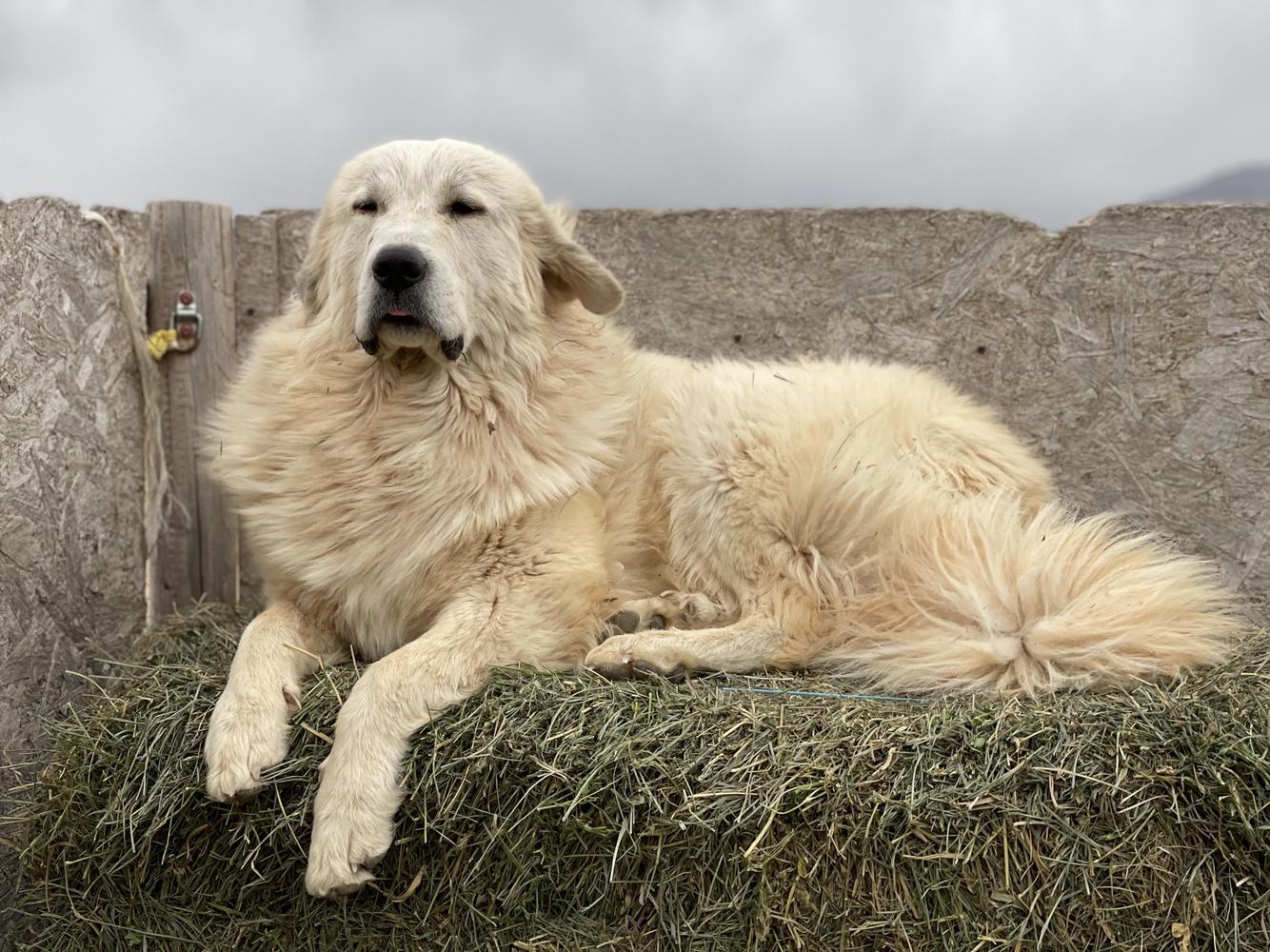
The Great Pyrenees (Pyr for short) is among the dog world’s most majestic breeds.

Fierce and protective when the need arises, they are otherwise a teddy bear at heart.
Browse available puppies

Connect with reputable breeders to find the dog of your dreams
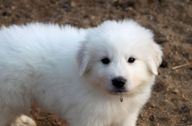
At a glance

Low Energy

Energy level

2/5

Low Maintenance

Grooming

3/5

Extra large

Size

Calm, independent

Temperament

10-12 years

Lifespan

More Challenging

Training

1/5

Vocal

Barking

4/5

At a glance

  • Energy level

    Low Energy

  • Grooming

    Low Maintenance

  • Size

    Extra large

  • Temperament

    Calm, independent

  • Lifespan

    10-12 years

  • Training

    More Challenging

  • Barking

    Vocal

Why people love the breed

Majestic, magnificent, and magnanimous: People love the Great Pyrenees for these qualities and more.
Their physical appearance is large and imposing, yet with a face that invites friends and family to snuggle. The Pyr is selective in its friendship, allowing only those who have proven themselves worthy to enter its inner circle. They are protective of their family, home, and flock. They are gentle with family, including children and elderly, but can be fierce against intruders. This is a dog that can think for itself, especially when deciding who is friend or foe—and whether a threat is present. They enjoy the company of family but are equally content to spend time outside with their flock. This breed loves cold weather, especially snow. The Great Pyrenees turns heads wherever they go. Owners are constantly stopped by strangers to inquire about their stunning dogs.

Appearance

The Great Pyrenees is indeed great, of imposing size and presence. Its incredibly thick coat adds even more size. However, beneath the coat is a dog that is both strong and agile.
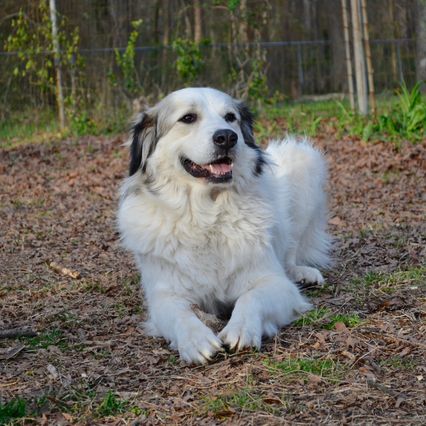
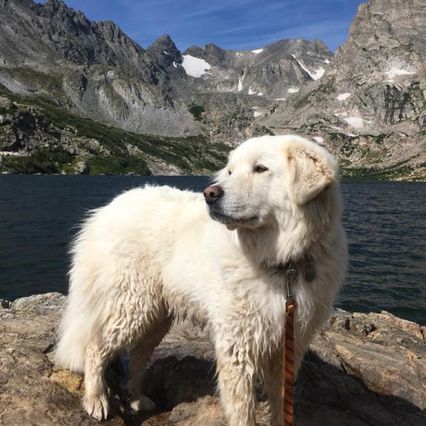
The Pyr has medium-sized bone that looks larger because it’s covered with thick fur. The body is slightly longer than tall, with a straight, level topline. The tail is long and well-plumed. A distinctive feature are the double dewclaws on each hind leg. The head is wedge-shaped, with a rounded crown. The flews are not excessive. The eyes are medium-sized and almond-shaped, and the hanging ears are small to medium in size, and V-shaped with rounded tips. The coat is thick and double, with a super dense wooly undercoat and longer, coarse, flat overcoat. The males especially may have a longer ruff around the neck. In color, the Pyr can be solid white or white with either gray, badger, reddish brown, or tan.

Grooming

The Pyr coat is extremely thick, with a wooly undercoat that needs regular brushing. Even so, grooming is easy.
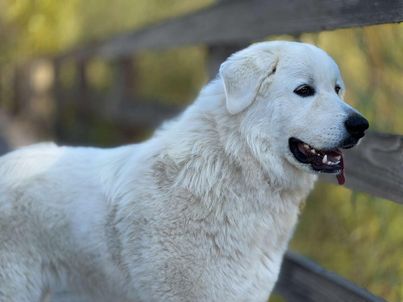
Their weather-resistant coat should be groomed once a week, or twice during shedding season. A slicker brush, along with a long-toothed metal comb and pin brush, can be used. The dog can lie on its side as you separate the coat into layers so you reach down to the skin. The goal is to make sure tangles and mats don’t form in the undercoat. Occasional baths can help your Pyr look their brightest, but their size makes it difficult to bathe them in the tub. In warm weather you may resort to the garden hose. Trim the nails as needed. Check the ears weekly for debris. Brush the teeth daily.
Great Pyr side profile
Img:

The Yosemite Pyrenees Ranch

Breed temperament and characteristics

The Pyr is a dog of contrasts: Calm yet alert; gentle yet protective; regal yet functional. The breed is equally at home adorning a royal throne room as it is slathered in mud, living with its flock. Actually, it’s probably happier with the flock.
According to the American Kennel Club (AKC) Standard, the Great Pyrenees is "strong willed, independent, and somewhat reserved, yet attentive, fearless, and loyal to his charges – both human and animal". This description is extremely accurate. But it fails to also mention that they are calm, affectionate, and protective. Pyrs are courageous and confident. They are laid back, but while they may appear to be just hanging out, they are alert for signs of intruders. They may watch an intruder unobtrusively at first, then take care of business once the intruder commits. The Great Pyrenees is the most popular working livestock guardian in North America, and it comes by this rank honestly. As a house dog, the Pyr loves to stretch out, preferably in a doorway, and half sleep as they keep an eye out for threats to its human flock. They are generally very gentle with household children but as with all dogs of that size, should be monitored—especially if strange children visit. Because they tend to overheat, some Pyrs are happier sleeping on the floor than in bed. When the Pyr feels their territory or flock is being threatened, they may bark a warning (or not) but if that goes unheeded, they will take action. They have the strength to take down wolves and other large predators. Even though they were not developed to take down humans, they will stand their ground. As befitting a dog that often lived days or weeks away from humans with its flock, Pyrs are independent dogs. They had to think for themselves, and that, coupled with their strength, often translates into stubbornness.

Exercise

Though laid back, Pyrs need a chance to exercise every day. They enjoy long strolls with occasional bursts of energy.
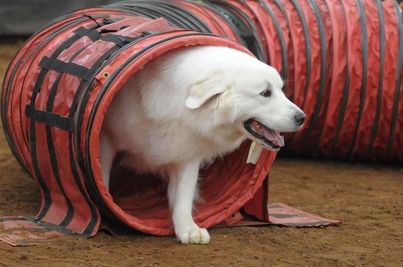
Your Pyr will be content to spend most of its day lounging about the yard and house. They prefer a room (or yard) with a view, so they can survey its territory. The yard must be fenced, so the dog doesn’t chase anyone, or decide to just wander around on their own. A daily walk around the neighborhood or hike in the woods will fulfill most of its exercise needs. This can be substituted for a short game of tag or fetch in the yard. This is not a breed for longer distances. Nor is swimming a favored activity. Pyrs love cold weather and snow, and particularly enjoy any snow sport such as skijoring. They also do well at weight-pulling or cart-pulling activities. Because of their large frame and slow maturation, discuss with your veterinarian when it is appropriate to begin exercising and engaging in different activities with your pup.
A Pyr runs through a red agility tunnel
Img:

Imac Great Pyrenees

Training

Pyrs are independent and strong enough to do what they want. Your job is to convince them you both want the same thing.
Given their size and strength, you obviously can’t force a Pyr to do anything it doesn’t want to do. Even if you could, Pyrs are not the sort to take coercion well. The way to train a Pyr is to use plenty of rewards in the form of treats, praise, and play to have them eager for every training session. Use treats to lure them into position, and gentle guidance to make sure they have the right idea. Even the best obedience Pyrs are not fast responders, nor are they concerned about a perfectly executed exercise. This is not the breed for you if a highly competitive obedience dog is your fantasy, because it will remain a fantasy with a Pyr. But a Pyr can become a reliable companion with enough obedience skills to earn titles and behave well in public…plus do a few tricks. It is imperative that Pyr puppies be socialized from an early age, as they can be naturally suspicious. An unsocialized Pyr can grow into a dog that is uncontrollable in public rather than the steadfast partner they can otherwise become.

Diet and nutrition

These big dogs need big nutrition, and food bills can be high.
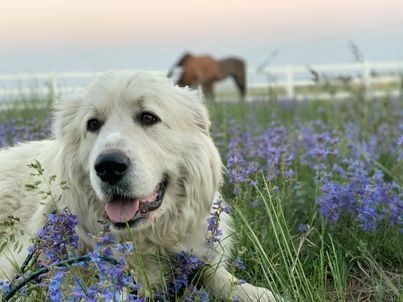
Fueling a Great Pyrenees can be expensive, so consider this before adding one (or several) to your household. Feed adults and especially puppies a commercial food formulated for large dogs. The larger kibble is more satisfying for them to crunch up and less likely to be inhaled. In Great Pyrenees puppies, large breed puppy foods are formulated to regulate the rate of growth. Feed puppies multiple times a day until they’re about four months old, then twice a day. Just because they are large dogs with thick coats doesn’t mean they should be overweight. Monitor your Pyr’s weight by feeling beneath the coat. You should be able to feel the ribs with just a little pressure. An obese Pyr is more likely to develop arthritis and other mobility problems.
An adult Pyr lays in a field of purple flowers with horses in the background
Img:

EverestSnow Pyrenees

Health issues

Large breeds, such as the Great Pyrenees, are often beset with health problems, but the Pyr are surprisingly healthy dogs.

Lifespan: 10 to 12 years.

Hip dysplasia

Common in large breed dogs, this complex condition involves both genetic and environmental factors and arises when the head of the femur doesn’t fit in the pelvic socket, causing arthritis and lameness. No genetic test is available to date, therefore, the recommended screening test is x-rays.

Elbow dysplasia

Found more often in larger breeds, this is a condition in which the elbow joint develops inappropriately, causing arthritis and lameness. No genetic test is available to date, therefore, the recommended screening test is x-rays.

Patellar luxation

In which the kneecap slips out of the groove in which it should be nested, causes lameness and arthritic changes. Screening involves an examination and grading of the degree of luxation present registered with OFA.

Osteochondritis dissecans (OCD)

An abnormality of cartilage development causing an inflammatory condition when the disease's cartilage separates from the underlying bone, can occur in large breed puppies, especially if not eating an appropriately formulated large breed puppy food.

Persistent pupillary membrane

In which strands of iris are stretched across the pupil opening to the extent it sometimes affects vision, is found in the breed.

Cataracts

An opacity in the lens, occur in Great Pyrenees.

Learn more about health issues that may impact Great Pyrenees

History

The Great Pyrenees has a long history as both a working and royal dog.
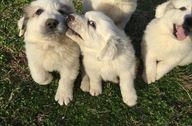
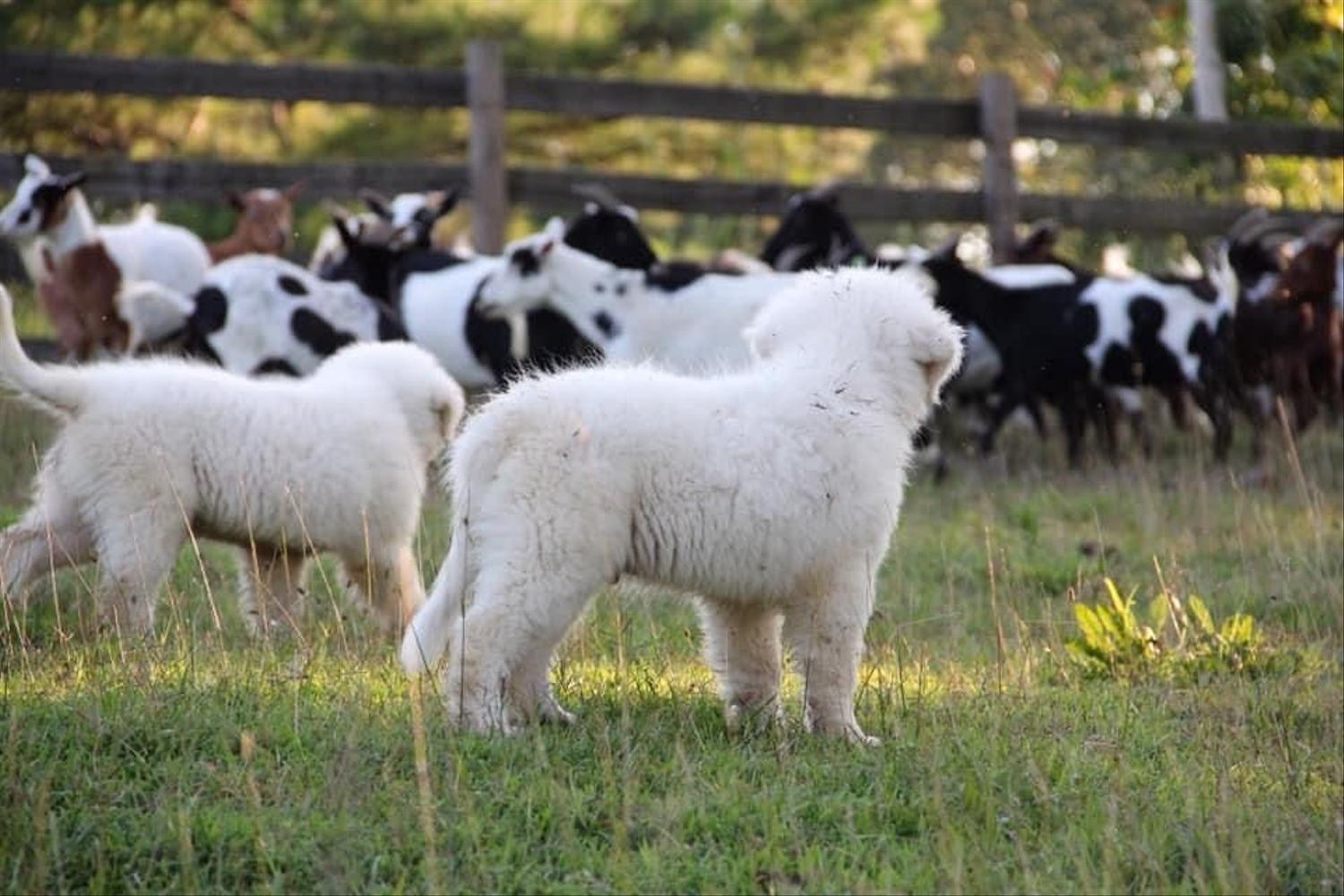
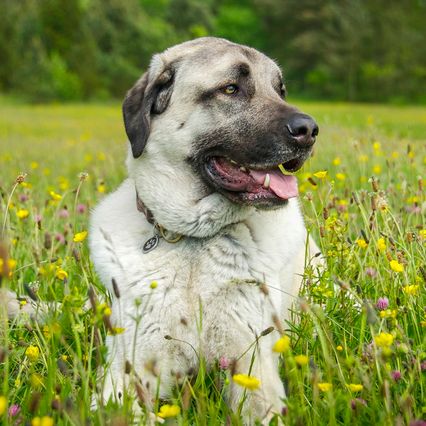
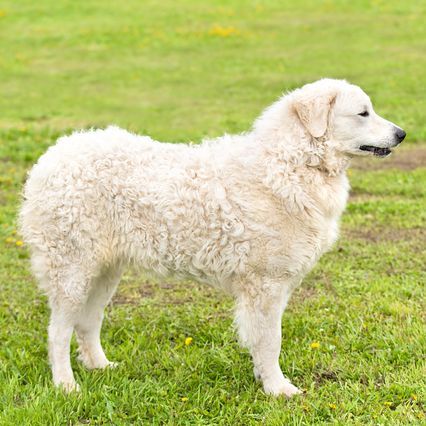
Most of the world calls the breed the Pyrenean Mountain Dog. In France, they may be called Patou or Le Chien de Montagne des Pyrenees. Despite its appearance, the Pyr is not in the Mastiff family. According to DNA evidence, it is more closely related to Mediterranean breeds, such as the Komondor and Kuvasz. The breed was developed as a remote flock guardian. Dogs grew up and lived with a flock so they regarded the flock as their family. The dog’s white fur allowed it to mingle with the sheep undetected by predators. When unsuspecting predators approached, the Pyr would take action and save the flock. One of the oldest accounts of the breed dates from 1407. The dogs were said to also guard castles. General Lafayette brought the first Pyrenees to America in 1824. Pyrs are used today as a working livestock guardian in the United States. Celebrity owners include Selena Gomez, Mariah Carey, Jimmy Fallon, Jay Leno, Martha Fallon, and many many more.
About the author

Canine specialist, Caroline Coile, Ph.D., is the author of 34 dog books, including the top-selling Barron's Encyclopedia of Dog Breeds. She’s written thousands of magazine and web articles about dogs. She specializes in canine science, health, breeds and competitions. Caroline has won 20 national dog-writing awards, and was a 2015 Inductee into the Dog Writers Association of America Hall of Fame.

Breed Scorecard

Characteristics and temperament
  • Affectionate with family

    3

  • Watchdog level

    5

  • Playfulness

    2

  • Adaptability

    3

  • Social needs

    2

  • Temperament

    Calm, independent

  • Intelligence

    3

  • Good with other dogs

    2

  • Good with cats or other pets

    3

  • Friendly with strangers

    2

  • Good as a service dog

    3

  • Good for apartments

    2

  • Barking level

    4

Appearance
  • Height

    25-32"

  • Size

    Extra large

  • Colors

    White and reddish brown, White and gray, White and badger, White and tan, White

  • Coat texture

    Coarse, double, feathered

  • Coat length

    Medium, straight

Training
  • Trainability

    1

Exercise
  • Exercise needs

    2

  • Exercise time

    45 minutes to one hour daily

  • Mental exercise needs

    2

  • Favorite activities

    Livestock guarding

Grooming
  • Grooming needs

    3

  • Brushing frequency

    Weekly (more when shedding)

  • Needs professional grooming?

    No

  • Drooling level

    4

Health issues
  • Hip dysplasia

  • Elbow dysplasia

  • Patellar luxation

  • Osteochondritis dissecans (OCD)

  • Persistent pupillary membrane

  • Cataracts

Other
  • Bred for

    Guarding flocks

  • Country of origin

    France

  • Popularity level

    3

FAQs

  • On Good Dog, you can search for Great Pyrenees puppies or dogs in rescues and shelters. Adopting a Great Pyrenees from a shelter or rescue is generally less expensive than buying a puppy from a breeder with ethical practices. Across the United States, there are dedicated rescues that specialize in specific breeds and may even help transport a Great Pyrenees dog to you from another part of the country. Although it can be more cost-effective, adopting the exact breed you're looking for is typically more difficult than working with a responsible breeder. Learn more about adopting a dog from a shelter or rescue.

  • Generally, yes. They are calm, loyal, and protective. They are not ideal for super active families with lots of strangers coming and going.

  • Although they have a lot of hair to brush, they require only about a half hour a week.

  • Pyrs can be vocal, and often bark in alarm. They seldom just bark for no reason, however. Their bark is very deep.

  • Prices for Great Pyrenees puppies for sale vary by breeder and individual puppy. On Good Dog today, Great Pyrenees puppies are typically around $1,350. Because all breeding programs are different, you may find dogs for sale outside that price range.
Caroline Coile, Ph.D.

Caroline Coile specializes in canine science, health, breeds and competitions. Caroline has won 20 national dog-writing awards, and was a 2015 Inductee into the Dog Writers Association of America Hall of Fame. She’s written thousands of magazine and web articles about dogs in addition to 34 dog books.

Content on Good Dog is generated, fact-checked, and evaluated by qualified writers and veterinarians.

Caroline Coile, Ph.D.

Caroline Coile specializes in canine science, health, breeds and competitions. Caroline has won 20 national dog-writing awards, and was a 2015 Inductee into the Dog Writers Association of America Hall of Fame. She’s written thousands of magazine and web articles about dogs in addition to 34 dog books.

Content on Good Dog is generated, fact-checked, and evaluated by qualified writers and veterinarians.