Belgian Malinois sitting outside
Get to know

Belgian Malinois

Written by
Caroline Coile, Ph.D.,
 author of 34 dog books.
Written by
Caroline Coile, Ph.D.,
 author of 34 dog books, including the top-selling Barron's Encyclopedia of Dog Breeds.
| | | | |

The Belgian Malinois has made a name for itself as a top choice for any job requiring brains, obedience, athleticism, and courage.

But despite their amazing abilities, these high-energy dogs can be a challenging breed to live with.
Browse available puppies

Connect with reputable breeders to find the dog of your dreams
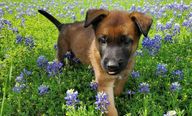
At a glance

Very High Energy

Energy level

5/5

Low Maintenance

Grooming

3/5

Large

Size

Intelligent, active, protective

Temperament

14-16 years

Lifespan

Quick to Learn

Training

4/5

Vocal

Barking

4/5

At a glance

  • Energy level

    Very High Energy

  • Grooming

    Low Maintenance

  • Size

    Large

  • Temperament

    Intelligent, active, protective

  • Lifespan

    14-16 years

  • Training

    Quick to Learn

  • Barking

    Vocal

Why people love the breed

Belgian Malinois are among the most intelligent and protective of breeds. They are amazing companions for active people who are devoted to exercising their dog’s physical and mental needs fully.
No other breed can consistently perform the awe-inspiring mental and physical feats displayed by Belgian Malinois. Whether demonstrating an uncanny ability to follow complex directions, or amazing ability to perform physical exercises involving jumping, climbing, and balance, or astounding acts of heroism and bravery, the Belgian Malinois is unmatched in its ability and enthusiasm in performing a variety of challenging jobs. All of this ability comes with a price: Malinois don’t train themselves. They don’t tolerate poor leadership and they require extensive mental and physical exercise daily lest they take it upon themselves—with the result being unprecedented acts of imaginative destruction. This is a breed for people who don’t like to take things too easy, and many people love this challenge. Despite their protectiveness, they are surprisingly gentle with family members of all ages. In addition, Malinois are handsome dogs with generally few health problems.

Appearance

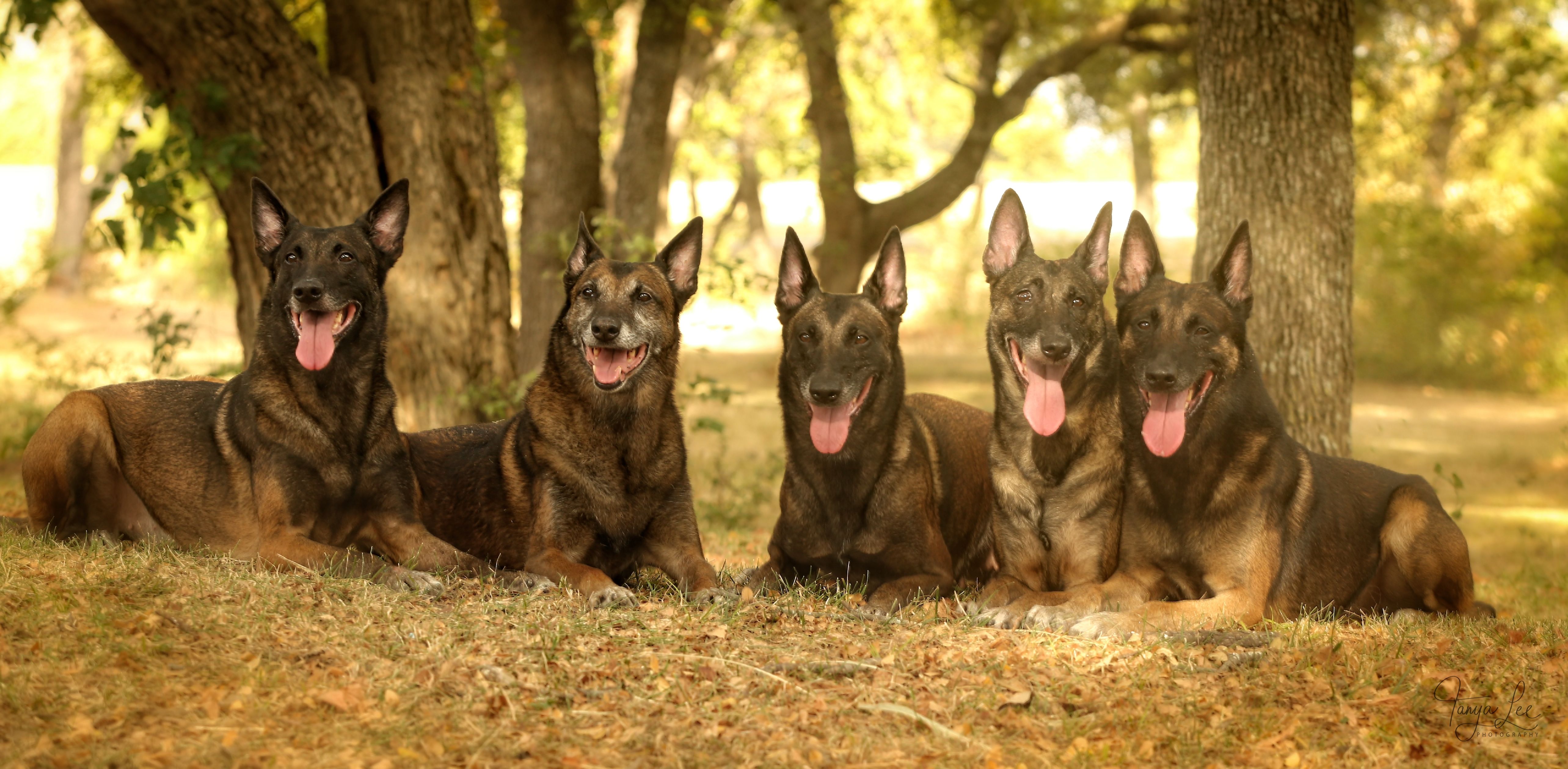
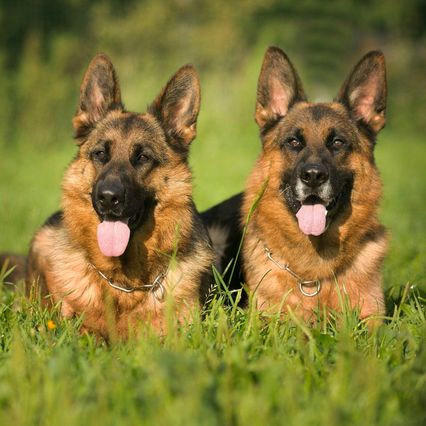
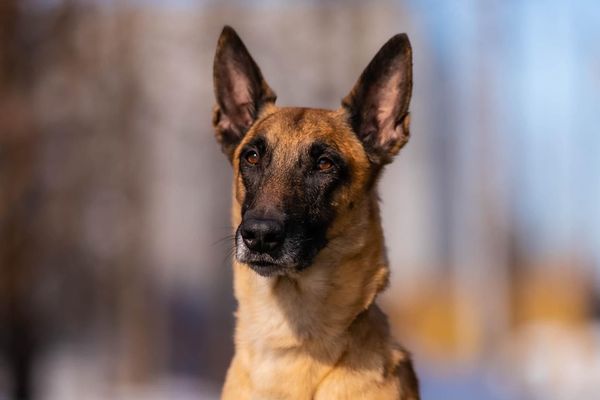
At first glance the Belgian Malnois might resemble a German Shepherd, but they’re more lightly built, have square proportions, and a straight, level topline.
The Malnois combines strength with elegance and agility, with moderate bone. Per breed standard it has a noticeable tuck up, and is muscular without being bulky. The chest is deep, The long tail is carried below the level of the back. The head is held high and the gait is smooth and ground-covering, but not so much as the German Shepherd's gait. The breed has a tendency to trot in large circles rather than straight lines, due to its herding heritage. The head is refined, with a pointed muzzle, naturally pricked ears, and somewhat almond-shaped eyes. The outer coat is fairly short, hard and weather resistant with a dense undercoat. The face is without furnishings. The hair on the tail and behind the legs is slightly longer than the body hair. Color ranges from fawn to mahogany, with black-tipped hairs. They usually have a black mask and ears.

Grooming

Grooming a Malinois requires only weekly brushing and occasional bathing, with more frequent brushing when shedding.
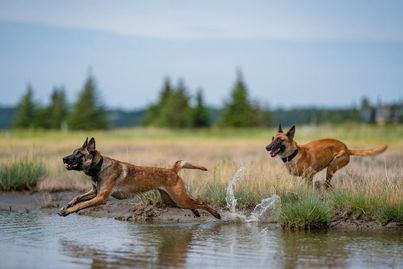
Grooming requires weekly brushing of their short coat with a pin or firm bristle brush, and bathing when required. During shedding seasons (twice a year) be prepared to brush every day for about two weeks, as they do shed a lot then. Bathing in warm water can help loosen the hair and hasten the process. Trim the nails as needed (possibly less often in working or extremely active dogs), check the ears (don't clean them unless needed) weekly, and brush the teeth daily.
2 Malinois running into a lake
Img:

Ak Hell Hounds

Breed temperament and characteristics

The Belgian Malinois has gained fame for its bravery, athleticism, and intelligence. But to be all that they can be, you have to do your part.
Belgian Malinois have replaced many other breeds as the dog of choice for military, protection, police, and even search & rescue work. They have a strong work ethic and thrive on being given an impossible task, tasks they usually manage to accomplish. Their resourcefulness and determination are without parallel. Many people have literally bet their lives on the ability of the Malinois—and won. But they don’t train themselves. In fact, they can be difficult to train. Being smart results in them constantly testing you, and constantly digging in their heels when they sense you don’t know what you're doing. This is not the wonderful, self-trained genius you may have had in mind when you saw videos of them, or the obedient dog starring in movies. Those dogs have been trained—a lot, and by experts. They are very active, high energy dogs, and if you don’t give them a job to do they will make up their own, which could be home destruction, digging up your yard, barking at everyone, or escaping. This is not a breed to acquire with a half-hearted commitment to training and exercise. With proper training, Malinois can make amazing family dogs. They are uncannily intelligent, alert to threats and ready to take care of business. They’re great with active adults, the elderly and with well-behaved children, but they also need to be carefully introduced to them when the dog is young. Good breeding and socialization are extremely important in any breed, but even more so here. Don’t expect a Malinois to be a social butterfly. They tend to be suspicious of strangers and slow to accept them. They require extensive socialization as puppies. While loving and affectionate, they’re not overly demonstrative, so don’t expect lots of doggy kisses and belly rub requests–that’s not their nature. Herding breeds tend to suffer from noise phobias and separation anxiety more than most breeds, so beware of this when training your puppy or dog.

Exercise

The Malinois was bred to be an active herding dog, a job that required them to run tirelessly for miles. They still retain that need for exertion.
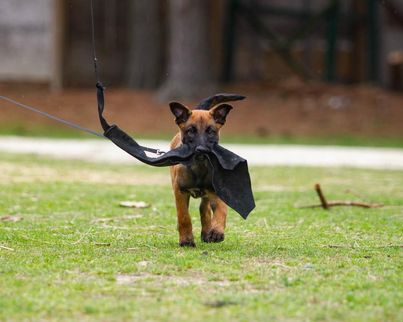
You don’t need a flock of sheep to keep your Malinois exercised, although they still are great herding dogs, especially with tough animals like cattle. But you do need to give this high-energy breed several hours of exercise a day. The Malinois is a great breed to take jogging, even for longer distances. Have your veterinarian check out your dog before committing to longer distance running, and wait until the dog is fully mature. Hiking is also a good choice, as they can carry their own backpack, tend to stay close by, and are large enough to get over rocks and other difficult terrain. They're also generally good swimmers. Malinois are excellent retrievers, and tend to enjoy it most when you give them something challenging to carry. They particularly enjoy games of strength, like tug. Malinois need as much mental stimulation as physical. Obedience training, agility, protection work, herding, nose work, or tracking are all excellent dog sports to exercise their mind.
Img:

Whiplash Malinois

Training

As smart as they are, they don’t train themselves.
Belgian Malinois are uncannily smart. This can sometimes make training easier, but it can also make it harder. You must be consistent in your cues,follow-through and rewards. Always use positive reinforcement training and convince them to work as a team with you. Sometimes they work best when given a challenge, and they can become extremely bored with too many repetitions. Show them what you want and reward them for doing it well. They work for praise, toys, play, and of course, treats. Training is a must for this breed, as untrained Malinois can and have caused serious damage to belongings as well as to other people and pets. Training should be a part of their everyday routine. They excel at obedience and agility training and competition. Many Malinois have earned top titles in obedience. They also enjoy training for activities that involve using their nose, such as nosework and tracking. They are extremely good at protection sports such as Schutzhund and French Ringsport, and are also good at herding trials.

Diet and nutrition

Belgian Malinois require no special diets and are generally easy keepers.
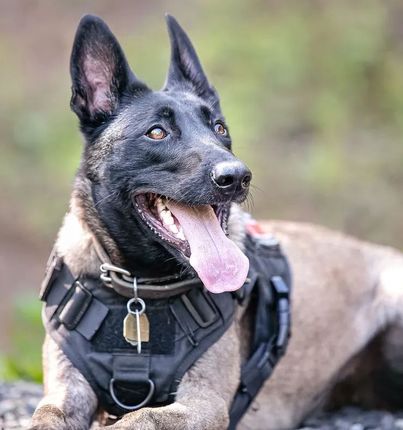
Adult working Malinois may need a commercial diet formulated for active dogs. Be careful that you don’t overfeed your Malinois as your dog ages and slows down. They’ll need fewer calories then. Factor in all the treats you may be doling out during training. They can add calories faster than you might think. You should be able to feel a definite waist and see some indication of a narrowing through the loin from above. You should also be able to feel the ribs with minimal probing. As puppies, they should eat puppy food three to four times a day until ~age 4 months, then two times a day thereafter. For puppies, feed them as directed by your veterinarian, but if they start to become chubby as older puppies you may have to restrict their intake. Some illnesses can be managed with prescription diets. If your dog has an illness, your veterinarian will discuss if your dog is a candidate for a special diet.
Malinois in a black harness
Img:

Earthhaven Malinois

Health issues

Belgian Malinois are an extremely healthy breed, one reason for their increased popularity as military and police dogs.

Lifespan: 14 to 16 years.

Hip Dysplasia

Common in large breed dogs, this complex condition involves both genetic and environmental factors and arises when the head of the femur doesn’t fit in the pelvic socket, causing arthritis and lameness. No genetic test is available to date, therefore, the recommended screening test is x-rays.

Elbow Dysplasia

Found more often in larger breeds, this is a condition in which the elbow joint develops inappropriately, causing arthritis and lameness. No genetic test is available to date, therefore, the recommended screening test is x-rays.

Other health issues

Additional conditions reported in the breed include cataracts, pannus, and retinal degeneration.

Learn more about health issues that may impact Belgian Malinois

History

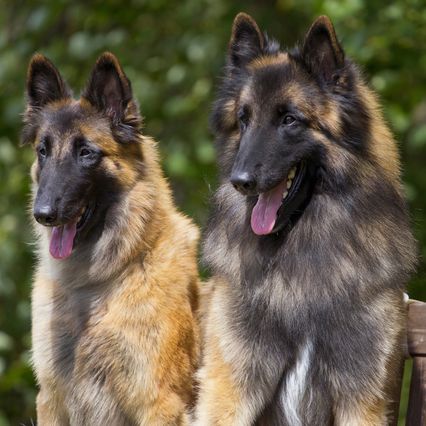
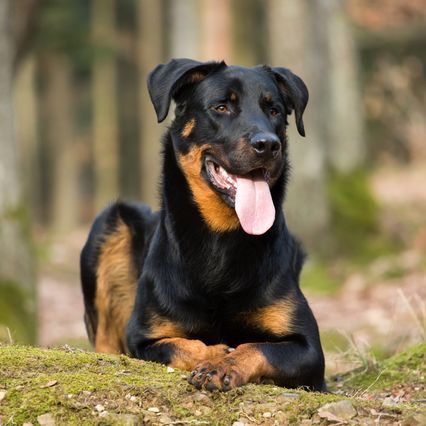
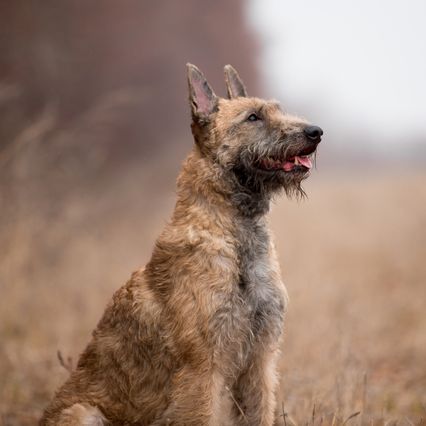
The Malnois is considered a separate breed by the AKC, but in other parts of the world it is one of four varieties of the Belgian Shepherd. The other three are the Belgian Tervuren (long, sable-colored coat), Belgian Sheepdog (long, black coat), and Belgian Laekenois (curly, sable-colored coat).
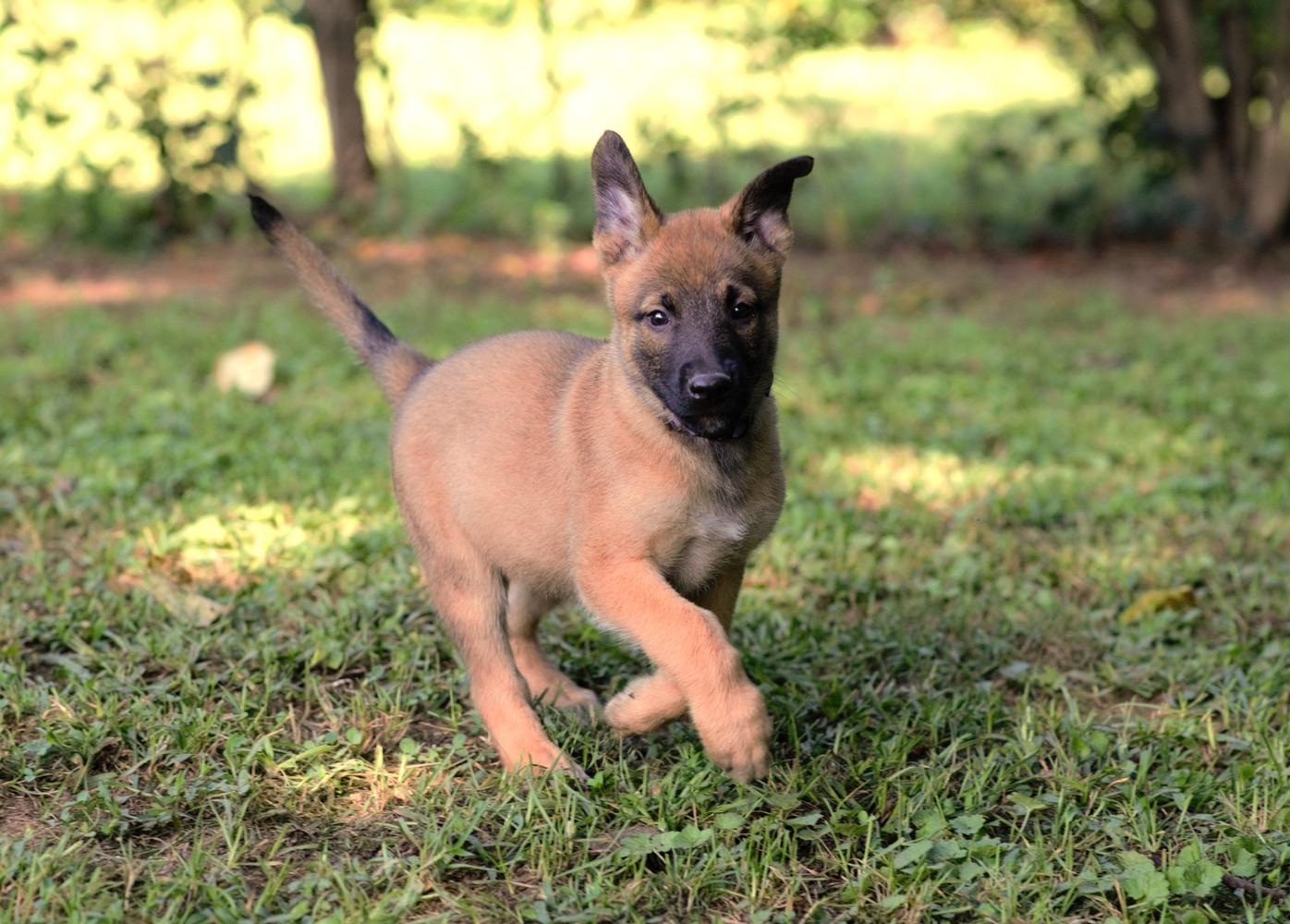
Belgian Shepherds were developed as working farm dogs that both herded and guarded livestock. The ones with short fawn coats predominated in the Malines region, and were called Malinois. By the early 1900s they were being used as police dogs in Europe, and they served in World War I as sentries, messengers, and draft dogs. The first mention of the breed in the United States of America was a notice that five were imported to New York City in 1908 to work as police dogs. The American Kennel Club (AKC) recognized the Belgian Shepherd in 1912, and split the different varieties into separate breeds in 1959. They were initially in the Working group, but moved into the Herding group when the breeds split in 1983. A Navy Seal Malinois named Cairo was part of the group that raided Osama Bin Laden's compound. Owners include Eva Mendes, Ben Affleck, Halle Berry, Channing Tatem, Natalie Russo, Johnny Hallyday and Bryan Adams.
About the author

Canine specialist, Caroline Coile, Ph.D., is the author of 34 dog books, including the top-selling Barron's Encyclopedia of Dog Breeds. She’s written thousands of magazine and web articles about dogs. She specializes in canine science, health, breeds and competitions. Caroline has won 20 national dog-writing awards, and was a 2015 Inductee into the Dog Writers Association of America Hall of Fame.

Breed Scorecard

Characteristics and temperament
  • Affectionate with family

    1

  • Watchdog level

    5

  • Playfulness

    4

  • Adaptability

    4

  • Social needs

    3

  • Temperament

    Intelligent, active, protective

  • Intelligence

    5

  • Good with other dogs

    3

  • Good with cats or other pets

    3

  • Friendly with strangers

    1

  • Good as a service dog

    5

  • Good for apartments

    1

  • Barking level

    4

Appearance
  • Height

    22-26"

  • Size

    Large

  • Colors

    Black sable (non-standard), Black (non-standard), Brindle (non-standard), Fawn, Cream (non-standard), Gray (non-standard), Mahogany, Red, Liver (non-standard), Gray sable (non-standard), Cream sable (non-standard), Red sable, Fawn sable

  • Coat texture

    Hard overcoat, dense undercoat

  • Coat length

    Straight and close; no furnishings

Training
  • Trainability

    4

Exercise
  • Exercise needs

    5

  • Exercise time

    2 to 3 hours daily

  • Mental exercise needs

    5

  • Favorite activities

    Protection work, tracking, obedience, nosework

Grooming
  • Grooming needs

    3

  • Brushing frequency

    Weekly

  • Needs professional grooming?

    No

  • Drooling level

    1

Health issues
  • Hip Dysplasia

  • Elbow Dysplasia

  • Other health issues

Other
  • Bred for

    Herding, protection

  • Country of origin

    Belgium

  • Popularity level

    4

FAQs

  • On Good Dog, you can search for Belgian Malinois puppies or dogs in rescues and shelters. Adopting a Belgian Malinois from a shelter or rescue is generally less expensive than buying a puppy from a breeder with ethical practices. Across the United States, there are dedicated rescues that specialize in specific breeds and may even help transport a Belgian Malinois dog to you from another part of the country. Although it can be more cost-effective, adopting the exact breed you're looking for is typically more difficult than working with a responsible breeder. Learn more about adopting a dog from a shelter or rescue.

  • Prices for Belgian Malinois puppies for sale vary by breeder and individual puppy. On Good Dog today, Belgian Malinois puppies are typically around $2,250. Because all breeding programs are different, you may find dogs for sale outside that price range.

  • They are smart, agile and healthy, and lighter weight than German Shepherd Dogs. Their light weight makes them easier to parachute in tandem with their handlers.

  • They are uncannily smart and athletic, able to perform feats of service and bravery no other breed can do as consistently.

  • Yes they can be, as long as the family is active and consistent in training. They will be a terrible family dog if the family has no time for it, or expects them to train themself.
Caroline Coile, Ph.D.

Caroline Coile specializes in canine science, health, breeds and competitions. Caroline has won 20 national dog-writing awards, and was a 2015 Inductee into the Dog Writers Association of America Hall of Fame. She’s written thousands of magazine and web articles about dogs in addition to 34 dog books.

Content on Good Dog is generated, fact-checked, and evaluated by qualified writers and veterinarians.

Caroline Coile, Ph.D.

Caroline Coile specializes in canine science, health, breeds and competitions. Caroline has won 20 national dog-writing awards, and was a 2015 Inductee into the Dog Writers Association of America Hall of Fame. She’s written thousands of magazine and web articles about dogs in addition to 34 dog books.

Content on Good Dog is generated, fact-checked, and evaluated by qualified writers and veterinarians.