All about ocular diseases and injuries
Learn about the signs, symptoms, and risk factors for common canine ocular diseases and injuries.
Good Dog is on a mission to educate the public, support dog breeders, and promote canine health so we can give our dogs the world they deserve.
Good Dog is on a mission to educate the public, support dog breeders, and promote canine health so we can give our dogs the world they deserve.
Good Dog is on a mission to educate the public, support dog breeders, and promote canine health so we can give our dogs the world they deserve.
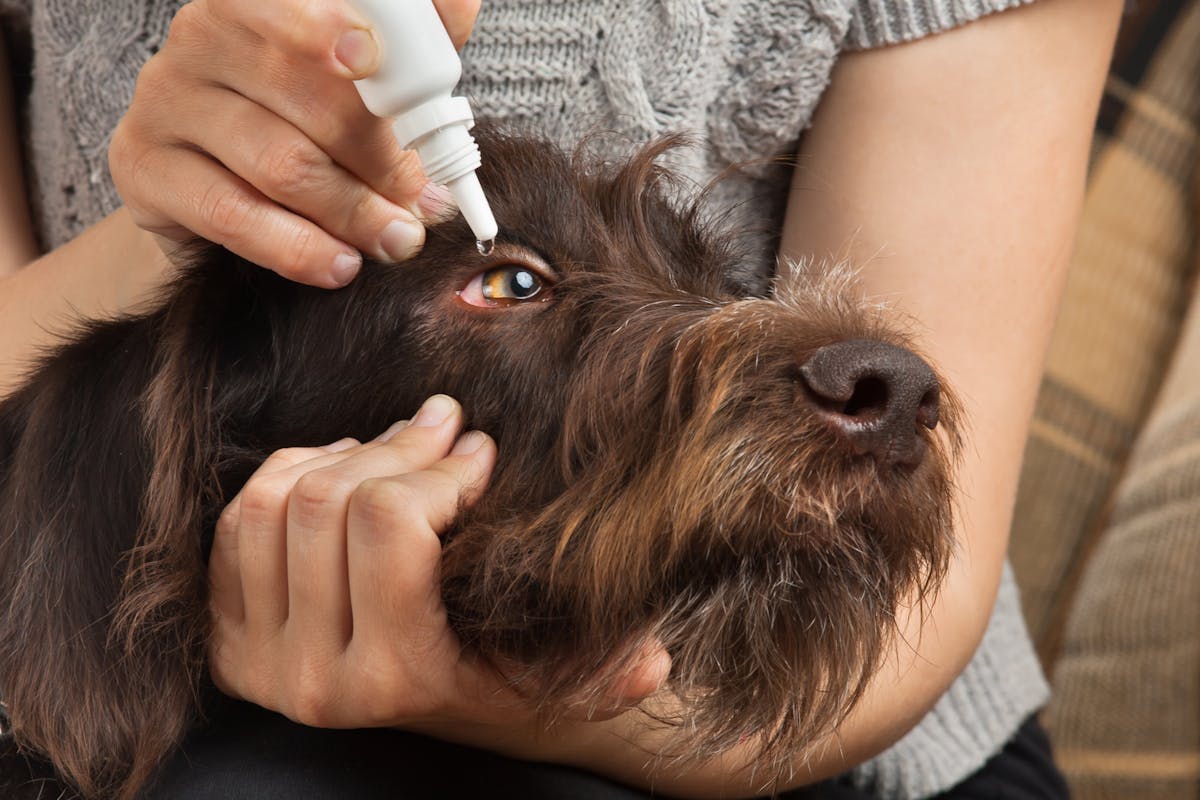
Ocular diseases and injuries can affect your dog’s eye differently, and each come with a different set of warning signs, as well as risk factors. While some ocular diseases are genetic, other eye injuries can occur while your dog is simply playing or digging outside. It’s important to be able to identify the warning signs of an ocular disease or injury, so you can consult with your veterinarian on the best treatment method.
What Are the Warning Signs of an Eye Issue?
These are the 4 common warning signs that your dog may be experiencing an eye issue. It’s important to remember that as soon as you notice your dog exhibiting any warning signs of an ocular disease or injury, they should be brought to your veterinarian immediately.
- Your dog frequently has tearing, squinting, or is rubbing their face
- Their eye has changed in appearance (e.g., redness, cloudiness, or bulging)
- Your dog is showing changes in attitude or behavior; seems to be in pain or is acting strange
- Their eye is producing a thick and opaque discharge
How Can I Protect My Dog’s Eyes?
These 5 tips can be helpful in either preventing injury or catching warning signs early. While it is difficult to prevent many genetic ocular diseases, it’s important to know which diseases are common in your dog’s breed, so you can take action as soon as you notice any changes.
- Schedule routine checkups with your veterinarian.
- Look closely at your dog’s eyes often to detect any changes in appearance.
- Keep your dog's nails trimmed to avoid injury caused by scratching.
- Make sure the hair around your dog’s eye is trimmed to avoid irritation.
- If you're giving your dog a bath, clean carefully around their eyes with a non-abrasive item such as a washcloth and warm water. Don't use soap around the eyes!
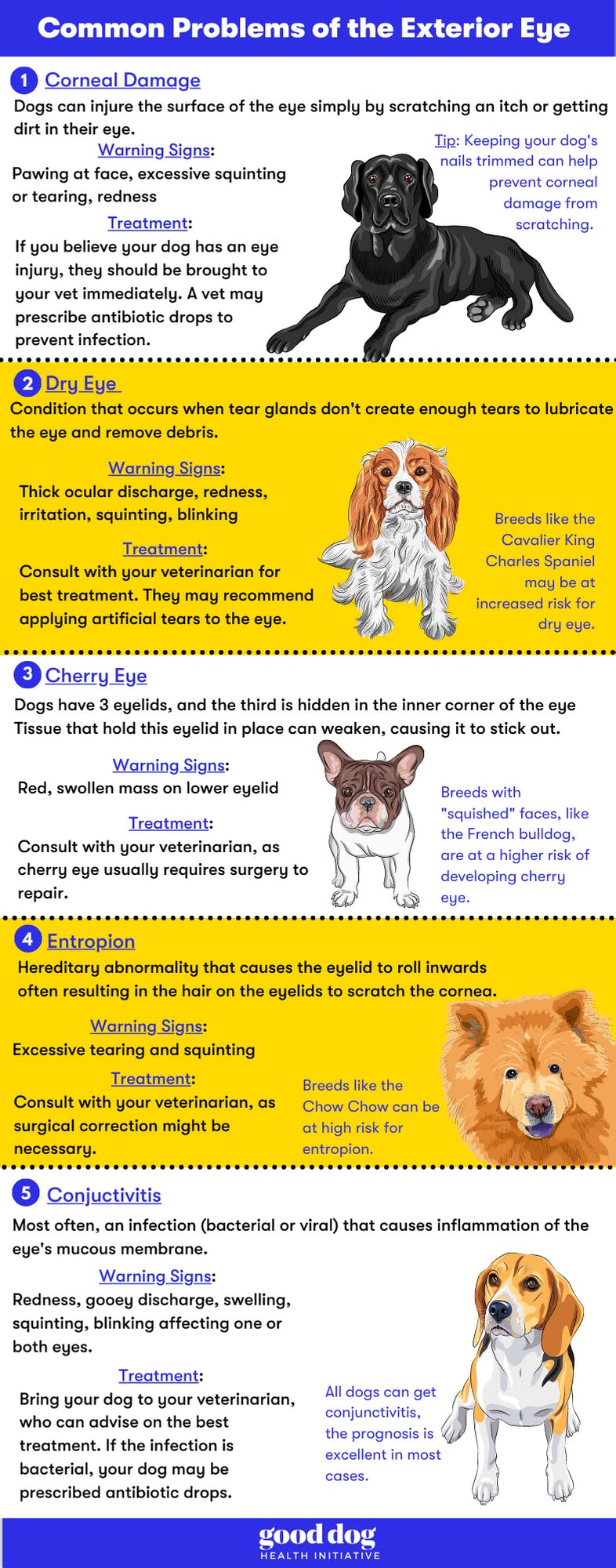
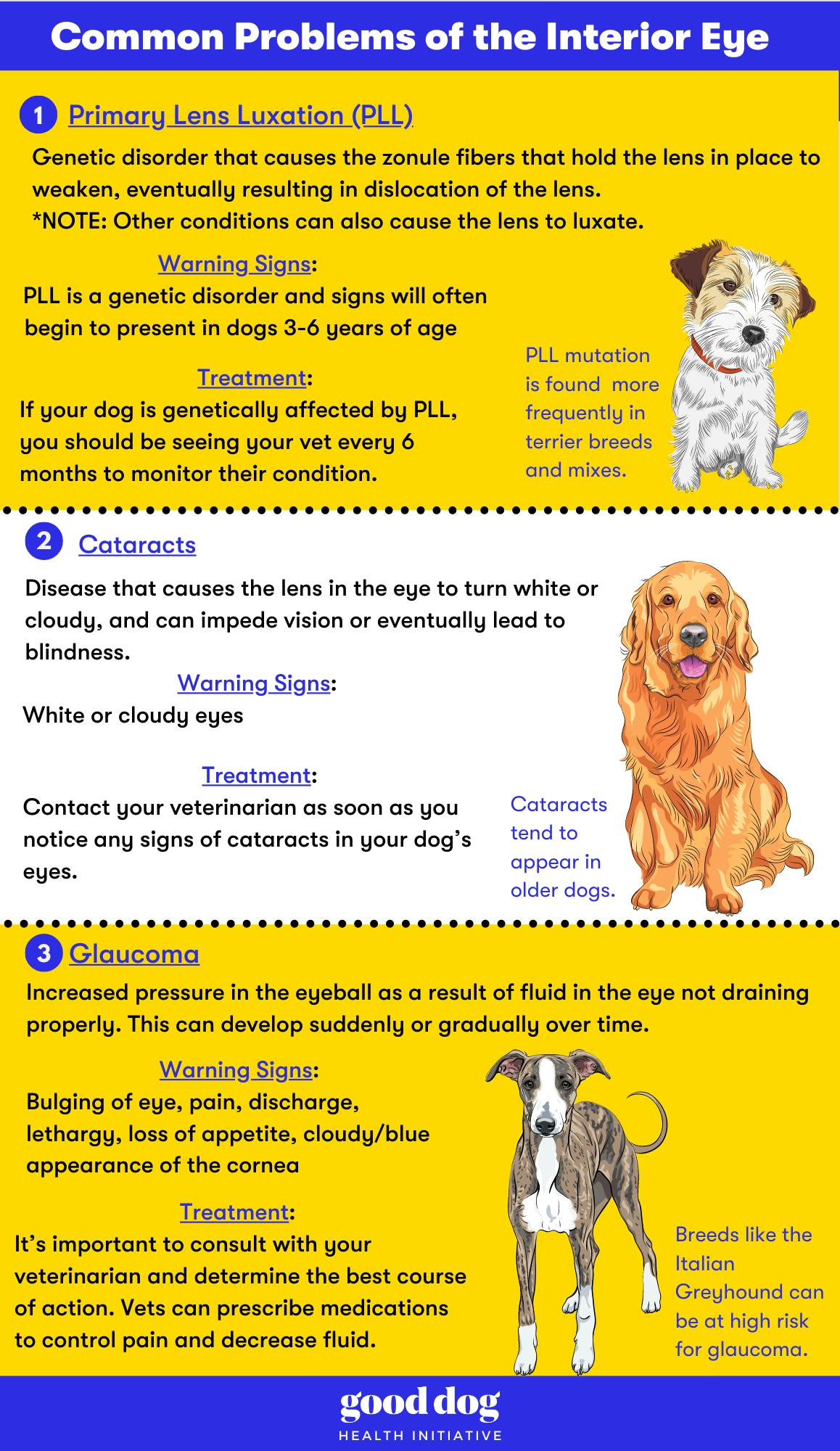
We worked to create the below pamphlets, which highlight common interior and exterior eye problems, and their warning signs. We encourage you to download and print both the Common Problems of the Exterior Eye and the Common Problems of the Interior Eye pamphlets to share with your communities and puppy buyers!


Join our Good Breeder community
Are you a responsible breeder? We'd love to recognize you. Connect directly with informed buyers, get access to free benefits, and more.