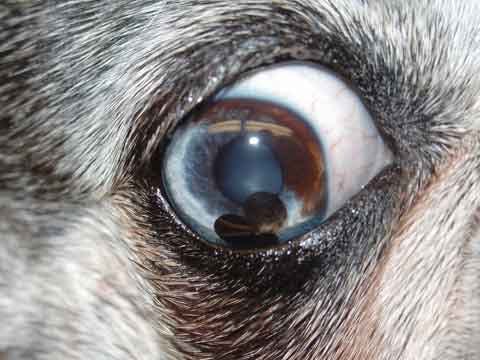
Annual Golden Retriever Eye Exams
An example of how breeders can help their owners
Good Dog is on a mission to educate the public, support dog breeders, and promote canine health so we can give our dogs the world they deserve.
Good Dog is on a mission to educate the public, support dog breeders, and promote canine health so we can give our dogs the world they deserve.
Good Dog is on a mission to educate the public, support dog breeders, and promote canine health so we can give our dogs the world they deserve.
We strongly believe that a key part of a dog breeder’s job is lifelong assistance to those who own their dogs. This doesn’t mean sitting back waiting for them to call or email but instead requires reaching out with new information about dogs in general and your breed specifically, reminders about important health care decisions, and updates on the health of their dogs’ relatives.
As an example, here is a letter I sent out to my owners about the need for annual golden retriever eye exams due to a serious eye issue found in the breed, including dogs in my line. The letter is simply my opinion and recommendations so is by no means perfect but perhaps it will be helpful to breeders and owners alike. (If you think it’s useful, feel free to share this post with golden retriever and goldendoodle owners you know.)
Then consider what information could you provide to owners of your dogs that might help those dogs live a long and happy life and drop them an email!
Reminder! You Need to Do Golden Retriever Eye Exams Every Year
Annual eye exams are a MUST for all North American golden retrievers.

An essential part of owning a golden is doing annual golden retriever eye exams for a lifetime. It doesn’t matter if that dog comes from us, another breeder, a shelter or a rescue. Pigmentary uveitis (PU) is found throughout show, pet and field lines in the US and Canada. Estimates from researchers are well over half of North American goldens carry the gene for PU. At the moment, they think PU’s mode of inheritance is dominant with incomplete penetrance so your dog only needs ONE PU gene to end up with the disease. Not every dog with the gene will have the disease but at this point, we don’t know why that is.
Caught early, the majority of PU cases can be treated with daily eye drops for the dog’s lifetime. A small number of early diagnosed cases will go on to glaucoma, cataracts and blindness regardless of early treatment but these dogs are more likely to keep their vision longer.
How do we know we’ve caught PU early? The dog has no outward symptoms of the disease! The only indication is pigment on the lens that only the ophthalmologist can see. If there are symptoms—redness, tearing, enlarged pupil, visible floaters in the eye—PU is quite advanced and the chance of saving the dog’s eye is significantly lower. Treatment now will be quite extensive, usually requiring multiple eye drops each day, and often unsuccessful. So early diagnosis is important!
Please spread the word to all the golden retriever owners you know! You can also tell goldendoodle owners you might know since PU has now been found in goldendoodles.

Frequently Asked Questions
Do I need to take my dog to a veterinary ophthalmologist for this exam?
YES! Very few general practitioners have the training or equipment to find PU or subsequent problems, such as glaucoma, until they are very far along. Ask for a CERF or OFA exam when you make the appointment.
PLEASE SEND IN THE OFA FORM to OFA!!! To find a veterinary ophthalmologist, go to the American College of Veterinary Ophthalmologists. Not every optho is skilled or knowledgeable in diagnosing PU so ask for recommendations from other golden owners, too. Many breed clubs host health clinics throughout the year.
You can find a schedule on the OFA website here. For dogs that have always had normal eye examinations, health clinics are a fine way to get your dog examined.
Must I take my dog in for an eye exam every year?
YES! Caught early, the majority of PU cases can be managed with daily eye drops for the dog’s lifetime. But if this disease is caught late, it is likely that your dog will go blind in the affected eye and may lose its eye.
Here is more information about PU from the Golden Retriever Club of America.
There is also a Facebook group for those interested in finding out more about PU.
When should I start taking my dog for exams?
The earliest PU has been diagnosed is 18 months but that is extremely rare so start annual eye exams at 2.
How long must I do the exams?
The average age the dogs develop PU is 8. The latest PU has been diagnosed is 14.5 years of age in a dog that had years of clear exams. Plan to have your dog’s eyes examined for a lifetime.
My dog has had several clear exams, must I keep going?
YES! Many dogs have had years of clear exams before suddenly showing symptoms of PU. Normal exams early in life do not mean your dog will not develop PU!
Are annual exams enough?
Annual golden retriever eye exams are fine for dogs with no history of iris cysts or a family history of PU. If your dog has either uveal/iris/cilliary body cysts (ICs) or a family history of PU, talk to your dog’s eye vet about timing but usually every six months is appropriate.
Do I have to send in the OFA form the ophthalmologist gives me?
You don’t have to but if you want to help further PU research, you must do so. Without publicly recorded golden retriever eye exams, researchers are limited in their efforts. Please pay the nominal fee and record your dog’s results with the OFA!! The details are on the back of the OFA form.
What causes PU?
Aside from knowing it’s a genetic disease, little else is known about PU. The distinguishing characteristic of PU is pigment on the lens laid down in a radiating pattern. No one knows where the pigment comes from or how it gets on the lens. Furthermore, how it progresses to glaucoma and cataracts is also unknown but it is these two secondary effects that result in blindness. If the dog has glaucoma, it often must have its eye removed due to the pain associated with high eye pressure.
Are uveal/iris/cilliary body cysts the same as PU?
There is good evidence that there is some relationship between uveal, iris or cilliary body cysts (ICs) and PU but the details of that relationship is not clear. The vast majority of goldens with PU also have at least microscopic ICs.
However, this does not mean that all ICs in goldens mean the dog has PU. There is no correlation between a single IC in one or both eyes and the dog developing PU. However, more than one IC increases the risk the dog will get PU in the next few years. If your dog has more than one IC in an eye, you should be doing eye exams every 6 months.
Most uveal cysts can be found on annual eye exams: