Straight from the Center of the Ring: How to Move with Your Dog
Laura Reeves shares expert tips for getting your dog moving in the show ring.
Good Dog is on a mission to educate the public, support dog breeders, and promote canine health so we can give our dogs the world they deserve.
Good Dog is on a mission to educate the public, support dog breeders, and promote canine health so we can give our dogs the world they deserve.
Good Dog is on a mission to educate the public, support dog breeders, and promote canine health so we can give our dogs the world they deserve.

Running gracefully is a challenge for many of us! Add a dog to the mix and it can be a proverbial train wreck. Our gait dramatically affects our dog’s gait. Fortunately, you can improve yours to help theirs.
When I’m working with handling students, we practice several different aspects of moving a dog. Training the handler is as important as training the dog. I take the pieces one at a time and then put them back together, exactly like training a free stack, hand stack, down and back and go-‘round as separate elements of the dog’s performance.
First, we try to get rid of bad habits. Don’t run on your tiptoes, don’t mince your steps, don’t weave like a drunken sailor.
Second, lower your center of gravity. All of the drive should come from your hips with breed-appropriate, smooth strides. Think cross-country skiing.
Third, keep your upper body and leash hand still. Just like they make models practice walking with a glass of water on their heads, I often make students move an invisible dog with a dangling leash until they can do it without any motion.
Fourth, stand up. Running crouched over or looking like you’re about to pitch forward onto your face is defeating the purpose of flowing movement we’re seeking. Included in this is one, two, three, goooooo….. Don’t just burst into a run. Stop, collect yourself and your dog, find a point to aim for, take three walking steps of gradually increasing speed and then gently move into a proper gait for your dog.
Fifth, move your right hand in a natural motion, just like you are out for a walk or jog in the park.
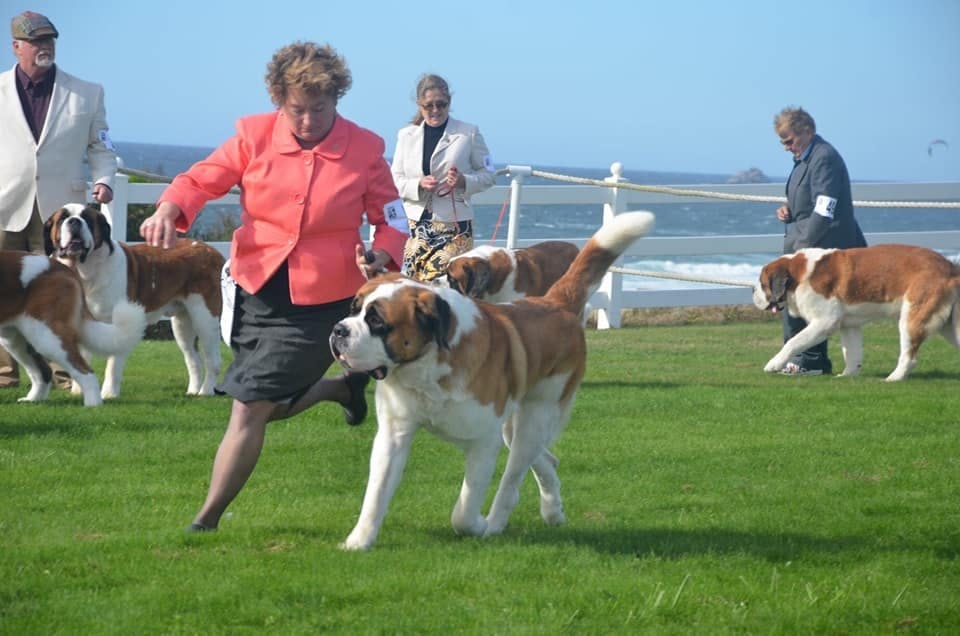
A couple other items to consider, especially on the down and back, the judge wants to see your dog’s rear, not yours! Be sure to line the *dog* up in front of the judge. And, there is a “best speed” for every dog. It is almost never a sprint. Have a friend or instructor watch the dog coming and going to know when its foot timing is correct and then practice always hitting that stride.
Join our Good Breeder community
Are you a responsible breeder? We'd love to recognize you. Connect directly with informed buyers, get access to free benefits, and more.
Baby Steps
Training the dog to move properly on a leash before you even hit the ring the first time is a major part of the process. I start with puppies on kennel leads from the time they are 8 weeks old. They learn to follow along without fighting or flinging themselves around. Patience and following the puppy first will make all the difference in a successful outcome. In other words, the first time you put on the leash, you go where the puppy goes (within the bounds of safety). Then you call “puppy puppy” and walk the other way. Most will follow without any pressure. A few short sessions later, the puppy should just follow you around without even noticing the leash.
Then we practice walking, just walking, not running, in a straight line. Rather quickly, the puppy learns to trot at your side on the leash comfortably and without any fuss.
As the puppy gets older, it may want to pull ahead and drag you around. Nip this in the bud early! We have a couple solutions, building on the basis of following the handler on lead.
The first is a quick about-turn and head the other direction. Every time the dog pulls ahead, you turn around and walk the other way. Easy peasy. A quick food reward when the dog arrives at the proper position, will reinforce this. Avoid constantly feeding the dog while moving. This teaches the dog to look up at you for food and is guaranteed to throw his gait off kilter.
Yielding to Leash Pressure
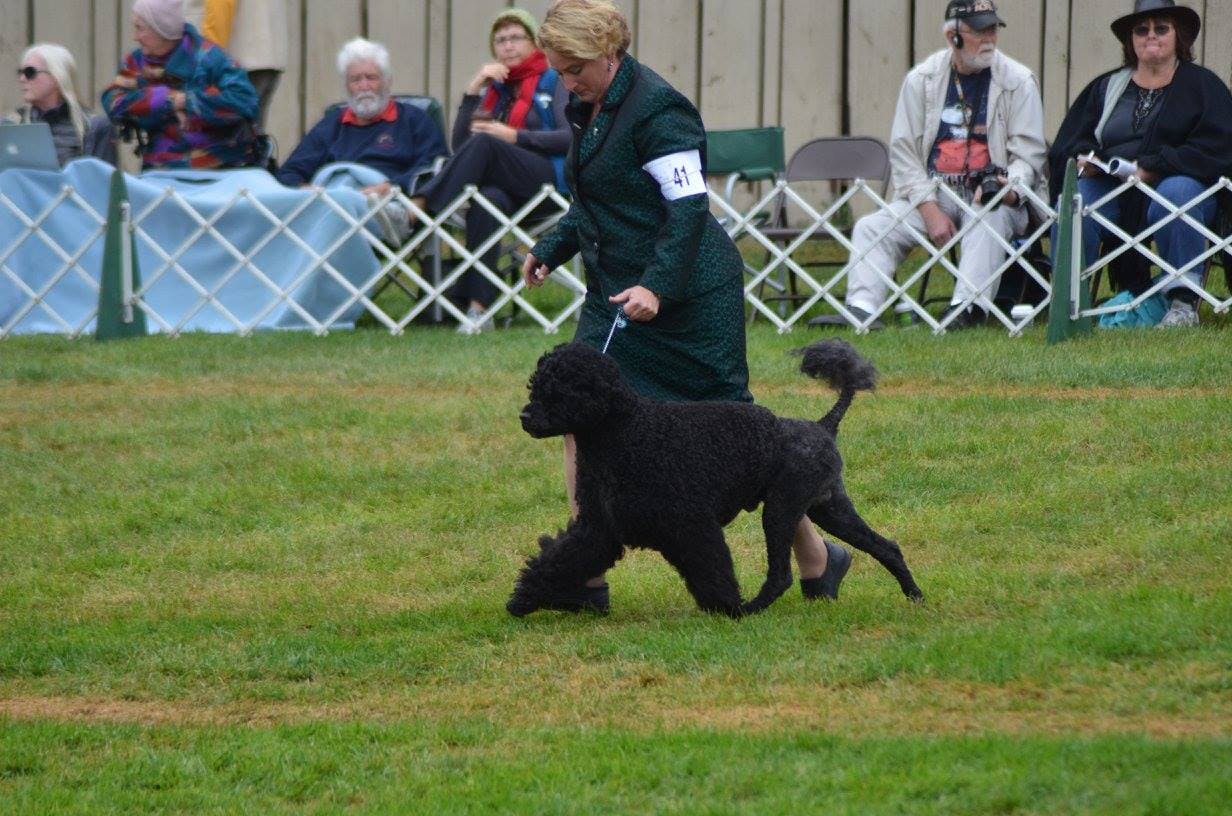
The second is “catch and release.” A dog’s natural inclination is to give equal resistance to the pressure applied. In other words, if you push a standing dog forward, it will push back. Pull it back and it will pull forward. If you are constantly keeping the dog’s collar tight, it will just pull harder. While I know that chain training collars are dismissed by many pet trainers, used properly, they are kinder and more effective than any other training tool. Pinch collars, harnesses, “halti” leads and all the other doodads were designed primarily because people are not taught how to use a simple chain collar correctly.
Using a fine link chain “show collar” that slides smoothly, quickly “catch” the forging dog and then *immediately* “release” the tension. We are not hurting the dog. We are not choking the dog. We are applying contact with the collar that is a correction of position. For softer dogs who need a nylon show collar, I generally train with the chain collar and switch to the nylon for the ring. Nylon collars don’t provide the audible marker of the collar sliding for the “catch.”
Continue the training in short sessions with your goal to never have a tight collar. Use the catch and release in conjunction with the previous techniques and within a very brief time, you’ll have a pleasant walking companion and a show dog who is not “gagging and dragging.”
Pro Tip:
One of my favorite training tips I ever heard came from famous dog show judge, breeder and enthusiast Anne Rogers Clark, who taught all of her dogs to move on lead carrying a toy. The natural proud carriage that dogs have when holding something instills the lovely neck and head set we want to see for most breeds in the ring. I still use this on puppies as soon as they are comfortable on a kennel lead.