How to Avoid Heat Stress in Your Puppies
Dr. Gayle Watkins shares how to spot signs of canine heat stress in neonate puppies and protect them from overheating.
Good Dog is on a mission to educate the public and make it simple for people to get dogs from good sources and for reputable breeders, shelters and rescues to put their dogs in good homes.
Good Dog is on a mission to educate the public and make it simple for people to get dogs from good sources and for reputable breeders, shelters and rescues to put their dogs in good homes.
Good Dog is on a mission to educate the public and make it simple for people to get dogs from good sources and for reputable breeders, shelters and rescues to put their dogs in good homes.

We often worry about baby puppies getting chilled but we also must ensure they don’t overheat. Pups are quite heat intolerant until they are several months old and aren’t as efficient at cooling themselves as adult dogs. Overheating can stop digestion in puppies and cause dehydration, diarrhea, and even heat stroke.
Neonate Puppies (Birth to 3 Weeks)
Signs of heat stress in neonates
Neonate pups cannot cool themselves if they become overheated. They cannot pant and they have limited ability to move to cooler spots in the whelping box. Often what we think of as “fevers” in neonates have been caused by a whelping box that is too warm. Despite what the books say, very few litters need to be kept at 85-90° F. Toy and lightly-coated small breeds need warmer room temperatures than larger and more heavily coated pups. My golden retriever moms and pups are happiest at 68° F, even within a day of birth.
Join our Good Breeder community
Are you a responsible breeder? We'd love to recognize you. Connect directly with informed buyers, get access to free benefits, and more.
Signs that your baby pups are overheated include:.
- Crying constantly
- Ineffective or no nursing
- Hot to touch
- Bloated belly
- Intestinal gas
- Restlessness, can’t settle
- Dehydration
Pro Tip:
How to quickly confirm pups are crying because they are too warm
Check to see if your crying puppies are overheated by placing them on a cool surface, like a tile floor or the bathtub. If they quiet down within a minute or two, they were too hot.
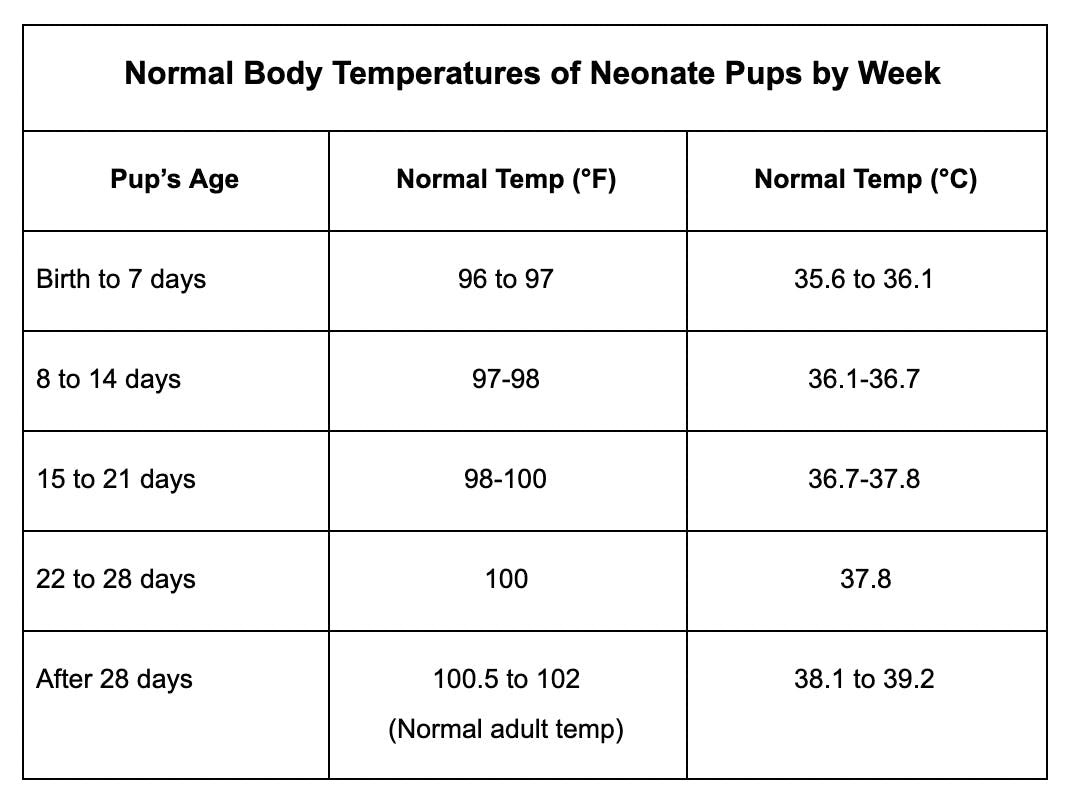
Safely cooling neonate pups
Cooling neonate puppies can be challenging because they can so easily get chilled.
- Cool the entire room down
- Put cool items in the whelping box for pups to lie near, if they choose. Even something as simple as a cookie tray or piece of tile can provide a way for pups to cool themselves. On very hot days, freeze water bottles and put them in one portion of the box so again, the pups can choose to be near them or not.
It’s important to cool pups while avoiding drafts on them so do not use fans, even ceiling fans, and protect the pups from air conditioners or vents blowing directly on them.
Pro Tip:
Checking your whelping box for drafts
Hang a long thread above your whelping box to monitor for drafts. If the thread is moving, you have drafts around your box that you need to protect pups from.
An easy way to protect pups from drafts is to drape your whelping box on three sides. To do so, put an exercise pen around the whelping box and drape a sheet over it, leaving the front of the box open.
Are Your Puppies Too Hot? (Video): https://vimeo.com/553455792/abc23728e2
Safely Cooling Puppies (Video): https://vimeo.com/553455777/921f0fdced
Protecting Sensitive Period Puppies From Heat (3-16 weeks)
It is also important to protect older puppies from high temperatures and humidity, as well as too much sun exposure. Although we want to socialize and develop our Sensitive Period puppies, we have to consider the weather when creating our plans. By four weeks of age, pups can pant and move around well but they still overheat more quickly than adult dogs. In addition, allowing pups this age to get overheated can make them heat averse as adults.
There is no specific temperature that is too hot for pups. Instead, let your pups tell you when they are too hot.
Signs that Sensitive Period pups are overheated include:
- Excessive panting
- Excessive crying
- Poor appetites
- Restlessness or lethargy
- Diarrhea
To Protect Sensitive Period Pups From Overheating
- Use fans or air conditioners to cool the rooms pups are in.
- Put cooler items in the pen, such as frozen water bottles, tiles, and cookie sheets into the pen for the pups to lie on.
- Once you’ve started weaning, always ensure pups have clean, cool water to drink.
- In extremely hot weather, move the pups to the coolest room in your house, often the bathroom or basement
- If your pups go outdoors, avoid peak temperatures on hot days.
- Make sure your outdoor puppy pens have a lot of shade and cooler surfaces, like tiles for the pups to lie on.
- Add a baby pool to your outdoor pen for pups to cool off in.
- Plan outdoor walks for early mornings or evenings, when the air is cooler.
- Start your walks in a shaded area and avoid crossing large spaces with a lot of sun exposure.
- If you find your pups balk at going on the walk or are crying constantly, try again when it’s cooler.