Canine auditory awareness: Noise phobias
Our July Health Initiative is all about noise phobias and how to help dogs cope.
Good Dog is on a mission to educate the public, support dog breeders, and promote canine health so we can give our dogs the world they deserve.

Good Dog is on a mission to educate the public, support dog breeders, and promote canine health so we can give our dogs the world they deserve.
Good Dog is on a mission to educate the public, support dog breeders, and promote canine health so we can give our dogs the world they deserve.
Summer Firework Safety
More pets go missing around July 4th than any other time of year! Dogs may get scared by fireworks and run away unexpectedly because their fight-or-flight response can be triggered by the loud noise.
It's important to check that your dog has proper identification (e.g., collar, ID tag), and that they are microchipped with up to date information. Be sure to also check the fit of their collar and harness before any fireworks begin.
A safe space in your home can help your dog be more comfortable with sounds and activity. This safe space should be set up in a quiet part of your home, away from auditory/visual stimuli. It also helps to place some of their toys or other familiar objects there, and get them used to the area beforehand.
Noise Phobias
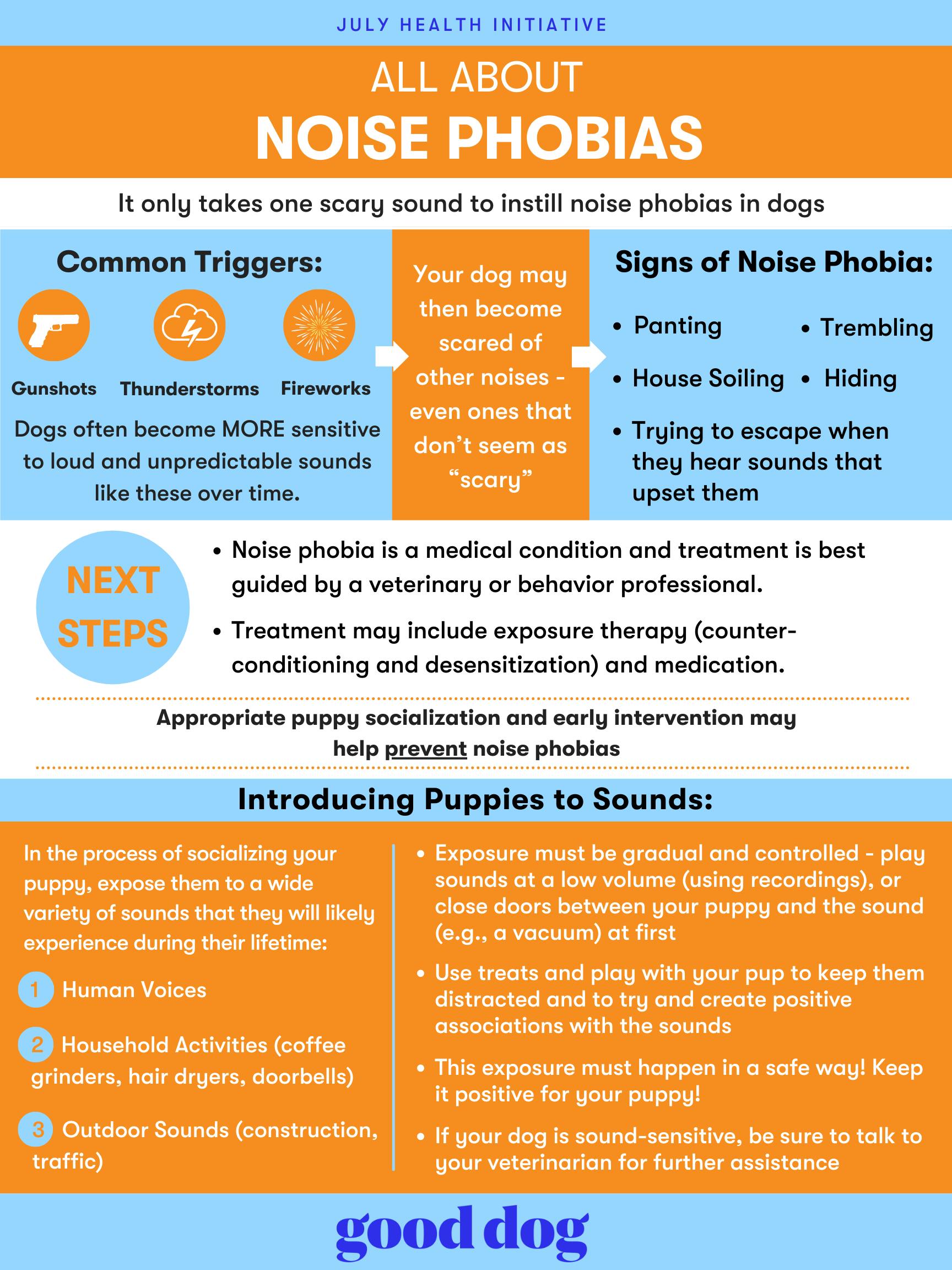
It takes only one scary sound to instill noise phobias in dogs. Common triggers include fireworks or thunderstorms , and dogs will likely become more sensitive to loud and unpredictable sounds like these over time.
Some signs your dog may have noise phobia include:
- Panting
- Trembling
- House soiling
- Hiding
- Trying to escape when they hear sounds that upset them
Noise phobia is a medical condition and treatment is best guided by a veterinary or behavior professional. Treatment may include exposure therapy (counter-conditioning and desensitization) and medication. Additionally, appropriate puppy socialization and early intervention may help prevent noise phobias.
Introducing Puppies to Sounds
In the process of socializing your puppy, expose them to a wide variety of sounds that they will likely experience during their lifetime such as human voices, household activities (e.g., coffee grinders, doorbells), and outdoor sounds (e.g., construction, traffic).
Exposure to sounds must be gradual and controlled. Play sounds at a low volume (using recordings), or close doors between your puppy and the sound (e.g., a vacuum) at first.
Use treats and play with your pup to keep them distracted and to try and create positive associations with the sounds. Remember--this exposure must happen in a safe way, so keep it positive for your puppy!
For any easy way to share this information, we created the below infographic which you can download and print to share with your communities!

Join our Good Breeder community
Are you a responsible breeder? We'd love to recognize you. Connect directly with informed buyers, get access to free benefits, and more.