Canine heart health
Our August Health Initiative is all about canine heart disease and how to help your dog stay heart healthy!
Good Dog is on a mission to educate the public, support dog breeders, and promote canine health so we can give our dogs the world they deserve.
Good Dog is on a mission to educate the public, support dog breeders, and promote canine health so we can give our dogs the world they deserve.
Good Dog is on a mission to educate the public, support dog breeders, and promote canine health so we can give our dogs the world they deserve.
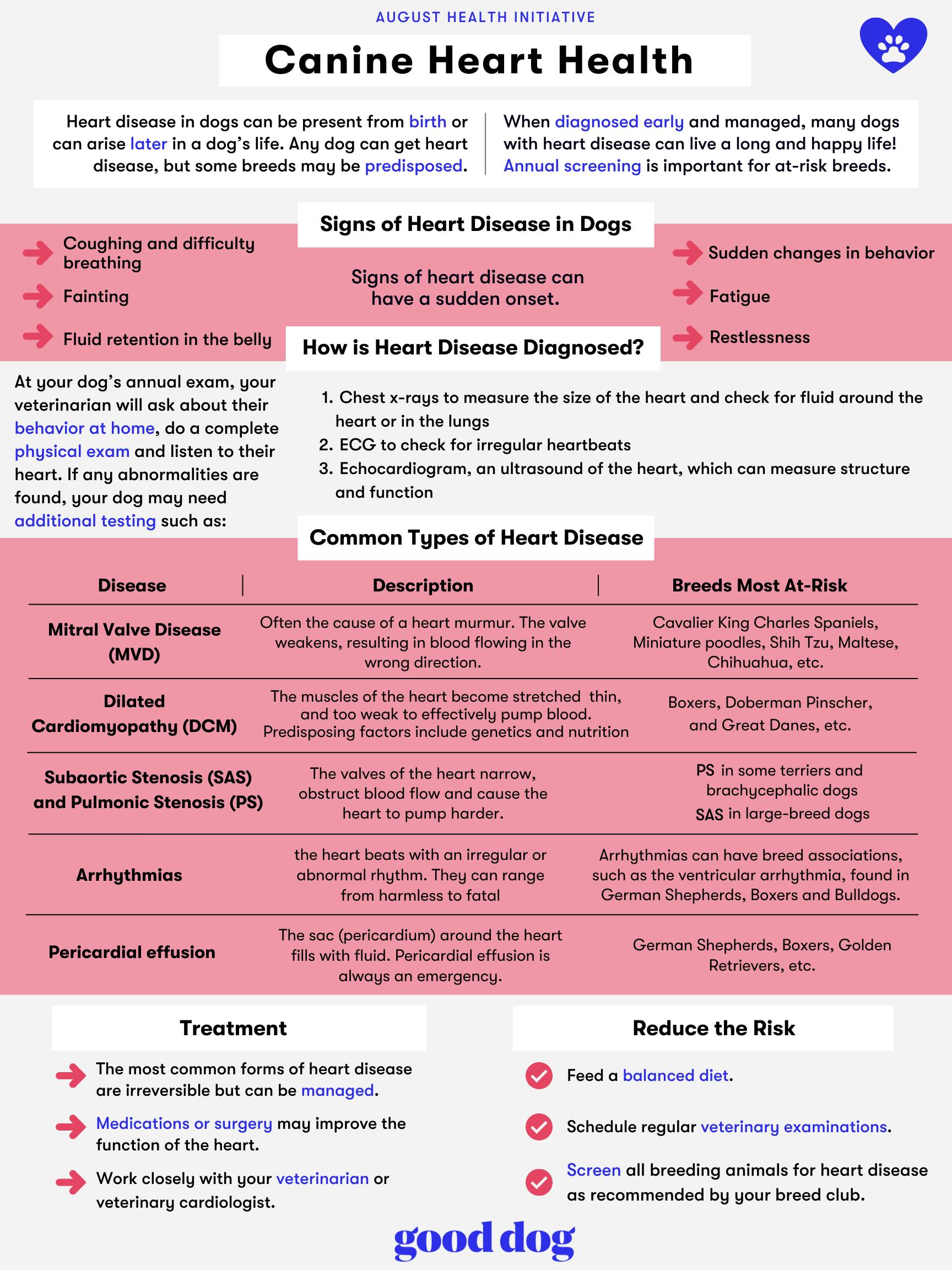
Heart disease in dogs can be present from birth or can arise later in a dog’s life. Any dog can get heart disease, but some breeds may be predisposed. When diagnosed early and managed, many dogs with heart disease can live a long and happy life! Annual screening is important for at-risk breeds.
Signs of Heart Disease include:
- Coughing and difficulty breathing
- Fainting
- Fluid retention in the belly
- Sudden changes in behavior
- Fatigue
- Restlessness

Diagnosing Heart Disease
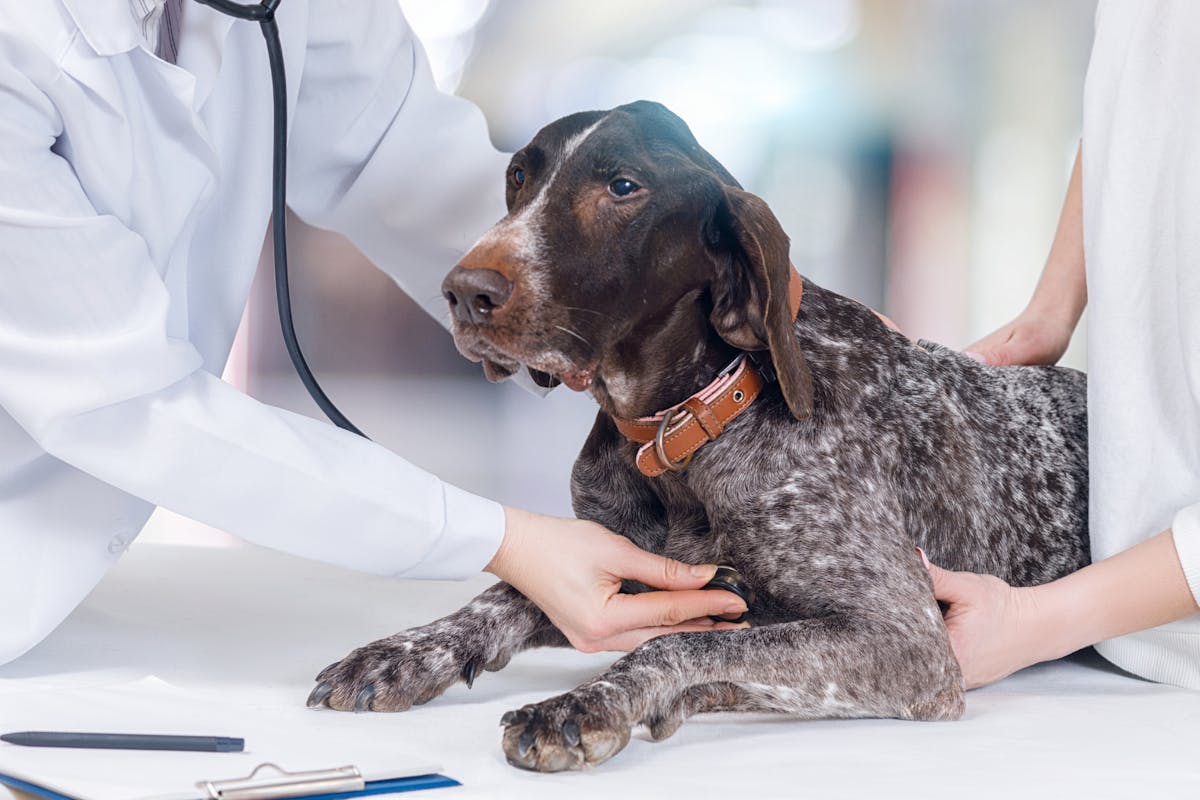
At your dog’s yearly check-up, your veterinarian will listen to your dog’s heart. If issues are suspected, your dog may need additional testing such as:
1. Chest x-rays to measure the size of the heart and check for fluid in the heart and lungs.
2. ECG to check for irregular heartbeats.
3. Echocardiogram, an ultrasound of the heart, which can measure health and function, including the shape of the heart and abnormalities.
Common Types of Heart Disease
Mitral Valve Disease (MVD): Often the cause of a heart murmur. The valves of the heart weaken, leading blood to leak into the heart instead of out to the body.
Canine Dilated Cardiomyopathy (DCM): The muscles of the heart are too weak to pump blood. DCM can be genetic, or caused by infection or nutritional deficiencies.
Subaortic Stenosis (SAS) and Pulmonic Stenosis (PS): The valves of the heart narrow, obstruct blood flow and cause the heart to pump harder.
Arrhythmias: Irregular rhythms in the heartbeat. Arrhythmias can sometimes lead to more serious heart problems.
Pericardial effusion: The sac (pericardium) around the heart fills with fluid. Pericardial effusion is often an emergency.
Prevention & Treatment
Most forms of heart disease are irreversible but can be managed. It's important to work closely with your veterinarian or veterinary cardiologist.
Regular physical exercise and veterinary examinations are excellent ways to prevent heart disease and catch early warning signs. If your dog is a breed known to be at risk, talk to your veterinarian about how to help your dog stay heart-healthy.
For any easy way to share this information, we created the below infographic which you can download and print to share with your communities! Check out our social media-sized version here.

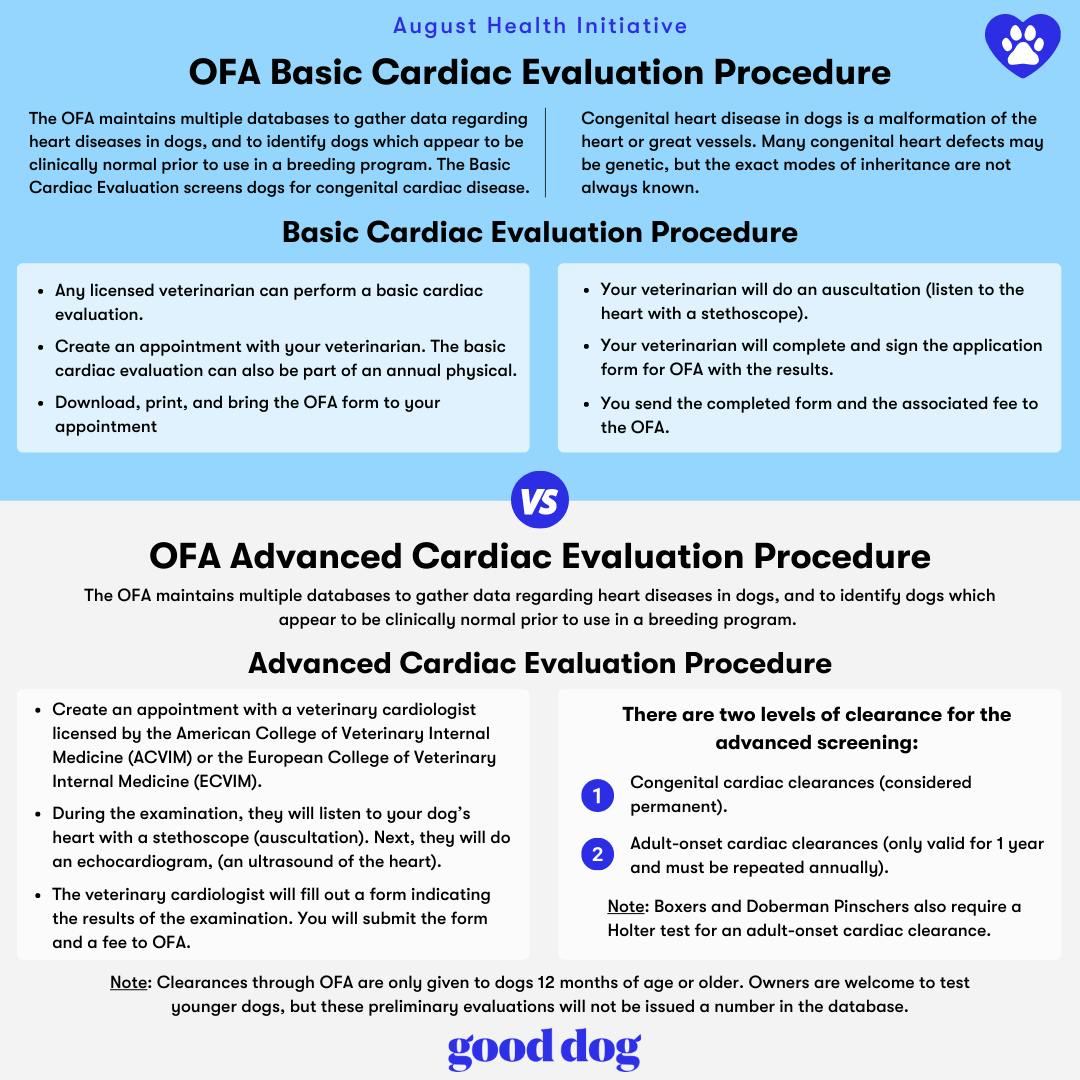
The OFA maintains multiple databases to gather data regarding heart diseases in dogs, and to identify dogs which appear to be clinically normal prior to use in a breeding program. Learn more about the different types of Cardiac Evaluation Procedures below, and download and print the infographic here. You can find the social media-sized version here.


Join our Good Breeder community
Are you a responsible breeder? We'd love to recognize you. Connect directly with informed buyers, get access to free benefits, and more.