Canine Physical Therapy
Our thanks to Danette Weich, DVM for this blog post on canine PT
Good Dog is on a mission to educate the public, support dog breeders, and promote canine health so we can give our dogs the world they deserve.
Good Dog is on a mission to educate the public, support dog breeders, and promote canine health so we can give our dogs the world they deserve.
Good Dog is on a mission to educate the public, support dog breeders, and promote canine health so we can give our dogs the world they deserve.
There are many types of non-traditional therapies that benefit dogs!
Canine sports medicine and rehabilitation is a relatively new specialty in veterinary medicine. Physical therapy (also called physiotherapy) has long been used for humans to help preserve, enhance or restore physical function impaired by disease, surgery or aging. What many people don’t realize is that physical therapy and rehabilitation can also enhance and restore function for our dogs.
The dogs that could benefit from physical therapy include:
- Canine athletes (such as agility, obedience, and field)
- Working dogs (such as police, farm, search & rescue, assistant)
- Active pet dogs (hiking and running partners)
- Obese dogs
- Geriatric dogsInjured or post-surgical dogs (including spinal injuries, intervertebral disc disease, cruciate ligament surgeries, muscle atrophy, hip and elbow dysplasia, and osteoarthritis)
These days your treatment options go far beyond surgery and pain medications. Gayle, Marcy and I all have had dogs who greatly benefitted from physical therapy. Gayle’s and Marcy’s dogs had major traumas which required surgery, but their injuries and therapies were very different.
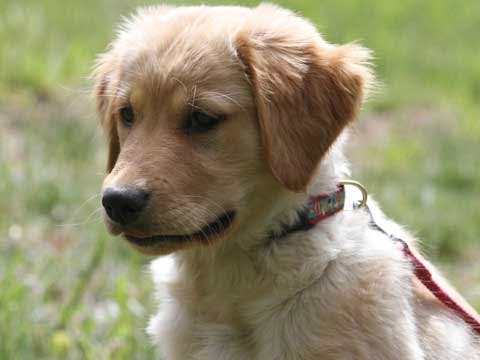
Gayle’s young girl Glee was seriously injured as a five-month-old puppy while playing with a Bernese Mountain Dog puppy. Although they had played together many times before without incident, on this day the Berner puppy landed on top of Glee breaking her elbow, damaging tendons in both shoulders and tearing the joint capsule out of a toe. Gayle took Glee to a top orthopedic and canine sports medicine surgeon who put her back together and then performed stem cell therapy.
The surgery was followed by many months of confinement along with rechecks and physical therapy, including laser treatments, physical manipulation and pain management along with many hours of home exercises. The time, expense and effort paid off, as Glee made a complete recovery and even got her OFA elbow clearances at two years old.
Glee 2 months before the accident:
Unfortunately, Marcy’s girl, Taylor, also needed surgery after being hit by a car. It’s a long story, but suffice it to say a leash is a really valuable tool, even when you are moving an extremely well trained dog in and out of the house. She survived the accident, but her show career was over.
Our goal was to enable her to live as happy and pain-free a life as was possible. Taylor’s surgeon did a wonderful job putting her back together, and advised us not to start any physical therapy for eight weeks. Our good friend Chris Zink put together a program for Taylor that started two weeks post surgery and included many months of manual therapy, laser therapy and in particular swim therapy.
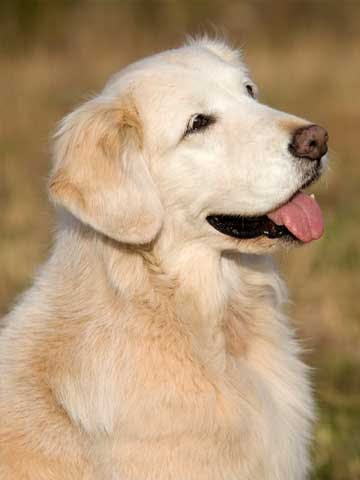
During Taylor’s first recheck the surgeon was stunned at her progress and said he was going to reassess recommending total crate rest post surgery. Taylor went on to live another 7 years, still retrieving the week before she died.
Taylor 8 years post accident:
Extreme trauma is not the only reason to seek out a physical therapist. Dogs with subtle issues can benefit from treatment as well. My boy, Goose, was one double Q away from his Master Agility Championship title when he started refusing to do the equipment. He was a young dog and looked perfectly normal in everyday life, but for him to suddenly decide not to navigate the obstacles on course, something had to be physically wrong.
After a visit to my veterinarian we figured out that Goose had jammed his neck jumping into our pool. This caused him considerable pain when he dropped his head below his shoulders if he was moving. So off to the chiropractor and acupuncturist we went! After only a few visits Goose and I were running around the ring with our MACH ribbon.
Dr Nina Malik administering acupuncture:
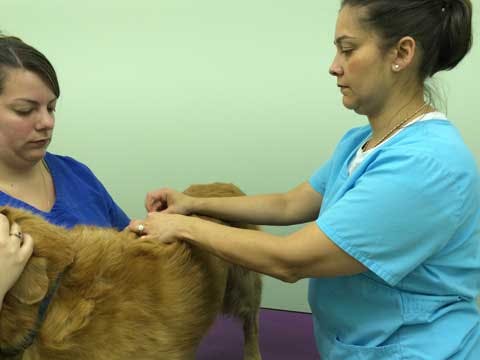
As you can see, your dog’s physical therapy team might include:
- Veterinarians and veterinary technicians
- Physical therapists and assistants
- Nutritionists
- Acupuncturists, chiropractors, massage therapists
- And of course, you
If your dog needs treatment be sure to have him closely evaluated prior to starting a physical therapy program to determine his current status and what the expectations are for his return to function for sport, work or even a normal family dog life. With this information you can set goals for the therapy and decide on the type of therapy needed.
There are many types of physical therapy. You should talk to your veterinarian to discuss which therapy would be most helpful for your dog’s needs. Some types of therapy are:
Manual therapy
Soft tissue mobilization – massage aimed at increasing proper circulation, mobilizing connective tissue for increased extensibility or to decrease adhesions, increase range of motion, promote healing and reduce pain.
Physical modalities
- Cryotherapy – superficial cold – often used during acute stage of injury, also used for exercise-related and arthritis pain
- Superficial heat – Can be used to decrease pain, increase blood flow, and improve mobility
- Electrical Stimulation – NMES – Neuromuscular electrical stimulations used for muscle weakness; TENS – Transcutaneous electrical nerve stimulation used for pain relief
- Therapeutic Ultrasound – causes deep heating that can help with scar tissue, joint restrictions, muscle spasm, and soft tissue injuries
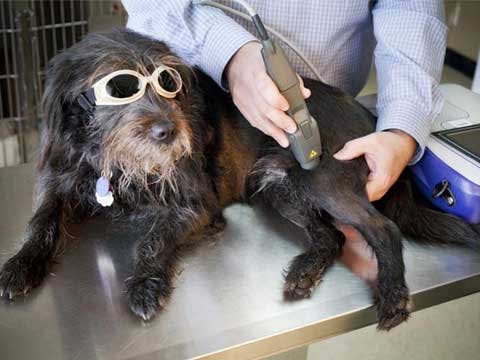
- Low level laser therapy (LLLT) – used for healing wounds, connective and musculoskeletal injuries, inflammation and arthritis. Spinal cord and nerve injuries
- Extracorporeal shock wave therapy ESWT – high energy sound wave therapy. Used for increased healing and pain relief in many types of musculoskeletal injuries
Laser therapy treatment:
Therapeutic exercise
Exercises that can improve proprioception, balance, strength and endurance, and gait training.
Tools used can include physio balls, cavalettis, land treadmill, balance discs, rocker boards and tunnels, as well as exercises that use environmental terrain such as hills and steps.
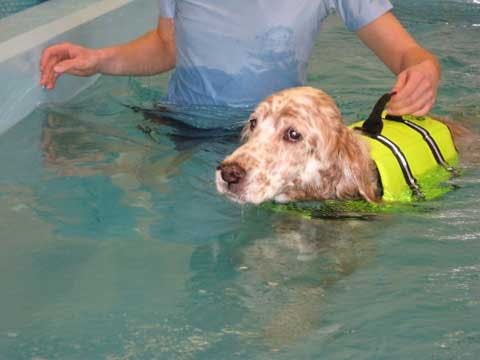
Aquatic therapy
- Uses the properties of water such as buoyancy and resistance to assist with functional exercise without causing pain
- Therapeutic swimming – can include flotation devises, leg weights and adding resistance
- Underwater treadmills- adds a controlled amount of weight bearing, which can increase bone strength, excellent for gait retraining – neurological patients will often walk in water before they can on land
Aquatic Therapy a/k/a Swim Therapy:
Assistive devices
- Bandages
- Orthoses (custom splints), premade splints, soft supports
- Prosthetics
- Carts and harnesses
Pain management
- Western medicine – NSAIDS (non steroidal inflammatory medications) and many other types of medications to reduce pain and inflammation
- Acupuncture
- Chiropractic spinal manipulation
Nutritional consultation
- Helps to establish a dietary regimen that incorporates correct amounts of carbohydrates and fats for the individual dog’s type of athletic performance
- Provide necessary nutrients for wound and surgical healing
- Address addition of nutrients that have anti-inflammatory effects, especially for those dogs with chronic osteoarthritis
Many working dogs and canine athletes see a chiropractor, acupuncturist and/or massage therapist on a regular basis to keep them in top physical condition. Finding the right treatment for your dog can be truly overwhelming when your dog is injured, in pain or worse yet traumatized. Whether you want to find a rehab specialist in your area to give your dog a “tune-up” or follow up after a trauma, here are a few suggestions on how to locate one:
- Get a referral from your primary care veterinarian
- Talk to veterinary specialty clinics in your area
- Check with veterinary schools in your state
- Word of mouth – ask other “dog people” that you trust if they know of anyone in the area that they would bring their dog to if it needed treatment.
Remember, traditional, western medicine is no longer the only treatment for injured/aging dogs. Rather than simply popping a pain pill for your dog ask your vet if getting a non-traditional specialist on your dog’s team might be beneficial.
Treatments and Medications
After this blog was posted we were asked what treatments and medications are safe to use on pregnant bitches. What a great question! So we called our friend Danette Weich, DVM to talk about it and have written this addendum for people who breed and raise litters.
Here is a list of medications and treatments that have not been proven safe for use in pregnant bitches:
- Steroids
- NSAIDS (nonsteroidal pain medications) such as carprofen (Rimadyl), meloxicam (Metacam), etodolac (Etogesic), deracoxib (Deramaxx) and firocoxib (Previcox).
These all carry labels that say that the safe use of each drug in pregnant and lactating bitches has not been evaluated. In humans, woman are advised against using NSAIDS during pregnancy.
The safety of Tramadol in pregnant dogs has not been established. Women are advised not to use Tramadol due to withdrawl effects in neonates, and possible increases in miscarriages.
Modalities such as laser, therapeutic ultrasound, and TENS units have been used in pregnant women only in areas away from the abdomen without adverse effects. However, some ob/gyns recommend refraining from using these modalities while pregnant. The safety of these modalities in pregnant bitches has not been established, so we do not recommend their use.
So what do we have available for pain management and physical rehabilitation that is safe in a pregnant bitch?
Physical therapy such as therapeutic exercises and stretching
- Massage
- Cold and heat
- Acupuncture
- Chiropractic care
When seeking a professional to treat your bitch, be sure to tell him/her that she is pregnant!
Lastly, we highly recommend giving some thought, before you breed your bitch, to what you would do in a situation where a medication is needed to save the life of your bitch, even though the medication could potentially harm the fetuses. Although not something we ever want to think about, it is better to make that decision when you are not under the stress of an emergency.
RESOURCES
- Zink, M. Christine., and Van Dyke Janet B. Canine Sports Medicine and Rehabilitation. Ames, IA: John Wiley & Sons, 2013.
- Searchable for diplomates: “American College of Veterinary Sports Medicine and Rehabilitation | Home. N.p., n.d. Web. 30 July 2014.
- Example of veterinary teaching hospital rehab services – “VMTH, UCDavis; Small Animal Physical Rehabilitation Services.” William R. Pritchard Veterinary Medical Teaching Hospital. N.p., n.d. Web. 30 July 2014.


