Canine degenerative myelopathy (DM)
A chronic and progressive disease of the spinal cord that can lead to paralysis in dogs

Reviewed by
Dr. Nate Ritter, DVM
Health & Screening Lead at Good Dog
Dr. Nate Ritter, DVM is the Health & Screening Lead at Good Dog. He earned his Bachelor of Science in Biology from Lafayette College and his Doctor of Veterinary Medicine degree from Virginia-Maryland College of Veterinary Medicine. He is a member of the American Veterinary Medical Association, New York State Veterinary Medical Society, and the Veterinary Medical Association of New York City. Additionally, he is a USDA-accredited veterinarian
Reviewed by
Dr. Nate Ritter, DVM
Health & Screening Lead at Good Dog
Dr. Nate Ritter, DVM is the Health & Screening Lead at Good Dog. He earned his Bachelor of Science in Biology from Lafayette College and his Doctor of Veterinary Medicine degree from Virginia-Maryland College of Veterinary Medicine. He is a member of the American Veterinary Medical Association, New York State Veterinary Medical Society, and the Veterinary Medical Association of New York City. Additionally, he is a USDA-accredited veterinarian
Reviewed by
Dr. Nate Ritter, DVM
Health & Screening Lead at Good Dog
Dr. Nate Ritter, DVM is the Health & Screening Lead at Good Dog. He earned his Bachelor of Science in Biology from Lafayette College and his Doctor of Veterinary Medicine degree from Virginia-Maryland College of Veterinary Medicine. He is a member of the American Veterinary Medical Association, New York State Veterinary Medical Society, and the Veterinary Medical Association of New York City. Additionally, he is a USDA-accredited veterinarian
by Dr. Mikel Delgado, PhD
Canine Degenerative Myelopathy (DM) is a chronic and progressive disease of the white matter in the spinal cord, decreasing signals from the central nervous system to the limbs of the body. It generally affects middle-aged and older dogs. Breeds such as German Shepherds, Siberian Huskies and Collies are at higher risk of carrying the genetic mutation associated with DM, but DM is observed in dogs of several breeds.
At first, DM may look similar to other joint disorders in dogs, such as arthritis or hip dysplasia, but eventually signs such as a wobbly gait, and difficulty standing will appear. In affected dogs, the disease can wax and wane or will slowly progress from weakness to incontinence, and eventually, paralysis. Progression tends to be 6-12 months from diagnosis to debilitation, but may be slower in smaller dogs.
How is Degenerative Myelopathy diagnosed in dogs?
Degenerative myelopathy is generally considered a diagnosis of exclusion, meaning there are no definitive tests that can be done on a living dog to confirm that they have DM. Veterinarians will likely do a physical and neurological examination, and x-rays to rule out conditions such as arthritis. If DM is suspected, a consultation with a veterinary neurologist will likely be recommended. They may conduct further diagnostic tests, such as a CT scan or MRI.
Genetic tests for Canine Degenerative Myelopathy
There is a DNA test for a mutation on the SOD1-A gene, superoxide dismutase 1, which has been associated with amyotrophic lateral sclerosis (ALS) in humans, and now with DM in dogs. Unfortunately, the association between the presence of the mutation and the development of DM is not as strong as genetic links found in some diseases. A second mutation, SOD1-B gene, has been identified in Bernese Mountain Dogs.
Although DM is autosomal recessive, meaning having mutations on both alleles of SOD1-A would increase risk for DM, there is incomplete penetrance. This means that not all dogs with two copies of the mutation develop DM, and some dogs with one mutation, or even no mutations, do. Approximately 60% of dogs with 2 copies of the mutation will develop clinical signs of DM. It is estimated that 5% of carriers and clear dogs will also develop DM.
It is apparent that the genetics behind this disease are complex, and there are likely additional genes that contribute to the development of this condition. However, in some breeds, testing for the SOD1-A and SOD1-B gene is strongly recommended or required by breed clubs (and Good Dog).
Test results classify dogs into one of three categories:
At risk: the dog carries both mutations of the SOD1-A (or SOD1-B) gene, and may develop clinical signs of DM. They will pass on the mutation to all offspring.
Carrier: the dog carries one mutation of the SOD1-A (or SOD1-B) gene, and will pass on the mutation to approximately 50% of their offspring.
Clear: the dog does not carry the SOD1-A (or SOD1-B) mutation, and will not pass on the mutation to any offspring.
Results can be registered in the OFA database when DNA tests are conducted at an approved laboratory. The fee is $15 per genetic test for one dog, $30 for a litter of up to three dogs, and $7.50 per dog for a group of five or more dogs owned by the same person.
Treatment and care of dogs with Degenerative Myelopathy
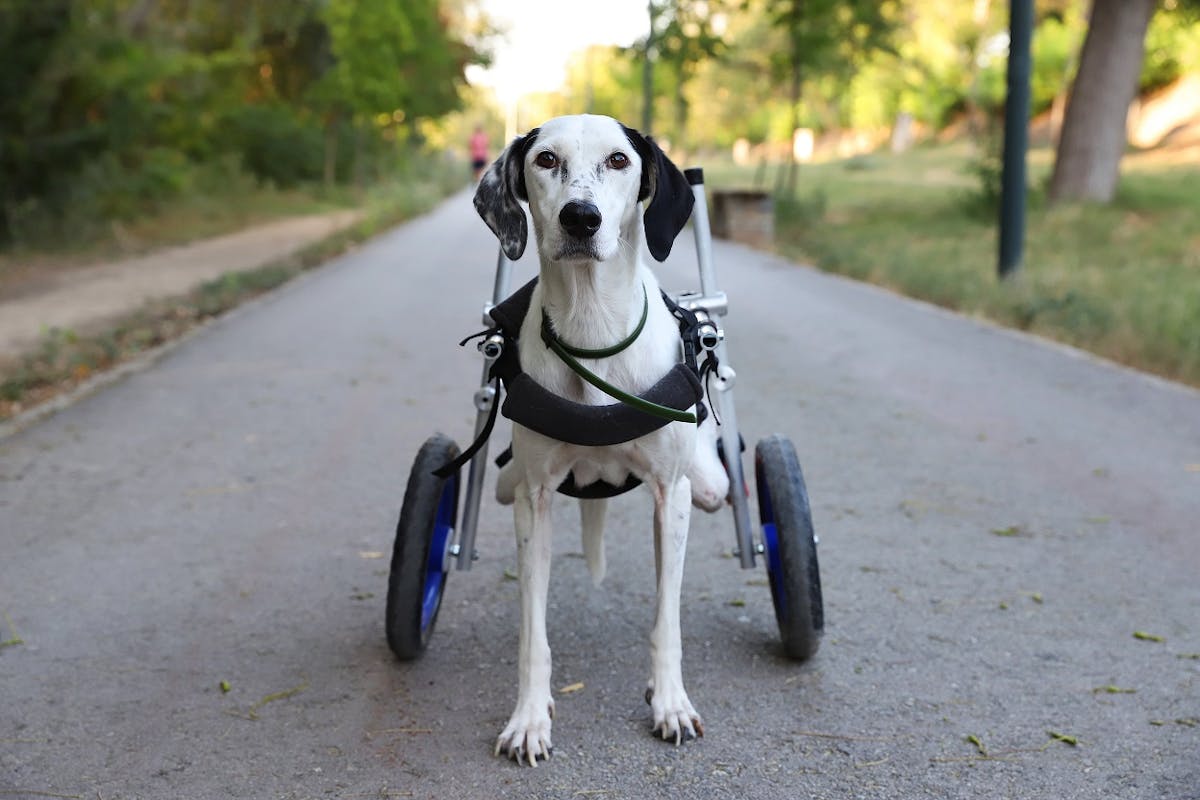
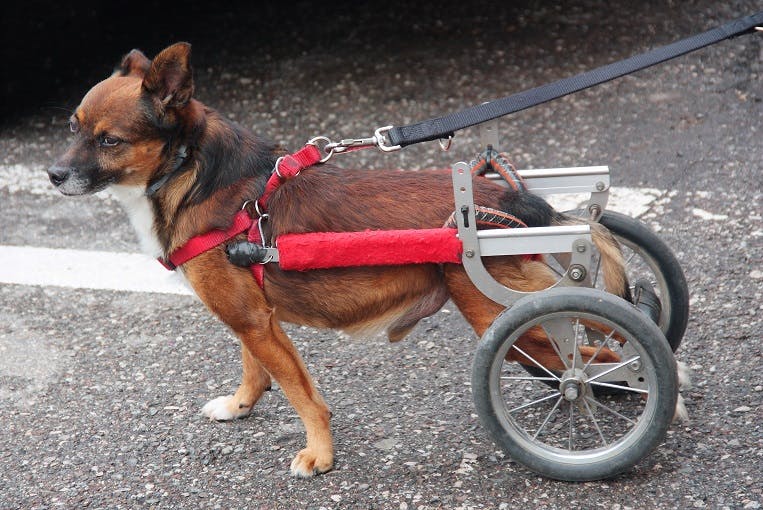
There is no treatment or cure for degenerative myelopathy, so management revolves around supportive care, such as physical therapy and obesity prevention. Environmental management such as anti-skid mats and a wheelchair or cart can help dogs continue to stay mobile. Dogs with DM may also need help with bladder expression and maintenance of clean bedding to prevent urine scalding and urinary tract infections.
Although there is no cure for DM, it is not painful for most dogs. Eventually most dogs require humane euthanasia due to the progression of clinical signs, but it possible to have a good quality of life for a time after diagnosis.
Further Reading:
Breed distribution of SOD1 alleles previously associated with Canine Degenerative Myelopathy
The Institute of Canine Biology: The lesson(s) from SOD1 and degenerative myelopathy

Join our Good Breeder community
Are you a responsible breeder? We'd love to recognize you. Connect directly with informed buyers, get access to free benefits, and more.