Dog allergies with dermatologist Dr. Andrew Rosenberg, DVM
All your questions about dog allergies, answered.

Animal Dermatology & Allergy Specialists/Natalie Ullman, Good Dog
by Rae Paoletta
Is your dog itching themselves a lot? That might not be a simple quirk in their personality.
Many dog owners have no idea their dog might have allergies — or that dog allergies exist at all. But according to the American Veterinary Medical Association, over the last decade, the number of environmental allergy cases in dogs has jumped 30.7%. Flea allergy in dogs has also become more common.
We caught up with Dr. Andrew Rosenberg of the Animal Dermatology & Allergy Specialists in Riverdale, New Jersey to learn more about what kinds of allergies dogs can have — and what responsible dog owners can to do help them.

Good Dog: In a very broad sense, what kinds of things are dogs typically allergic to?
Dr. Andrew Rosenberg: So there are really three main categories of things that dogs can be allergic to. Flea allergy is a big one — that’s an allergy to flea saliva from flea bites. That’s why a lot of veterinarians really stress the importance of doing monthly flea preventatives. Dogs or cats that are allergic to flea bites usually get skin lesions mostly focused on their lower back, but they can be anywhere.
The other two main categories of allergy are either food allergy or environmental allergy. With food allergy, they're allergic to something that they're eating. With environmental allergies, they’re allergic to things in the environment like pollens or dust or molds — basically what we think of as being classic seasonal allergy-type things.
Do dogs' seasonal allergies happen around the same time humans get them, like in the spring, for example?
AR: Yeah. So we do see spikes in allergies in animals around the same time of the year that we see them in people. It's usually the seasonal change from winter into spring and then from summer into fall where we see a large spike in allergy. But ultimately it depends on what the animals are specifically allergic to.
Right.
AR: So if they have a really bad dust mite allergy, for instance, they might have the worst symptoms in the winter when they're inside, since that’s where they have the most exposure to dust mites. It really depends on what they're allergic to, just like with people.
Why don't more people know that dogs may have allergies similar to humans?
AR: I think that people probably don't realize it because when we think of allergies in people, we think of runny noses and runny eyes — things like that. And that's due to allergies causing inflammation in people’s noses and in the eyes, which is where people get their symptoms.
In animals, inflammation doesn't occur in the nose and the eyes — it occurs on the skin. And so when people see dogs licking their paws or scratching their skin because they're itchy, they don't associate that with allergy.
With dogs lick their paws, some people just think that's normal behavior. And then if a dog's scratching their body, they don't really think that that's due to allergies. They think it's due to something else.
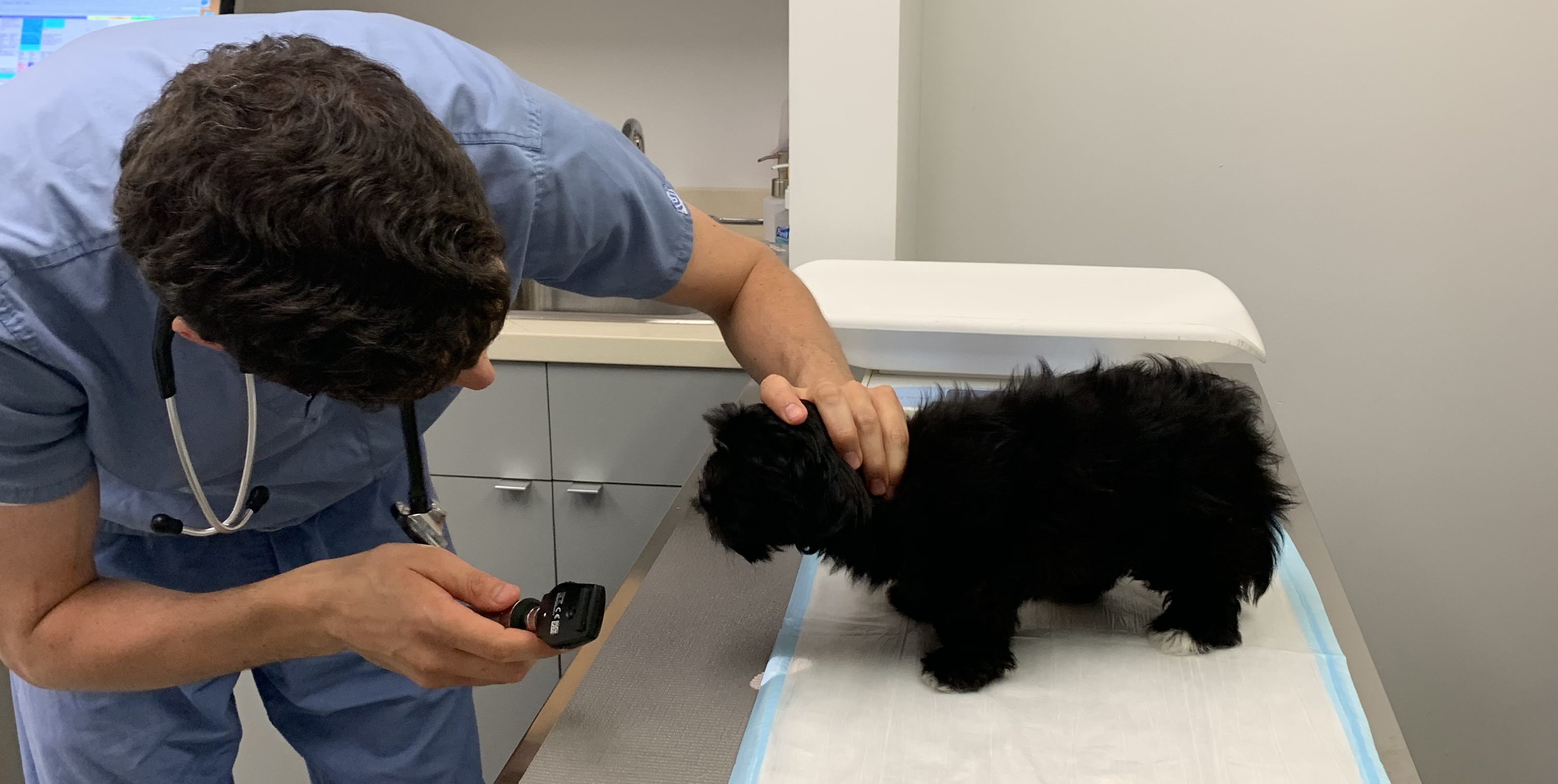
Something a lot of dog owners have told me about is skin irritation and so-called "hotspots." Could these be due to allergies?
AR: Yeah. So “hotspots” isn’t really a medical term — it's kind of a catch-all term. It can mean different things to different people. The medical term for what’s classically thought of as a hotspot is actually pyotraumatic dermatitis.
Basically what that means is the dog has an allergic reaction, gets super itchy, and starts itching one particular area to the point where they traumatize their skin. Then, because they're traumatizing their skin, it gets infected with bacteria. And then it becomes really inflamed, sometimes with pus, which then gets even itchier. So then the dog will scratch or bite the spot even more. So very often, yeah, it is associated with allergy.
My colleagues and I have been talking to a bunch of Doodle owners and breeders, so Goldendoodles, Bernedoodles, etc. Especially with Bernedoodles, my colleague kept hearing that many owners' dogs had food allergies. So I'm wondering what your thoughts are on that.
AR: Yeah. So with allergies, there's definitely a genetic component. It's just like with people — if you have two human parents with allergies, their kids are going to be more predisposed to having allergies than someone who's born from two parents that have no history of allergies in their family. So there's definitely a genetic component.
We do see certain breeds due to that genetic component that are more predisposed to developing allergies. It's a genetic predisposition to develop allergies — you're not born with allergies, but some individuals are born with a higher predisposition to developing them as they get older. And so there are definitely certain breeds that are predisposed to that.
The West Highland White Terrier used to be the poster child for allergies. In the last 10 years or so, that honor has been bestowed upon the French Bulldog and Bulldogs in general. I would say that almost all Frenchies have some predisposition for allergies. It's very rare to see a French Bulldog without some signs of allergy.
Bulldogs in general are a very allergy predisposed breed. Labradors, Golden Retrievers, West Highland White Terriers, German Shepherds — all of those breeds are certainly predisposed to allergies.
There are some studies that indicate there are certain breeds more predisposed to food allergy than other allergies, but we're starting to get away from that mentality in the last 15 years. It used to be thought that dogs either had a food allergy or they had an environmental allergy or they had a flea allergy, and that they were very distinct. And so what we're seeing more and more now is that really, dogs are just predisposed to being on this allergy spectrum, where they can have environmental allergies and then a food component to that allergy. On the other hand, they may have a food allergy with environmental components. It's more of a generalized predisposition to developing an allergy.
So the categories of allergies aren't as siloed as we thought they were?
AR: Absolutely. The categories are not as discrete as we used to think they were.
Why do you think certain breeds are more genetically predisposed to developing allergies, like Frenchies, for example? Is it inbreeding?
AR: Basically, breeders select dogs that have certain characteristics that are desirable. So whether that's a good temperament or a cute face or whatever, it's possible that whatever trait you're selecting for, that maybe those dogs also have a predisposition for allergy and you just didn't know and didn't intentionally select for. But you did.
So you breed those dogs together to get the traits that you select for. And then, lo and behold, a few generations down the line, you get dogs that are more predisposed to allergy. That's just how genetics work. I don't think it's known — or I certainly don't know — what things were selected for that were also linked with allergy. But that's just what happens.
I would also tell you that in general — in both dogs and people — we are seeing higher incidence of allergies as the years go on. There are a lot of hypotheses as to why that happens. But we are seeing increased predisposition to allergy across the board as well as with specific breeds.
Why is that? Is it because everything's in a state of entropy and seems to be getting infinitely more chaotic?
AR: There are a few main thoughts as to why. The main thought is this theory called the “hygiene hypothesis.” The hygiene hypothesis is based on the idea that we're becoming a cleaner society where people don't get intestinal parasites anymore and dogs are on parasite preventatives. People aren't rolling around with cow manure getting parasites from the cows. And since dogs aren't getting all those infections and parasites when they're younger, the part of the immune system that really evolved over all these years to deal with parasites now doesn't have anything to do.
That part of the immune system is what really causes allergic reactions. So because it doesn't have the parasites to deal with, it then deals with things like pollens that are really harmless — or should be harmless — and causes that inflammatory reaction.
And we see this. If you look at rural countries or countries that aren't developed and the people do still get parasites and the dogs aren't on parasite prevention, there is much, much lower rates and sometimes nonexistent rates of allergies. So that's where that theory comes from.
That's super interesting. Are there any other theories?
AR: Yeah. Interestingly enough, other things that have been shown to increase incidents of allergy are things like diesel exhaust fumes from trucks. This is in people and not really in dogs, but I would suspect it to be similar. The diesel exhaust can actually bind the different pollens in the air and it can make those pollens more allergenic and more reactive to allergic people.
If you look at maps of where the highest incidence of severe asthmatics are in people, you actually get a higher incidence of that around highways because of the diesel fumes and things like that.
So it makes a “super pollen”?
AR: Yeah, exactly. It makes the pollen more allergenic, which is kind of crazy.

That's wild. I had no idea of any of that. I have a few questions about allergies that humans can have with dogs. One of the reasons people say they want Goldendoodles because they're thought of as being "hypoallergenic." But I'm curious to know, is there actually such a thing as a hypoallergenic dog?
AR: There's not. You have dogs that are less allergenic than others, I would say, just due to the decrease in the amount of shedding that some dogs do. If you have less shedding, you're gonna have less of an allergen load in the environment. But yeah, if you're allergic to dogs, you're allergic to dogs.
Have any of your patients ever asked you about getting a Doodle because of their allergies?
AR: You know, I don't really get that too much. I usually end up seeing the Doodles after the people already have them and then they're getting signs of allergy. But we actually are seeing a ton of Doodles lately for allergies.
Really? Why do you think so?
AR: A lot of it is because Goldens and Labs are predisposed to allergy. And so the Doodles are probably getting some of those genes, especially in the Golden and Labradoodles. The Berners aren't really predisposed, but I have seen a few Bernedoodles recently. So who knows if allergy genes are getting into those lines as well.
But I've been asked a few times about hypoallergenic breeds, and my answer is always the same: there's no such thing as a really hypoallergenic dog. So if you're allergic, you just probably shouldn't get a dog. My other recommendation for people who are allergic is to go into someone's house that has one of those supposedly hypoallergenic breeds and see how they do. If they do okay then maybe they're not super allergic and they can essentially tolerate it. But yeah, if you have a dog allergy, you have a dog allergy.
I think that's the prevailing wisdom for sure. So what do you typically treat for the different kinds of allergies that dogs might have?
AR: So that's a three-hour answer. So for food allergies specifically, in animals, we don't have any accurate food allergy testing. There's a lot of food tests out there, but in many, many studies, none of those food tests have been shown to be accurate. So the way we first diagnose it, which goes along with treatment, is we have to put dogs on a special hypoallergenic diet for at least eight weeks. And that diet has to be strict, meaning no other foods, treats, rawhides, bones, like nothing else.
Like an elimination diet?
AR: Exactly. Yes. And so it has to be basically a prescription-based diet, because prescription-only diets are the ones that — and studies have shown this — are really the only ones that don't have any other trace proteins or anything else in the food. If you look at other over-the-counter diets, there's stuff in there that's not listed on the ingredients because it's made with the same equipment in the same year as other foods.
So there's a prescription-only diet for eight weeks. After that eight week period is over, we then challenge the diet, meaning we go back to the original food and we see if the dog gets symptomatic again. And if they do, then they go back on the elimination diet, and then we introduce one specific ingredient at a time to see what specifically they're reacting to. So we'll do like, chicken for a week with the food and then beef for a week and then dairy for a week and then eggs for a week. And we have a list of different common food allergens, and we tell the owners to keep a diary and try to figure out what the dog is reacting to.
And then at the end of our trials, we have a list of what the dog can eat and what the dog can't eat. Then you just have to avoid giving them the things that they're allergic to. It's similar to a food allergy in people — you just can't eat what you're allergic to and you'll be fine.
With environmental allergies, we have a lot of different options. Antihistamines don't really work that well in dogs like they do on people. So we use other types of medications. Some medications are designed just to block the itch, which is considered symptomatic. Other medications block itch and inflammation.
Just like with people, we do a fair amount of allergy testing. With people, they do allergy testing with different injections in the arm or the back of a person, so we do that on the side of the dog and then we start allergy shots, which is called immunotherapy, and we can make it into an injection form or an oral drop form. The idea is by giving small amounts of what the dog's allergic to, we can desensitize their immune system over time so they don't have the reactions.
Is it common that dog owners think their dog has something, but they're not sure what it is, and then it turns out to be allergies?
AR: Yes. Definitely. There are a hundred other things sometimes the owner thinks is going on. When we say, "Is your dog itchy?" some owners won't make the connection that, you know, licking paws means they're itchy, scooting on their butt means they're itchy, rolling around in the grass might mean they're itchy. Shaking the head is a sign of itch. So yes, it's definitely some client education with how their dogs are showing signs.
It seems like a lot of people don't know there are specialists like yourself who are super qualified to handle these problems.
AR: Exactly right. When people first come to see me, they're usually like, "I had no idea you guys even existed." And, you know, it's true. Right? I mean, people usually don't know about us until they really need us. And I mean, who's ever heard of a dog dermatologist? So I get it.
But the way I explain it is, you know, as a person, you have your general practitioner that you go to for most things, and then if there's something that you really need to be evaluated — like if you have a heart issue — your general practitioner will send you to a cardiologist. If you have a bad allergy, they'll send you to an allergist. It's the same thing with dogs. And that's the way we're seeing veterinary medicine go, really. General practitioner vets are such a vital role. But then, you know, if you do have these severe skin or allergy issues, they should be sent to a dermatologist to really see what's going on.