Episode 11: How to take great photos of your dogs
Learn how to take great photos of your dog from the expert, Bret Cody!
Good Dog is on a mission to educate the public and make it simple for people to get dogs from good sources and for reputable breeders, shelters and rescues to put their dogs in good homes.
Good Dog is on a mission to educate the public and make it simple for people to get dogs from good sources and for reputable breeders, shelters and rescues to put their dogs in good homes.
Good Dog is on a mission to educate the public and make it simple for people to get dogs from good sources and for reputable breeders, shelters and rescues to put their dogs in good homes.
About Bret Cody: Bret owns That'll Do Photography and specializes in getting action shots of dogs. He got his start photographing Border Collies and Kelpies at herding dog events and continues attending events where he photographs all the action.
Laura and Bret discuss how Bret got his start in the action dog photography world, and how breeders can apply his techniques to produce high-quality photos.
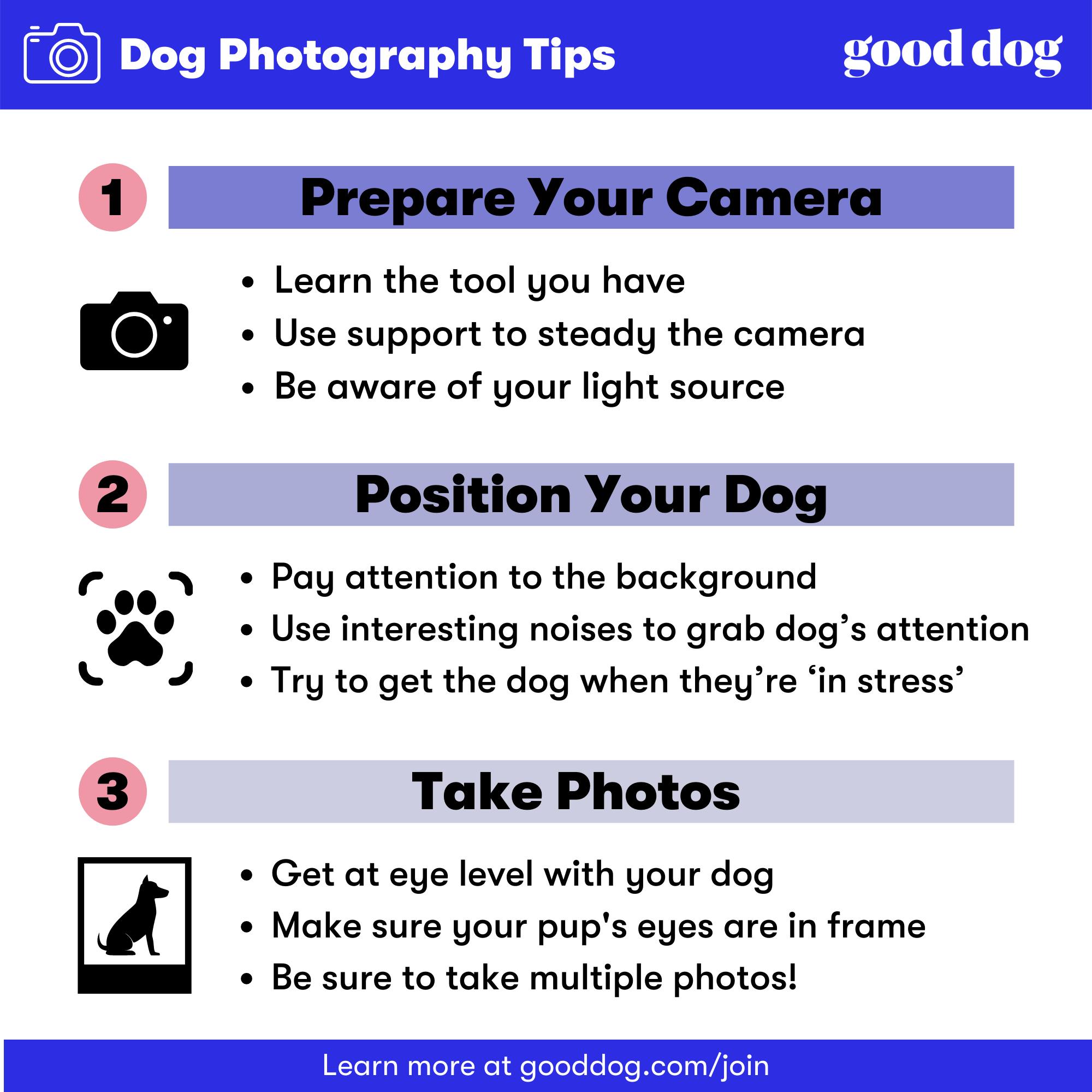
Some of Bret’s tips include:
- Get at eye level
- Pay attention to the background
- Utilize interesting noises to grab the dog’s attention
- Use support to steady the camera
- Be aware of your light source
- Try to get the dog when they’re ‘in stress’
- Make sure the eyes are in frame
- Learn the tool you have
- Take lots of pictures!
Join our Good Breeder community
Are you a responsible breeder? We'd love to recognize you. Connect directly with informed buyers, get access to free benefits, and more.
Transcription:
INTRO
Welcome to the Good Dog Pod! I’m your host, Laura Reeves. Here at the Good Dog Pod, we are all about supporting dog breeders and responsible dog ownership. Join our mission and help change the conversation—because we are all stronger together! Good Dog is on a mission to build a better world for our dogs and the people who love them, through education and advocacy. The Good Dog Pod provides dog lovers with the latest updates in canine health and veterinary care, animal legislation and legal advocacy, canine training and behavior science, and dog breeding practices. Subscribe, and join our mission to help give our dogs the world they deserve.
Laura Reeves [0:53] Welcome to the Good Dog Pod! I am your host, Laura Reeves, and we have a really fun conversation today. Good Dog is creating a partnership with the Leader Dog Organization, and we have Judi Stella (from Good Dog) and we have Bev Blanchard (from Leader Dog). We’re going to talk about this partnership and what it entails, and we’re going to talk about major differences between service dogs, therapy dogs, guide dogs—these are not interchangeable! So I’m super excited for that conversation. Judi, I’m going to have you introduce yourself, introduce the planned partnership between Good Dog and Leader Dog, and then we’re going to talk to Bev more about the organization.
Judi Stella [1:39] Hi, everyone! I am Judi Stella. I am the Head of Health Screening and Research at Good Dog, and we are so excited to kick off our partnership with the Leader Dog Organization. We are just beginning this new adventure. Some of the things that we have planned to work on together are a webinar series for our Good Dog breeders. We’re going to talk about puppy raising programs and the breeding selection process, best practices, as well as neonatal care and C-sections, and how the Leader Dog Organization organizes that and all the research and experience that they have behind that. And we’re also going to write some articles in collaboration with Leader Dog Organization and maybe potentially (hopefully, down the road) do some collaborative research.
Laura Reeves [2:27] Well that’s very exciting! I love it.
Judi Stella [2:30] And with that, I would like to kick it over to Beverly, to tell us more about Leader Dogs.
Beverly Blanchard [2:36] Great! So excited to be here and to be part of both organizations with our partnering with Leader Dogs for the Blind. We are an organization here in Rochester, Michigan, and we are one of a few large guide dog organizations in the United States. I like to tell people that it’s kind of like the differences between what kind of car you get. Do you get a Chevy or a Ford? Do you get a guide dog or a seeing eye dog? They’re different brand names. And people choose. They come to different organizations for different reasons, just like you select your vehicle for different reasons, or the breed of dog you choose.
Laura Reeves [3:15] That’s really interesting, Bev! I did not actually know that. I figure I’m relatively well hooked into dog stuff. I did not know that! That is fascinating.
Beverly Blanchard [3:25] I get you right off the bat!
Laura Reeves [3:28] Touchdown! Okay, so what are some of the distinctions, then, of Leader Dogs for the Blind? Some of us (many of us) have heard of Guide Dogs for the Blind. What are the distinctions?
Beverly Blanchard [3:38] Some of the distinctions that make us different are we all train our dogs slightly differently. We train our dogs to do certain tasks. We also breed our dogs differently. Some of our organizations create dogs that have more energy and drive and some have less energy and drive. Some of the organizations in the United States only breed certain breeds. Leader Dogs for the Blind, we breed Labrador Retrievers, Golden Retrievers, German Shepherds. And then we also cross any of those three breeds together. From a purebred standpoint (I’m a purist at heart), it’s really difficult to make that decision. However, our goal is to breed the very best product we can for a visually-impaired person. If that means that we can cross two different breeds to create the very best for them, then that’s what we do. So, in this country for instance, German Shepherds are very difficult to come by that are sound, stable—both in health and temperament. By crossing a Labrador with them, we’re able to still give a Shepherd look with some Shepherd traits to a guide dog user who really might love a German Shepherd, and we can have healthy, well-trained dogs. We look at all of those different pieces of when we want to cross our dogs, why we cross them. But at the end of the road, all of our dogs are spayed and neutered—unless they’re in our breeding program. It’s a little different that we can make those choices, because we know at the end of the day where every single one of our dogs goes and are not perpetuating things down the road.
Laura Reeves [5:25] The Guide Dogs for the Blind, Leader Dogs for the Blind—same thing—you’re talking about a closed colony. How many breeding dogs do you have in-house or in your program? Because you are able to keep meticulous records and all of the maintenance stuff that goes with that.
Beverly Blanchard [5:45] Absolutely. In our program, we have about a hundred dogs in our breeding colony. About 75 of those are girls and about 25 of them are our boys. We do also have four cryogenics tanks on our property, where we have collected and frozen our stud dogs for the last 25 years. We’re able to constantly use current dogs but infuse past dogs into our program. It allows us to keep a relatively closed colony, and we do also then still take in some selected outside sources, from outside breeders, that keep our colony fresh as well—reversing different trends. Just recently we saw that some of our dogs were getting smaller than we like to see. So we started looking at how we can boost the size of our dogs. Going to the outside population helped us to do that. All of our breeding dogs (again, kind of the differences between some of the organizations) live with host families. All volunteer. We do not house any of our dogs long-term on our campus. All of these dogs are whelped in someone’s home. This is something that we’re excited to bring to Good Dog because we’re training 75 families every year to whelp dogs in their home. Most of these people have never had a litter of puppies on their own.
Laura Reeves [7:19] Bev, this is so smart! Because, whether people want to admit it or not, what we see in the United States is a lack of dog breeders. We do not have enough dog breeders who have knowledge, who have skill, who are willing to put in the time and effort. Animal husbandry is sort of old-fashioned. Even if you’re talking about purpose-bred, cross-bred dogs, you are still talking about basic animal husbandry.
Beverly Blanchard [7:46] Absolutely. For us, Leader Dog, our breeding manager—our breeding specialist—they make the selection on who we’re breeding. When our girls [7:57], we are making all of those selections, based on all of the criteria in the records that we have on their health, on their temperament—and not just about them, but also their siblings. We’re in a really unique situation, that we track every single dog. We have health and temperament on every single dog that we create. And so when we’re making breeding selections, it isn’t just about that dog. It’s about every place that it’s come from. And I think that’s something that some of the breeders on the outside lose. We look at the dog in front of us. We want to improve that dog in the next generation, but we have to look at all sides of where that dog comes from, which I think is exciting about where you are with some of your breeding, because you know where they’re coming from and what you’re creating because you’ve been there.
Laura Reeves [8:49] Right. You know, we talk in Pure Dog Talk (my other podcast)—I just had Jimmy Moses on, talking about German Shepherd dogs actually. He said that German Shepherd dog breeding programs made huge strides when they started utilizing OFA’s vertical pedigree and they were looking at all the sibling data. But now, with Leader Dog and some of these really contained and managed programs, you’re able to not just test the individual dogs that are bred but every single dog in the pedigree. That is unbelievably valuable and allows you to make health decisions and breeding decisions based on full data that you can’t get (even in my breeding program, where I’ve raised every single one of the litters that are behind this for seven generations).
Beverly Blanchard [9:38] Right. Once you sell that puppy or it goes to its home, we’re kind of at their mercy to give that information back. I think all of us in the guide dog and service dog industry have that opportunity because we are tracking all of those pieces. Just like a regular breeder, our goal is to breed the next generation even better than our current generation.
Laura Reeves [10:02] That’s always the goal.
Beverly Blanchard [10:04] We also have to factor into that: what’s happening in society that is changing what our dogs have to do? Things that people don’t think about: the introduction of the electric car or the Prius that doesn’t make any noise. We have to be more mindful in our training because our dogs now not only have to rely on the sound of vehicles, but a vehicle could move and they don’t have sound. Also, in this country, because the way we train dogs has shifted drastically in the last several years… Dogs used to be pretty hard-headed. They could tolerate a lot. Training was harder. Training isn’t that way anymore. Training is a little bit softer and more gentle and kind—and people expect that out of their dog. About 12 years ago, we made this real shift in our dogs temperament to start to be able to handle that style of training. Our old style of dogs couldn’t handle that style of training.
Laura Reeves [11:07] Right. Bev, you make such an incredibly valuable point right there. Number one: There is no one magic bullet training method. Not every dog! There just isn’t. Whether it’s the same breed, whether it’s litter mates, whatever it is. That is so important to understand. But I think it’s really valuable to people to hear that one particular training method in one particular breed with one particular type of dog isn’t going to get the same results. I think that that is so important for people to hear.
Beverly Blanchard [11:45] I want to talk just a little bit about the differences between service, guide, and therapy dogs.
Laura Reeves [11:51] Yes please!
Beverly Blanchard [11:53] And what that entails. People are always surprised when we talk about our success rate. Keep in mind we breed about 500 dogs every year. Our average litter size is about five and a half to six dogs. You do the math, you figure out how many litters you have—that’s a lot of litters of puppies. We breed the amount of litters we have. We start it backwards and we say, “How many clients are we going to graduate?” And then we went backwards. How often do we career-change them (meaning they have a change of career; this isn’t their job)? How many of those happen normally in training? And then how many get lost in our medical exams? We X-ray hips and elbows. We look at hearts. We check teeth, skin—all different facets of the dog—and their eyes, all different parts of them. On average, we know how many dogs we’re going to lose on medical. That means we return for training, every single month, about 45 dogs. For training. Of that, we’re going to graduate approximately 45% of those dogs. Now those are dogs that are purposefully bred for this work. Every single one of them we put into the job with a volunteer puppy raiser that reads our manual, that we support through the process, that we see on a monthly basis. We give them all of these tools, and they’re raising their dogs for this specific purpose. Of that, only about 45% of them are going to graduate. It’s kind of like saying that you have four siblings, and your parents want you all to be doctors. The reality is: it’s not going to happen. The same is true with our dogs. The reality is they can’t all be guides. Just like every litter can’t all be show dogs or all be field dogs. As we’re raising them, we look at all of the different health and temperament traits of the dog. They can certainly be one way with their puppy raiser, but then they come in for formal training and here’s where guide dog work is a little bit different than some of the other jobs. In guide dog work, we give them all the tools they need to do their job. However, they are working with a client who cannot see. So our dogs have to perform what’s called disobedient obedience. Sometimes they are given a cue, and they are asked to perform a task that they know from their training they cannot do. For some dogs, that pressure is way too much for them. Tell them all day long what to do, and they’re perfectly happy.
Laura Reeves [14:30] That is such a delicate balance, because you have to have a dog strong-minded enough to make those decisions and yet that would harken back to what you were talking about earlier: the stronger minded dogs. But that dog isn’t going to take as well to the kinder and gentler America we live in. Finding that tipping point of that dog that’s strong enough to make those decisions independently and soft enough to take the training in the manner that it’s currently delivered—that seems like a really tall order.
Beverly Blanchard [15:10] It is a very tall order! And I think really only dog people get that.
Laura Reeves [15:15] I totally get that! I’m freaking out! There’s no way!
Beverly Blanchard [15:19] And sometimes you tip too far.
Laura Reeves [15:21] Right, you’re gonna.
Beverly Blanchard [15:22] You get dogs that have more of a fear response, and they’re not confident enough. When I go back to why we cross some of our breeds, we’re using Golden Retrievers who are a softer, gentler breed than a Labrador typically. By combining them, sometimes we can soften the Labrador and bring up the Golden. We find that some of those balances are much better that way, than in a purebred dog. We balance all of that in our breeding, but I’m not going to lie: some of the breedings don’t happen the way that you want them to.
Laura Reeves [15:57] I say this more than once: Mother Nature is a wicked, wicked mistress, man. We’re still talking about Mother Nature, even in a very organized breeding program, like your own.
Beverly Blanchard [16:07] Absolutely. You can make all of the best decisions possible, and Mother Nature still has the final say.
Laura Reeves [16:15] Here’s the big paw.
Beverly Blanchard [16:17] Right. I think if, as a breeder, you are not willing to be honest about those issues in your breeding colony, you’re never going to move them forward. We have things like a breeding committee, where we have two full-time veterinarians that are here. That’s their job. They are veterinarians only for our Leader Dogs. Our veterinarians are there. Our training manager’s on there. Our breeding specialist is there. And we talk about these things: if we have girls who aren’t producing what we need or our boys in our colony aren’t, where we need to make shifts and what trend we’re seeing in our training. Very similar to a show dog breeder that’s looking more for looks and some temperament, but you have to just look at what your purpose is. But for us, in the guide dog industry, if we are breeding a dog, we are breeding them, we are raising them solely to be a guide—and we still only have 45%. There’s really no way that you can look at a baby puppy and say, “This is going to be a great service dog or a great guide dog.” Because I’m here to tell you: I’ve been doing this job as a paid employee for 26 years. I also started volunteering when I was 11, to raise puppies for this organization—
Laura Reeves [17:27] How did I not know this about you?! I’ve known you for 26 years!
Beverly Blanchard [17:34] I’ve been around a long time in this industry. I still can’t tell, when I look at a baby puppy, that that dog has what it takes.
Laura Reeves [17:43] You mentioned a thing earlier about a career change. We also started with a conversation about service versus guide dog versus therapy dog. Can you run us through some of those basic distinctions between those performances that those dogs do? I assume when you say “career change,” they’ve had a career change from guide dog to therapy dog or something along those lines? Can you break that down just a little bit?
Beverly Blanchard [18:14] Right. So when our dogs get career changed, it is exactly what it says. They are changing from this career. We’ve invested so much into them. Our goal is: If we can find another service for them, then we do. So we have other partnerships that have a very similar training philosophy and model as ours. When we have dogs that are career changed, we reach out to them if we feel this dog might be suitable for them. If so, then that dog goes there. If not, the puppy raiser has the first opportunity to adopt that dog. If not, we have a whole long laundry list: people who had its mom can adopt the dog, and we have volunteers on campus. So we have a whole laundry list of people. Finding homes for our dogs is never the problem. To get a year-and-a-half-old well-bred, healthy dog… It’s a great family pet. It may just not have had the internal stock to do the job.
Laura Reeves [19:13] What we were talking about! Doesn’t balance on that pinnacle. So a guide dog needs that independent decision-making. What is a service dog and a therapy dog by comparison?
Beverly Blanchard [19:25] A guide dog is a dog that has been certified by an organization that says it meets standards and it, by law, has access rights. A service dog should go through that same process. A graduated service dog should come from an organization that is certified to say: this dog meets that criteria, and it has been trained by an instructor who has that certification. The difference between our service and guide is service dogs are much more task-based. “I need you to go do this, I need you to open the door. Fetch this for me. Pull my chair.” They’re much more task-based, whereas the person that uses a guide says, “I’m going to go to work. Now take me there safely.” A guide’s job is to make sure that they’re not bumping their heads on low-hanging branches, not tripping on a sidewalk that’s not flat, stopping at curbs and waiting for cars to pass by. They really do their job. And if they do their job well, their person doesn’t even realize there was anything in their path. And then when we get to a therapy dog… Therapy dogs are dogs that aren’t really certified by any governing body, other than someone who says, “If you want to have your dog go to a hospital or do therapy work, they have these basic skills.” But they haven’t been trained by a certified instructor that has standards and a certified body that says these dogs also should be [21:03] in public places. What ends up happening with those types of dogs—they may be a very great dog in small situations, but when you put them under the pressure of being in an airport, laying on a bus—all these things that guide and service dogs have to go through—it can be very overwhelming and challenging for that therapy-type dog. What ends up happening is (I think all of us have seen them in the airport or in public places where we know this is not a dog that has come from any kind of certified agency, because of the dog’s mannerism, because of the lack of skill of the person that might be holding their leash) that ruins it for those people who desperately need these dogs. If you have ever known a person who doesn’t have their eyesight or doesn’t have their legs or hands or that truly, desperately need these dogs, you don’t realize the jeopardy that you put them in. We’ve lost some guide dogs because of the way that other dogs might interact with them in public places or have traumatized them to the point where they no longer feel confident to do their job. That’s a really bad place to be in. It’s really up to people to think beyond themselves and how fun it is to take our dogs into places. There’s enough places that will let us take our pet dogs in. We can take them into Home Depot and places like that, for socialization. We don’t need to take them and chance, for other people, that we may be doing harm for them.
Laura Reeves [22:39] I really appreciate that message, Bev. As I was mentioning earlier, this is a real make-my-head-spin-off-my-body topic, and I can only strongly encourage every single person out there that’s listening to this podcast: if your dog is not an actual service or guide dog for you, do not abuse the system and destroy the opportunity for someone who desperately needs it.
Beverly Blanchard [23:07] For us, we’re really excited to be able to share all we do with Good Dog and how we get there, and hopefully for those people who might be new into breeding—or even those people who have been around a long time. We all have things to learn. I always say I want to learn at least one new fact every single day.
Laura Reeves [23:26] I get to, because I have a podcast!
Beverly Blanchard [23:32] We have the opportunity to work with so many volunteers. If you’re doing the math, we have 100 breeding families. Every two years, we retire those dogs. They have four litters of puppies. Approximately every two years, we’re retiring those dogs, and we’re starting over with new families. We’re constantly in this training mode. Every year, we have 500 families or minimum-security inmates in prisons that raise puppies for us. We have puppy raisers that we’re constantly training. Here’s your puppy; it’s a clean slate. Here’s your job. Here’s your task, to get them to in a year. We’re constantly training 500 volunteers. And then when we don’t have COVID, we also have almost approximately 400 volunteers that come to our facility every week to help take care of our dogs when they’re on campus, going through about five months’ worth of training. It’s a lot of volunteers that help make us run. They do such an amazing job for us, so that we all have that same mission, which is to enhance the lives of people who are blind and visually-impaired. Everything we do—from our breeding to our puppy raising—is all to get there for our clients.
Laura Reeves [24:48] I think that is a really awesome story. I want to make sure I’m hearing you right, so I’m going to use myself as an example, even though I’m not going to do it. Even though I raise a different breed, I would be someone that would be allowed to be a foster family and raise a litter for Leader Dogs?
Beverly Blanchard [25:08] Sure. So, I have German Wirehaired Pointers and I show them, and I also have had three breeding stud dogs for Leader Dog. I’ve raised 13 puppies for Leader Dog. I started in 4-H, and I actually started raising puppies because it was a way to convince my family to let me have more dogs. And I came from a dog family, so—
Laura Reeves [25:28] I know you did!
Beverly Blanchard [25:30] But here’s a way that I had 13 dogs in my life that I wouldn’t have normally, because I took them for a year to raise them for someone else. The most commonly asked question we always get is: How can you possibly ever give them up? When I get this dog, I know it’s not mine. I know I’m keeping it—I’m fostering it—for someone else. I am raising it for someone else. The best compliment I can get is when that dog is successful and goes with someone else and changes their life. It’s not for me to keep the dog. But I’ve learned from each one of them, and they have given me so much back. Each dog gives us things that we learn from. Easy dogs—while they’re great to live with—don’t teach us as much as the hard ones.
Laura Reeves [26:17] Absolutely true!
Beverly Blanchard [26:20] I always say if my second Leader Dog puppy had been my first Leader Dog puppy, I’m not sure I would still be working here. Because I’m not sure I would have made it that far. We persevered, and she graduated. That success really resonated with my family about how hard we had to work and how much she ultimately then taught us. It’s really exciting. We have a lot of people who come to us who are dog people, but we also have a lot of people who have never ever had a dog in their life. And they come to us because they know that we’re going to give them tools, and we’re going to help them raise a good quality dog that, if it’s in the way that this dog’s life is going to go, it goes with someone else. But if not, they’re going to get this wonderful pet dog back. If we can train people to raise better dogs, then we’re all for it.
Laura Reeves [27:11] That is a win-win, right there!
Beverly Blanchard [27:14] Absolutely. We will take all the time we can to do that. The same is true for our breeding hosts. You know how hard it is to have a litter of puppies. We have our breeding specialists that are on-call for these volunteers and our veterinarians. They walk through whelping these puppies in their living room, with nothing more than a manual and the information that we’ve taught them and the support that we give them. Then we also have all of the raising that goes along with those puppies for the first few weeks.
Laura Reeves [27:41] All the socialization and all that early neurological stimulation and all the stuff that’s super critical! Well, Bev, thank you so much. Judi, it was great to see you. I’m super excited for this partnership. I think you guys are going to do a lot of good work, so thank you very, very much.
Join our Good Breeder community
Are you a responsible breeder? We'd love to recognize you. Connect directly with informed buyers, get access to free benefits, and more.