Episode 61: “Your Litter A to Z” with Dr. Gayle Watkins
Tune in to learn how you can get free access to Avidog’s “Your Litter A to Z” course!
By
Good Dog is on a mission to educate the public, support dog breeders, and promote canine health so we can give our dogs the world they deserve.
Good Dog is on a mission to educate the public, support dog breeders, and promote canine health so we can give our dogs the world they deserve.
Good Dog is on a mission to educate the public, support dog breeders, and promote canine health so we can give our dogs the world they deserve.
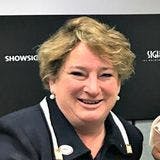
In this episode of the Good Dog Pod, Good Dog has an exciting announcement! Good Dog Breeders now get free access to Avidog’s “Your Litter A to Z” course. Host Laura Reeves is joined by Good Dog’s Head of Education and Avidog founder Dr. Gayle Watkins to discuss everything this course has to offer, for both new and experienced breeders.
What is “Your Litter A to Z”? This is Avidog’s flagship course on dog breeding, developed by Gayle over the last 25 years. With an original value of $497, Good Breeders can now access it completely free! It includes 18 modules on everything from laying the stage for a breeding, to whelping, and finally to sending the puppies to their new homes. Each module comes with instructional videos, checklists, and written chapters.
How should I best utilize this course? Go through the course from the beginning or jump to the module you need. This course is intended for both new and seasoned breeders, and Gayle herself uses the checklists for every litter. The checklists and breeding diary worksheets are easy to use, with clear instructions and tips. The course is updated regularly with the newest dog breeding science and recommendations, to help you produce the healthiest puppies possible.
Good Dog hopes all Good Breeders will take advantage of this amazing course and read more about it here. If you are not yet a Good Dog Breeder, sign up at gooddog.com/join to get free access to “Your Litter A to Z” and more!
Transcript
Laura Reeves [0:40] Welcome to the Good Dog Pod! I am your host, Laura Reeves, and one of my very favorite humans on the planet, Dr. Gayle Watkins (one of our Breeder Experts here at Good Dog) is joining me today. We have huge news! Like, huge.
Dr. Gayle Watkins [0:58] Woohoo!
LR [1:01] We’re very excited that Gayle’s “Your Litter A to Z” is being released and has, we believe, just dropped to our Good Dog breeders. Gayle, I am so excited, and I really want to share with people what they’re going to find in this coursework that you have available.
GW [1:22] I am super excited as well, Laura. I’ve been so looking forward to this day when we can give this to Good Dog breeders. “Your Litter A to Z” is Avidog’s foundation or flagship course that has developed and arisen over the last 25 years. It’s kind of a unique course. It has 18 modules, and it takes you from laying the stage for a breeding through getting your dog and your bitch nutrition, their fitness, their stress levels—all of those things—all the way, step-by-step, through the first trimester, second trimester, third trimester, through labor and whelping with videos and checklists and things like that. All the way to sending your puppies home! And you can enter it from the beginning and take the course from beginning to end or you can pop in. Say you just heard about this and your puppies are 48 hours old. Module 8 is the first 48 hours, and you can dive right in, and you can start taking the information (or using the information) because we have checklists because, you know, we’re all really tired when this happens.
LR [2:45] When I’ve been up for 72 hours straight, bottle-feeding a litter of puppies that I had by C-section and mom won’t make any milk, does it just really tell me what I’m supposed to do because I promise you, I don’t remember my name.
GW [2:59] It has a little to-print button, and you click on that, and you print the checklist off.
LR [3:08] I can find my printer. I can do it.
GW [3:10] Literally the goal was to make it so that we could do this when we were stressed, when we were tired, when we had driven across the country to do a breeding and we can’t get the breeding. What are the steps we need to take for each portion of our breedings? I’m a great believer in things like checklists and videos and transcripts. Oh my gosh, is this a pyometra? I can click on this link and go to the report on pyometra that has the symptoms, has what we should be doing, and what (likely) our vet is going to do. This entire course is talking about our partnership with our repro team and how important they are to our success. It’s about as thorough as we can possibly make it. The really interesting thing—this course has been available for almost a decade now, which is hard for me to imagine—and we’ve had breeders who have never bred a litter before take it.
LR [4:14] This is through Avidog. Just to be clear.
GW [4:16] This is through Avidog. Correct.
LR [4:19] People can buy it through Avidog for something like $500, right?
GW [4:24] It’s $500. Correct. $497 actually.
LR [4:28] I’m saying it’s a steal at twice the price, but—and, again, I hate to sound like “There’s another thing! But wait! There’s more!”—
GW [4:40] You get Ginsu steak knives, too!
LR [4:42] Right, exactly. There’s no steak knives. But this actually is a huge deal here. Good Dog has made it so that Good Dog breeders who are signed up with Good Dog can take this course for free. That is huge!
GW [4:58] Exactly. It’s pretty easy. There is going to be a link emailed to you or there’s going to be a link in the Good Breeder Center under Exclusive for Good Breeders. You’ll be able to click on that link, put in your name and your email address, and you’re in the course. You can start anywhere you want in the course. In addition—but wait there’s more—with this course also comes twice monthly live coaching calls, group calls. We just had one last night.
LR [5:32] Oh my gosh. I didn’t even know that!
GW [5:35] Yeah! Any Good Dog breeder can join in on the calls. We actually have great discussions, so you can ask questions if you want. Last night, we were just talking about the —you’re probably familiar with it—American College of Veterinary Ophthalmologists blue book and this amazing resource that the ACVO and the OFA put out where we can see what’s happening in our breed with regard to eye issues. We talk about that. We talk about nomographs. We talk about all kinds of crazy things on the calls. Or we talk about some real basic things. The calls are wonderful. And then obviously, hopefully, as everyone knows, we have the Good Dog private Facebook group where you, Susan, and I, and other experienced breeders are there to help answer questions, resolve issues. And then—
LR [6:35] But wait, there’s more?!
GW [6:34] We have Susan’s amazing “Straight From the Whelping Box.”
LR [6:39] And if you get yourself a show puppy, you can come read the “Straight From the Center of the Ring” column and watch our Facebook Live. So there you go! We’ve got the whole package here.
GW [6:48] I was just going to say. And then you have all of Laura’s podcasts and Facebook Lives, which she coached me through so nicely last time we were on together. Huge package, but what the coursework gives you is the ability to read things at three in the morning, when you’re not awake. That, I think, provides people with an awful lot of reassurance. As I said, the foundation of the course are the checklists but there’s also the book itself. It’s a book that’s split into chapters, and the book itself is probably 300 pages, so I highly recommend people don’t print it. The reason we haven’t published that book—we’ve made it into a course—is because we update it at least monthly with new science, with new experience, with new suggestions. Rather than a published book—which I love! I’m a big fan of publishing books. But then they become static. You don’t tend to release them every month or every year. So this gives us the ability to constantly be updating. We’re pretty lucky right now. There was a period of time when there was no research on dog reproduction and fertility and puppy raising. And now, in the last three years, there’s been this exponential growth in research on dogs. We want to make sure we’re incorporating all that new stuff as we’re breeding our dogs. What I learned four years ago and what you learned four years ago—
LR [8:27] You mean it’s outdated?!
GW [8:29] It’s maybe outdated. Yours isn’t. But mine is.
LR [8:33] Mine is, too. Because we learned it at the same time.
GW [8:38] You think of what we learned and now it’s amazing we actually got dogs pregnant.
LR [8:43] Let’s just use one perfect example, simply because it’s the one that still just stings and resonates in my mind. That is: we did a lot of C-sections. I come from Clumber Spaniels, originally. We did everything, almost, as a C-section. We swung a lot of puppies. I mean, we swung a lot of puppies in my day.
GW [9:08] I remember my mentor teaching me how to properly swing puppies.
LR [9:13] Me too! I was taught by my veterinarian because I was in there and now we know that that’s not the right way to do it. All of the things that we have learned in the intervening 40 years is what I think is most important about what you guys are doing with this particular course. I learn something new every day. You learn something new every day. And we’re able to share it with everybody who is a Good Breeder!
GW [9:45] You get more successful breedings, more healthy puppies, better placements—which, we all know, makes all of our lives better and easier. Good for us. Good for the puppies. Good for the buyers.
LR [10:00] And the bomb-proofing your puppy and all of the socialization and raising things that not only make better placements because you have a better understanding of your families based on what you’re learning, but the puppy is more liable to stay in that home for the duration because it has a good foundation that you’ve laid, based on the knowledge in these courses.
GW [10:22] Absolutely. And the whole goal of the course is to produce healthier, more stable puppies—as healthy as we can make them, as stable as we can make each individual puppy. Things that we can do at two days can reduce hip dysplasia, can improve the puppies’ temperament as an adult, can improve its ability to handle stress. Because all of our dogs are stressed. There’s no dog that can undergo no stress in their life, so how do we prepare dogs for what’s kind of a pretty crazy world right now? That’s the kind of thing we talk about in the course.
LR [11:01] Like I said, I’ve long been a huge fan of yours and of Avidog’s and talked to you on the Pure Dog Talk podcast many years ago (actually, Mary did) and learned more from those four episodes that you did for Pure Dog Talk than I had maybe ever learned in my life in one sitting. I’m serious! I literally changed half a dozen things about how I whelp and raise puppies based on those four podcast interviews. Serious.
GW [11:34] I remember those. We talked about bomb-proofing, we talked about traction, we talked about early scent introduction. And we talked about vaccinations!
LR [11:43] Yes, nomographs. Absolutely. Here’s what we’re going to do. We’re going to provide some sample information in this podcast for people so that they’ll have some of that to draw on.
[12:00] Let’s begin now.
GW [12:02] The neonatal period—we call this period where they go from potatoes to puppies because neonatal puppies are just so helpless. They’re such an unusual phase of dogs. If you’ve raised puppies, you don’t think anything about it, but they don’t really look like dogs or act like dogs. They appear to be completely helpless. They can’t see, hear, can’t control their body temperature. They can only move in circles. They have very limited ability to communicate. They can’t even pee and poop on their own. They’re a really apparently helpless creature. But in reality, there’s an awful lot going on in their brains. This is a massive stage of brain development in puppies. They are creating synapses, connections between brain cells. They are also cutting them out. They’re reducing the number of synapses that they have that aren’t of value to them. Even this early in a puppy’s life, its brain is making a decision about what nerve connections it needs and which ones it doesn’t. If we think about the kinds of activities those puppies should be involved in, the kind of environment that they need, a lot of it is related to setting their brain up for lifetime success as well as their immune system and their body. What are the things that I think about that really leap out during this period?
Number one: mothers. Their mother is so key to their development. It’s really incalculable. Mother dogs, in addition to providing heat/warmth/milk, also do mothering. Mothering is a term that captures the kinds of things that moms do to puppies. They lick them, they clean them, they poke them, they scrub them down, they touch them. They touch them all over. A lot of the touching is on the genitals, as they clean the puppies. But they’re rolling them around. Some moms might even put their paw on them to scrub them and make sure that they’re spotless. All of those actions are developing the puppy far beyond just hygiene, just cleanliness. It stabilizes the puppy’s stress management response over a lifetime. That mothering sets our dogs up to be able to handle stress in the future. What are stress management systems in dogs? How do we see it? We know we talk about bomb-proof dogs. Dogs that just don’t respond to stressful events. They could be startled by something, but then they just shake it off, and they go on, and they don’t get upset. They don’t get aggressive. They don’t react to it. They don’t bark at it. That’s a very good stress management system. It’s a stress management system that realizes their stress. It goes up, and then it immediately comes back down again. There are other dogs with less effective stress management systems. Those are dogs that go up, that spin up, and don’t come back down again. Their body has trouble reengaging or stabilizing their response to the world. Depending upon the breed or even the individual dog, that could be reactivity. It could be reactive barking. It could be aggression, depending upon the breed, or it could be fearfulness: bolting, running, quivering, shaking, urinating, things like that. Those are the extremes. There are the dogs that maybe aren’t that bad but simply once they get stressed, they have trouble getting themselves back under control again.
What differentiates a dog’s ability to respond to stress as an adult? Some of it is going to be its genetics, what it got from its parents. But a lot of it is the mothering that it received in the first two weeks of life. Allowing moms access to their puppies, ensuring that we select moms that do engage with their puppies in those first two weeks, and then stepping back and letting it happen. We monitor it, but you’ve raised puppies. You know: it’s not real gentle sometimes. They can be really scrubbing puppies down and the puppy’s crying and mom couldn’t care less. She’s going to do what she needs to do to make sure that that puppy is okay.
LR [16:07] Tell us: What is your favorite chapter in “Your Litter A to Z” and what’s in it?
GW [16:15] Oh my gosh. Well, I love them all, but I think the pivotal one is the Module 2: “She’s In Season.” Because if you don’t successfully do that one, you may as well just stop.
LR [16:32] The other 16 don’t matter.
GW [16:36] That’s right, because if she’s not pregnant, then you simply are not going to be able to do anything else.
LR [16:41] Talk to us about Module 2. What’s in that?
GW [16:44] In Module 2, we have (as I said) a bunch of forms to print—two checklists this time. You have “She’s In Season,” so that’s going to be: What do you do about vaccinations? What do you do about other health issues? What do you do about nutrition? We’ve got nutrition per module. Heartworming. All of these things. And then we have a “Timing Your Breeding” checklist. The “Timing Your Breeding” checklist is very specific to how you are going to breed. When I say specific, Laura, it is when do you go to the vet, what tube do you use to draw blood for progesterone, and if you can do vaginal cytology, how do you read your vaginal cytology? How do you use that to save money on progesterone tests? Because you can start your progesterone tests later, with confidence, without missing your bitch. When I say we are specific, I’m reading: “Have the vet or tech draw blood in a plain red-top tube, spin it down into serum, keep 5-6 drops in a small tube that you have dated. You have written a date on the outside. And then submit the remaining serum for progesterone testing.” That’s how specific these are. Because the devil is in the details in dog breeding. You can have these grand and glorious plans, and you can have these general ideas, but when you’re sitting there, looking at that progesterone test and saying, “What does 2.7 nanograms mean? What do I do next?” it’s really important when you do that next thing and what you do.
LR [18:35] And what the next thing is!
GW [18:38] And what the next thing is! It is not breed her. It is not breed her.
LR [18:42] Not at 2.7, it is definitely not breed her.
GW [18:45] So, back to my module. We have the forms to print, we have forms to download. We have a really cool breeding diary workshop where you can keep a breeding diary. This tracks your breeding, and it comes in a couple of different file formats. I know Google Spreadsheets are your favorite not.
LR [19:13] Can I have a regular old MS Word Doc? That’s all I’m asking!
GW [19:16] You can print it as an MS Word Doc, but the really cool thing about it is that when you put in the numbers, either nanograms per milliliter or nanomoles per liter, it begins to tell you what you should do next.
LR [19:32] Oh my gosh.
GW [19:34] And we have interpretations. Another worksheet is an interpretation that says: “You get 2.7, do this within X number of days.” It walks you through. So you’re using fresh chilled, you’re shipping it in—when do you ship? Those are all those decisions. Because you know if you miss by a day, that can be the end of the entire thing. If she’s at 2.7, that means her LHP was most likely yesterday, and you should expect to see 100% cornified. She’s now estrus. Your next step, if you have fresh semen, is to retest in a day. If you’re using frozen, you are not going to breed. If you’re shipping frozen, you’re going to ship it today. That’s one of 200 tools through this entire course. And such a small piece, but kind of a key piece. You have your breeding diary. You have your chapter that you’re going to read that’s going to tell you about the estrus cycle and things like that. You know, I’m just a bit of a geek. I’m saying that to myself. But what the course does is it takes these geeky terms, translates them, and then at the very bottom of the page is all the research you might want to read, if you are a geek like me. The checklists are sort of step-by-step, but if you want to dig into the science, just keep going down the page. Find the additional resources, and you can just dig into all the research you want to.
LR [21:23] I think, Gayle, that that is kind of where I was going to go next. This isn’t just for the very first litter you’ve had. This is what I’m saying. When I first heard some of your excerpts from this basic thing in those early Pure Dog Talk episodes—I had been breeding, at that point, for 40 years if I go back with my family or close to it. I learned a ton. I’ve had and whelped and raised (at that point) 2 or 3 dozen litters of puppies—and I’m learning things. This is what I’m trying to say. I think that there is so much accumulated knowledge that this is a value to anyone and everyone. It’s free.
GW [22:14] And it’s free for Good Breeders!
LR [22:15] I really can’t get past that, because I think that is such an enormously big deal.
GW [22:22] I’m getting my pom-poms and shooting off fireworks.
LR [22:25] You’re so cute in your rah-rah outfit.
GW [22:29] You know, Laura, I am in charge of this course and I print those checklists for every single litter I have. Even when you’ve done it a lot, it’s easy to forget things. I have a log on this, written by my younger brother who has worked with me at Avidog now for two years. My younger brother is a retired army colonel helicopter pilot. As he reminds us, he literally has never taken off in a helicopter without going through a checklist, and he’s an instructor pilot! He’s this amazing pilot. And he is never going to take off without that checklist. If you think about what we’re doing—those oversights, those “I forgot this,” the “Oh my god, I forgot to give her folic acid!” or “Oh my gosh, I forgot to check X!”—those really matter to how many puppies survive, how pregnant she is. There is variation in pregnancy, as you know! We would like her to get and stay pregnant with a nice size litter. Bitches get pregnant, but they don’t stay pregnant. How we manage that really, really matters. So you’re right. I’m learning all the time in this course. The course takes information from a huge array of people, research, resources.
LR [23:54] Truly crowdsourced knowledge. The other thing I think of, Gayle, is I am now (as you know) sort of not actually personally doing all of my whelping. I’m sort of coaching or mentoring people who are continuing with my dogs. For me, the benefit and something to think about for people who—maybe you don’t need it, but you are trying to help somebody else and you forgot to tell them to worm their bitch, and there you go. The things that just don’t come right off the top of your head, off the tip of your tongue!
GW [24:28] Especially when you’re on the phone talking to someone else, or you’re Zooming with someone else. The things that are obvious to you aren’t obvious to them. Then it’s things like “I forgot to tell them to start worming their bitch on day 40 of pregnancy. It’s now day 60! Can I start? Can they start now? Should they start now?” All of those kinds of questions. There’s a million questions that are related to producing a single litter, let alone many litters. All of those issues are the goal of this. Plus, there’s minor things like calculations, dosing. So we have calculators.
LR [25:15] Please can you tell me how much is a mg per k?! It’s going to make my head spin off my body.
GW [25:21] We have the “Do you weigh your dogs in pounds or kilograms?” so you don’t have to do the translation of it. You know we’re always saying that you should make sure that your bitch’s food has a 1 to 1 to 1.3 to 1 calcium phosphorus ratio. That sounds really good, but that’s not what’s on the bag. What’s on the bag is that it has 1.1% calcium to 0.8 phosphorus. What the heck does that mean?! Cool little calculator, pop those numbers in there, and it tells you whether this is good or not.
LR [26:00] I know my phone has a calculator, but I don’t ever remember. Am I supposed to divide by that into that or that into the other thing? And then what do I do?
GW [26:07] Which one goes on top? That’s a lot of the course. I think the calls are equally important.
LR [26:18] Yeah, now I’m going to come hang out with you guys.
GW [26:21] Oh, come hang out! We do two calls a month. The second Tuesday, 8PM EST. And then the middle of the day on the fourth Wednesday. This is terrible—you and I have done Wine Wednesdays. Sitting there 8PM at night or 5PM PST, with your wine, just talking to dog breeders.
LR [26:50] The Pure Dog Talk patrons, the After Dark. It’s the same thing. I think that as this pandemic has rolled out, as we have lived through this last year and a half, one of the things that we have found that is more important than we maybe realized is community. Community matters. Having people around you that are supportive and helpful and like-minded and able to have a conversation that has nothing to do with the outside world—it has just to do with what we’re working on. I have found it to be really, really important. I think that people who are missing out on what you’re doing with these calls are missing something invaluable.
GW [27:40] I totally agree. I think for dog breeders, being a part of that like-minded… You don’t have to be in lock step. I always tell the story: Susan and I completely disagree on how to handle umbilical cords. Neither of us is wrong. We don’t fight about it. We can discuss the differences in what we do and offer both of them to people.
LR [28:04] I don’t agree with either one of you! There you go.
GW [28:08] There you go! None of us are wrong. I think bringing multiple perspectives and so wise—why would you do something different with a giant breed puppy that you would not do with a toy breed puppy? Thinking through all of those! It’s easy to say, “I bred Labradors for 40 years, and that’s all I care about.” But you never know where you might venture out, and you never know what another breed may inform your decisions and your actions. Another breed may be tackling an issue that you haven’t even thought about before but you can learn from—
LR [28:50] But then, all of a sudden, shows up!
GW [28:53] Inevitably.
LR [28:55] I think that is the crowdsourced knowledge, the availability, the accessibility, straight from A to Z, literally.
GW [29:07] Beginning to end!
LR [29:10] Exactly. I just think of all of the situations in which I wish I would’ve had this information in years past. So I’m very excited about this. Everybody who’s listening who is even thinking about having a litter should definitely check this out.
GW [29:28] I’m very excited, too, and I can’t wait to see everyone in the course.
LR [29:30] Excellent. Well, Gayle, as always, it is amazing to see your smiling face. I cannot thank you enough for the wealth of knowledge that you bring to dog breeders.
GW [29:40] Thanks, Laura. Can’t wait to share this with everyone.
Join our Good Breeder community
Are you a responsible breeder? We'd love to recognize you. Connect directly with informed buyers, get access to free benefits, and more.